

Welcome to my Blog
Most people don’t arrive here because something dramatic has happened.
They arrive because something feels… different.
The relationship still works. Conversations still happen. Life continues.
But something important is no longer organizing it the way it used to.
This space is where I write about that shift.
Not just what breaks relationships—but what quietly changes them:
how desire adapts.
how attention moves.
how meaning erodes or deepens over time.
These patterns are not random.
They tend to unfold in a predictable sequence.
If you’re here, you’re likely in one of those moments:
trying to understand what changed.
trying to decide whether it matters.
trying to figure out what to do next.
Start anywhere.
But if something here feels familiar, don’t treat it as abstract.
It usually isn’t.
Where to Begin
If you’re not sure what you’re looking for, these are a few good entry points:
Marriage Is Still Chosen — Even by Those Who Once Stood Outside It.
Epistemic Safety: What It Is and Why It Matters in Relationships.
The Relationship Consequences of Living in a Permanent News Cycle.
The Two Types of People Narcissists Avoid (And Why You Might Be One of Them).
When Narcissists Grieve: Why Their Mourning Looks Cold, Delayed, or Self-Centered
The 3-6-9 Dating Rule: Why Most Relationships Change at Month 3, 6, and 9.
The First Listener Shift: A Precise Relationship Diagnostic Most Couples Miss.
Why Curiosity Is Sacred in Relationships (And What Happens When It Disappears).
If You’re Looking for More Than Insight
Understanding is useful.
But at a certain point, most couples realize they can explain their relationship clearly—and still not change it.
That’s where focused work becomes effective.
I offer structured, high-impact couples intensives designed to produce meaningful movement in a compressed period of time.
Before We Decide Anything
A brief consultation helps determine:
whether this is what you’re dealing with.
whether this format fits.
and whether we should move forward.
Get a Clear Read on Your Relationship
Take your time reading.
But if something here lands in a way that feels specific—pay attention to that.
That’s usually where this work begins.
Continue Exploring
If you prefer to browse more broadly, you can explore posts by topic below.
But most people don’t find what they need by browsing.
They find it when something they read feels uncomfortably accurate.
Be Well, Stay Kind, and Godspeed.
~ Daniel
- Attachment Issues
- Coronavirus
- Couples Therapy
- Extramarital Affairs
- Family Life and Parenting
- How to Fight Fair
- Inlaws and Extended Families
- Intercultural Relationships
- Marriage and Mental Health
- Married Life & Intimate Relationships
- Neurodiverse Couples
- Separation & Divorce
- Signs of Trouble
- Social Media and Relationships
- What Happy Couples Know

Narcissists Are Persuasive Speakers but Struggle in Writing: What New Research Reveals About Charm and Argument
For years now, grandiose narcissists have maintained a core belief about themselves:
I can convince anyone of anything.
Which, as it turns out, is sometimes true.
Provided you let them talk.
A new paper by Joshua Foster and colleagues in the Journal of Research in Personality found that folks higher in grandiose narcissism are, in fact, slightly more persuasive than their peers when speaking aloud.
They are confident.
They are enthusiastic.
They speak longer.
They gesture.
Observers—especially younger ones—tend to interpret this as competence.
Which is how these souls so often end up running the meeting.

On-Again, Off-Again Relationships May Be Making You Sick: What New Research Reveals About Breakup-Makeup Couples
There are couples who break up the way other people get into sourdough.
At first it’s an emergency measure.
Then it’s a ritual.
Eventually there are spreadsheets.
And now—quietly, methodically—the research literature has begun to suggest that this particular romantic pastime may not be good for the spleen.
A recent paper by René Dailey, Amber Vennum, and Kale Monk in the Journal of Social and Personal Relationships examined what is known, with admirable restraint, as relationship cycling—the process of breaking up and renewing a romantic partnership at least once.
Approximately two-thirds of adults have done this.
Which is statistically impressive, given how many of us claim to hate our exes.

Why Sexual Chemistry Disappears in Long-Term Relationships: Admiration Collapse and Desire Discrepancy
Let’s begin with a small linguistic mystery that turns out not to be small at all.
A recent study published in Archives of Sexual Behavior used the Google Books Ngram corpus—more than five million English-language books spanning 1800 to 2022—
to track the phrase “feel sexy.”
Out of 28 qualifying constructions (appearing in at least 40 books):
25 referred to women.
Across matched male/female equivalents, female versions appeared about ten times more often than male ones.
This pattern emerged in the late 1970s.
It accelerated after the 1990s.
And it showed up overwhelmingly in heterosexual romance fiction—written primarily by women.
Now, that might sound like a publishing quirk.
It isn’t.
It’s a sexual script.

Why Standard Mental Health Tests May Misread Highly Intelligent People
There is a quiet problem hiding inside most mental health questionnaires.
It appears when a psychologically sophisticated person is asked to circle how often they have felt “sad,” “restless,” or “downhearted.”
Highly intelligent people may underreport or misreport distress on standard inventories because emotional experience is cognitively processed before it becomes linguistically available — weakening the accuracy of the test itself.
In other words:
The test may not be measuring mood.
It may be measuring translation difficulty.

When Your Partner Says “That’s Not What Happened”: How Reality Disputes Create Communication Gridlock in Relationships
There is a particular kind of argument that does not get louder.
It gets procedural.
You are no longer arguing about the dishes, or the in-laws, or the money, or whether Saturday was “supposed to be a quiet day.”
You are arguing about:
what happened.
what was said.
what was meant.
and whether the tone you heard was even there.
One of you says:
“I never said that.”
The other says:
“You absolutely did.”
And now — without anyone quite noticing — the conversation has moved from conflict into litigation.
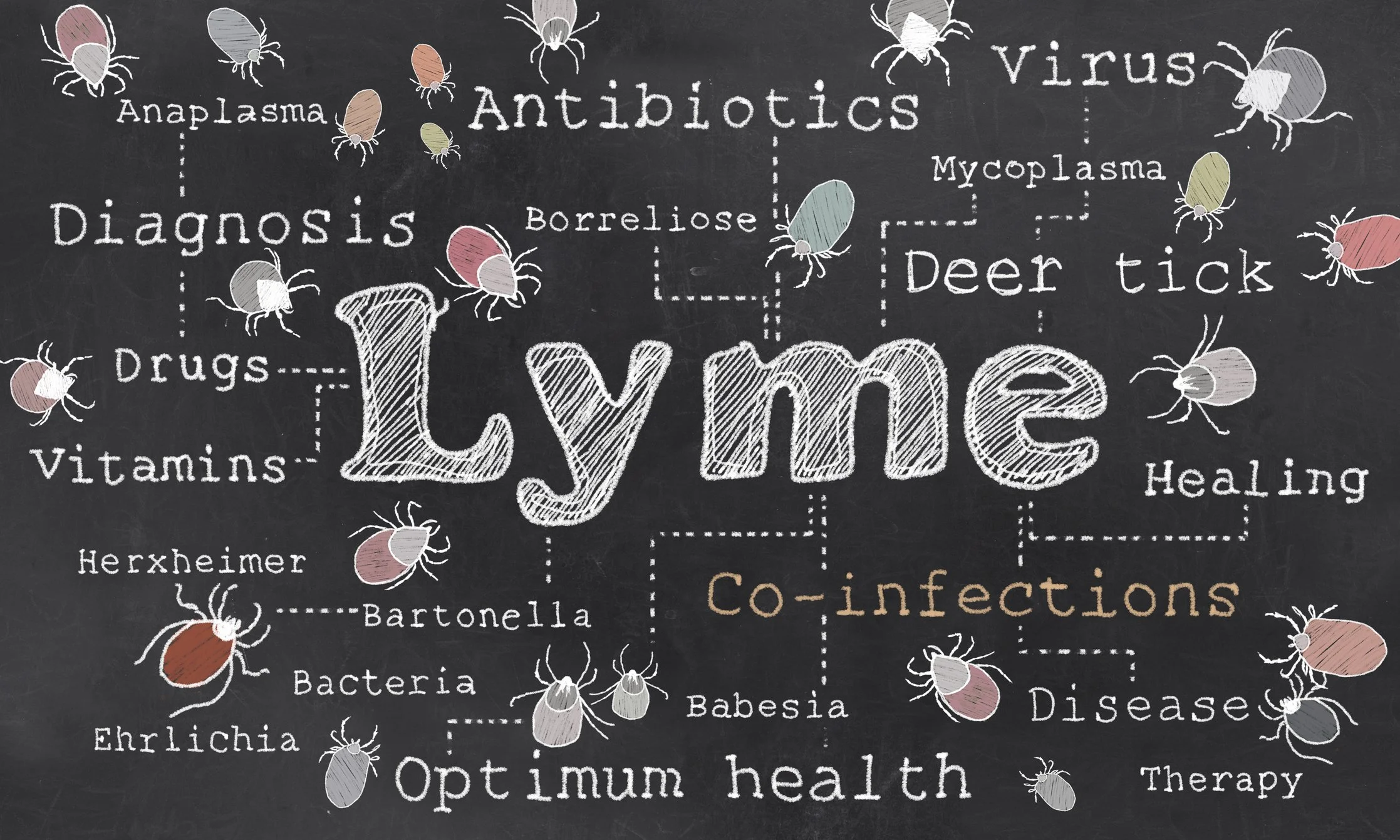
Lyme Disease and Marriage: Why Chronic Illness Quietly Changes What Your Partner’s Behavior Means
In New England, a marriage can be quietly altered by a walk.
Not a metaphorical walk.
A real one.
The sort involving a stone wall, a late afternoon that smells faintly of pine, and the general conviction — widely held across Massachusetts, Vermont, and the wooded outskirts of Greater Boston — that time spent outdoors is not just pleasant, but morally improving.
You go out a married couple.
You come back a married couple.
But somewhere between the ferns and the gravel drive, something very small may have attached itself to the future.
And months later, the argument begins.
Not about the woods.
About whether you are trying.

The Obligation Density Audit: A Couples Therapy Intervention for Resentment
Most couples do not begin by resenting each other.
They begin by volunteering.
You take the lead on daycare logistics because your schedule is more flexible.
He handles the finances because he’s better with numbers.
You start organizing holidays because someone has to.
At first, these are acts of generosity.
Then they become habits.
Then they become expectations.
Then they become evidence.
And eventually, they become grievances.
Resentment rarely begins with a single act of unfairness.
It begins with a role that was never explicitly negotiated.
One partner starts doing more—not because they were asked, but because they could.
And over time, that ability becomes obligation.
Which is where obligation density enters the system.

The Interpretive Delay Exercise: A Couples Therapy Intervention for Reactivity in the First 10 Seconds
Most couples don’t need better words.
They need a longer fuse.
Because the catastrophe usually happens in the first ten seconds—when your partner does something small, your brain assigns it a familiar meaning at warp speed, and your nervous system reacts as if it’s responding to a felony.
Then the conversation becomes less like dialogue and more like two people taking turns reading from their private indictments.
This is where the Interpretive Delay Exercise comes in.
The Interpretive Delay Exercise is a couples therapy intervention that prevents post-flood meaning consolidation by separating observable behavior from motive attribution during the first 60–90 seconds of conflict.

The Admiration Reinstatement Drill: A Couples Therapy Intervention for Moral Contempt
Most couples do not begin by hating each other.
They begin by admiring each other’s competence.
You loved that she could organize a 14-person dinner party without breaking a sweat.
He loved that you could negotiate a vendor contract in under ten minutes.
You loved that he remembered your sister’s birthday without prompting.
She loved that you knew how to fix the thing that everyone else had given up on.
Admiration is how we first register someone as capable of affecting our lives in good ways.
And then, slowly—almost imperceptibly—it begins to collapse.
Not because your partner became less competent.
But because conflict reorganizes perception around threat.
The same executive functioning you once admired now feels controlling.
The same emotional sensitivity now feels volatile.
The same independence now feels withholding.
And eventually, during arguments, your partner stops appearing in your mind as an agent—
and starts appearing as a problem.
This is the moment moral contempt begins to flood the conversation.

The Parallel Universe Intervention: How Couples Therapy Creates Sudden Relationship Insight
Some couples arrive in therapy because they’re confused.
The more dangerous ones arrive because they’re not.
They know exactly why the argument is happening.
They know what the silence means.
They know what the tone meant.
They know what the look meant.
In fact, they could run the entire fight in their heads on the drive over—right down to the closing statement and the mutual, dignified despair that follows.
This is not a communication problem.
It’s an inevitability problem.
And it’s powered by meaning.

Reframing Depression as Strength: The 20-Minute Psychological Intervention That Boosts Goal Achievement by 50%
There is the biological fact of depression.
And then there is the story we tell about what it means.
For decades, we have treated depression as an illness — correctly. Neurochemistry matters. Sleep architecture matters. Hormones matter. Therapy and medication save lives.
But there is a second injury that often lingers after the symptoms lift: the quiet belief that having been depressed reveals something defective about one’s character.
Weak.
Unreliable.
Not built for the long haul.
A new set of studies published in Personality and Social Psychology Bulletin tests a simple but destabilizing alternative:
What if surviving depression is not evidence of weakness — but evidence of strength?
And what if changing that interpretation changes behavior?

The Doctrine of Necessary Pruning Or: Why Serenity Is Never Accidental
There is a reason monasteries have gardens.
Not wild fields.
Gardens.
A monastery does not eliminate desire.
It disciplines it.
A garden does not eliminate growth.
It edits it.
People imagine serenity as something that appears when everyone feels sufficiently understood.
It does not.
Serenity appears when someone has had the courage to cut.