

Welcome to my Blog
Most people don’t arrive here because something dramatic has happened.
They arrive because something feels… different.
The relationship still works. Conversations still happen. Life continues.
But something important is no longer organizing it the way it used to.
This space is where I write about that shift.
Not just what breaks relationships—but what quietly changes them:
how desire adapts.
how attention moves.
how meaning erodes or deepens over time.
These patterns are not random.
They tend to unfold in a predictable sequence.
If you’re here, you’re likely in one of those moments:
trying to understand what changed.
trying to decide whether it matters.
trying to figure out what to do next.
Start anywhere.
But if something here feels familiar, don’t treat it as abstract.
It usually isn’t.
Where to Begin
If you’re not sure what you’re looking for, these are a few good entry points:
Marriage Is Still Chosen — Even by Those Who Once Stood Outside It.
Epistemic Safety: What It Is and Why It Matters in Relationships.
The Relationship Consequences of Living in a Permanent News Cycle.
The Two Types of People Narcissists Avoid (And Why You Might Be One of Them).
When Narcissists Grieve: Why Their Mourning Looks Cold, Delayed, or Self-Centered
The 3-6-9 Dating Rule: Why Most Relationships Change at Month 3, 6, and 9.
The First Listener Shift: A Precise Relationship Diagnostic Most Couples Miss.
Why Curiosity Is Sacred in Relationships (And What Happens When It Disappears).
If You’re Looking for More Than Insight
Understanding is useful.
But at a certain point, most couples realize they can explain their relationship clearly—and still not change it.
That’s where focused work becomes effective.
I offer structured, high-impact couples intensives designed to produce meaningful movement in a compressed period of time.
Before We Decide Anything
A brief consultation helps determine:
whether this is what you’re dealing with.
whether this format fits.
and whether we should move forward.
Get a Clear Read on Your Relationship
Take your time reading.
But if something here lands in a way that feels specific—pay attention to that.
That’s usually where this work begins.
Continue Exploring
If you prefer to browse more broadly, you can explore posts by topic below.
But most people don’t find what they need by browsing.
They find it when something they read feels uncomfortably accurate.
Be Well, Stay Kind, and Godspeed.
~ Daniel
- Attachment Issues
- Coronavirus
- Couples Therapy
- Extramarital Affairs
- Family Life and Parenting
- How to Fight Fair
- Inlaws and Extended Families
- Intercultural Relationships
- Marriage and Mental Health
- Married Life & Intimate Relationships
- Neurodiverse Couples
- Separation & Divorce
- Signs of Trouble
- Social Media and Relationships
- What Happy Couples Know

How the Cult of Victimhood Learned to Love Meaningless Suffering
There was a time when suffering had a job.
It built character.
It tested faith.
It explained why the novel was so long.
Now it mostly fills airtime.
The Telegraph’s discussion of I Suffer Therefore I Am by Pascal Bruckner circles a problem Western culture is strangely reluctant to name: we have not merely acknowledged suffering—we have stripped it of meaning.
And when suffering loses meaning, it does not disappear.
It multiplies.
Meaningless suffering refers to pain that is no longer embedded in a coherent narrative of purpose, transformation, duty, or repair.
It is suffering without a “toward.”
It hurts, but it points nowhere.
This matters because historically, suffering survived by being contained.
Religion gave it transcendence. Community gave it context. Work gave it dignity. Even tragedy gave it structure. You suffered within something.
Modern Western culture dismantled those containers—sometimes wisely, sometimes gleefully—and replaced them with… nothing particularly sturdy.
The result is a surplus.
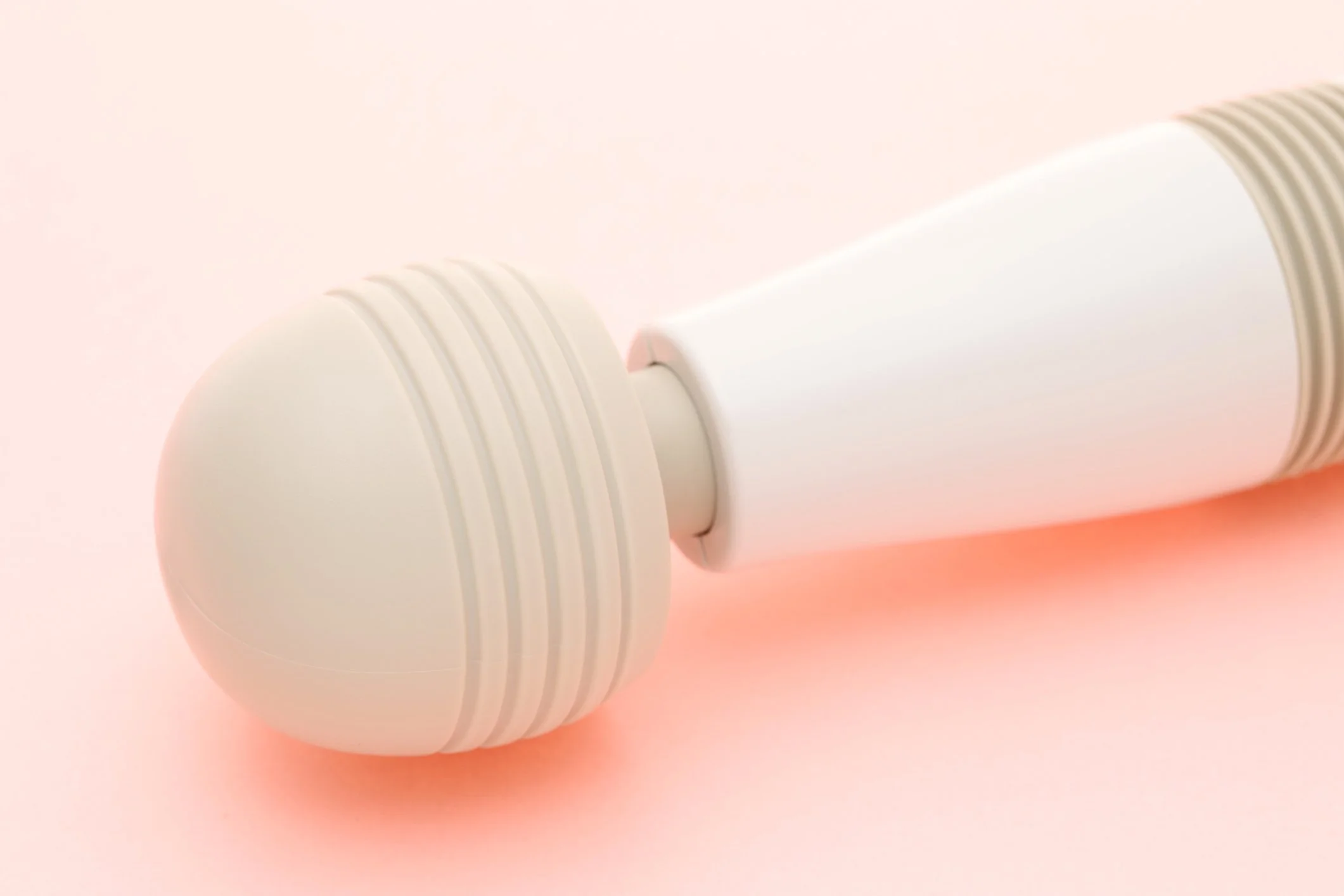
Is Your Vibrator Spying on You? Data Privacy, Sex Tech, and the Modern Intimacy Trap
There was a time when sex toys were beautifully, reliably stupid.
They vibrated. They stopped vibrating.
That was the entire relationship.
Now they come with apps, updates, permissions, privacy policies, and the quiet sense that something else has joined you in the room—and it isn’t invited.
A recent WIRED article asks the question everyone is trying not to think about: Is your vibrator spying on you?
The short answer is no. The longer, more accurate answer is worse.

How Common Is Rough Sex? Research Shows Normalization Has Outpaced Consent
Rough sex did not drift into the mainstream quietly. It arrived loudly, confidently, and with the cultural authority of repetition.
Behaviors once treated as niche or transgressive—choking, spanking, slapping, hair pulling—now appear routinely in television plots, music lyrics, dating-app bios, and social media confessions.
The message is subtle but persistent: this is what sex looks like now.
A large, nationally representative U.S. study suggests that impression is largely correct—particularly for younger adults. It also reveals something more troubling.
Rough sex may be common, but consent has not kept pace with its normalization.
Drawing on data from more than 9,000 adults, the findings show three things clearly: rough sex behaviors are widespread, sharply divided by age, and frequently experienced without permission. Visibility, it turns out, is not the same as agreement.

Michigan Football, Supermasculinity, and Institutional Collapse
You don’t need to care about football to recognize this case.
You only need to have worked with power.
The collapse surrounding Michigan football—where a recently fired head coach now faces serious criminal charges—matters clinically not because it is shocking, but because it is diagnostically clean.
It is a familiar pattern, merely televised. If it feels dramatic, good. Pathology often only becomes legible once it’s broadcast in high definition.
For clinicians, this is not a morality play. It is a failure cascade produced by the convergence of three forces:
A role structured around supermasculine performance.
Narcissistic defenses continuously reinforced by institutional reward.
A family system quietly tasked with absorbing everything no one wants to name.
The useful question is not “What was wrong with this man?”
The useful question is:
What kind of psychological structure does this role reliably produce—and how does it fail under stress?

The 3-3-3 Rule: Why the Internet Invented a New Pace for Modern Dating
The 3-3-3 dating rule is one of those dating ideas that seems to materialize out of the cultural ether—your friend mentions it, TikTok repeats it, Reddit debates it, and suddenly everyone is acting as if it’s been a best cultural practice all along.
It hasn’t.
The rule came from ordinary daters trying to solve an extraordinary problem: the acceleration of intimacy in a world where no one has time to know each other.
The rule itself is simple—three days, three dates, three weeks—but simplicity is deceptive here.
Because the 3-3-3 rule isn’t really about numbers. It’s about tempo.
It’s about building a relationship at a pace where your nervous system can tell the difference between compatibility and projection.
If the 3-6-9 rule helps daters evaluate long-term viability, the 3-3-3 rule helps them survive the beginning—where most relationships don’t fail so much as misfire.

Soft Love: A Cultural Field Guide to the New Romance That Refuses to Bruise
Soft love is the newest export from a generation that looked at the emotional hangover of the past fifty years—hookup culture, hustle culture, self-optimization culture—and decided it simply did not pair well with their nervous systems.
It is, essentially, the romance equivalent of switching to oat milk: unnecessary, arguably a little precious, and yet somehow undeniably better for you.
Soft love is not fragile.
Soft love is not weak.
Soft love is not the emotional version of cashmere you keep sealed in a protective garment bag for fear of “pilling.”
Soft love is simply… gentle.
And gentleness, in an era where everyone’s cortisol is doing Pilates, feels radical.
Let’s define it culturally, before TikTok finishes doing it for us.

Starting Over in Love: Lennon, Nostalgia, Tears, and the Neuroscience of Repair
John Lennon was killed on December 8, 1980—shot outside the home he shared with the woman this song was written for.
He was forty. He has now been dead longer than he lived.
Most of us can accept tragedy, but not this kind of math: the idea that someone who shaped us never got the years he was singing toward.
So when we listen to “(Just Like) Starting Over,” we’re hearing a man imagining a future he believed he still had. It makes the song tender; it also makes it unbearable.
By this point, Lennon had stepped out of the spectacle and into the ordinariness he’d once mocked. He was raising a child, burning bread, trying to remember who he was when nobody asked him to be iconic.
It’s often in these quiet domestic stretches that we finally hear ourselves think—and don’t entirely like what we hear.
He was at the age when people begin taking stock of their lives, and their loves, and the distances they swore they’d never allow to grow.
He was not a rock star writing a love song.
He was a highly accomplished middle-aged man realizing repair might require more honesty than he had practiced.

Bird Theory & Marriage: The Science of Turning Toward
Bird theory arrived on social media like most modern revelations: half-joke, half-confession.
You mention a bird—“I saw the most incredible bird today”—and then watch your partner for proof of something you can’t quite articulate.
Do they look up? Do they join you? Or does your enthusiasm drift into the room like background static—barely noticed, vaguely inconvenient?
TikTok calls this a relationship test. Therapists call it a nervous system seeking evidence of companionship.
Bird theory resonates not because it’s clever, but because everyone knows the exquisite ache of turning toward someone who doesn’t turn back. It captures, in one feather-light moment, the existential question sitting beneath every marriage:
Does my inner life have a home here? Or am I alone, even when I’m loved?
The truth—rarely acknowledged in the shiny emotional economy of social media—is that relationships rise or fall on these tiny tests.
Not on the anniversaries or apologies or weekend getaways, but on the microscopic, near-invisible moments of emotional availability.
The internet gave it a name. Gottman gave it a science. Couples give it their whole future.

The 3-6-9 Dating Rule: Why Most Relationships Change at Month 3, 6, and 9
Modern dating is a high-speed emotional sport conducted by people who barely trust their own instincts and absolutely do not trust each other’s.
So naturally, the culture began inventing rules—small navigational systems to help people pace intimacy in a world where everything else moves too fast.
The 3-6-9 month rule is one of these rules.
It shouldn’t work.
It’s far too neat for human nature.
And yet—infuriatingly—it tracks with what decades of research reveal about attachment, neurobiology, emotional pacing, and the developmental arc of intimacy once the novelty fog burns off.
What follows is the definitive explanation of the 3-6-9 rule, written for adults who want to date with more clarity, less chaos, and far fewer 3 a.m. existential spirals.
What Is the 3-6-9 Month Rule? (The Honest Summary You Were Looking For)

When a Poem Walks Into the Therapy Room: The Proverbs 31 Woman and the Psychology of an Inherited Ideal
Every faith tradition produces at least one woman whose reputation eventually eclipses her biography.
Christianity, industrious as ever, has several.
But none has traveled farther—through pulpits, women’s conferences, Pinterest boards, private doubts, and tense marital conversations—than the Proverbs 31 woman.
She appears only once in Scripture.
Not in a narrative, not in a theological treatise, but in a poem—a Hebrew acrostic, the ancient equivalent of dedicating the alphabet to one person. A portrait of wisdom in full bloom: economic, moral, emotional, embodied.
And yet, by the time she arrives in couples therapy, she often looks nothing like the woman in the poem.
She arrives as a brand.
A mandate.
A lifestyle aspiration with a side of guilt.
A doctrinal mascot for exhausted women.
A nostalgic fantasy for certain men.
Which is impressive, given that she didn’t ask for any of it.

Fictosexuality: The Complete Guide to Attraction to Fictional Characters
Fictosexuality refers to enduring romantic or sexual attraction to fictional characters. Not a fleeting crush. Not a “well, he is pretty cute for a cartoon lion.”
Not a temporary fever brought on by binge-reading too many fantasy novels at 2 a.m.
Fictosexuality is:
• persistent.
• meaningful.
• experienced as a legitimate orientation.
• emotionally loaded.
• psychologically coherent.
• and—for many people—central to their sense of identity.
Researchers studying sexual identity formation have long noted that desire can occur toward persons, archetypes, symbols, and imagined others (Berlant & Edelman, 2014). Fictosexuality is simply the contemporary form of this ancient phenomenon.
It is not pathology.
It is not delusion.
It is not failure.
It’s just the human imaginative capacity doing its usual overachieving thing.

Berrisexual: The Definitive Guide to Attraction to Fictional Characters in the Digital Age
Every era invents new language for longing.
Victorians had swooning.
Millennials had situationships.
Gen Z has turned desire into a full-time classification project—half anthropology, half fandom studies, half committee meeting.
And now, from the unruly compost pile of digital culture, we meet the newest micro-label: berrisexual.
A word so charmingly absurd it feels pre-approved for a tote bag.
But as always, behind the joke is something earnest: a very old human ache dressed in new pixels.
To understand berrisexuality, we must understand its lineage: fictosexuality, nijikon, parasocial attachment, and the centuries-long tradition of falling in love with beings who do not strictly exist.
As scholars of sexual identity construction note, desire often expands faster than language, which is why new terms emerge at cultural flashpoints, as explored in Barker’s analysis of sexual identity labels (Barker, 2016) and in Fahs’s work on naming practices and desire (Fahs, 2019).
So let’s begin—with affectionate bemusement for the human heart and its unfettered enthusiasms.