Tuesday, December 9, 2025.
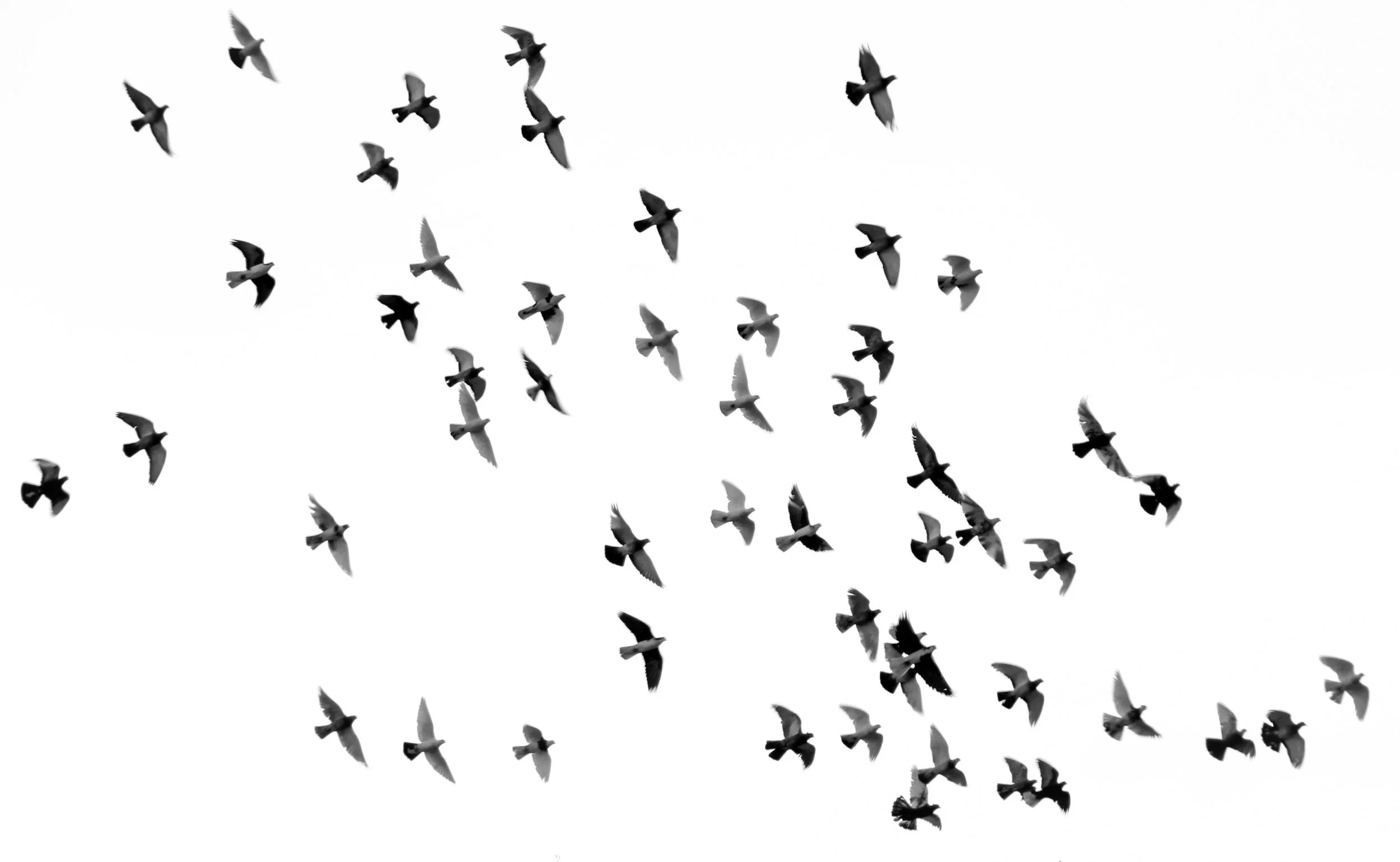
Bird theory arrived on social media like most modern revelations: half-joke, half-confession.
You mention a bird—“I saw the most incredible bird today”—and then watch your partner for proof of something you can’t quite articulate.
Do they look up? Do they join you? Or does your enthusiasm drift into the room like background static—barely noticed, vaguely inconvenient?
TikTok calls this a relationship test. Therapists call it a nervous system seeking evidence of companionship.
Bird theory resonates not because it’s clever, but because everyone knows the exquisite ache of turning toward someone who doesn’t turn back.
It captures, in one feather-light moment, the existential question sitting beneath every marriage:
Does my inner life have a home here? Or am I alone, even when I’m loved?
The truth—rarely acknowledged in the shiny emotional economy of social media—is that relationships rise or fall on these tiny tests.
Not on the anniversaries or apologies or weekend getaways, but on the microscopic, near-invisible moments of emotional availability.
The internet gave it a name. Gottman gave it a science. A few fortunate couples give it their whole future.
What Bird Theory Gets Right About How Love Actually Works
Bird theory is not about birds; it’s about responsiveness.
More specifically, it’s about the invitation that hides inside every small remark. When you say, “Look, a bird!,” you are not sharing information—you are extending an inner doorway.
The question is never, “Do you like birds too?”
The question is: Are you willing to cross the threshold into my small moment of awe and delight?
Most partners never announce they're sending a bid for connection; they just do it instinctively, the way birds call into a canopy and wait for the faintest returning note.
A partner who consistently turns toward these tiny openings creates a relationship that feels buffered, breathable, stable.
A partner who misses or dismisses them creates a world where the other person slowly, quietly stops reaching.
This is not a metaphor. This is a longitudinal finding.
Gottman’s Love Lab: The Science Bird Theory Didn’t Know It Was Using
In the early 1980s, John and Julie Gottman did something radical by contemporary standards: they observed couples living their normal lives in a small apartment, recording everything. What they discovered was unsettling in its simplicity.
Marriages do not fail because of dramatic betrayals or clashing values or insufficient communication exercises. They fail because one partner says, “Look at that!,” and the other partner never looks.
Gottman found that couples who remained together turned toward each other’s bids about 86% of the time. Couples who later divorced turned toward about 33%.
The deciding factor in a marriage was not conflict management or compatibility. It was micro-attunement: whether partners responded to the smallest possible gestures of connection.
Bird theory—without knowing it—stumbled directly into one of the most replicated findings in relationship science.
The Three Ways Couples Answer a Bird
Bird theory becomes diagnostic when paired with Gottman’s framework: the three ways partners respond to bids every minute of every day.
Turning Toward: The Quiet Work of Love
Turning toward is not grand. It is the tiny pivot of attention that says, “I see you reaching; let me meet you halfway.”
A glance.
A question.
A smile in the direction of your delight.
It is the softest skill in the world and the most predictive of marital longevity.
Turning toward says:
Your inner world interrupts nothing. It is part of my world now.
Turning Away: The Slow, Civil Erosion
Turning away rarely looks cruel. It looks busy, tired, overstimulated, preoccupied. It sounds like:
“Uh-huh.”
Silence.
A distracted nod from behind a glowing screen.
It is the relational version of an unanswered message: not intentional abandonment, but a patterned absence that eventually feels the same.
Nothing kills intimacy faster than neutral disengagement.
Turning Against: The Micro-Aggression That Teaches Silence
Turning against is sharper, faster, and far more consequential than most partners realize.
“Oh Please, spare me your nonsense.”
“Why do you always interrupt me?”
“It’s just a stupid bird.”
Turning against a bid trains the other person’s nervous system to stop trying.
A relationship can survive conflict; it cannot survive contempt disguised as irritation.
Why the Nervous System Treats a Bird Like a Verdict
On paper, bird theory is trivial. In the body, it is decisive.
Stephen Porges’s work on neuroception reveals that humans constantly, unconsciously assess whether another person represents safety or threat.
A partner who responds warmly to your small delight sends a message directly into the autonomic system:
You are safe here. Keep reaching.
A partner who consistently turns away or against sends a different message:
Withdraw. Protect. Do not risk vulnerability.
This is why bird theory hits people so hard: it bypasses logic and lands in the place where attachment lives. It reveals, in one tiny moment, the larger emotional climate of the relationship.
Why Social Media Fell in Love With Bird Theory
People instinctively know that intimacy is made of small acts, not big statements. Bird theory gave shape to a longing everyone carries: the desire to be recognized and joined, not just tolerated.
It also explains why so many couples describe their deteriorating marriage with the same phrase:
“We just drifted apart.”
No one drifts. One partner sends a bird, and the other partner never looks. And gradually, reaching begins to feel foolish.
Bird theory is not a test. It is a mirror held up to awe.
If Your Partner Fails the Bird Test, What Then?
Not every missed bid is meaningful. Missing a bird is not a problem; missing most birds is.
The real inquiry is pattern:
Do you feel cherished or barely tolerated?
When you share small wonders, does anyone join you?
Has your partner trained you—accidentally or otherwise—to mute your inner life?
Instead of weaponizing the trend (“TikTok says we’re doomed”), shift the conversation toward the emotional truth underneath:
“When I share small things and you don’t respond, I feel alone. I don’t need enthusiasm. I just need presence.”
If the relationship is healthy, this opens a conversation.
If it is not, this reveals a truth that was already there.
How to Build a “Turning Toward” Marriage
This is not complicated, but it is labor. And it is daily.
Look up when your partner speaks.
Consider their delight part of your relational world, even when it’s not your interest.
Honor bids as opportunities, not interruptions.
Offer curiosity—not a performance, just a moment of attention.
Ask yourself why their bids feel burdensome; the answer is where the work begins.
A marriage built on consistent turning toward becomes astonishingly resilient.
Conflict lands softer. Repairs happen faster. Passion survives ordinary time.
Love, in its most durable form, is simply the habit of bestowed attention and profound noticing.
Final Thoughts
A partner says, “Look—a bird!” and the entire marriage balances on the response.
Tiny moments carry the weight of the entire relationship not because they are dramatic, but because they are honest.
Bird theory is not a trend. It is a reminder. I can help with that.
The future of a marriage lives in the smallest glances toward one another’s worlds.
Look up. Turn toward. Share the bird. The rest follows.
Be Well, Stay Kind, and Godspeed.
REFERENCES:
Cosmopolitan. (2025, October 30). The science behind the “bird theory.” Cosmopolitan.
Gottman Institute. (2015, April 1). Turn toward instead of away. The Gottman Institute.
Gottman Institute. (2019, February 11). Want to improve your relationship? Start paying more attention to bids. The Gottman Institute.
Gottman Institute. (2024, June 24). An introduction to emotional bids and trust. The Gottman Institute.
Porges, S. W. (2011). The polyvagal theory: Neurophysiological foundations of emotions, attachment, communication, and self-regulation. W. W. Norton & Company.
Sloat, S. (2025, December 4). Is your relationship solid—or sinking? The bird theory thinks it knows. The Guardian.
Smith, E. E. (2014, June 12). Masters of love. The Atlantic.
The Everygirl. (2025, October 30). I tried the viral bird theory to test the strength of my relationship. The Everygirl.
Times of India. (2025, November 24). The “bird theory”: Why small moments decide the future of your relationship. The Times of India.