

Welcome to my Blog
Most people don’t arrive here because something dramatic has happened.
They arrive because something feels… different.
The relationship still works. Conversations still happen. Life continues.
But something important is no longer organizing it the way it used to.
This space is where I write about that shift.
Not just what breaks relationships—but what quietly changes them:
how desire adapts.
how attention moves.
how meaning erodes or deepens over time.
These patterns are not random.
They tend to unfold in a predictable sequence.
If you’re here, you’re likely in one of those moments:
trying to understand what changed.
trying to decide whether it matters.
trying to figure out what to do next.
Start anywhere.
But if something here feels familiar, don’t treat it as abstract.
It usually isn’t.
Where to Begin
If you’re not sure what you’re looking for, these are a few good entry points:
Marriage Is Still Chosen — Even by Those Who Once Stood Outside It.
Epistemic Safety: What It Is and Why It Matters in Relationships.
The Relationship Consequences of Living in a Permanent News Cycle.
The Two Types of People Narcissists Avoid (And Why You Might Be One of Them).
When Narcissists Grieve: Why Their Mourning Looks Cold, Delayed, or Self-Centered
The 3-6-9 Dating Rule: Why Most Relationships Change at Month 3, 6, and 9.
The First Listener Shift: A Precise Relationship Diagnostic Most Couples Miss.
Why Curiosity Is Sacred in Relationships (And What Happens When It Disappears).
If You’re Looking for More Than Insight
Understanding is useful.
But at a certain point, most couples realize they can explain their relationship clearly—and still not change it.
That’s where focused work becomes effective.
I offer structured, high-impact couples intensives designed to produce meaningful movement in a compressed period of time.
Before We Decide Anything
A brief consultation helps determine:
whether this is what you’re dealing with.
whether this format fits.
and whether we should move forward.
Get a Clear Read on Your Relationship
Take your time reading.
But if something here lands in a way that feels specific—pay attention to that.
That’s usually where this work begins.
Continue Exploring
If you prefer to browse more broadly, you can explore posts by topic below.
But most people don’t find what they need by browsing.
They find it when something they read feels uncomfortably accurate.
Be Well, Stay Kind, and Godspeed.
~ Daniel
- Attachment Issues
- Coronavirus
- Couples Therapy
- Extramarital Affairs
- Family Life and Parenting
- How to Fight Fair
- Inlaws and Extended Families
- Intercultural Relationships
- Marriage and Mental Health
- Married Life & Intimate Relationships
- Neurodiverse Couples
- Separation & Divorce
- Signs of Trouble
- Social Media and Relationships
- What Happy Couples Know

What Emotional Safety Really Means in Relationships (And Why Most Couples Get It Wrong)
“Emotional safety” is one of those phrases that survives almost entirely on good intentions.
It sounds humane.
It reassures everyone in the room.
It suggests that the relationship is being handled correctly.
It is also almost never defined.
In popular relationship culture, emotional safety is treated like a mood: calm voices, careful phrasing, minimal friction. In therapy culture, it often collapses into tone management. In high-achieving marriages, it gets confused with efficiency.
None of that is emotional safety.

Emotional Safety in High-Achieving Relationships: Why Comfort Isn’t the Same as Closeness
High-achieving couples are rarely chaotic.
They arrive on time.
They speak in paragraphs.
They manage feelings the way they manage calendars—competently and in advance.
They often believe this is emotional safety.
What they usually have is emotional professionalism: a relationship optimized for stability, predictability, and minimal disruption. It looks good. It works well. It feels oddly untouched.
And eventually, one partner says something inefficient, like:
“I feel lonely even when we’re together.”
That moment isn’t a communication failure.
It’s the system revealing its limits.
This post attemts to engage the gentle reader to explore emotional safety, explains why common frameworks often fail high-achieving couples, and introduces an alternative model of emotional safety that is predicated on influence, permeability, and repair.

The Soft Exit Marriage: How Modern Couples Leave Without Leaving
A soft exit marriage is what happens when a relationship stays married on paper but stops asking much of either person emotionally.
Nothing dramatic occurs.
No announcement.
No moment friends later point to and say, that’s when it ended.
The marriage just keeps functioning. Calendars stay synced. Groceries get bought. The dog goes to the vet. It looks stable. Often enviably so.
Everyone behaves like an adult.
Which is usually the giveaway.
What disappears isn’t affection or politeness. It’s impact.
One partner’s inner life no longer really alters the other’s choices. Feelings are listened to respectfully, the way you listen to a colleague.
They don’t interrupt schedules. They don’t rearrange priorities. They don’t require anything afterward.
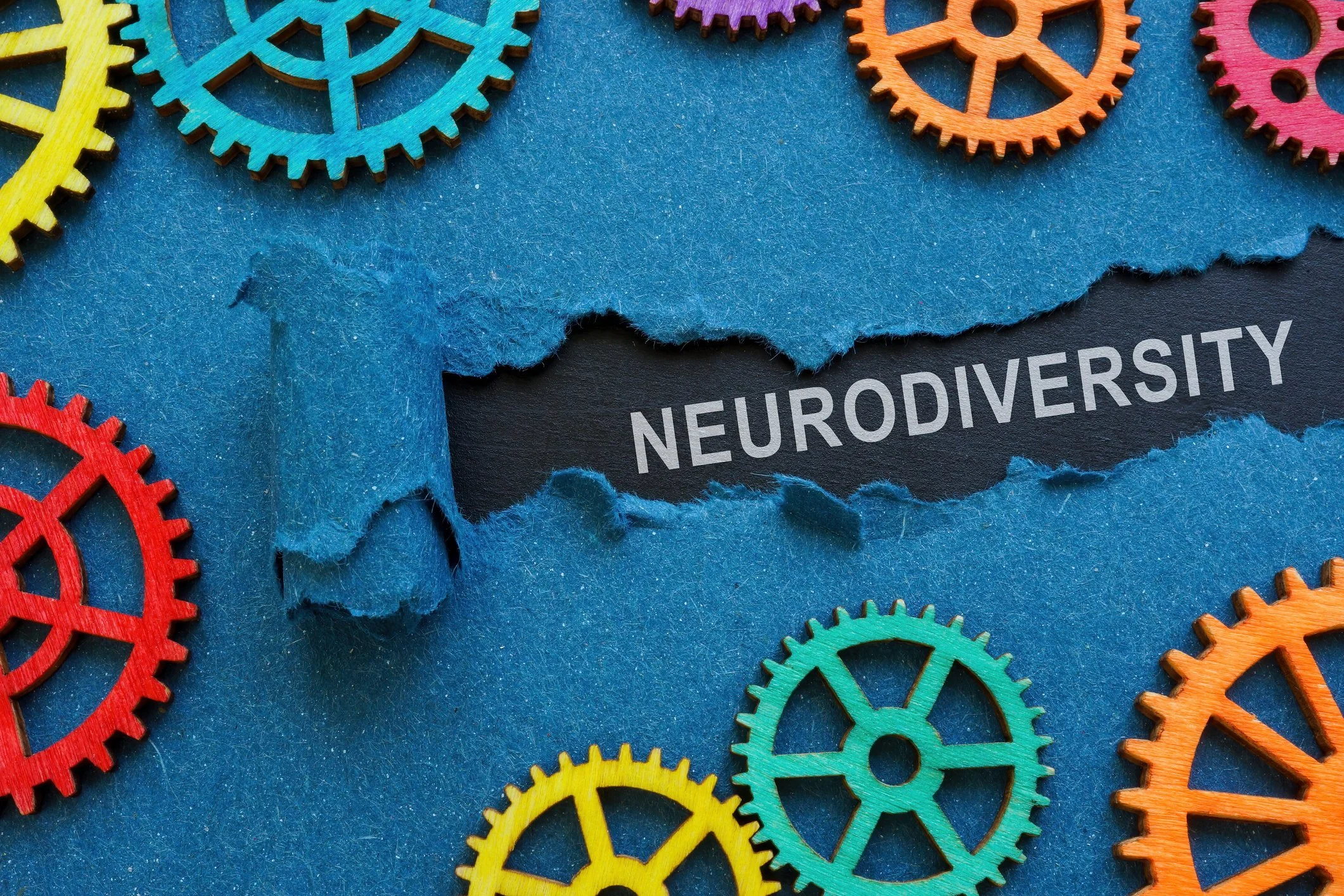
The Problem With Calling Everything “Neurodiversity”
Neurodiversity has become one of those words that sounds like it’s doing work even when nothing else is. I use it way too much, myself.
It floats. It reassures. It allows everyone in the room to feel progressive without having to move a chair, dim a light, or rethink a deadline.
It is the verbal equivalent of applauding accessibility from a standing desk no one else can use.
Autism, by contrast, remains stubbornly physical. Loud. Exhausting. Inconvenient.
It still requires things—particularly when differences in sensory processing reliably affect pain thresholds, attention, and fatigue in everyday environments, as documented in adult autistic populations by Crane, Goddard, and Pring in Autism.
This difference matters.
As I said in my last post, Neurodiversity is a framework. Autism is a diagnosis. Treating them as interchangeable flatters institutions and strains bodies.

Autism vs. Neurodiversity: Two Words Doing Very Different Jobs
Autism is a diagnosis.
Neurodiversity is a framework.
They are often used interchangeably online, which is efficient for discourse and disastrous for clarity.
One term opens access to services, accommodations, and legal protections.
The other opens access to moral approval—and applause from institutions that prefer language to logistics.
Institutions tend to favor the second.
It’s cheaper.
I’ve learned that autism is not a personality aesthetic.
Autism exists as a diagnosis because certain neurological patterns cluster reliably enough to be studied, identified, and—most importantly—accommodated.
Differences in sensory processing, social cognition, executive functioning, and motor coordination are well documented, with measurable impacts on daily functioning, employment, and health outcomes, as summarized across decades of research in journals such as Autism Research and The Lancet Psychiatry.
I’ve been working with autistic children and their families for roughly twenty hours a week at a public mental health clinic for the past thirteen months.
That proximity has taught me something no amount of discourse ever could.

The Attention Famine: Why Modern Relationships Starve in a World Stuffed With Everything
The couple arrived early. in the morning. I have to confess that I watched them somewhat carefully through the window.
They sat stiffly in their car, side-by-side but orbiting different suns.
She scrolled without reading; he scanned headlines without absorbing. Both looked full—full calendars, full professions, full lives—but something essential had emptied out between them.
When I invited them in, they walked into my office like two people who hadn’t realized their marriage was starving until they saw how thin it looked under clinical lighting.
This is the quiet crisis of our era:
a famine in the one resource modern couples cannot afford to lose—Bestowed Attention.
Not love.
Not desire.
Not compatibility.
Bestowed Attention.
The one form of nourishment no culture can mass-produce.

Narcissists Make Terrible Gamblers (Which Is Exactly Why They Love It)
Let us begin with the simplest truth: casinos were not built to separate fools from their money.
They were built to separate confident men from their delusions—preferably while those men are wearing sunglasses indoors.
A new French study, published in Alcoologie et Addictologie, confirms what most of us learned watching someone lose a mortgage payment at blackjack: narcissists gravitate to “strategic gambling” as if it were a personality test they’re certain they’ll ace.
The tragedy, of course, is that they never do.

Autistic Employees Outsmart the Dunning–Kruger Effect (And Yes, I’m Saying This as Someone with a Degree in Labor Studies)
Before anyone sends me an email beginning with “Well, actually,” let me open with an apology—the academic kind, not the sincere kind.
Besides Marriage and Family Therapy, I also have a degree in Labor Studies, and I am a published researcher in the field.
Which means I have spent an absurd amount of time understanding workplaces, workers, and the elaborate mythologies they construct about their own competence.
So if this piece sounds judgmental, know that I say all of this with respect for working people and… let’s call it realistic expectations of their self-awareness.
With that out of the way:
A new study in Autism Research shows that autistic employees are far less susceptible to the Dunning–Kruger effectthan their non-autistic peers.
If you’ve ever worked in an office, you already knew this.

Why Beauty Is Easy on the Brain: New Neuroscience Explained
If you ever wondered why you find one thing beautiful and another thing exhausting, science has finally delivered the answer, and it is exquisitely humiliating: your brain is cheap.
New neuroscience research from the University of Toronto—published in the sleekly titled PNAS Nexus, a journal that sounds like it should arrive encrypted—tells us that beauty is not cultural, not divine, not mystical, and certainly not a mark of taste.
Beauty, they say, is a biological bargain. It’s whatever costs your brain the least metabolic energy to process.
It turns out “easy on the eyes” was never a compliment. It was a financial report.
The brain, that famously expensive organ that eats 20% of your daily calories just to keep you upright and not sobbing in a Trader Joe’s parking lot, prefers images that require fewer neurons to fire.
Less neural activity means less glucose burned. Less glucose burned means your brain is happier.
Happiness, apparently, is just low energy expenditure wearing a romantic coat.
This is the kind of news that ruins poetry but kinda explains your dating history.

God is Dead. The Lone Wolf Lives. We Live in Free Markets.
The modern West has always loved its own slogans.
They roll off the tongue with the ease of a creed and the hollowness of a television jingle:
God is dead. The lone wolf lives. We live in free markets.
Three sentences that were never entirely true, then became increasingly false, and now survive only as the flickering neon above a civilization that no longer believes in its own mythology.
What follows is not an argument.
Arguments require an audience with hope.
This is a eulogy.
A ruined-beautiful lament for a world that still stands but no longer shelters.
And like all eulogies, it begins with the cause of death.

The 3-3-3 Rule: Why the Internet Invented a New Pace for Modern Dating
The 3-3-3 dating rule is one of those dating ideas that seems to materialize out of the cultural ether—your friend mentions it, TikTok repeats it, Reddit debates it, and suddenly everyone is acting as if it’s been a best cultural practice all along.
It hasn’t.
The rule came from ordinary daters trying to solve an extraordinary problem: the acceleration of intimacy in a world where no one has time to know each other.
The rule itself is simple—three days, three dates, three weeks—but simplicity is deceptive here.
Because the 3-3-3 rule isn’t really about numbers. It’s about tempo.
It’s about building a relationship at a pace where your nervous system can tell the difference between compatibility and projection.
If the 3-6-9 rule helps daters evaluate long-term viability, the 3-3-3 rule helps them survive the beginning—where most relationships don’t fail so much as misfire.

Humans Rank Between Meerkats and Beavers in Monogamy: The Kind of News We Pretend Surprises Us
Every few years, science releases a study that tries—earnestly, valiantly—to quantify human monogamy with the cool precision of a lab instrument.
The latest comes from the University of Cambridge, where Dr. Mark Dyble decided to bypass centuries of philosophical debate and simply look at the genetic receipts:
How many siblings in a given species share both parents?
It’s the least romantic way to study commitment, which may be why it works.
Humans, as it turns out, sit neatly between meerkats and beavers in what Dyble terms the “monogamy league table” (Dyble, 2025).
Not the top, not the bottom—just the reliable middle lane. Devoted enough to form pair bonds, conflicted enough to keep poets employed.
This study doesn’t bother with moral frameworks or cultural narratives.
It measures monogamy the way nature measures anything: by outcomes.
And outcomes tell a different, far simpler story than the one we like to tell about ourselves.