Wednesday, December 10, 2025.
Every few years, science releases a study that tries—earnestly, valiantly—to quantify human monogamy with the cool precision of a lab instrument.
The latest comes from the University of Cambridge, where Dr. Mark Dyble decided to bypass centuries of philosophical debate and simply look at the genetic receipts:
How many siblings in a given species share both parents?
It’s the least romantic way to study commitment, which may be why it works.
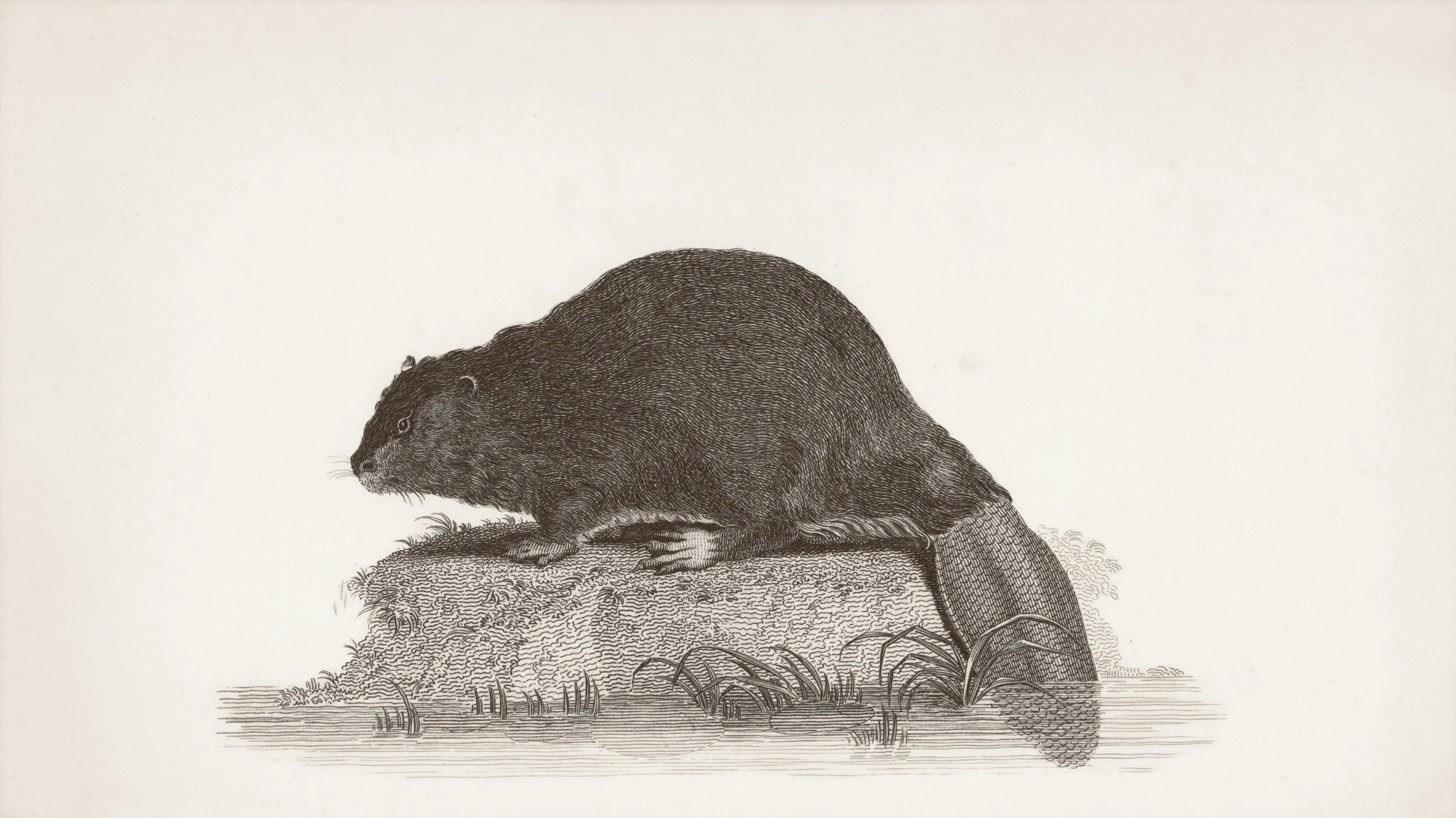
Humans, as it turns out, sit neatly between meerkats and beavers in what Dyble terms the “monogamy league table” (Dyble, 2025). Not the top, not the bottom—just the reliable middle lane. Devoted enough to form pair bonds, conflicted enough to keep poets employed.
This study doesn’t bother with moral frameworks or cultural narratives.
It measures monogamy the way nature measures anything: by outcomes.
And outcomes tell a different, far simpler story than the one we like to tell about ourselves.
Are Humans Naturally Monogamous? What the Cambridge Study Actually Measures
Dyble’s approach is deliberately and decidedly austere: count the number of full siblings versus half siblings and infer how often both parents were present for reproduction (Dyble, 2025). It’s a departure from older frameworks that relied heavily on ethnography and fossil speculation (Betzig, 1989).
But the logic is sound.
Mammals that produce more full siblings tend to be more monogamous (Lukas & Clutton-Brock, 2013).
Humans clock in at 66% full siblings—a number that slots us comfortably into a pattern of “practical monogamy” rather than idealized purity.
If you’ve ever wondered whether humans are naturally built for one partner, the answer is:
mostly, mostly not, and almost always more complicated than we admit.
Why Humans Sit Between Meerkats and Beavers: A Cross-Species Reality Check
Here’s the thing. The vast majority of mammals don’t pair bond at all (Lukas & Clutton-Brock, 2013).
Only about 9% manage anything resembling monogamy.
Humans, beavers, and meerkats fall in that rare enclave—not because we are morally elevated, but because cooperation is expensive and child-rearing is ruinously time-consuming.
Our reproductive patterns suggest that monogamy wasn’t an ethical invention. It was a problem-solving technique for the human experiment.
The 66% Full-Sibling Pattern: What Genetic Evidence Says About Our Mating Strategy
Genetic consistency implies behavioral consistency.
Even in societies that permit polygyny, actual reproductive outcomes skew heavily toward stable dyadic bonds (Kaplan et al., 2000). Biological reality remains remarkably stubborn.
The genome suggests that—despite our cultural narratives of dissatisfaction, reinvention, and “finding ourselves”—humans oftenreturn repeatedly to the same architecture:
one partner, shared offspring, long-term investment.
The drama comes from everything layered on top of it.
What Our Primate Cousins Reveal About the Improbable Evolution of Human Monogamy
Human monogamy is strange.
Our closest primate relatives want nothing to do with it.
Chimpanzees, with their multi-male multi-female mating systems, produce only about 4% full siblings (Goodall, 1986; Tutin, 1979).
Gorillas—a more hierarchical species—barely reach 6% (Harcourt & Stewart, 2007).
Japanese macaques operate in an almost exuberantly Hefnerian non-monogamous fashion, sitting near the very bottom of the league table (Lukas & Clutton-Brock, 2013).
That humans developed pair bonds strong enough to support cooperative breeding is less a miracle than an evolutionary improvisation.
Beyond Biology: Cooperative Breeding, Cultural Choreography, and the Burden of Psychological Monogamy
Humans evolved as cooperative breeders—a species in which multiple adults help raise the young (Hrdy, 2009). That arrangement strengthens pair bonds but does not guarantee exclusivity.
It wasn’t biology that transformed monogamy into a psychological contract.
Culture did that.
We invented romantic love, property, inheritance laws, emotional exclusivity, intimacy expectations, and the modern idea that one person should fulfill the roles once dispersed across a village.
The beaver does not lose sleep over erotic compatibility. Humans, famously, do.
From Bronze Age Burial Grounds to Modern Commitment Rituals: How Humans Keep Announcing They Mean It
Ancient DNA shows that early agrarian societies leaned more monogamous than previously assumed.
Bronze Age burial sites reveal family clusters composed primarily of full siblings (Lazaridis et al., 2014).
The way humans signal commitment has changed—grave goods have evolved into mortgages and shared calendars—but the underlying instinct hasn’t:
to make visible, durable, public claims about belonging.
What Monogamy Means Today: The Moment Dr. Chris Donaghue Enters the Room
At some point in this kind of essay, evolutionary charts begin to feel like they’re dodging the real story—the one happening in bedrooms, therapy offices, and the private anxieties couples carry around like contraband.
This is where most people lose their nerve.
And this is exactly where Dr. Chris Donaghue gets comfortable.
If you’ve never heard him talk about intimacy, imagine someone who can discuss sexuality without moral panic or academic aloofness. He approaches desire like an archaeologist approaching ruins: gently, curiously, without assuming the site was ever tidy.
When he joined me on the podcast, something subtle shifted. Suddenly monogamy wasn’t a data point; it was a negotiation. A living system. A set of agreements couples inherit, improvise, and occasionally break with operatic flair.
Where evolution explains how we pair bond, Donaghue and I discussed what it costs to stay:
self-awareness, erotic honesty, emotional accountability, and an ability to tell the truth about what you want without burning down your life.
Monogamy, in his view, is less a biological instinct than a psychological discipline—one most adults were never fully taught, yet attempt daily with religious conviction.
Why Monogamy Feels Kinda Fragile Now: Expectations No Mammal Ever Signed Up For
Monogamy did not get harder.
The requirements did.
Esther Perel has a point. We want loyalty, availability, emotional fluency, sexual vitality, ease, erotic mystery, attachment security, and minimal resentment—all from the same person, indefinitely.
It’s astonishing we manage it at all.
But according to this data—apparently, we do.
Are Humans Good at Monogamy? The Data Says Yes—Culture Says “Define Good.”
Biology gives humans passing marks.
Culture gives us a lifetime of contradictory expectations.
We fail not because monogamy is unnatural, but because we treat it as a personality trait rather than a relational practice—a craft requiring attention, humility, and repair.
The Clinical View: When Biological Monogamy Collides With Emotional Reality
By the time a couple arrives in therapy, they are rarely asking whether monogamy is natural. They are asking whether theirs is survivable.
“Can we do this?”
“Can we do this?”
“Can we do this without becoming strangers to ourselves?”
Monogamy is not a test of nature.
It is a test of communication and courage.
Final Thoughts: What Our Place Between Meerkats and Beavers Actually Reveals
Humans are monogamous enough to build civilizations, ambitious enough to want more from love, and conflicted enough to generate endless literature on the subject.
We are, in short, a species doing its best—with mixed results, but admirable consistency.
Therapist’s Note
If you recognized yourself somewhere in this science, somewhere in the longing or the fatigue, begin there.
The tension between what biology prepared you for and what culture demands is not a personal failing—it’s the human condition.
If you want to explore monogamy as a practice rather than a verdict, reach out.
Let’s build something purposeful, not inherited.
Book your consultation. Begin the work.
You deserve a relationship that feels chosen, not assumed.
Be Well, Stay Kind, and Godspeed.
REFERENCES:
Betzig, L. (1989). Causes of conjugal dissolution: A cross-cultural study. Current Anthropology, 30(5), 654–676. https://doi.org/10.1086/203798
Dyble, M. (2025). Human monogamy in mammalian context. Proceedings of the Royal Society B: Biological Sciences, 292(2163). https://doi.org/10.1098/rspb.2025.2163
Goodall, J. (1986). The chimpanzees of Gombe: Patterns of behavior. Harvard University Press.
Harcourt, A. H., & Stewart, K. J. (2007). Gorilla society: Conflict, compromise, and cooperation between the sexes. University of Chicago Press.
Hrdy, S. B. (2009). Mothers and others: The evolutionary origins of mutual understanding. Harvard University Press.
Kaplan, H., Hill, K., Lancaster, J., & Hurtado, A. M. (2000). A theory of human life history evolution: Diet, intelligence, and longevity. Evolutionary Anthropology, 9(4), 156–185. https://doi.org/10.1002/1520-6505(2000)9:4<156::AID-EVAN5>3.0.CO;2-7
Lazaridis, I., et al. (2014). Ancient human genomes suggest three ancestral populations for present-day Europeans. Nature, 513(7518), 409–413. https://doi.org/10.1038/nature13673
Lukas, D., & Clutton-Brock, T. H. (2013). The evolution of social monogamy in mammals. Science, 341(6145), 526–530. https://doi.org/10.1126/science.1238677
Tutin, C. E. G. (1979). Mating patterns and reproductive strategies in a community of wild chimpanzees (Pan troglodytes schweinfurthii). Behavioral Ecology and Sociobiology, 6(1), 29–38. https://doi.org/10.1007/BF00293238