
Welcome to my Blog
Thank you for stopping by. This space is where I share research, reflections, and practical tools drawn from my experience as a marriage and family therapist with an international practice.
I write about what happens to desire, attachment, and meaning once the early myths stop working.
Are you a couple looking for clarity? A professional curious about the science of relationships? Or simply someone interested in how love and resilience work? I'm glad you've found your way here. I can help with that. I'm accepting new clients, and this blog is for the benefit of all my gentle readers.
Each post is written with one goal in mind: to help you better understand yourself, your partner, and the hidden dynamics that shape human connection
Grab a coffee (or a notebook), explore what speaks to you, and take what's useful back into your life and relationships.
And if a post sparks a question, or makes you realize you could use more support, l'd love to hear from you. Let's explore the scope of work you'd like to do together.
Be Well, Stay Kind, and Godspeed.
~ Daniel
P.S.
Feel free to explore the categories below to find past blog posts on the topics that matter most to you. If you're curious about attachment, navigating conflict, or strengthening intimacy, these archives are a great way to dive deeper into the research and insights that l've been sharing for years.
- Attachment Issues
- Coronavirus
- Couples Therapy
- Extramarital Affairs
- Family Life and Parenting
- How to Fight Fair
- Inlaws and Extended Families
- Intercultural Relationships
- Marriage and Mental Health
- Married Life & Intimate Relationships
- Neurodiverse Couples
- Separation & Divorce
- Signs of Trouble
- Social Media and Relationships
- What Happy Couples Know


The Hidden Psychology of Sugar Relationships: What Research Reveals About Transactional Dating
The loudest conversations about sugar relationships are usually the least illuminating.
One camp treats the arrangement as empowerment with a payment schedule.
Another treats it as a moral collapse, as though romance and economics had only just discovered each other in the modern world.
Both sides miss the more interesting question.
Not whether sugar relationships are empowering or exploitative.
But why some people find them psychologically appealing in the first place.
Psychology, inconveniently, has begun to offer an answer.
A recent study published in Archives of Sexual Behavior examined openness to sugar relationships among young women and found a pattern worth paying attention to.
Women who reported greater openness to transactional intimacy also showed greater impairments in personality functioning, stronger early maladaptive schemas, and heavier reliance on maladaptive emotional coping strategies.
In other words, the appeal of sugar relationships may not primarily be about money.
It may be about how someone learned to manage intimacy.
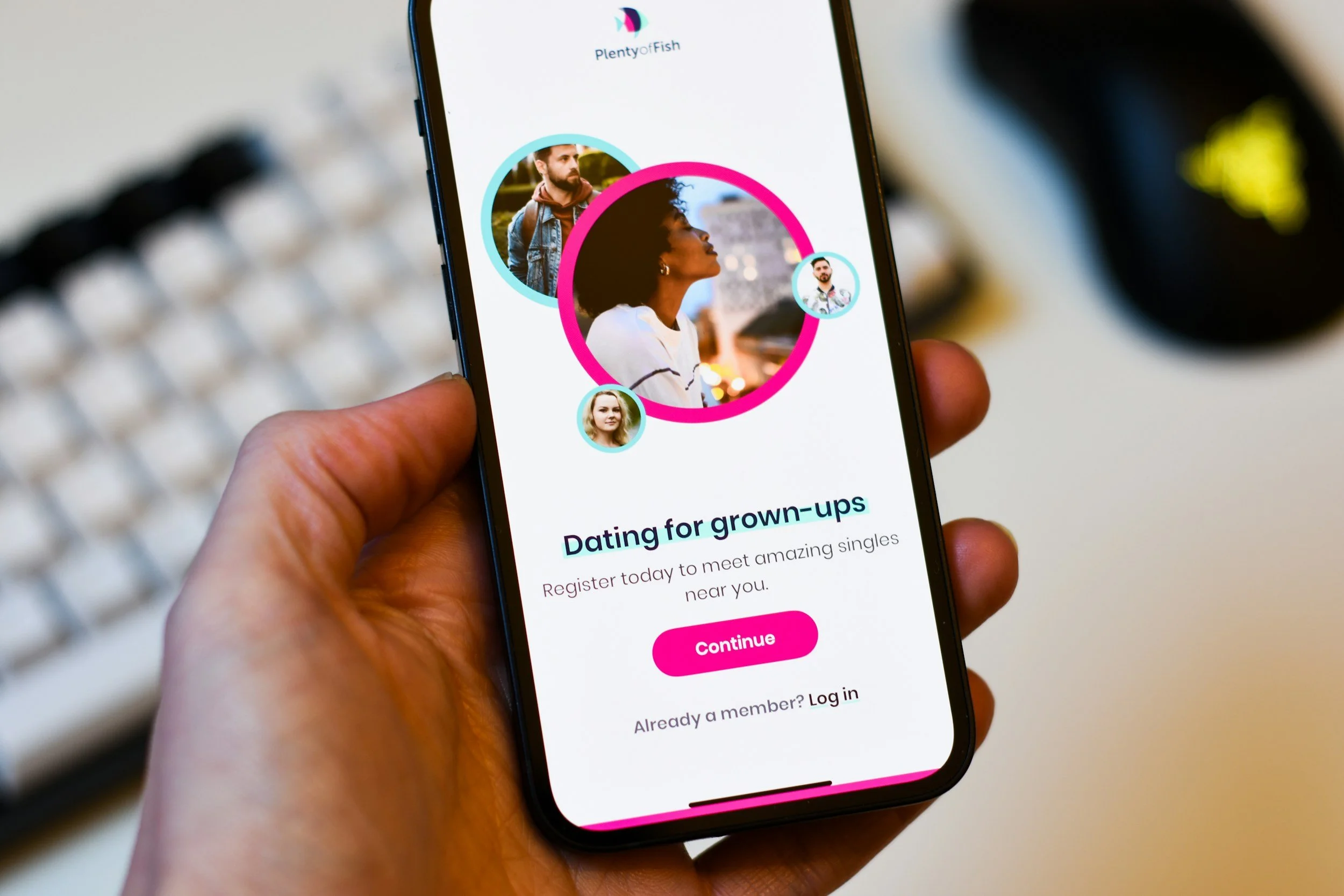
Algorithmic Attraction: How Dating App Algorithms Quietly Reshape Modern Love
Most people believe they choose their romantic partners.
Increasingly, software chooses the pool from which those choices are made.
For most of human history, attraction was a messy, inefficient process governed by geography and chance. People met through friends, neighborhoods, workplaces, churches, and the occasional bold acquaintance willing to say, “You two should meet.”
Romance depended on proximity.
Now it depends on ranking systems.
In my work with couples, I increasingly see relationships that began not through shared communities but through recommendation engines—software designed to predict who might interest us, who might respond, and who might keep us swiping.
If this sounds familiar, you are not alone. Millions of thoughtful people are beginning to notice that modern dating feels strangely different from the way relationships once formed.
Understanding why can change how we approach intimacy in a digital age.

Tattoos, Confidence, and the Psychology of the Witnessed Body
The modern body is curated with extraordinary care.
We decorate it.
We sculpt it.
We photograph it.
We modify it.
Tattoos, cosmetic procedures, fitness culture, skincare rituals, carefully chosen clothing—these have become ordinary tools in the project of shaping how we appear to the world.
And in many cases, these efforts genuinely improve how people feel about themselves.
But intimacy has a strange habit of ignoring all that work.
Because the body that appears in public is not the same body that appears in the bedroom.
A recent study published in Critical Public Health illustrates this paradox beautifully.

What a Massive Global Study Found About Forgiveness and Well-Being
Researchers analyzing data from 207,919 participants across 23 countries examined whether people who generally forgive others experience better well-being over time.
The findings were published in npj Mental Health Research as part of the Global Flourishing Study.
The researchers measured dispositional forgivingness, meaning a person’s general tendency to forgive across situations.
Participants were surveyed twice, roughly one year apart. Researchers then examined 56 indicators of human flourishing, including:
• psychological well-being
• psychological distress
• social relationships
• social participation
• character and prosocial behavior
• physical health
• socioeconomic stability
The results showed a consistent pattern.

Weaponized Attachment: What My True-Crime Addiction Finally Taught Me About Abusive Relationships
Here is a confession I suspect many otherwise respectable adults share.
I watch a great deal of true-crime television.
Not because I enjoy violence.
Not because I admire criminals.
But because those stories circle around a question that therapists hear every week.
A terrible thing has happened.
Detectives reconstruct the relationship.
Neighbors shake their heads and say the line we now recognize as the national chorus of hindsight:
“They seemed like such a normal couple.”
Friends say:
“We never thought it would go that far.”
And the viewer—safe on the couch with a bowl of popcorn and a vague sense of moral superiority—asks the question that arrives sooner or later in nearly every episode.
Why didn’t the victim leave sooner?

Only Later Does Someone Mount a Plaque: Sitting in Hoagy Carmichael’s Stardust Booth
It was 1980 — the era of avocado appliances and durable optimism.
I was twenty-eight, a district manager for Magic Chef, traveling the Midwest with brochures that promised domestic transcendence at 350 degrees.
I was a New Englander by accent and temperament, dropped into Indiana like a saltine into gravy. I came from granite and sarcasm. The Midwest offered limestone and civility.
Bloomington that October was rain-soaked and earnest. A college town that believed in ideas the way other towns believed in weather.
That afternoon I had met with dealers who displayed our ovens in obedient rows, chrome handles gleaming like dental work.
We discussed margins as if the Republic depended on convection cooking.

What Really Happens at 3, 6, and 9 Months (Most Couples Miss This)
The 3-6-9 dating rule is one of the internet’s favorite relationship timelines.
Three months is the honeymoon.
Six months is evaluation.
Nine months is seriousness.
It’s clean. It’s memorable. It’s incomplete.
Because what actually happens at three, six, and nine months isn’t about time.
It’s about exposure.
Exposure of projection.
Exposure of pattern.
Exposure of structure.
And most couples don’t realize what’s being revealed until they’re already emotionally invested.
If you want the structured breakdown of the 3-6-9 rule itself, start with the original timeline guide here. What follows is what that timeline doesn’t explain.

Healed Scars Are Credentials: Why Strategic Oversharing Builds Trust and Status
Let’s begin by correcting the premise.
Most people are not afraid of oversharing.
They are afraid of losing position.
And in a world governed by Limbic Capitalism — where attention is currency and perception is leverage — self-disclosure feels like lowering the shield.
But here is the inversion:
Strategic disclosure does not lower status.
It reorganizes the hierarchy around you.
When done correctly, it increases both admiration and trust — the two currencies that govern pair bonding and leadership alike.
And here is the crucial distinction:
Vulnerability is not exposure.
Vulnerability is regulated transparency under voluntary control.
If it is not regulated, it is not vulnerability.
It is leakage.

The First Hard Question in a New Relationship (It’s Not About Chemistry)
Most partners begin a relationship by asking:
“Do they like me?”
“Is this going somewhere?”
“Are we compatible?”
These are trajectory questions.
They are not structural questions.
The first hard question in a new relationship is this:
Am I becoming more coherent here — or more fragmented?
That is the diagnostic.
Not chemistry.
Not attraction.
Not intensity.
Coherence.

Is Polyamory Right for You? A Psychological Capacity Checklist
There are three common mistakes therapists make with consensual non-monogamy (CNM).
They pathologize it.
They romanticize it.
Or they tiptoe around it.
None of those are clinical positions.
The task is not to decide whether polyamory is enlightened or regressive.
The task is to determine whether the partners attempting it possess the psychological capacity to metabolize its complexity.
Polyamory does not increase relational complexity.
It reveals it.
And revelation is rarely gentle.

The Politics of “Please Don’t Hurt Me”
We like to believe our political beliefs are principled.
That we reason our way into them.
That we compare arguments, weigh evidence, and arrive—earnestly—at a moral position.
Recent psychological research suggests something less flattering and far more useful.
Much of our political thinking appears to be organized around a simpler question:
Who might hurt me—and what would it cost to keep them from doing so?
Not rhetorically.
Not emotionally.
Physically. Socially. Economically.
The kinds of harm human beings have always organized themselves to avoid

We Are Over-Explained and Under-Moved
Something odd has happened to modern intimacy, and it didn’t announce itself politely.
We are the first generation expected to understand our inner lives exhaustively while they are happening.
In real time.
With footnotes.
We narrate our feelings as they arise.
We contextualize them historically.
We soften them preemptively so no one feels accused.
And we do all of this while trying to stay desirable, solvent, emotionally regulated, and morally correct.
It is an enormous amount of work.