Only Later Does Someone Mount a Plaque: Sitting in Hoagy Carmichael’s Stardust Booth
Wednesday, February 18, 2026.
It was 1981 — it was the eclipse of avocado appliances and durable refrigerators.
I was twenty-seven, a district manager for Magic Chef, traveling the Midwest with brochures that promised domestic transcendence at 350 degrees.
I was a New Englander by accent and temperament, dropped into Indiana like a saltine into gravy.
I came from granite and sarcasm. The Midwest offered limestone and civility.
Bloomington that October was rain-soaked and earnest. A college town that believed in ideas the way other towns believed in weather.
That afternoon I had met with dealers who displayed our ovens in obedient rows, chrome handles gleaming like dental work. We discussed profit margins as if the Republic depended on convection cooking.
At twenty-seven, I had imagined I would be doing something slightly more romantic with my life.
Perhaps writing. Perhaps teaching. Instead, I was explaining warranty coverage on self-cleaning ranges to men who owned sensible shoes.
By evening I was alone — which is the natural habitat of a district manager.
I ducked into a restaurant off Kirkwood Avenue.
The Corner Booth
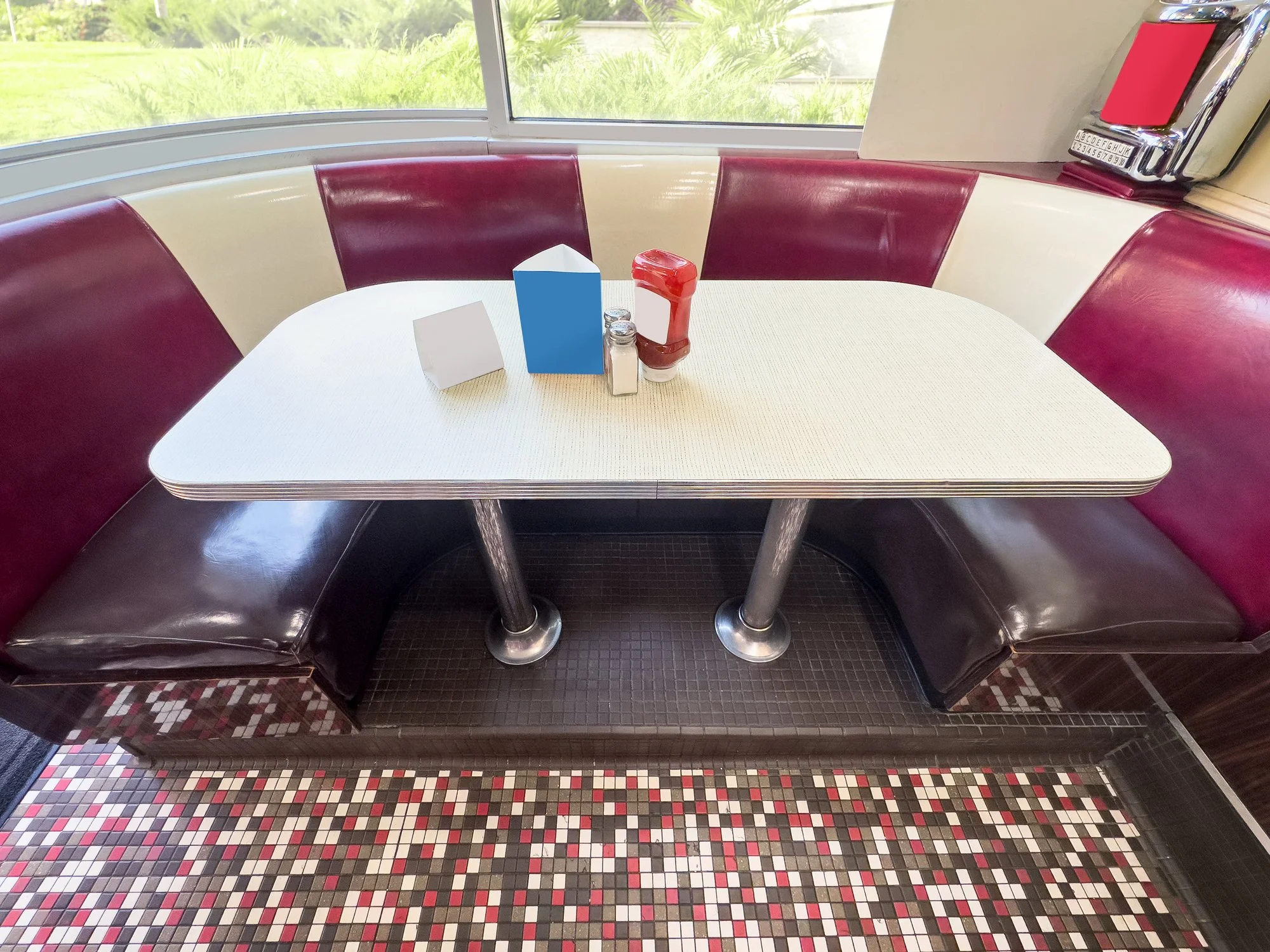
It was the sort of place where booths accepted you without curiosity. The vinyl had survived decades of elbows and declarations. I slid into a corner seat, ordered coffee, and tried to look like a man fluent in Indiana.
Above the table was a modest brass plaque:
In this booth Hoagy Carmichael wrote the song “Stardust.”
It was not dramatic. It did not glow. It simply announced the fact as one might note the location of the restroom.
Hoagy Carmichael. Bloomington’s native son. Composer of “Stardust,” that drifting anthem which makes even an ice machine sound reflective.
I stared at the plaque the way a salesman stares at an unexpectedly generous commission — skeptical first, then hopeful.
Where Hoagy Wrote “Stardust”
The song had floated through my New England childhood on Sunday mornings, sounding faintly European, as though it required cufflinks.
And here I was, sitting where it began.
I tried to picture him — young, uncertain, perhaps short on cash. Did he look at this same wall? Did someone interrupt him to ask if he wanted pie? Did he suspect that whatever melody was forming in his head would outlive the upholstery?
There is something deeply democratic about the Midwest. It lets you sit where a legend sat and charges you the same for coffee. No velvet rope. No docent. Just tufted red vinyl and gravity.
The waitress approached.
“You’re in Hoagy’s booth,” she said.
“So I’ve heard,” I replied, still speaking in my clipped New England consonants.
“People like to sit there.”
For that.
Stardust and Ordinary Furniture
Outside, students hurried through the rain, arguing about something that would feel less urgent by graduation. Inside, a man dismantled a slice of pie with surgical focus. The world continued without consulting the plaque.
“Stardust” is not about achievement. It is about memory — how love dissolves but does not disappear. It lingers. It becomes atmospheric.
At twenty-seven, I understood something about longing. Not dramatic longing. Just the mild, persistent sense that life might be happening slightly elsewhere.
Perhaps Hoagy had felt that too.
Perhaps he left the booth without knowing he had written something permanent. Perhaps he worried about paying the rent. He was also 27 when he earned his plaque.
There is comfort in knowing something enduring began in a booth that smelled faintly of onions. It suggests immortality does not require marble. Sometimes it only requires a corner booth.
Leaving the Booth
I finished my coffee. No melody descended. The ovens would still need selling in the morning.
But for a moment I felt less like a man passing through and more like a minor character in a story that did not revolve around him — which was oddly reassuring.
I slid out carefully, as if not to disturb any remaining history lurking in the vinyl.
Outside, the rain had softened. Bloomington glistened under streetlights that believed in the future.
I drove back to my hotel in my new K car. It hummed with responsible ambition.
Somewhere between the restaurant and I-41, the opening phrase of “Stardust” drifted into my head — not the whole song, just enough to suggest something had once happened here.
A life can feel entirely ordinary while it is being lived.
Only later does someone mount a plaque.
You can still stand where Hoagy Carmichael once sat.
You can still read the historical marker in Bloomington, Indiana.
You can still order food in the building that once housed the Book Nook, that earnest collegiate habitat where the melody to Stardust drifted into existence in 1927 while Carmichael was technically studying law.
But the booth?
The booth is gone.
Time, like Renovation, Prefers Laminate.
The original soda fountain is no longer a soda fountain.
The Book Nook yielded, as such places do, to subsequent businesses and updated interiors. Today the building at 114 South Indiana Avenue houses a restaurant with lighting better suited to wings than to reverie. The state historical marker outside does the commemorative heavy lifting.
You can touch the brick. You can photograph the plaque. You can sit somewhere in the same footprint and order coffee.
What you cannot do is what I did in 1981.
You can no longer slide your tush into the exact vinyl cradle that once held a distracted law student hearing a gorgeous, haunting melody he did not yet imagine would outlive him.
And perhaps that is correct.
Bloomington, to its credit, has resisted turning the site into a velvet-roped shrine.
There is no docent whispering, “This is where genius occurred.”
There is just a marker, understated as a Midwestern autumn, stating the fact and trusting you to supply the awe.
Final thoughts
That restraint feels right.
Because “Stardust” was not born in a cathedral. It was born in a booth.
And booths are, by definition, temporary.
They hold elbows, pie, declarations, and occasionally something transcendent. Then they are reupholstered.
If you go today, you will see continuity, not preservation.
A building that remembers without dramatizing itself. A town that lets legend sit at the same table as lunch.
The red tufted vinyl is gone.
But the melody remains. Along with the memory of love’s refrain.
Be Well, Stay Kind, and Godspeed.