

Welcome to my Blog
Most people don’t arrive here because something dramatic has happened.
They arrive because something feels… different.
The relationship still works. Conversations still happen. Life continues.
But something important is no longer organizing it the way it used to.
This space is where I write about that shift.
Not just what breaks relationships—but what quietly changes them:
how desire adapts.
how attention moves.
how meaning erodes or deepens over time.
These patterns are not random.
They tend to unfold in a predictable sequence.
If you’re here, you’re likely in one of those moments:
trying to understand what changed.
trying to decide whether it matters.
trying to figure out what to do next.
Start anywhere.
But if something here feels familiar, don’t treat it as abstract.
It usually isn’t.
Where to Begin
If you’re not sure what you’re looking for, these are a few good entry points:
Marriage Is Still Chosen — Even by Those Who Once Stood Outside It.
Epistemic Safety: What It Is and Why It Matters in Relationships.
The Relationship Consequences of Living in a Permanent News Cycle.
The Two Types of People Narcissists Avoid (And Why You Might Be One of Them).
When Narcissists Grieve: Why Their Mourning Looks Cold, Delayed, or Self-Centered
The 3-6-9 Dating Rule: Why Most Relationships Change at Month 3, 6, and 9.
The First Listener Shift: A Precise Relationship Diagnostic Most Couples Miss.
Why Curiosity Is Sacred in Relationships (And What Happens When It Disappears).
If You’re Looking for More Than Insight
Understanding is useful.
But at a certain point, most couples realize they can explain their relationship clearly—and still not change it.
That’s where focused work becomes effective.
I offer structured, high-impact couples intensives designed to produce meaningful movement in a compressed period of time.
Before We Decide Anything
A brief consultation helps determine:
whether this is what you’re dealing with.
whether this format fits.
and whether we should move forward.
Get a Clear Read on Your Relationship
Take your time reading.
But if something here lands in a way that feels specific—pay attention to that.
That’s usually where this work begins.
Continue Exploring
If you prefer to browse more broadly, you can explore posts by topic below.
But most people don’t find what they need by browsing.
They find it when something they read feels uncomfortably accurate.
Be Well, Stay Kind, and Godspeed.
~ Daniel
- Attachment Issues
- Coronavirus
- Couples Therapy
- Extramarital Affairs
- Family Life and Parenting
- How to Fight Fair
- Inlaws and Extended Families
- Intercultural Relationships
- Marriage and Mental Health
- Married Life & Intimate Relationships
- Neurodiverse Couples
- Separation & Divorce
- Signs of Trouble
- Social Media and Relationships
- What Happy Couples Know

You Don’t Owe Anyone Emotional Transparency
There is a quiet pressure in modern relationships to explain yourself immediately.
Not just your decisions—but your feelings about your decisions.
Not eventually. Now.
A pause gets interpreted as distance.
“I don’t know yet” sounds evasive.
Privacy reads as withholding.
Opacity, we’re told, is a relational failure.
But this assumption—that emotional transparency is always virtuous, always necessary, always loving—is not only wrong.
It is destabilizing.

We’re All Bozos on this Bus
There is a fantasy most of us quietly carry that other people are doing life on purpose.
That they selected their temperament, their childhood, their nervous system, their coping style.
That somewhere, at the beginning, there was a menu.
There wasn’t.
We didn’t choose the bus.
We didn’t choose the route.
We didn’t choose who sat next to us, or who taught us how to sit at all.
We just boarded—crying, confused, half-asleep—and have been squirming in our seats ever since, waiting for the ride to end.
This is not pessimism.
This is realism with its sleeves rolled up.

Why Monks Walk—to the Desert, to Washington, and Back Into the Heart of Marriage
A group of Buddhist monks is walking across the United States toward Washington, D.C., to promote peace. They started in Texas in late October.
They are now moving through the Southeast. Two of them were injured when a truck struck their escort vehicle. They kept walking.
This detail matters. Not because it’s dramatic—but because it clarifies intent.
If this were a stunt, it would have ended at the hospital. If it were branding, it would have paused for optics. Instead, the walk continued.
That’s the point.
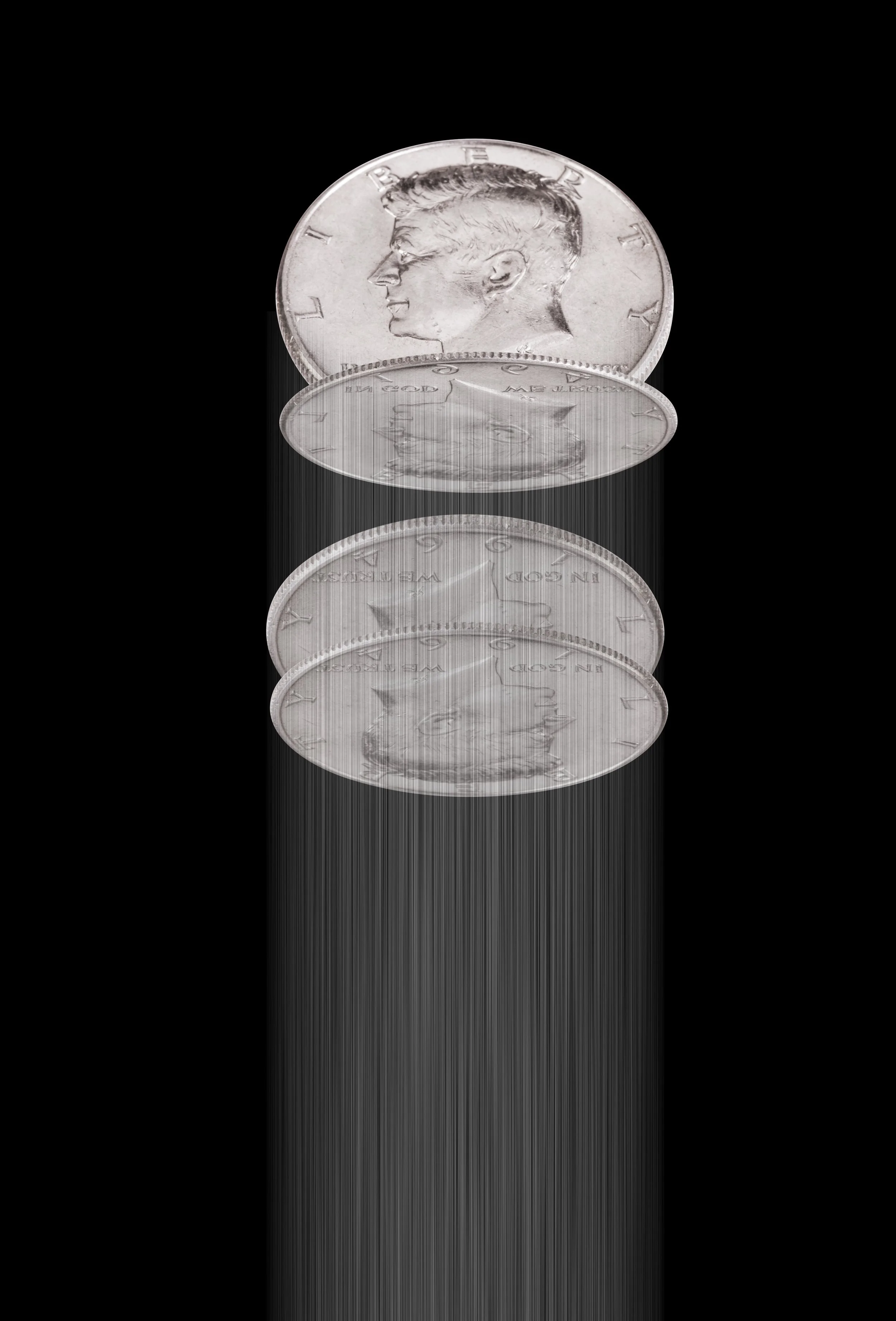
Tatiana Schlossberg and the Inheritance of Seriousness
There are people who inherit money, people who inherit power, and people who inherit expectations.
Tatiana Schlossberg inherited the last one, which is by far the most exhausting.
She is the granddaughter of John F. Kennedy.
This is the kind of fact that never stops being true and never stops being unhelpful. It follows you into rooms. It sits beside you at dinner. It whispers to editors and readers alike: Yes, but is she serious?
What Schlossberg did—unfashionably—was answer that question by becoming boring in the most honorable way possible.
She became a reporter.
Not a memoirist of dynastic pain.
Not a brand ambassador for inherited melancholy.
Not a performative conscience with a newsletter and a speaking tour.
A reporter. The kind who reads studies, files stories, and writes sentences that do not ask to be admired.
This is rarer than it sounds.

Emotionally Competent but Romantically Unavailable: a Modern Relationship Pattern Hiding in Plain Sight
Emotionally competent but romantically unavailable describes a person who can identify feelings, reflect insightfully, communicate calmly, and validate others—yet reliably withdraws, delays, or reframes commitment when emotional dependence or long-term mutual obligation becomes unavoidable.
This pattern persists not because people lack insight, but because insight has become a substitute for intimacy—especially when intimacy would require behavioral change under pressure.
Why is this pattern suddenly everywhere?
This is not a personality epidemic. It is an emerging cultural adaptation.
Over the last two decades, American relationship culture has increasingly rewarded self-awareness, emotional vocabulary, regulation, and composure.
What it has quietly penalized—particularly among high-achieving adults—is relational exposure.

Relational Permeability: Why Some Relationships Can Adapt—and Others Quietly Exhaust the People Inside Them
For years, relationship culture focused on insight.
Understand your attachment style.
Name your triggers.
Communicate clearly.
Do your work.
That era is ending—not because insight was wrong, but because it was incomplete.
The defining relational problem now is not ignorance.
It is load.
And the concept that explains why some relationships bend under load while others harden is permeability.

What Is Relational Permeability in an Intimate Dyad?
Most relationship problems are explained as failures of communication, empathy, or commitment.
That explanation is incomplete.
A more accurate diagnosis is often this: the relationship has lost permeability.
Relational permeability describes whether influence can still move between two people without triggering defensiveness, shutdown, or collapse.
When permeability is high, small inputs create meaningful change. When permeability is low, even sincere efforts bounce off the system.
T
his concept explains why insight often fails, why therapy stalls, and why couples can understand each other perfectly and still remain stuck.

Dyad vs. Individual Insight
Ever wonder why understanding yourself doesn’t automatically repair your relationship?
Most modern couples arrive in therapy highly informed.
They know their attachment styles.
They can name their triggers.
They understand where their patterns came from.
This is not a failure. It’s progress.
But it is also where many relationships quietly stall.
What individual insight actually does well:
Individual insight operates at the level of intrapersonal clarity. It helps a person:
Make sense of their emotional reactions.
Reduce shame by providing coherent narratives.
Interrupt self-blame or character attacks.
Feel calmer, smarter, and more compassionate.
Insight is emotionally analgesic. It lowers pain.
That is why it spreads so well in books, podcasts, and social media.
And why couples often say, “We understand each other so much better now… but nothing is changing.”
They are not wrong.

Dyadic Repair: How Relationships Actually Recover (When They Do)
Most relationship advice treats repair as an emotional performance.
Say the right words.
Show sufficient remorse.
Demonstrate growth.
Dyadic repair is none of that.
Dyadic repair is the restoration of responsiveness between two nervous systems after rupture—before distance hardens into pattern.
This is not moral work.
It is systems work.

Dyadic Failure: Why Insight Alone Doesn’t Heal Relationships
Many couples arrive in therapy articulate, reflective, and well-read—and still stuck.
They understand their attachment styles.
They can name their triggers.
They agree on what should happen.
And yet, something keeps breaking down between them.
This is not a motivation problem.
It is not resistance.
It is not a lack of skills.
It is a failure to treat the dyad as the primary system of change.

When Romance Stops Organizing Relationships How Intimacy Reorganizes Under Economic, Cultural, and Psychological Constraint
When romance stops organizing relationships, intimacy does not disappear—it reorganizes.
Desire becomes optional rather than central, and partnerships are increasingly structured around stability, coordination, and shared survival rather than romantic intensity.
In relationship psychology, this shift reflects a move from romantic primacy to structural partnership: a reordering of what relationships are expected to provide when economic, cultural, and emotional systems no longer support romance as the primary load‑bearing beam. (Which it turns out romance was never especially good at carrying alone.)
For much of modern history, romance has been treated as the moral engine of adult relationships.
Love was expected to justify commitment, sexual exclusivity was meant to stabilize it, and marriage served as ceremonial proof that desire had finally learned to behave itself.
That model worked best under conditions of abundance—stable jobs, affordable housing, predictable life trajectories, and a shared belief that adulthood came with a floor, not just a ceiling.
Those conditions are no longer reliably present in 2026.
What we are witnessing is not the end of intimacy, but a structural reorganization of it.

What is a Dyad? A Definition for Relationships, Therapy, and Anyone Tired of Fixing the Wrong Thing
What Is a Dyad?
A dyad is the smallest living relationship system: two nervous systems in ongoing emotional contact, shaping each other over time.
That is the definition. Everything else is commentary.
If your relationship feels over-analyzed and under-lived, you may be working on the wrong thing.
I work with couples who want to understand—and repair—the system between them, not assign blame or collect insight.
If that framing feels relieving rather than demanding, this work may be a fit.
Most relationship advice fails for a simple reason: it works on the wrong unit.
It focuses on individuals when the real action is happening somewhere else.
That somewhere else is the dyad.
If your relationship feels over-analyzed and under-lived, the problem may not be communication, attachment style, or emotional intelligence.
It may be that you are treating a dyad like two separate self-improvement projects.