Tatiana Schlossberg and the Inheritance of Seriousness
Tuesday, December 30, 2025.
There are people who inherit money, people who inherit power, and people who inherit expectations. Tatiana Schlossberg inherited the last one, which is by far the most exhausting.
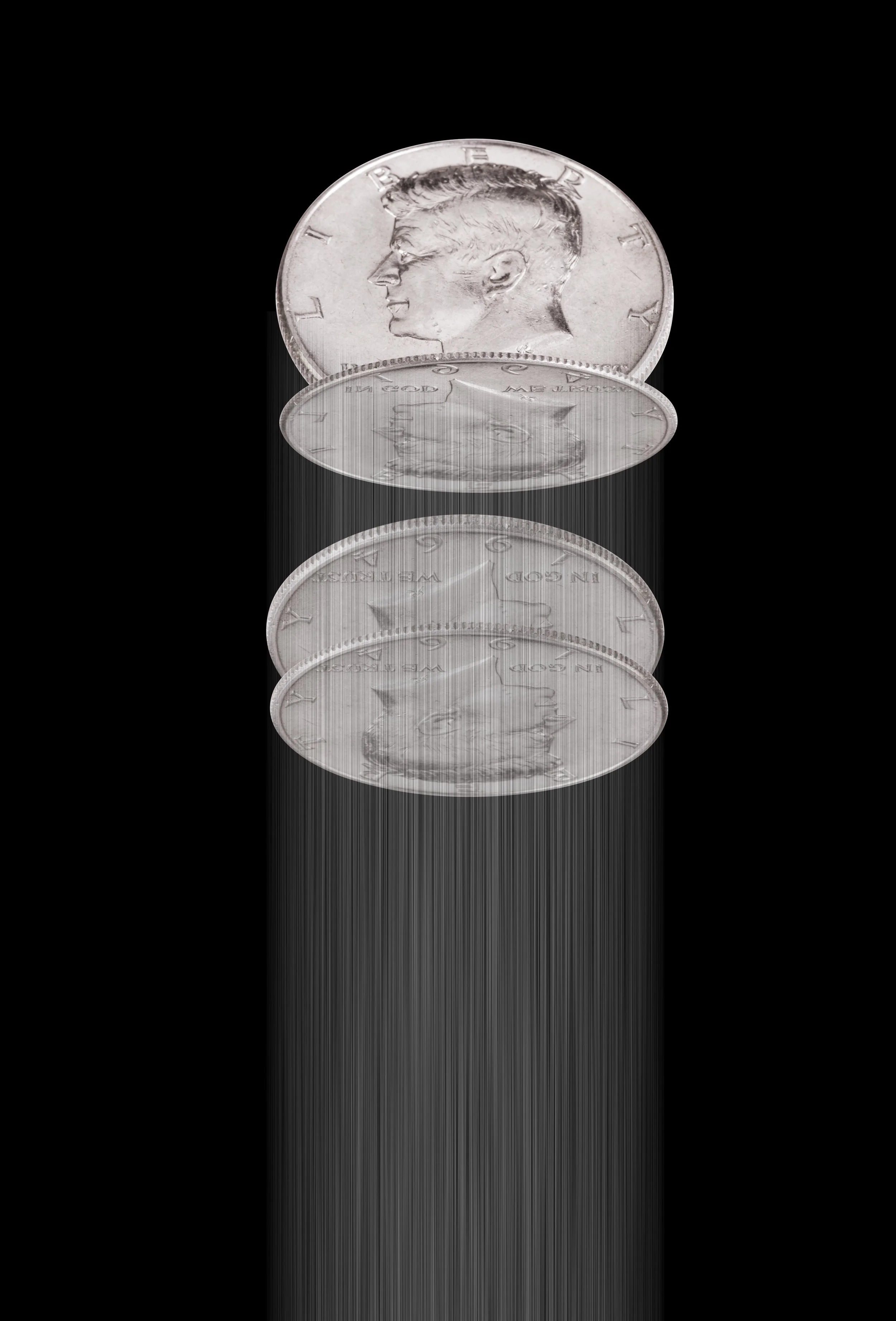
She is the granddaughter of John F. Kennedy.
This is the kind of fact that never stops being true and never stops being unhelpful. It follows you into rooms. It sits beside you at dinner. It whispers to editors and readers alike: Yes, but is she serious?
What Schlossberg did—unfashionably—was answer that question by becoming boring in the most honorable way possible.
She became a reporter.
Not a memoirist of dynastic pain.
Not a brand ambassador for inherited melancholy.
Not a performative conscience with a newsletter and a speaking tour.
A reporter. The kind who reads studies, files stories, and writes sentences that do not ask to be admired.
This is rarer than it sounds.
The Unsexy Choice
In an era when climate writing oscillates between apocalyptic performance art and lifestyle moralism—here’s how to feel bad about your groceries—Schlossberg chose something deeply out of style: structural analysis.
Her work at The New York Times treats climate change not as a personal virtue failure, but as systems interacting badly with human psychology. Consumption. Incentives. Denial. The ways people continue living exactly as before, not because they are evil, but because they are human.
This is not content that goes viral.
It does not flatter the reader.
It does not offer redemption through bamboo toothbrushes.
It does something more subversive: it refuses to pretend that awareness automatically produces change.
The Problem With Being Earnest in Public
Schlossberg’s book Inconspicuous Consumption landed awkwardly in a culture that prefers its moral messaging either glamorous or ironic. The book argued—politely, relentlessly—that much of environmental harm comes not from cartoon villains, but from ordinary, comfortable lives.
This is a message people claim to want—and then punish.
Because it implicates the reader without providing a flattering exit ramp.
The problem with earnestness, especially when delivered by someone with pedigree, is that people assume it must be performative. Surely this is brand management. Surely this is absolution theater.
But Schlossberg’s writing is almost aggressively untheatrical. She does not write like someone auditioning for sainthood. She writes like someone who understands that moral clarity without structural change is just another form of narcissism.
Nepotism Is a Lazy Critique
It is tempting to reduce Schlossberg to her lineage. It is also intellectually lazy.
Yes, she had access. So do most people whose writing you already trust. The more interesting question is what she did with it.
She did not trade on intimacy with power.
She did not write insider gossip disguised as critique.
She did not monetize proximity.
She chose a beat—climate—that is famously thankless, politically fraught, and emotionally unrewarding. She stayed within institutional journalism rather than fleeing to the warmer waters of personal essay and personal brand.
This is not the behavior of someone trying to cash in on a last name.
It is the behavior of someone trying to disappear into the work.
The Discipline of Not Centering Yourself
There is something almost monastic about Schlossberg’s refusal to center her own feelings. Contemporary nonfiction rewards confession. Trauma performs well. Interior struggle is treated as proof of authenticity.
Schlossberg resists this.
Her writing implies a quieter ethic: that the story is not about how she feels about climate collapse, but about how systems persist despite everyone’s feelings.
This restraint reads, to some audiences, as coldness.
To others, it reads as trust in the reader’s intelligence.
It is also a form of moral adulthood that has largely gone missing online.
Motherhood Without Performance
There is another dimension to Schlossberg’s seriousness that rarely earns cultural credit: her devotion as a mother.
She organized her life around responsibility rather than visibility. There was no maternal branding arc, no conversion of private care into public moral capital, no essays about the aesthetics of bedtime routines. She did not aestheticize motherhood or weaponize it as proof of virtue.
She simply did it.
Carefully. Deliberately.
Schlossberg was intensely present with her children—structured, attentive, unsentimental about sacrifice, serious about the daily work of raising other human beings. Not romantic about it. Not resentful either. Just committed.
When women devote themselves to care without turning that devotion into spectacle, culture often fails to notice. There is nothing to applaud. Nothing to envy. Nothing to consume.
Then Schlossberg died young—suddenly, before the work or the parenting arc could complete itself.
No final reinvention.
No long descent into eccentricity.
Just absence.
A Contrast in Time: Schlossberg and Bardot
This is where the contrast with Brigitte Bardot, who also recently passed away, sharpens.
Bardot lived long enough for culture to turn her refusal into a permanent public identity. She remained visible—unmanaged, provocative—because culture required her to. Her motherhood was famously fraught, distant, openly regretted. Over time, her life became a running argument about female desire, female anger, and female refusal.
Schlossberg’s life did not stretch long enough to be metabolized that way. She chose responsibility over performance and was removed from the story before culture could decide how to judge her.
Bardot lived long enough to be misunderstood forever.
Schlossberg did not live long enough to be misunderstood at scale.
That difference matters.
This essay is perhaps not so much about discernible virtue. It is about how culture metabolizes women differently depending on how long they remain visible.
We don’t know how to argue with women who burn brightly and destructively into their 90’s.
But we also do not know how to speak about women who build, sustain, parent, and then die at 35, long before their work is complete.
A Cultural Note
We live in a moment that distrusts seriousness unless it is wrapped in charm, irony, or rage.
Schlossberg offered none of these. She offered facts, synthesis, and an implicit challenge: If you understand this, what will you do with it?
No call to action.
No catharsis.
No absolution.
Just responsibility, sitting there, unadorned.
That may be why her work unsettles people. It refuses to let climate anxiety become a personality trait. It insists that the problem is not awareness, but behavior—and that behavior is governed by structures far larger than individual intention.
The discomfort this produces is not hers.
It belongs to us.
Final Thoughts
Tatiana Schlossberg represents a nearly extinct public figure: someone born into visibility who chose constraint; someone, like Marcus Aurelius, surrounded by myth but who opted for historic footnotes.
She did not ask to be liked.
She did not ask to be forgiven for her inheritance.
She did the work—professionally, maternally, ethically—and then disappeared into it.
In a culture addicted to spectacle, choosing seriousness—and disappearing into it, is a rare and wondrous thing. My condolences to her family.
Be Well. Stay Kind. And Godspeed.