

Welcome to my Blog
Most people don’t arrive here because something dramatic has happened.
They arrive because something feels… different.
The relationship still works. Conversations still happen. Life continues.
But something important is no longer organizing it the way it used to.
This space is where I write about that shift.
Not just what breaks relationships—but what quietly changes them:
how desire adapts.
how attention moves.
how meaning erodes or deepens over time.
These patterns are not random.
They tend to unfold in a predictable sequence.
If you’re here, you’re likely in one of those moments:
trying to understand what changed.
trying to decide whether it matters.
trying to figure out what to do next.
Start anywhere.
But if something here feels familiar, don’t treat it as abstract.
It usually isn’t.
Where to Begin
If you’re not sure what you’re looking for, these are a few good entry points:
Marriage Is Still Chosen — Even by Those Who Once Stood Outside It.
Epistemic Safety: What It Is and Why It Matters in Relationships.
The Relationship Consequences of Living in a Permanent News Cycle.
The Two Types of People Narcissists Avoid (And Why You Might Be One of Them).
When Narcissists Grieve: Why Their Mourning Looks Cold, Delayed, or Self-Centered
The 3-6-9 Dating Rule: Why Most Relationships Change at Month 3, 6, and 9.
The First Listener Shift: A Precise Relationship Diagnostic Most Couples Miss.
Why Curiosity Is Sacred in Relationships (And What Happens When It Disappears).
If You’re Looking for More Than Insight
Understanding is useful.
But at a certain point, most couples realize they can explain their relationship clearly—and still not change it.
That’s where focused work becomes effective.
I offer structured, high-impact couples intensives designed to produce meaningful movement in a compressed period of time.
Before We Decide Anything
A brief consultation helps determine:
whether this is what you’re dealing with.
whether this format fits.
and whether we should move forward.
Get a Clear Read on Your Relationship
Take your time reading.
But if something here lands in a way that feels specific—pay attention to that.
That’s usually where this work begins.
Continue Exploring
If you prefer to browse more broadly, you can explore posts by topic below.
But most people don’t find what they need by browsing.
They find it when something they read feels uncomfortably accurate.
Be Well, Stay Kind, and Godspeed.
~ Daniel
- Attachment Issues
- Coronavirus
- Couples Therapy
- Extramarital Affairs
- Family Life and Parenting
- How to Fight Fair
- Inlaws and Extended Families
- Intercultural Relationships
- Marriage and Mental Health
- Married Life & Intimate Relationships
- Neurodiverse Couples
- Separation & Divorce
- Signs of Trouble
- Social Media and Relationships
- What Happy Couples Know

When Marriage Starts Feeling Like Living With a Roommate
Every couples therapist eventually hears the same quiet sentence.
“We’re basically just roommates now.”
It is rarely said with anger. More often it is delivered with the calm confusion of someone who has discovered that the marriage is still intact, but the romance has quietly moved out.
Nothing dramatic happened.
No explosive fight.
No affair.
No catastrophic betrayal.
Instead, the relationship cooled.
Slowly. Quietly. Almost politely.
Two people who once watched each other with fascination eventually find themselves discussing grocery lists, orthodontist appointments, and whether anyone remembered to renew the car registration.
The marriage continues.
But something essential has changed.
The relationship is no longer organized around curiosity and attraction.
It is organized around running a life together.
The Epstein Class: When Wealth, Power, and Prestige Begin Protecting One Another
Every era eventually produces a social class that lives slightly above gravity.
Not above morality, exactly. Above consequences.
In the medieval world it was the hereditary aristocracy. In the Gilded Age it was the railroad barons. In the twentieth century it was the clubby overlap of diplomats, intelligence officers, financiers, and old political families.
In the twenty-first century, we might as well call it the Epstein Class.
The name comes, inevitably, from Jeffrey Epstein.
Not because he invented the phenomenon, but because his life revealed it with unusual clarity.
Epstein was less an anomaly than a diagnostic instrument. For decades he moved comfortably among billionaires, politicians, royalty, scientists, and cultural institutions while engaging in behavior that would have ended an ordinary person’s career—or freedom—almost immediately.
The truly unsettling revelation was not simply Epstein himself.
It was how normal his presence appeared inside elite circles.
That is the defining feature of the Epstein Class: a social ecosystem in which wealth, reputation, and influence begin quietly protecting one another.

Do You Have to Love Yourself Before You Can Love Someone Else? What the Research Actually Says
For years, relationship advice columns have repeated a sentence that sounds both wise and slightly suspicious:
You must love yourself before you can love someone else.
The idea appears everywhere—therapy language, social media, inspirational posters, even wedding speeches.
It feels intuitively correct.
But intuition and evidence are not the same thing.
A group of psychologists in Germany recently decided to examine whether the cliché survives contact with data.
Their findings suggest that the popular belief contains a grain of truth—but not quite the one people usually assume.

When Silence Becomes the Argument: Why Couples Stop Talking and How Relationships Drift Apart
In the beginning, most couples argue with words.
They argue about dishes, money, children, vacations, in-laws, or the thermostat. Voices rise, feelings get bruised, someone retreats to the bedroom or the garage for a while, and eventually the storm passes.
Words—even angry ones—are still a form of engagement.
They signal that both people still believe the relationship can be influenced.
But in some relationships, something else eventually appears.
Silence.
Not the ordinary quiet that follows a disagreement. Not the pause two people take to cool off.
Something colder.
A silence that stretches across hours, then days, then sometimes weeks.
At first glance it looks like peace.
But it isn’t peace.
It is simply a different kind of argument.

Why Admiration Matters More Than Love in Long-Term Relationships
Most people believe love is the force that keeps relationships alive.
Love begins the relationship.
Love inspires commitment.
Love explains why two people choose each other in the first place.
But if you spend enough time observing long-term relationships—five years, ten years, thirty years—you begin to notice something surprising.
The couples who remain emotionally connected are not always the ones who love each other the most.
They are the ones who still admire each other.
Love creates attachment.
Admiration creates respectful regard.
And without respect, even deep affection eventually becomes unstable.

Do Narcissists Feel Regret? How Narcissists Experience Regret (And Why It Rarely Looks Like Remorse)
There is a moment many people reach after a difficult breakup. It usually happens late at night.
The relationship is over. The conversations are finished. The explanations have run out. Yet one question refuses to leave.
So they do what modern people do when a human answer is no longer available. They open a browser and type a question that sounds less like curiosity and more like a quiet plea:
Do narcissists ever feel regret?
The short answer is yes.
But if you expect regret to appear as tenderness, accountability, or a sincere apology, you may be disappointed in a very particular way.
Narcissistic regret often exists. It simply tends to organize itself around status, control, and consequence rather than around the emotional reality of another person.
Put simply:
The feeling may be real, but it is often directed at the self rather than toward the person who was hurt.

Why Passion Fades in Marriage: The Ancient Marriage Rule Modern Couples Forgot
Modern marriage operates on a simple assumption: intimacy should always be available.
If two people love each other, live together, and share their lives, why would affection or physical closeness ever need to pause?
And yet many long-term couples eventually discover a problem hiding inside this assumption.
Constant availability dulls desire.
Couples rarely lose attraction because they stop loving each other. They lose attraction because familiarity becomes total. The person who once felt mysterious eventually becomes the person who knows where the spare batteries are kept.
In my work with couples, I often describe what sustains desire in long relationships as erotic rhythm—the structured alternation between closeness and distance that prevents intimacy from dissolving into routine.
Curiously, an ancient religious system anticipated this problem long before modern psychology had language for it.
Traditional Jewish law quietly built distance directly into marriage itself.

The Five Stages of Relationship Breakdown: How Couples Slowly Stop Understanding Each Other
There is a popular fantasy about how relationships end.
The fantasy is that something dramatic happens—an affair, a screaming match, a betrayal so theatrical it practically demands a soundtrack.
In reality, most relationships end the way old houses collapse: quietly, after years of structural stress no one thought to examine closely.
Most relationships do not end because of betrayal.
They end because two people gradually stop believing the other person’s mind makes sense.
Couples rarely implode because of one terrible moment.
They collapse because the interpretive infrastructure of the relationship slowly fails.
Two life partners who once understood each other begin encountering each other as if speaking slightly incompatible dialects of the same language.
The Five-Stage Model of Relationship Breakdown describes how rising life complexity gradually overwhelms the interpretive systems that allow two partners to understand each other.

The Emotional Cost of Being a Power Couple
There is a particular kind of marriage that receives a great deal of admiration from other people.
Friends admire their careers. Colleagues admire their apartment. Dinner guests admire the way they seem to glide through life with impressive competence. They travel well. They host beautifully. They appear to know exactly what they are doing.
The phrase people use is power couple.
It sounds flattering. It sounds modern. It suggests two impressive people who have figured out not only their careers but also their lives.
Everyone assumes the relationship must be exceptional.
Sometimes that assumption is correct.
But therapists who work with highly accomplished couples see another pattern often enough to mention it out loud:
Two very successful people can build an extraordinary life together while slowly becoming less emotionally known to one another.
When Polyamory Seeks Legal Protection: The Cultural Politics of Nontraditional Families
Every era invents its own experiment in domestic life.
The Victorians built quiet marriages inside heavy drawing rooms and hoped no one noticed how bored everyone was.
The 1970s experimented with communes, shared houses, and the vague conviction that everyone could simply love everyone else if the music were good enough.
The early twenty-first century appears to have settled on a new structure:
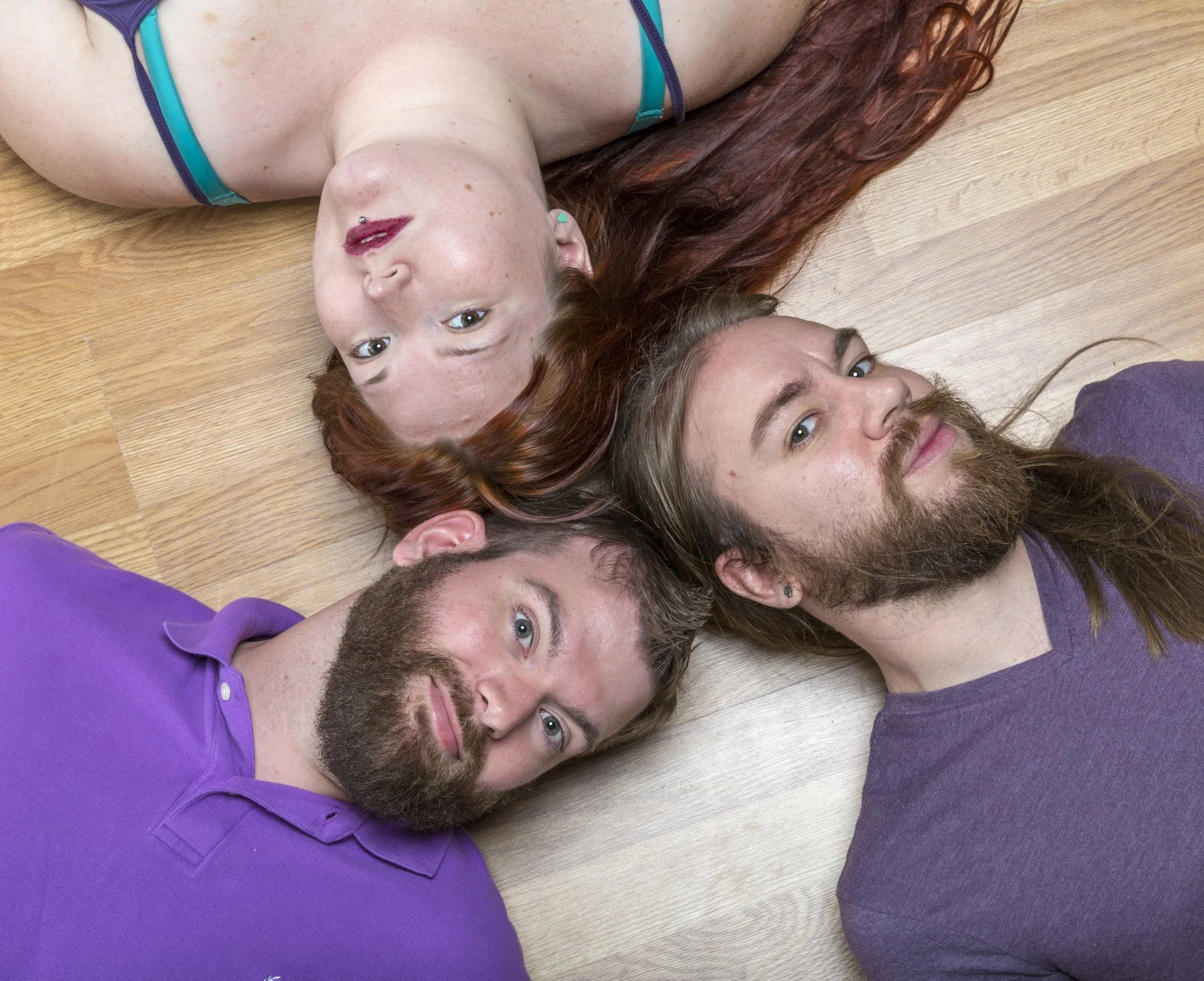
the legally protected polycule.
Recent reporting from the Pacific Northwest suggests that cities like Seattle, Portland, and Olympia are considering ordinances that would extend nondiscrimination protections to people living in polyamorous or otherwise “nontraditional” household arrangements.

The Psychology of Ashley Madison: What Scientists Learned About Online Infidelity
When the extramarital dating site Ashley Madison launched in 2002, many observers dismissed it as little more than a provocative marketing stunt.
Its slogan was blunt.
Life is short. Have an affair.
The platform openly marketed itself to married people seeking romantic or sexual relationships outside their primary partnerships.
Critics argued that the company had simply built a business model on broken marriages.
For years the debate remained largely theoretical.
Then, in 2015, the entire experiment suddenly became visible.
A group of hackers calling themselves The Impact Team breached the company’s servers and released the personal data of approximately 37 million users.
Names, billing addresses, search histories, and private messages appeared online.

Why Smart People Betray Their Partners (And Why They Think They Won’t Get Caught)
When someone discovers that their life partner has been unfaithful, the explanation often feels straightforward.
Weakness.
Impulse.
Poor judgment.
But many affairs involve individuals who are not impulsive at all.
They are disciplined, thoughtful, and professionally accomplished people who spend much of their lives analyzing consequences and solving complex problems.
In these cases the betrayal rarely begins with recklessness.
It begins with reasoning.
And the reasoning can be remarkably persuasive—especially to the person constructing it.
The psychology behind these contradictions appears not only in private relationships but also in the hidden lives of admired public figures, a pattern explored more fully in my essay on why powerful people live double lives.