
Welcome to my Blog
Thank you for stopping by. This space is where I share research, reflections, and practical tools drawn from my experience as a marriage and family therapist with an international practice.
I write about what happens to desire, attachment, and meaning once the early myths stop working.
Are you a couple looking for clarity? A professional curious about the science of relationships? Or simply someone interested in how love and resilience work? I'm glad you've found your way here. I can help with that. I'm accepting new clients, and this blog is for the benefit of all my gentle readers.
Each post is written with one goal in mind: to help you better understand yourself, your partner, and the hidden dynamics that shape human connection
Grab a coffee (or a notebook), explore what speaks to you, and take what's useful back into your life and relationships.
And if a post sparks a question, or makes you realize you could use more support, l'd love to hear from you. Let's explore the scope of work you'd like to do together.
Be Well, Stay Kind, and Godspeed.
~ Daniel
P.S.
Feel free to explore the categories below to find past blog posts on the topics that matter most to you. If you're curious about attachment, navigating conflict, or strengthening intimacy, these archives are a great way to dive deeper into the research and insights that l've been sharing for years.
- Attachment Issues
- Coronavirus
- Couples Therapy
- Extramarital Affairs
- Family Life and Parenting
- How to Fight Fair
- Inlaws and Extended Families
- Intercultural Relationships
- Marriage and Mental Health
- Married Life & Intimate Relationships
- Neurodiverse Couples
- Separation & Divorce
- Signs of Trouble
- Social Media and Relationships
- What Happy Couples Know


Why Narcissistic Students Don’t See Professor Flirting as a Big Deal
There are few things more awkward than realizing—mid-sentence—that what you thought was intellectual rapport might, in fact, be flirting.
There are even fewer things more awkward than discovering that some students are very comfortable with that ambiguity.
According to new research, those students are disproportionately narcissistic. I’m shocked.
The study’s headline finding is deceptively mild: narcissistic students see student-professor flirting as less morally troubling than everyone else.
But underneath that tidy sentence is a much messier psychological truth about entitlement, perception, and the strange theater of higher education.
This is not a story about professors behaving badly. Nor is it about campuses quietly devolving into soap operas.
It’s about how personality structure shapes what people think is happening—and how acceptable they find it when it does.
And yes, it’s about narcissism doing what narcissism always does: bending reality slightly toward the self.

When “Realism” Breaks Epistemic Safety in a Relationship
There is a particular kind of person who calls themselves a realist as if it were a credential.
Not a preference.
Not a temperament.
A role.
They are not trying to be cruel. That matters.
They are trying to be correct.
And more importantly, they are trying to be safe.
The problem is not realism itself.
The problem begins when realism becomes the only sanctioned way of knowing.
That is how epistemic safety erodes—quietly, relationally, and often without anyone meaning for it to happen.

Signs Your Relationship Is Epistemically Unsafe (And Why Insight Feels Lonely)
Most relationships don’t fail because people don’t communicate.
They fail because reality itself becomes negotiable.
You can talk endlessly and still feel erased.
You can understand everything and feel more alone than ever.
That’s not a communication problem.
That’s an epistemic one.

Why Depression and Anxiety Cause Inflammation in Sexual Minority Adults
Depression and anxiety do not stay in the mind.
In sexual minority adults, they reliably show up in the blood.
That is the finding this study makes difficult to ignore. Not loudly. Not polemically.
Just clearly enough to dismantle a very American fantasy—that emotional suffering is primarily psychological, and that the body is a passive bystander, waiting patiently for insight to arrive.
It isn’t.
When depression or anxiety intensifies in sexual minority adults, markers of systemic inflammation rise more sharply than they do in heterosexual adults.
The same symptoms. The same scales. A higher physiological cost.
This is not a story about fragility.
It is a story about exposure.
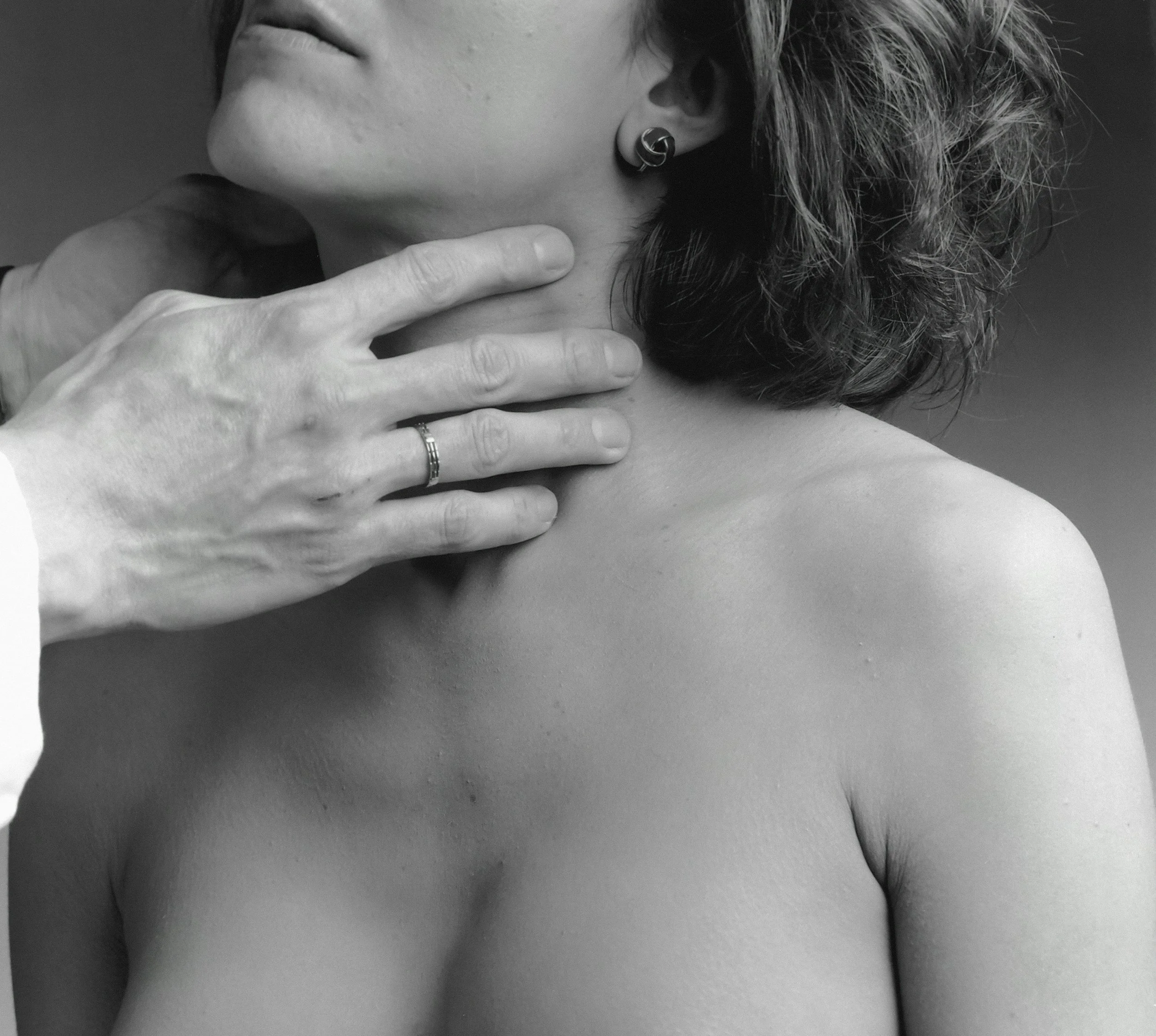
When Hormones Change How You Treat People: Hyperthyroidism and the Dark Side of Personality
Why happens when hormones change how you treat your life-partner?
Let’s start where most misunderstandings begin.
When people hear dark personality traits, they think character.
When clinicians hear hyperthyroidism, they think arousal.
Those two categories are not the same thing. But in everyday life—and often in therapy—they get collapsed into a single moral verdict: this is who you are.
New research published in Current Psychology suggests that collapse may be a mistake.
The study found that folks with hyperthyroidism reported higher levels of Machiavellianism, psychopathy, and sadism, with narcissism showing a weaker and less consistent pattern, compared to people with hypothyroidism or no thyroid disorder.
Not destiny.
Not diagnosis.
Association.
Handled carefully, association still tells us something important.

What an Untenable Relationship Really Is (And Why People Stay Anyway)
The word untenable is often used casually in relationship conversations. It shouldn’t be.
Here is the clinical definition I use:
Untenable relationship:
A relationship that cannot be sustained without ongoing self-betrayal, distortion of reality, or erosion of dignity.
In practical terms, a relationship becomes untenable when continuing it reliably causes psychological harm, regardless of intent, effort, or love.
This is not about how unhappy you feel.
It is about what continuation costs you.
An untenable relationship is not difficult.
It is structurally unsustainable.

Upskirting: Psychopathy, Voyeurism, and the Quiet Permission of Minimization
Upskirting is not a prank enabled by technology.
It is a sexual violation facilitated by it.
What this research clarifies—without moral inflation or rhetorical excess—is not merely who commits this act, but why it continues to function. Not technologically. Socially.
Upskirting persists not because it is misunderstood, but because it reliably attracts folks low in empathy and reliably encounters a culture prepared to minimize its meaning.
That pairing is not incidental. It is efficient.

How Childhood Adversity Ages Women’s Bodies—Decades Later
They tell us that childhood passes.
They do not tell us where it goes.
A new analysis shows that certain kinds of childhood hardship do not disappear so much as settle—quietly, chemically—into the body, where they reemerge decades later as accelerated biological aging in women.
Published in Psychoneuroendocrinology, the study demonstrates that early social disadvantage leaves a biological trace, unevenly distributed by sex and by racial or ethnic background.
This is not a study about memory or psychology.
It is a study about how inequality becomes cellular.

Narcissism Is Weirdly Consistent Across the World And That Should Make Us Less Moralistic—and More Precise
Narcissism is one of the most common traits couples weaponize against each other.
It shows up as diagnosis-by-insult (“You’re a narcissist”), as explanatory shorthand (“That’s just how narcissists are”), or as quiet despair (“Nothing ever lands with them”).
What it almost never shows up as is what it actually is: a strategy that once worked and may no longer be working.
A large cross-national study published in Self and Identity makes this harder to avoid.
Across 53 countries and nearly 46,000 participants, narcissism follows the same demographic contours with almost boring regularity.
Not just in Western nations. Not just in individualistic cultures. Everywhere.
Young people score higher.
Men score higher.
People who see themselves as higher in social status score higher.
This is not a culture-war finding.
It’s a pattern-recognition finding.
And it quietly dismantles several comforting stories we like to tell about who narcissists are and where they come from.

Vulnerable Narcissism Isn’t Vanity: How Attachment Insecurity Keeps Shame Contained
Vulnerable narcissism Isn’t Vanity. It’s a shame-management procedure.
Vulnerable narcissism isn’t the “I’m amazing” version of narcissism.
It’s the “I am one bad look away from evaporating” version.
And if you’ve been online for more than twelve minutes, you already know we’ve collectively agreed to treat “narcissist” as a single character: loud, glossy, entitled, always auditioning for the mirror.
That caricature sells. It also sabotages clinical accuracy.
Because the quieter subtype—the one that arrives wrapped in sensitivity, grievance, and a permanent sense of being slightly emotionally robbed—maps differently.
And annoyingly, the research is clearer than the discourse.
The claim the internet hates: insecure attachment links more strongly to vulnerable narcissism (not grandiose).

Interpersonal Victimhood: Why Chronic Victim Identity Is Linked to Vulnerable Narcissism
There is a certain kind of person who feels injured everywhere they go.
Not harmed, exactly.
Not necessarily traumatized.
But persistently wronged—across friendships, partnerships, workplaces, families.
They do not simply suffer.
They organize themselves around suffering.
A recent study published in Personality and Individual Differences offers a precise psychological name for this pattern: the Tendency for Interpersonal Victimhood.
What the research shows—quietly but unmistakably—is that this tendency is strongly associated with vulnerable narcissism, not with objective trauma exposure itself.
This is not a moral claim.
It is a structural one.

Emotional Detachment Is Not Emotional Maturity
This is the confusion that keeps getting rebranded.
One of the quietest confusions in modern relationship culture is this:
Emotional detachment is repeatedly mistaken for emotional maturity.
They look similar on the surface.
Both are calm.
Both avoid drama.
Both speak the language of boundaries.
But they are not the same psychological achievement.
Emotional maturity expands a person’s capacity to remain connected under stress.
Emotional detachment reduces exposure to stress by limiting connection.
One builds tolerance.
The other builds distance.
Only one supports intimacy.