Saturday, January 31, 2026
Upskirting is secretly photographing up someone’s clothing without consent—an offense that used to require effort, planning, and a trench coat, and now mostly requires a charged phone and a shocking lack of shame.
What this research clarifies—without moral inflation or rhetorical excess—is not merely who commits acts of upskirting, but why it continues to function. Not technologically. Socially.
Modern technology has made it easier, faster, and more deniable—proof that innovation does not automatically come with character, supervision, or adult impulse control.
Upskirting persists not because it is misunderstood, but because it reliably attracts folks low in empathy and reliably encounters a culture prepared to minimize its meaning.
That pairing is not incidental. It is efficient.
Upskirting is not a prank enabled by technology.
It is a sexual violation facilitated by it.
What this research clarifies—without moral inflation or rhetorical excess—is not merely who commits this act, but why it continues to function. Not technologically. Socially.
Upskirting persists not because it is misunderstood, but because it reliably attracts individuals low in empathy and reliably encounters a culture prepared to minimize its meaning.
That pairing is not incidental. It is efficient.
The Psychology Is Not Subtle
In the study by Fido and colleagues, willingness to commit upskirting clustered around one trait above all others: psychopathy.
Not narcissism.
Not Machiavellian calculation.
Psychopathy.
This matters because psychopathy is not primarily about ego or strategy. It is about emotional indifference paired with impulsivity—the ability to act without registering the interior life of the person being acted upon.
Upskirting requires exactly this configuration.
The victim must be briefly converted into an object: an image, a body part, a moment. Something to be taken and then exited.
Psychopathy does not merely predict who might commit the act.
It predicts who experiences no internal obligation to reckon with the aftermath.
Why “No Physical Contact” Is a Psychologically Meaningless Distinction
One of the most durable cultural errors surrounding image-based sexual abuse is the belief that harm requires touch.
It does not.
Psychological violation is defined by subjectivity, not proximity.
The injury occurs the moment a person’s inner life—their dignity, privacy, and consent—is rendered irrelevant.
Upskirting is minimized precisely because it bypasses physical force. But the absence of contact does not reduce the severity of the violation; it merely disguises it.
In clinical terms, the harm is interpretive:
I was reduced to something consumable.
My consent was unnecessary.
My experience does not matter.
These are not minor wounds. They are assaults on personhood.
When law or culture treats “no contact” as mitigation, it is not preserving nuance. It is misunderstanding harm—and training society to look away until damage becomes undeniable.
The Harm We Recognize—and the Harm We Don’t
The study reveals a compelling and familiar asymmetry.
Female victims were perceived as more harmed and more deserving of police involvement. Male victims—especially attractive ones—were perceived as least harmed.
This is not a data problem. It is a narrative one.
Our cultural imagination is fluent in recognizing sexual harm when it conforms to established scripts. Outside those scripts, harm does not vanish—but recognition falters.
Attractiveness compounds this failure for men. The attractive male victim is quietly recoded as someone who should not be traumatized by sexual attention, even when that attention is covert and non-consensual.
What cannot be easily recognized cannot be easily defended.
Age, Technology, and the Cultural Training of Indifference
Older participants were more likely to:
blame the victim.
minimize criminality.
perceive less harm.
report greater hypothetical willingness to commit the act
The authors suggest generational differences in technological literacy. Younger participants understand permanence; older participants may still privilege physical contact as the threshold of violation.
What this really reflects is moral attenuation—a dulling of response to violations that do not announce themselves loudly.
Minimization does not deny the act.
It drains it of urgency.
Social minimization functions as reinforcement. When a violation is treated as trivial, perpetrators are spared not only punishment—but interruption.
When Admiration Softens Judgment: A Cultural Case Study
This dynamic predates smartphones.
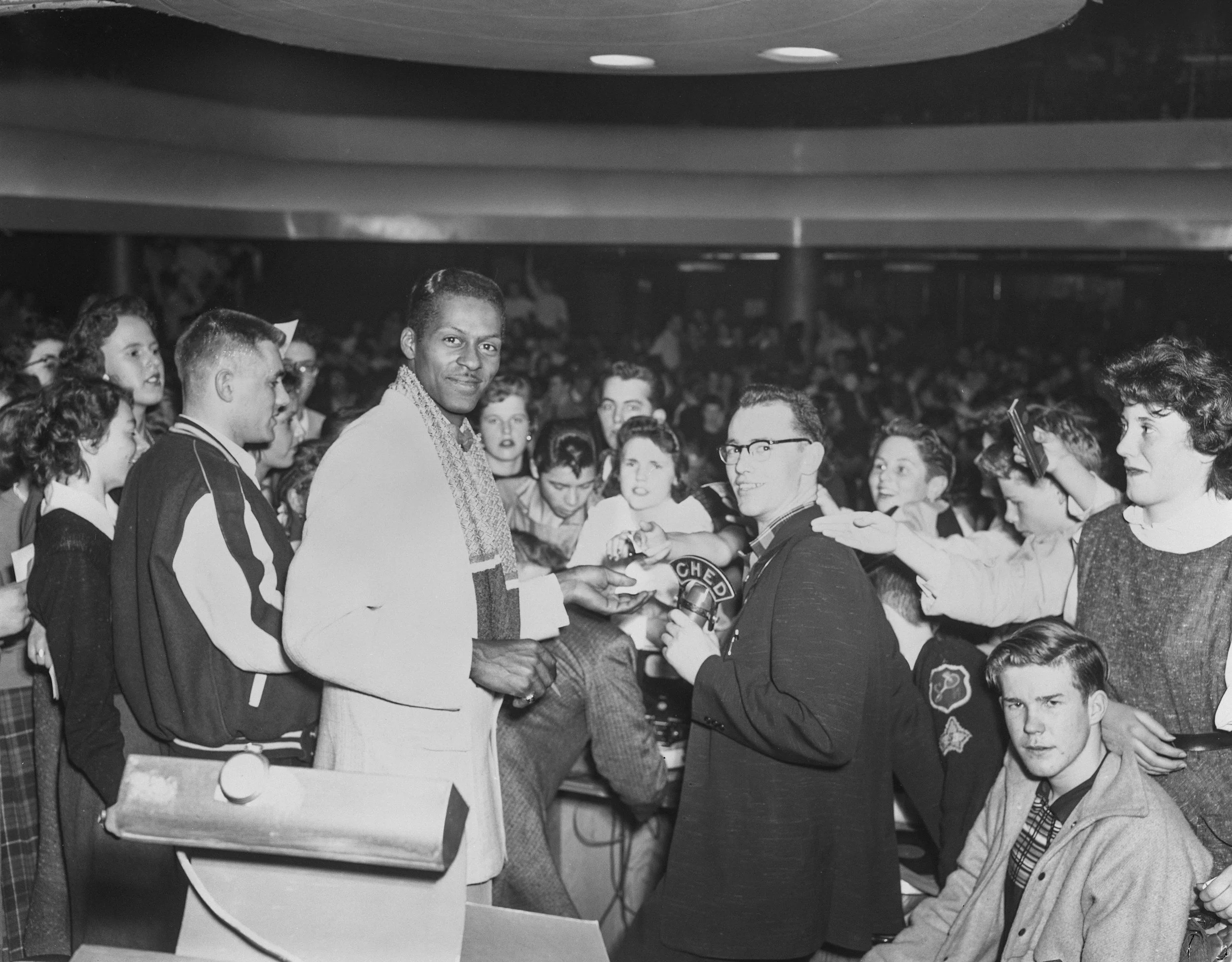
The case of Chuck Berry is instructive not because of celebrity, but because of what cultural reverence did to moral clarity.
In 1990, Berry pleaded guilty to misdemeanor charges after installing hidden cameras in a women’s restroom at a restaurant he owned. The recordings were made without consent. Fines were paid. Civil suits were settled.
Then came the reframing.
The behavior was acknowledged—but its meaning was quietly downgraded. It became eccentricity. A flaw. A regrettable footnote to genius.
No physical contact.
No violence.
No urgency.
Berry’s conduct over 35 years ago aligns precisely with the profile described in this current research: voyeurism without contact, secrecy without coercion, and indifference to the subjectivity of those being recorded.
What followed was not denial, but absorption.
Cultural admiration softened moral clarity.
This is how minimization becomes tradition.
Why Minimization Is the Most Dangerous Variable
Technology lowers the barrier to voyeuristic abuse.
Psychopathy predicts who will cross it.
But minimization ensures repetition.
When society treats image-based sexual violations as trivial, it does not merely misunderstand harm—it trains offenders to expect indifference.
And indifference, as it turns out, is plentiful.
FAQ: Image-Based Sexual Abuse, Psychology, and Minimization
Is upskirting considered sexual abuse?
Yes. Clinically and legally, it constitutes non-consensual sexual exploitation. The absence of physical contact does not negate the violation.
Why is psychopathy linked to upskirting?
Psychopathy involves low affective empathy and impulsivity. Upskirting requires the ability to violate another person’s privacy without emotional inhibition or concern for their distress.
Why are male victims perceived as less harmed?
Cultural scripts frame sexual victimization as primarily female. Male victimization—especially involving attractive men—is often misinterpreted as benign or flattering rather than violating.
Does age affect how people judge image-based sexual crimes?
Yes. Older souls in the study were more likely to minimize harm and criminality, possibly due to outdated moral frameworks that prioritize physical contact over psychological violation.
Is voyeurism without contact less serious than physical sexual assault?
No. Severity is determined by violation of consent and subjectivity, not by proximity. Psychological harm can be profound even without touch.
Final thoughts
Clinically, “no contact” is not a meaningful boundary.
Violation occurs the moment a person’s interior life is treated as irrelevant. Once that threshold is crossed, harm has already happened—quietly, efficiently, and often without witnesses.
The task of therapy—and law—is not to wait for harm to look dramatic.
It is to recognize it while it is still being minimized.
Be Well, Stay Kind, and Godspeed.
REFERENCES:
Fido, D., Harper, C. A., Duff, S., & Page, T. E. (2023). Understanding social judgments of and proclivities to commit upskirting. Sexual Abuse, 35 (7), 749–776. https://doi.org/10.1177/10790632231168835