

Welcome to my Blog
Most people don’t arrive here because something dramatic has happened.
They arrive because something feels… different.
The relationship still works. Conversations still happen. Life continues.
But something important is no longer organizing it the way it used to.
This space is where I write about that shift.
Not just what breaks relationships—but what quietly changes them:
how desire adapts.
how attention moves.
how meaning erodes or deepens over time.
These patterns are not random.
They tend to unfold in a predictable sequence.
If you’re here, you’re likely in one of those moments:
trying to understand what changed.
trying to decide whether it matters.
trying to figure out what to do next.
Start anywhere.
But if something here feels familiar, don’t treat it as abstract.
It usually isn’t.
Where to Begin
If you’re not sure what you’re looking for, these are a few good entry points:
Marriage Is Still Chosen — Even by Those Who Once Stood Outside It.
Epistemic Safety: What It Is and Why It Matters in Relationships.
The Relationship Consequences of Living in a Permanent News Cycle.
The Two Types of People Narcissists Avoid (And Why You Might Be One of Them).
When Narcissists Grieve: Why Their Mourning Looks Cold, Delayed, or Self-Centered
The 3-6-9 Dating Rule: Why Most Relationships Change at Month 3, 6, and 9.
The First Listener Shift: A Precise Relationship Diagnostic Most Couples Miss.
Why Curiosity Is Sacred in Relationships (And What Happens When It Disappears).
If You’re Looking for More Than Insight
Understanding is useful.
But at a certain point, most couples realize they can explain their relationship clearly—and still not change it.
That’s where focused work becomes effective.
I offer structured, high-impact couples intensives designed to produce meaningful movement in a compressed period of time.
Before We Decide Anything
A brief consultation helps determine:
whether this is what you’re dealing with.
whether this format fits.
and whether we should move forward.
Get a Clear Read on Your Relationship
Take your time reading.
But if something here lands in a way that feels specific—pay attention to that.
That’s usually where this work begins.
Continue Exploring
If you prefer to browse more broadly, you can explore posts by topic below.
But most people don’t find what they need by browsing.
They find it when something they read feels uncomfortably accurate.
Be Well, Stay Kind, and Godspeed.
~ Daniel
- Attachment Issues
- Coronavirus
- Couples Therapy
- Extramarital Affairs
- Family Life and Parenting
- How to Fight Fair
- Inlaws and Extended Families
- Intercultural Relationships
- Marriage and Mental Health
- Married Life & Intimate Relationships
- Neurodiverse Couples
- Separation & Divorce
- Signs of Trouble
- Social Media and Relationships
- What Happy Couples Know
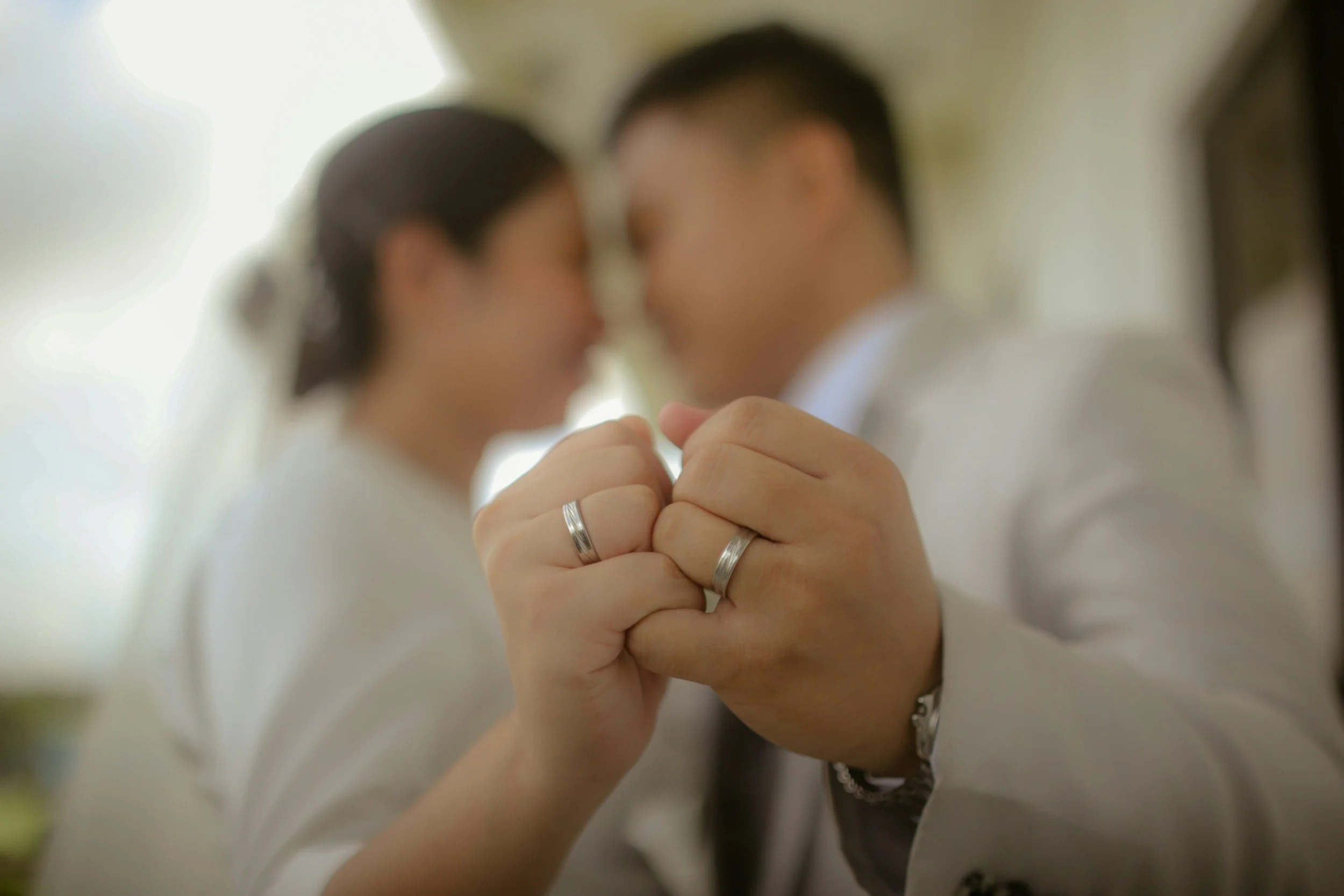
Why Marriages Are Happier When Nobody Helped You Meet
There is a persistent fantasy, usually held by parents, algorithms, and well-meaning acquaintances with too much time, that love works better with supervision.
The data, inconveniently, disagrees.
A recent analysis drawing on a decade of national survey data suggests something both obvious and oddly difficult to say out loud: marriages tend to be happier when the people in them found each other without intermediaries.
The study does not suggest that autonomy guarantees marital happiness; it suggests that autonomy reliably correlates with it.
That distinction matters.
This is not a romance novel masquerading as social science.
It is a sober finding about how relationships that begin without management, orchestration, or prior approval tend to fare once the novelty wears off.

When Partners Want Different Amounts of Physical Affection
Psychologists have confirmed something couples have been politely circling for decades: it’s not just how much affection you like—it’s whether the person next to you likes it in roughly the same way.
A recent study published in Personal Relationships examines what happens when romantic partners differ in their comfort with physical affection.
The findings are both obvious and quietly unsettling.
Mismatched comfort with physical affection predicts lower relationship well-being—especially when partners perceive themselves as out of sync, even if they are not.
That sentence does most of the work. The rest explains why.
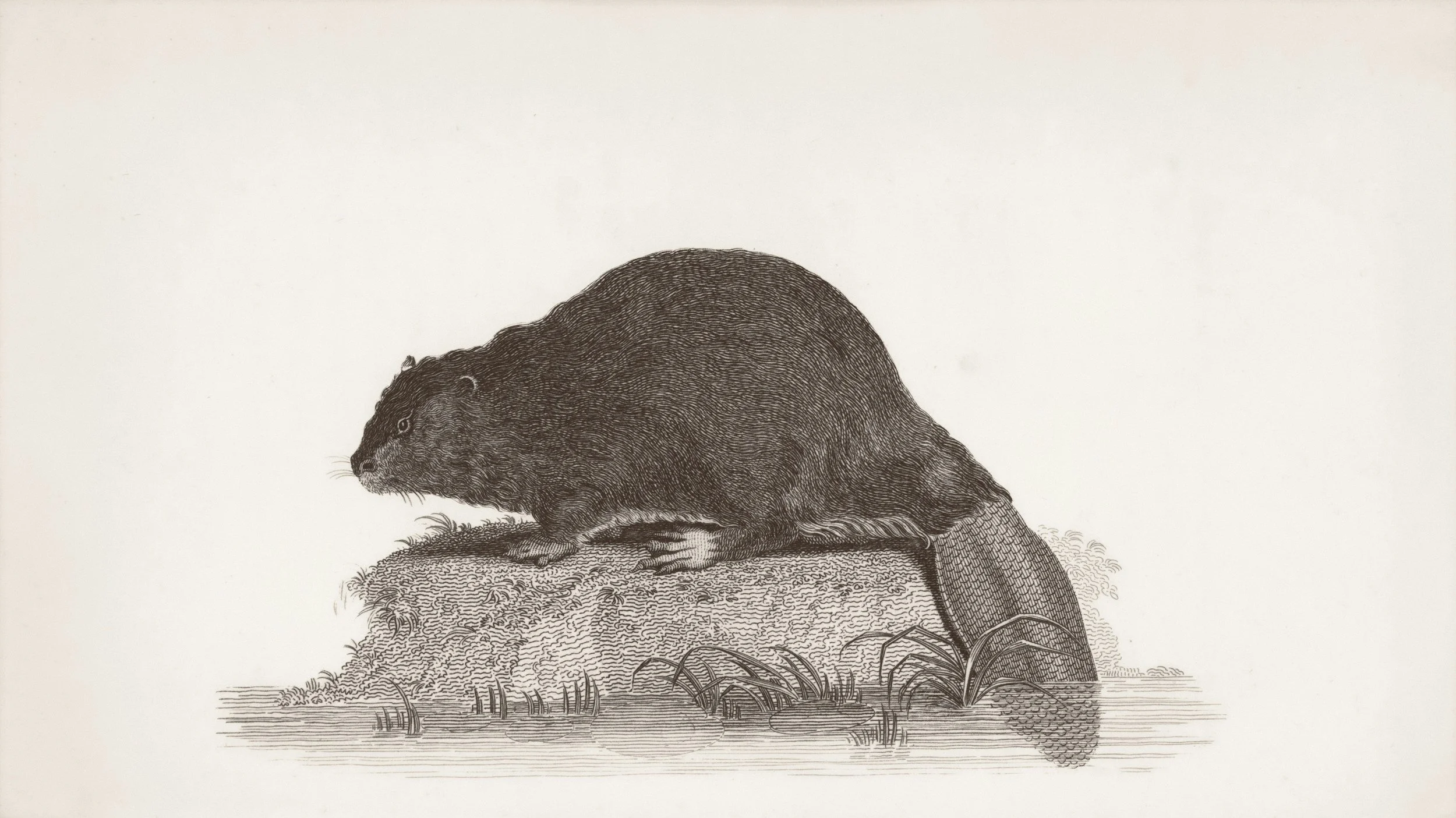
Humans Rank Between Meerkats and Beavers in Monogamy: The Kind of News We Pretend Surprises Us
Every few years, science releases a study that tries—earnestly, valiantly—to quantify human monogamy with the cool precision of a lab instrument.
The latest comes from the University of Cambridge, where Dr. Mark Dyble decided to bypass centuries of philosophical debate and simply look at the genetic receipts:
How many siblings in a given species share both parents?
It’s the least romantic way to study commitment, which may be why it works.
Humans, as it turns out, sit neatly between meerkats and beavers in what Dyble terms the “monogamy league table” (Dyble, 2025).
Not the top, not the bottom—just the reliable middle lane. Devoted enough to form pair bonds, conflicted enough to keep poets employed.
This study doesn’t bother with moral frameworks or cultural narratives.
It measures monogamy the way nature measures anything: by outcomes.
And outcomes tell a different, far simpler story than the one we like to tell about ourselves.

Childhood Trauma and Hypersexuality: How Early Wounds Shape Adult Sexual Urgency
There is a particular kind of story that walks into a therapist’s office looking like a sexual problem but is, in fact, a biography of survival told in the language of urgency.
Hypersexuality is often treated as a moral failing in the wild and as a “behavioral excess” in more polite clinical circles. But anyone who has spent significant time in trauma-informed therapy knows that hypersexuality is rarely about sex at all.
It is about the nervous system trying to outpace a memory.
A study out of Israel—published in the Archives of Sexual Behavior and conducted by Rotem Yaakov and Aviv Weinstein—has now confirmed what clinicians recognize intuitively: childhood trauma isn’t simply correlated with hypersexual behavior; it helps build the psychological scaffolding that makes that behavior feel necessary.
And sexual narcissism, that glossy defensive veneer of erotic grandiosity, may be the bridge that connects the two.
In other words: childhood trauma isn’t just in the background. It’s in the machinery.

Armpits as Erotic Zones: The Science of Attraction, Scent, and the Erotic Brain
There are body parts we proudly display—jawlines, clavicles, legs—and then there’s the armpit: evolution’s quiet overachiever, hidden under cotton and deodorant and centuries of polite denial.
But biologically, psychologically, and erotically?
The armpit is loud.
It broadcasts information.
It shapes attraction.
It influences bonding.
And yes—it can be erotic in a deeply scientific way.
Let’s walk straight into the research most people pretend doesn’t exist, while keeping this appropriately trauma-informed, and grounded in peer-reviewed human behavior science.

How Common Is Anal Sex? Scientific Insights on Prevalence, Pain, Pleasure, Anatomy, and Relationship Dynamics
If you want to understand any sexual behavior—why we do it, why we pretend we don’t do it, and why epidemiologists have been nervously clearing their throats about it for forty years—you have to begin with a basic anthropological truth:
Humans will try almost anything once, and twice if nobody panics.
Anal sex has spent decades sitting in the corner wearing a trench coat and sunglasses, treated primarily as a public-health hazard rather than a human behavior with motives, meaning, and (for many) genuinely rewarding sensation.
When researchers finally stopped hyperventilating long enough to ask why people actually do it, an interesting thing happened:
The data told a story far more ordinary—and far more revealing—than anyone expected.
Let’s begin at the beginning: prevalence.

Why Family-Oriented Women Trust Social Cues in Partner Choice
There are moments in a woman’s life when attraction is not a flutter but an audit.
She notices a man—his posture, his easy laugh, the way he performs charm as if it were a language he learned too quickly—and then she does something many men never see: she listens for the world’s opinion of him.
This is not insecurity.
It is the ancient logic of survival, the recognition that some mistakes cost more than others, and that romance—left unverified—can bankrupt a future.
A new study in Evolutionary Psychological Science embedded beside its name confirms the pattern: women who follow slower, more family-oriented life strategies rely more heavily on social information when judging potential partners.
In the language of evolutionary psychology, this is “mate choice copying.” In the language of women with something to lose, it is caution sharpened into intelligence.
Mate choice copying is not new; it’s older than agriculture, documented across species, including humans, in work such as Mate-choice copying in humans: adaptive utility embedded beside its title.
The principle is simple:
If other women found him desirable, he looks better. If other women fled, he looks like the reason they ran.
But this study asks the deeper question:
Who copies the most—and why?

Soft Swinging: The Loophole Written in Lipstick
The sound of the dishwasher always struck her as strangely moralistic.
It whirred, clicked, and churned with the same nightly insistence, as if to remind her that predictability had become the head of household.
She held a single wineglass to the light, turning it slowly in her hand as though the angle might reveal something she’d missed.
Her husband wandered in behind her, scrolling his phone with the blank absorption of a man consuming nothing important.
And there in the soft kitchen light, between an appliance humming its mechanical sermon and a glow from a screen that felt more intimate than conversation, she sensed the truth: modern married life rarely collapses in spectacular fashion.
It thins. It dries at the edges. It becomes a room you’ve walked through so many times you no longer see it.

Does Your Relationship with Your Parents Influence Your Sexual Fantasies?
In America, sex is both our national pastime and sometimes, our private shame.
We sell it in every advertisement, moralize it in every sermon, and sanitize it in every therapy session.
So when researchers ask whether our childhood relationships with our parents shape the fantasies that later flicker in our adult bedrooms, it exposes the one subject Americans never quite domesticated—desire itself.
Attachment theory, the backbone of modern relationship science, argues that our first caregivers teach us how safe intimacy feels—a script we keep rehearsing for the rest of our lives.
A 2025 study in the Archives of Sexual Behavior, led by Ellen Zakreski and colleagues, found that adults who reported poorer relationships with their parents were more likely to endorse violent sexual fantasies—those involving coercion, humiliation, or control. This link was mediated by insecure attachment styles, particularly preoccupied and fearful-avoidant.
In plain English: people who learned early that love was unpredictable or unsafe may eroticize that tension later, turning fear itself into arousal.
But it’s not a straight line of causation.
The study is correlational, not causal, and those associations—while statistically solid—are moderate. Still, the message is clear: childhood patterns echo in the most intimate corners of adult life.

Why We Leave Relationships: The Psychology of Breakups, Gender, and Culture
She rinsed the same coffee cup for the third time that morning. The handle had a hairline crack she’d never noticed before.
Her husband was upstairs, humming through his electric-toothbrush routine, and in that small domestic hum she heard something irreversible.
Nothing dramatic—no affair, no betrayal. Just a slow, accumulating certainty that she could no longer live the life she had built so meticulously.
That quiet moment—unseen, unannounced—is the true beginning of most breakups.
A new framework published in The Journal of General Psychology—Intending to Break Up: Exploring Romantic Relationship Dissolution from an Integrated Behavioral Intention Framework—explains that pause before leaving.
Psychologists Anna M. Semanko and Verlin B. Hinsz argue that ending a relationship is rarely impulsive.
It’s a deliberate, reasoned act—constructed from beliefs, emotions, and social expectations.
Their model integrates the Reasoned Action Approach (Fishbein & Ajzen, 2011) and Triandis’s Theory of Interpersonal Behavior—frameworks typically used to explain job-quitting or health decisions.
Semanko and Hinsz apply them to heartbreak.

Pain, Pleasure & the Porn Paradox: Why Some Women Find Aggression Arousing
Ask ten people what turns them on, and at least one will hesitate—because their answer sounds like a crime scene. That hesitation is where modern desire lives: between wanting control and wanting to be released from it.
A study published in the Archives of Sexual Behavior found that many pornography viewers—especially women—are aroused by aggression.
Not cruelty, not humiliation.
The draw is that strange current where pleasure and pain meet and start speaking the same language.
Sociologist Eran Shor, who led the research, interviewed 302 adults about how they interpret aggression, pain, and pleasure in pornographic scenes.
Their answers weren’t lurid—they were recognizably human: ambivalent, curious, and conflicted. Desire, it turns out, is rarely tidy, and never purely moral.

New Research Explores the Biopsychology of Common Sexual Behaviors
Science has finally taken a peek under the covers, and apparently, it found what everyone suspected: sex is about much more than mechanics.
A new trio of studies (Haider, Das, & Ahmed, 2025) examines why men hold their partners’ legs, stimulate breasts, and what these gestures mean for both pleasure and bonding.
One might think this is kinda self-evident.
Yet for centuries, researchers treated sex as if it were an awkward topic best left to poets and pornographers.
The irony is that, while couples have always understood that touch carries meaning, science has only just caught up — proving that much of what happens between two people is written not in words but in nervous systems.