

Welcome to my Blog
Most people don’t arrive here because something dramatic has happened.
They arrive because something feels… different.
The relationship still works. Conversations still happen. Life continues.
But something important is no longer organizing it the way it used to.
This space is where I write about that shift.
Not just what breaks relationships—but what quietly changes them:
how desire adapts.
how attention moves.
how meaning erodes or deepens over time.
These patterns are not random.
They tend to unfold in a predictable sequence.
If you’re here, you’re likely in one of those moments:
trying to understand what changed.
trying to decide whether it matters.
trying to figure out what to do next.
Start anywhere.
But if something here feels familiar, don’t treat it as abstract.
It usually isn’t.
Where to Begin
If you’re not sure what you’re looking for, these are a few good entry points:
Marriage Is Still Chosen — Even by Those Who Once Stood Outside It.
Epistemic Safety: What It Is and Why It Matters in Relationships.
The Relationship Consequences of Living in a Permanent News Cycle.
The Two Types of People Narcissists Avoid (And Why You Might Be One of Them).
When Narcissists Grieve: Why Their Mourning Looks Cold, Delayed, or Self-Centered
The 3-6-9 Dating Rule: Why Most Relationships Change at Month 3, 6, and 9.
The First Listener Shift: A Precise Relationship Diagnostic Most Couples Miss.
Why Curiosity Is Sacred in Relationships (And What Happens When It Disappears).
If You’re Looking for More Than Insight
Understanding is useful.
But at a certain point, most couples realize they can explain their relationship clearly—and still not change it.
That’s where focused work becomes effective.
I offer structured, high-impact couples intensives designed to produce meaningful movement in a compressed period of time.
Before We Decide Anything
A brief consultation helps determine:
whether this is what you’re dealing with.
whether this format fits.
and whether we should move forward.
Get a Clear Read on Your Relationship
Take your time reading.
But if something here lands in a way that feels specific—pay attention to that.
That’s usually where this work begins.
Continue Exploring
If you prefer to browse more broadly, you can explore posts by topic below.
But most people don’t find what they need by browsing.
They find it when something they read feels uncomfortably accurate.
Be Well, Stay Kind, and Godspeed.
~ Daniel
- Attachment Issues
- Coronavirus
- Couples Therapy
- Extramarital Affairs
- Family Life and Parenting
- How to Fight Fair
- Inlaws and Extended Families
- Intercultural Relationships
- Marriage and Mental Health
- Married Life & Intimate Relationships
- Neurodiverse Couples
- Separation & Divorce
- Signs of Trouble
- Social Media and Relationships
- What Happy Couples Know
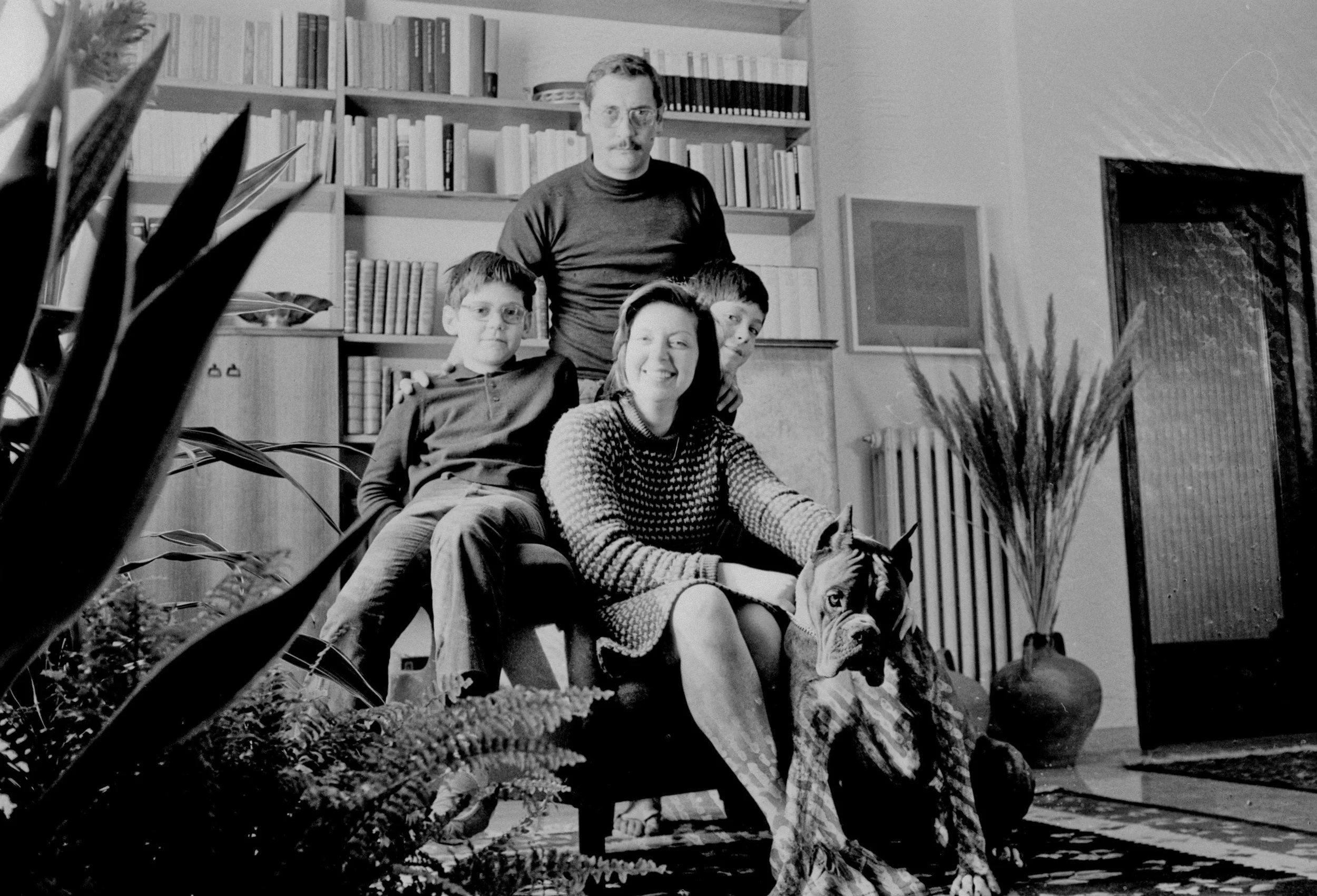
The Collapse of the “Good Family” Myth: When Nothing Is Wrong—but Nothing Is Working Splendidly Either
The most common family problem today is not toxicity or breakdown—it is emotional malnourishment inside systems that still technically work.
I see this most often in what I call emotionally unsustaining families: families that function reliably while quietly failing to nourish the people inside them.
For most of the twentieth century, the definition of a “good family” was simple—stay together, avoid scandal, raise competent adults. Emotional fulfillment was optional. Stability was the achievement.
Social media cracked that myth open—and replaced it with two extremes that leave most families stranded in the middle.

Turns Out Dad’s Inner Life Matters More Than Anyone Admitted
For decades, pregnancy research has treated fathers as emotionally relevant but biologically irrelevant—a position that flatters everyone and explains very little.
Supportive? Yes.
Important? Certainly.
Physiologically consequential? We preferred not to ask.
A new study published in Biopsychosocial Science and Medicine politely corrects this avoidance. It suggests that a father’s psychological resilience—his optimism, self-esteem, sense of mastery, and perceived social support—is associated with lower inflammation in his pregnant wife.
Lower inflammation, in turn, predicts longer gestational length.
Not metaphorically.
Biologically.
Babies, it turns out, stay put longer when dad has his inner act together.
Get this. And the effect appears only in married couples.
Which is where the cultural story gets wicked uncomfortable.
What Autistic Narratives Leave Out—and Why That Matters
This study is not interesting because autistic people tell worse stories.
It is interesting because they tell different ones—and their siblings do too.
The core finding is this: autistic folks and their first-degree relatives reliably produce narratives with lower narrative causality density—fewer explicit explanations of why events occur or how characters feel—despite intact sequencing, attention, and factual precision.
That is not a storytelling failure.
It is a different cognitive contract with the listener.

Is the Family the First Empire to Fall?
Historians are once again warning us about collapse. They tend to do this whenever the world begins to look a bit exhausted—which, lately, is most of the time.
Luke Kemp’s Goliath’s Curse, helpfully dissected in The Atlantic, explains why civilizations eventually fall apart.
It’s never sudden. It’s almost never dramatic.
It’s the slow accumulation of unfairness and silence until ordinary people lose the will to keep the whole thing running.
Anyone who has ever grown up in a family will recognize the pattern instantly.
Families collapse for the same reasons empires do:
too much burden on too few,
too much pretending,
and too little honest conversation.
Historians examine ruins.
Family therapists examine holidays.
Either way, the truth lies underneath the rubble.

Caring for Aging Parents While Working Full Time — Why America’s Sandwich Generation Is Burning Out
Her father texts during her Zoom meeting:
“Can you bring soup?”
She hits the thumbs-up emoji, mutes herself, and keeps nodding through a conversation about “quarterly outcomes.”
By the time the call ends, she’s got three browser tabs open—one for DoorDash, one for her daughter’s FAFSA, and one titled “How to talk to aging parents about independence.”
That’s what burnout looks like for America’s Sandwich Generation: love divided by logistics.
It’s the unpaid, unending role of caring for aging parents while still raising, funding, or worrying about your own kids. It’s devotion that’s begun to taste like debt.

The Bank of Mom and Dad: When Financial Help Becomes Emotional Debt
Your phone buzzes:
“Rent’s due—thanks, Mom ❤️.”
You stare at the heart emoji like it’s a receipt.
You tell yourself this is the last time.
Then you transfer the money and spend the next hour pretending you feel generous instead of cornered.
That’s how emotional debt begins: not with anger, but with relief.
Welcome to the quiet epidemic of financial enmeshment, where love and money blur into one long family subscription you forgot to cancel.

The Teen Narcissism Paradox: When Ego Becomes a Healthy Survival Strategy
Teenagers are born narcissists. They think the world is a waiting room for their arrival—and, to be fair, sometimes it is.
A new study in Personality and Individual Differences suggests that certain forms of adolescent narcissism might actually help kids function, at least when life isn’t falling apart.
Once stress ramps up, that same “specialness” starts to look less like confidence and more like an audition for a reality show no one asked to host.
The research, led by Qiming Yu and Silin Huang at Beijing Normal University, found that how narcissism plays out depends less on character and more on chemistry—specifically the body’s allostatic load, a measure of how much chronic stress has worn down the system.
Low stress? Grandiose narcissists can be surprisingly generous.
High stress? They might start throwing elbows.

LGBTQ+ Couples Therapy for Infertility: What the Research Really Says
Infertility is rarely kind, but for LGBTQ+ couples, it’s a double bind.
You face not only the grief of cycles that don’t work but also the absurdity of some clinics that don’t recognize your family.
Queer infertility therapy isn’t a luxury—it’s how couples keep from drowning in both the science and the silence.
Infertility never arrives as a polite guest. It doesn’t knock, it doesn’t call ahead.
It barges in, drops its bags in the middle of your living room, and declares it’s staying for an indefinite period of time.
For most couples, infertility brings grief, financial strain, and awkward silences at dinner parties.
For LGBTQ+ couples, infertility drags along a second, less visible shadow: decades of systemic exclusion, medical erasure, and cultural suspicion of queer families.

America’s Demographic Cliff: Narcissism in Yoga Pants, Live-Streaming Our Own Extinction
The University of New Hampshire recently announced that the United States has 5.7 million more childless women than expected and 11.8 million fewer births since 2007 (Johnson, 2025).
Demographers call it the demographic cliff.
Personally, I think “cliff” is generous. A cliff suggests someone slipped. This looks more like a nation deliberately walking into traffic while posting a TikTok about “boundaries.”
Here’s a sobering factoid: In 2024, half of American women in their twenties and thirties had not given birth (Johnson, 2025).
In other words: for the first time in history, motherhood is less common than brunch. Yikes!

Sisters with Sharp Elbows: Global Study Reveals Women Are Often More Aggressive Than Brothers
New sibling rivalry research overturns the old belief that men are naturally more aggressive, showing women often outpace brothers in family conflicts.
Aggression has always been handed out along gendered lines.
Men were assigned the part of the violent instigator—fighters, warriors, brawlers.
Women were cast as nurturers, peacekeepers, and emotional glue. Psychology, too, happily co-signed this story, reporting again and again that men were more aggressive than women, bolstered by reams of statistics from bar fights, playgrounds, and prisons (Archer, 2004; Bettencourt & Miller, 1996).
But stories are not science.
A new global study published in PNAS Nexus brings the myth to its knees. Surveying more than 4,000 people in 24 countries, the researchers found that women were just as aggressive as men toward their siblings—and often more so (Kenrick et al., 2025).
Aggression, it seems, is not simply male turf. Inside families, sisters often sharpen their elbows more than brothers.

Yes Day Parenting: Why Saying “Sure” Can Build Trust With Your Kids
Parenting has always lived somewhere between order and chaos. For decades, the standard approach leaned heavily on “because I said so.”
Lately, though, parents are experimenting with something closer to improv: Yes Day parenting.
The premise is simple. For one day, parents agree to stop saying “no.”
Kids make the decisions (within reason), and adults surrender control.
The idea is framed as a positive parenting strategy—one that builds trust, encourages child autonomy, and gives families a break from the daily grind. Of course, it can also go off the rails in spectacular fashion.

Couples Therapy for Co-Parenting After Divorce: Fighting Less, Parenting Better
Divorce kills the marriage. It does not kill the parenting.
You may not share a bed anymore, but you’ll still share a Google calendar, a dental bill, and a child who expects both of you to show up for their science fair.
That’s where co-parenting counseling comes in.
Let’s be blunt: this is not therapy to rekindle romance. It’s therapy to stop your child from being collateral damage in your ongoing feud.
The research is consistent: children don’t suffer because parents divorce—they suffer because parents keep fighting (Gottman, 1994; Sandler et al., 2020).
Which means the real question isn’t, “Do we still need therapy together?” It’s “What kind of plan—or therapy—keeps our conflict from spilling over onto the kids?”