

Welcome to my Blog
Most people don’t arrive here because something dramatic has happened.
They arrive because something feels… different.
The relationship still works. Conversations still happen. Life continues.
But something important is no longer organizing it the way it used to.
This space is where I write about that shift.
Not just what breaks relationships—but what quietly changes them:
how desire adapts.
how attention moves.
how meaning erodes or deepens over time.
These patterns are not random.
They tend to unfold in a predictable sequence.
If you’re here, you’re likely in one of those moments:
trying to understand what changed.
trying to decide whether it matters.
trying to figure out what to do next.
Start anywhere.
But if something here feels familiar, don’t treat it as abstract.
It usually isn’t.
Where to Begin
If you’re not sure what you’re looking for, these are a few good entry points:
Marriage Is Still Chosen — Even by Those Who Once Stood Outside It.
Epistemic Safety: What It Is and Why It Matters in Relationships.
The Relationship Consequences of Living in a Permanent News Cycle.
The Two Types of People Narcissists Avoid (And Why You Might Be One of Them).
When Narcissists Grieve: Why Their Mourning Looks Cold, Delayed, or Self-Centered
The 3-6-9 Dating Rule: Why Most Relationships Change at Month 3, 6, and 9.
The First Listener Shift: A Precise Relationship Diagnostic Most Couples Miss.
Why Curiosity Is Sacred in Relationships (And What Happens When It Disappears).
If You’re Looking for More Than Insight
Understanding is useful.
But at a certain point, most couples realize they can explain their relationship clearly—and still not change it.
That’s where focused work becomes effective.
I offer structured, high-impact couples intensives designed to produce meaningful movement in a compressed period of time.
Before We Decide Anything
A brief consultation helps determine:
whether this is what you’re dealing with.
whether this format fits.
and whether we should move forward.
Get a Clear Read on Your Relationship
Take your time reading.
But if something here lands in a way that feels specific—pay attention to that.
That’s usually where this work begins.
Continue Exploring
If you prefer to browse more broadly, you can explore posts by topic below.
But most people don’t find what they need by browsing.
They find it when something they read feels uncomfortably accurate.
Be Well, Stay Kind, and Godspeed.
~ Daniel
- Attachment Issues
- Coronavirus
- Couples Therapy
- Extramarital Affairs
- Family Life and Parenting
- How to Fight Fair
- Inlaws and Extended Families
- Intercultural Relationships
- Marriage and Mental Health
- Married Life & Intimate Relationships
- Neurodiverse Couples
- Separation & Divorce
- Signs of Trouble
- Social Media and Relationships
- What Happy Couples Know

Situationship Amnesia: Why We Miss Folks Who Weren’t Good for Us
There is a particular kind of forgetting that happens only in the aftermath of an almost-relationship.
It is not graceful, and it is not poetic.
It is the kind of forgetting, for some, that feels like a survival strategy invented by someone who has never actually survived anything.
This is Situationship Amnesia—the neurological blackout that convinces you the person who barely showed up for you might, under slightly improved astrological conditions, be the great love of your life.

Emotional Bandwidth Mismatch: Why Love Isn’t Enough When Capacity Runs Out
There are mornings when the house looks peaceful—sunlight on the floorboards, coffee quietly percolating, the kind of silence that feels borrowed. Then someone walks into the room, touches the back of a chair, and says, gently, “Do you have a minute?”
It’s a harmless question.
It’s practically nothing.
And yet your body responds with a quiet internal flinch, the nervous system version of a low battery warning.
You’re not impatient. You’re not angry. You simply do not have a minute—not emotionally, not neurologically. The budget is gone.
This is emotional bandwidth mismatch: when two nervous systems have unequal capacity at the exact moment one reaches for the other.

Attunement Fatigue: The Quiet Exhaustion Beneath Even Loving Relationships
Early morning, half-light.
The house is quiet in the way houses rarely are. You stand in the kitchen watching the coffee drip, holding onto the stillness like it’s the last clean surface in your life.
Then you hear it—the soft, almost apologetic way someone clears their throat in the hallway. It’s not loud. Not hostile. Not anything that should matter.
But your body reacts anyway. A small tightening behind the ribs. A shift in breath. The faint sense of being summoned.
Nothing has happened yet, and you’re already tired.
This is where attunement fatigue begins: not with conflict, but with the slow, steady depletion of your ability to track another person’s emotional life without abandoning your own.
We talk about attunement as though it’s a spiritual achievement—limitless presence, infinite empathy, a kind of interpersonal sainthood.
But attunement in its physiological form is not transcendence.
It is labor. Real labor. And the nervous system, generous as it is, has a limit.
Attunement fatigue is the moment the body sends the invoice.

Nervous System Compatibility: The Hidden Architecture of Long-Term Relationships
There are moments in a marriage—small, unremarkable moments—when something inside the body gives its verdict before the mind has even filed the paperwork.
A partner walks into the kitchen. A child drops a backpack by the door. Someone exhales with just enough force to alter the air in the room.
You feel it. Not emotionally, not conceptually. Physically.
Your body settles or braces.
There is no in-between.
Here’s the thing. The autonomic nervous system has no diplomatic wing.
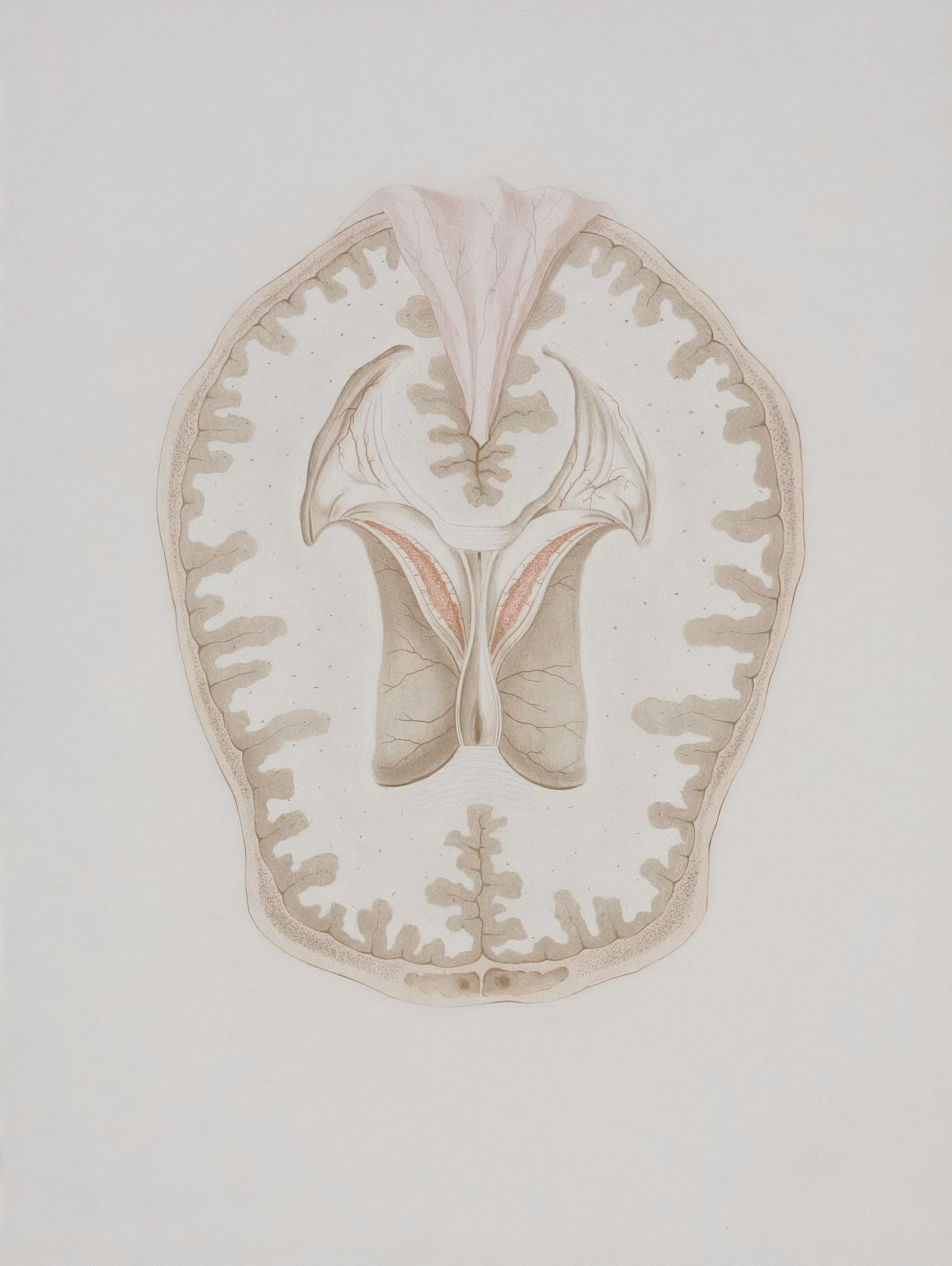
The Five Ages of the Human Brain: How Neural Architecture Changes Across a Lifetime
Here’s some new data. The human brain does not “grow,” it changes regimes.
It abandons one architectural logic and adopts another, the way empires shift capitals when the old city feels too cramped.
Neuroscientists now argue that the brain moves through five distinct epochs, each ushered in with its own quiet upheaval at ages 9, 32, 66, and 83.
These are not symbolic ages. They mark nothing ceremonial. No one receives a congratulatory card for entering their “modularization period.”
The skull does not vibrate to alert you. Yet the architecture shifts all the same—restructuring your inner life with the indifference of a city planning department updating zoning laws.
This is the brain’s real story: not ascent, not decline, but reorganization.
Published recently in Nature Communications, the research confirms something clinicians and parents have sensed intuitively: the brain is not a straight line. It’s a renovation schedule.

The Seven Kinds of Rest You Need to Recover from Complex PTSD
Let’s talk about a new order. A clearer frame. A deeper excavation.
Trauma reorders perception. It alters the nervous system’s interpretation of reality. The facts remain the same, but the meaning is different.
The room is the same, but your body reads it differently. A trauma survivor walks into ordinary spaces and senses what others do not: threat in the tone, tension in the air, danger in the pause, reversal in the silence.
A thousand small signals, each carrying its own implication.
When rest becomes part of trauma recovery, it has to follow this altered architecture.
Not the mind first. Not the feelings first.
The order must match the way the nervous system actually experiences the world.
First the world.
Then the body.
Then the inner life.
Then the meaning.
This is how rest is restored.

The Age of Disclosure and the Shape-Shifter Hypothesis
Let’s begin with the obvious: The Age of Disclosure is exactly the kind of film Washington thinks counts as intellectual engagement.
One hundred and nine minutes of retired admirals, intelligence officials, congressional hobbyists, and Marco Rubio (now with added gravitas) sitting in high-contrast lighting discussing “nonhuman craft” as though they’re reviewing zoning regulations for the Blue Army Procession of Fatima.
The film insists on its seriousness by sheer volume of talking heads—thirty-four of them—each framed with the same visual grammar: dimly lit rooms, brushed steel backdrops, and the kind of grave pauses that imply revelation is imminent if you’ll just keep watching.
It’s documentary as congressional catnip.
Dense enough to look important.
Vague enough to avoid accountability

California Sober: An American Elegy of Self-Compassion and Change
“California sober” is a modern, coastal-flavored rebrand of partial abstinence: a person stops drinking and avoids the heavier substances but keeps cannabis, psychedelics, or whatever gentler intoxication lets them feel functional without feeling exposed.
It’s not a clinical category.
Not recognized by addiction psychiatry.
It’s a distinctly American compromise—sobriety with loopholes, abstinence in soft focus.
In plain language:
California sober is sobriety with negotiated exceptions.
A spiritual SNAFU dressed in wellness vocabulary.
But beneath the contradiction is something tender: a quiet attempt at self-compassion.

Why Young Men Are Turning to Orthodoxy: A Clinical Look at Masculinity, Ritual, and the Search for Moral Coherence
The movement of young men toward the Orthodox Church is not dramatic if you see it up close.
It’s quiet. Nearly invisible. Until you read about it on Drudge.
But it’s still the sort of shift that begins with a feeling someone can’t name, then eventually becomes a choice that surprises even them.
When they try to explain it later—if they explain it at all—they usually mention the chanting, or the icons, or the way the service doesn’t rush itself. But that’s not really what brought them there.
They’re tracking something deeper. Something steady. Something that doesn’t move when the rest of the world does.

What Is Theory of Mind? The Definitive Guide for Adults and Relationships
Theory of mind is the quiet miracle you don’t notice until it fails.
It’s the human capacity to understand that other people have minds—full interior landscapes with beliefs, emotions, anxieties, and private meanings that differ from your own.
You’d think this would be the most basic human skill. Somehow it’s the rarest.
The term entered the scientific bloodstream when psychologists asked a now-famous question: “Does the chimpanzee have a theory of mind?” The answer, as usual, said more about humans than chimpanzees.
We discovered that even humans misunderstand each other constantly—and with appalling confidence.
Theory of mind is not a child’s milestone. It’s an ongoing moral discipline.
Adults may lose it under stress, under shame, and especially under conflict.
Modern life—with its thin signals, algorithmic outrage, and performative certainty—has placed theory of mind on the endangered-cognition list.
Let’s take it from the top, with the full weight of philosophy, anthropology, neuroscience, trauma studies, and couples therapy behind it.

Intensity vs. Intimacy: What Henry Miller’s Life Can Teach Us About Emotional Immaturity and Avoidant Love
Once upon a time, teenage American boys read books.
And there was once a rite of passage in American male adolescence: reading Henry Miller at precisely the wrong time in life.
When you’re young, his sentences feel like license—wild, rapturous, profane, as if emotional chaos were a sacrament.
Only later, usually after age and regret have taken turns sanding you down, do you realize that Miller wasn’t modeling any sort of depth.
He was modeling the kind of emotional immaturity that flourishes when no one demands your presence.
In this post, I’m not undertaking a cultural cancellation. I hope, instead, that it reads more like a commentary on an American saint of defensive self-absorption.

How We Stopped Believing in Sin
When we stopped believing in sin, we didn’t become innocent; we just lost the words for what was killing us.
The air purifier hums softly in the therapy office. A diploma glows faintly in its frame.
Between the couch and the chair, the silence is designed — professional, tolerant, well-lit. It’s the kind of silence that never accuses, never blesses.
Half a world and sixteen centuries away, a monk sits in a desert cell copying Evagrius Ponticus’s list of eight evil thoughts.
The wind scratches at the stone; candlelight wavers.
He writes the words as if each one could save a soul: gluttony, lust, avarice, sadness, anger, acedia, vainglory, pride.
Two rooms, two centuries, grappling with the same human aches and pains.