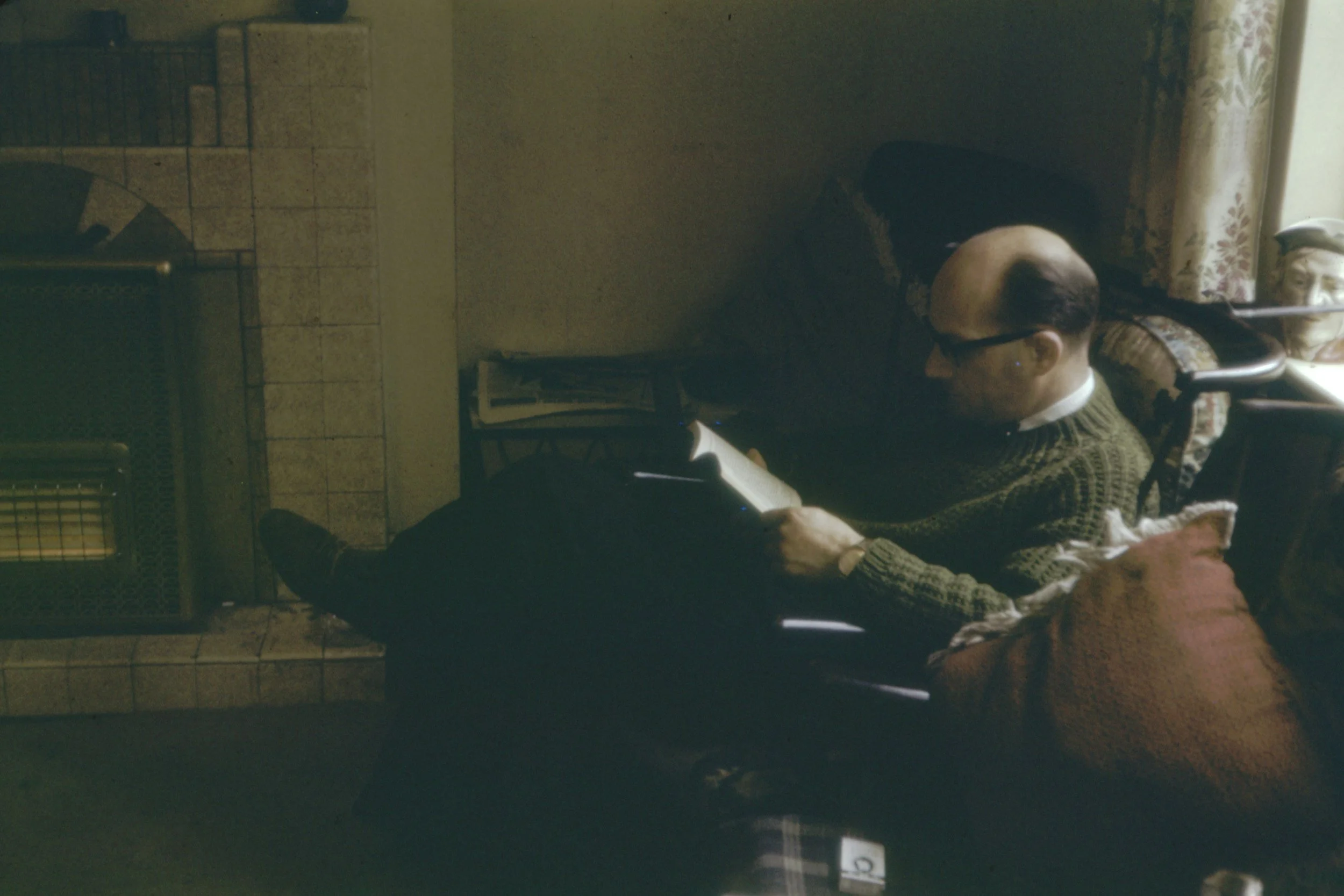
Monday, November 17, 2025. This is for Sarah S. and Dan H. Two victims of my own misguided mid-life passions.
Once upon a time, teenage American boys read books.
And there was once a rite of passage in American male adolescence: reading Henry Miller at precisely the wrong time in life.
When you’re young, his sentences feel like license—wild, rapturous, profane, as if emotional chaos were a sacrament.
Only later, usually after age and regret have taken turns sanding you down, do you realize that Miller wasn’t modeling any sort of depth.
He was modeling the kind of emotional immaturity that flourishes when no one can rely on your bestowed attention.
In this post, I’m not undertaking a cultural cancellation of Henry. I hope, instead, that it reads more like a commentary on a patron saint of American self-absorption.
The Convenient Myth of the Passionate Man
Miller’s reputation survived the obscenity trials because America loves a rebel, especially one who sins with an impressive vocabulary.
When Grove Press v. Gerstein turned him from outlaw to icon, the narrative was cemented: he was brave, raw, unfettered. That was the cultural reading.
The psychological reading is simpler.
A man who mistakes exhibitionism for authenticity will always seem “deep” to people who have not yet met intimacy.
Miller’s writing vibrates with hunger, but the emotional palate beneath it is surprisingly narrow: desire, resentment, escape. The narrator never rests long enough to risk closeness. Every partner is either a muse or a cage, depending on how much she asks of him.
This is the basic confusion of the avoidant adult: equating a partner’s emotional demand with the feeling of emotional imprisonment. Been there. Done that.
Psychoanalytic Origins: A Boy with No Safe Parent
If you truly want to understand an adult who flees intimacy, start by examining the childhood room where their vulnerability first felt profoundly unsafe.
Biographers Mary Dearborn and Robert Ferguson agree on the essential contours:
Henry’s mother, Louise, was controlling and volatile; his father, Heinrich, was passive, utterly defeated by her dominance, and chronically inconsistent. Miller adored his father but could not rely on him. He feared his mother, and frantically sought to escape her gravitational pull.To a developing nervous system, that is a perfect storm.
If your mother overwhelms and your father disappears, you learn—implicitly, wordlessly—that closeness suffocates and distance protects. Psychoanalysis has a blunt phrase for this: the defensive triumph of the private self.
Miller didn’t become an avoidant adult by accident.
He became one to survive.
His intensity as a writer wasn’t evidence of his depth. It was evidence of a boy who learned early that the only safe space was the one he created inside his own mind. I also learned this lesson well, and it was a toxic legacy in my son’s life.
Intensity Used as Emotional Camouflage
Attachment theorists like Mikulincer and Shaver have spent decades describing what Miller enacted in real time: avoidantly organized adults prefer affective performance to emotional exposure. If you keep the bandwidth narrow, no one can see the emptiness underneath.
Miller’s literary persona is a masterclass in this defense.
In Tropic of Cancer, his sexual desire is constant, but regulated by no one, especially not Miller himself.
In Sexus, contempt arrives where vulnerability should be—the classic avoidant swap. And beneath the sensory excess is a man terrified of the intimacy he never received as a child and never learned to tolerate as an adult.
Intensity is reactive, while authentic intimacy is responsive.
Miller didn’t do response. He did reaction instead.
The Children Who Knew Him Without the Prose
Miller had three children: Barbara, Tony, and Valentine.
Their accounts, as preserved in biographical interviews and archival material, are consistent: he could be captivating, tender even—but intermittently, briefly, and without reliability.
There’s nothing theatrical in their descriptions. No vengefulness. No melodrama. That’s what makes them credible. They describe a man who showed up in vivid flashes and then vanished into travel, lovers, or creative obsession.
It’s the emotional equivalent of a weather pattern that can produce sunlit afternoons but cannot reliably sustain a season of abiding warmth.
From a therapeutic standpoint, this is the defining mark of emotional immaturity: affection without consistency, love without containment, presence without reliably bestowed attention.
Children don’t want passion and fire. They just want bestowed attention, and shelter from the storm.
The Cultural Error: Confusing Chaos with Complexity
We are still paying for our cultural romance with artistic turbulence and emotional intensity.
Miller’s contemporaries saw his volatility as evidence of his depth. But volatility is not depth. It’s just dysregulation with better adjectives.
The American literary world tends to sanctify men who externalize their childhood wounds as some sort of cosmic insight. This marriage and family therapist sees something else: a nervous system that never learned how to stay.
In late life, I have come to see that charisma is not character, that longing is not intimacy, and that self-expression is not the same as emotional responsibility.
Why Couples Still Repeat the Miller Pattern
If Henry Miller’s life feels familiar, it’s because versions of him appear in modern couples therapy every week.
The partner who dazzles at the beginning, only to retreat when emotional expectation enters the room. The young husband who equates commitment with confinement. The wife in midlife who betrays and flees to a new lover, confusing erotic vivacity with relational maturity.
Avoidant adults are not afraid of love.
They are often afraid of grappling with the grief embedded in receiving it.
Miller could touch desire, but he could never be held by it in a single partner.
He could ignite longing, but he could never endure its aching reciprocity.
This is what today’s research shows: unresolved early inconsistency produces adults who are brilliant at longing, but really terrible at staying.
The Compassionate Interpretation (The Only One That Works)
Miller wasn’t malicious. Nor was he a monster.
He was a child raised between an engulfing mother and an evaporating father, who grew into a man who mistook emotional distance for freedom because closeness had once been intolerable.
His wit and brilliance made him memorable, but it was his wounds that made him human.
But, in hindsight, his emotional limitations also made him sadly predictable.
The gift he leaves us isn’t his exaggerated erotic bravado. It’s the map of how early developmental wounds echo through adult intimacy—and how easily culture can mistake a trauma adaptation for courage.
Final Thoughts
Henry Miller reminds me that emotional immaturity does not preclude brilliance.
But brilliance cannot substitute for the developmental work required to love another person in a singular, committed fashion. In his dotage, Miller embarrassed himself with infatuations with younger, unattainable women.
Passion can be thrilling, but a nervous system shaped by fear of engulfment and fear of abandonment cannot sustain it.
I can still admire Miller’s art. He was also a gifted painter of water colors.
I own a small collection of his paintings, including the original watercolor of perhaps his best-known image, “Le Clown.” And at the same time, I also have compassion for the barren emotional landscape that characterized the twilight of his life. It resonates with my own.
Perhaps we can finally retire the childish idea that chaos makes a man deep.
Chaos just makes a man chaotic and consequently, unreliable.
But it is in his struggle toward authentic intimacy that a man becomes truly known to his beloved, and perhaps imagines himself the happiest man alive.
Be Well, Stay Kind, and Godspeed.
REFERENCES:
Ainsworth, M. D. S. (1978). Patterns of attachment: A psychological study of the strange situation. Lawrence Erlbaum Associates.
Bowlby, J. (1982). Attachment and loss: Vol. 1. Attachment (2nd ed.). Basic Books.
Dearborn, M. (1991). The happiest man alive: A biography of Henry Miller. Simon & Schuster.
Ferguson, R. (1991). Henry Miller: A life. W. W. Norton.
Hoyle, A. (2014). The unknown Henry Miller: A seeker in Big Sur. Skyhorse Publishing.
✓ Correction: Big Sur requires capitalization of Big and Sur (APA follows standard proper-noun rules).
The subtitle on the original print edition is indeed A seeker in Big Sur.
Mikulincer, M., & Shaver, P. R. (2016). Attachment in adulthood: Structure, dynamics, and change (2nd ed.). Guilford Press.
Miller, H. (1949). Sexus. Grove Press.
Miller, H. (1961). Tropic of Cancer. Grove Press.
Miller, H. (1961). Tropic of Capricorn. Grove Press.