Welcome to my Blog
Thank you for stopping by. This space is where I share research, reflections, and practical tools drawn from my experience as a marriage and family therapist with an international practice.
I write about what happens to desire, attachment, and meaning once the early myths stop working.
Are you a couple looking for clarity? A professional curious about the science of relationships? Or simply someone interested in how love and resilience work? I'm glad you've found your way here. I can help with that. I'm accepting new clients, and this blog is for the benefit of all my gentle readers.
Each post is written with one goal in mind: to help you better understand yourself, your partner, and the hidden dynamics that shape human connection
Grab a coffee (or a notebook), explore what speaks to you, and take what's useful back into your life and relationships.
And if a post sparks a question, or makes you realize you could use more support, l'd love to hear from you. Let's explore the scope of work you'd like to do together.
Be Well, Stay Kind, and Godspeed.
~ Daniel
P.S.
Feel free to explore the categories below to find past blog posts on the topics that matter most to you. If you're curious about attachment, navigating conflict, or strengthening intimacy, these archives are a great way to dive deeper into the research and insights that l've been sharing for years.
- Attachment Issues
- Coronavirus
- Couples Therapy
- Extramarital Affairs
- Family Life and Parenting
- How to Fight Fair
- Inlaws and Extended Families
- Intercultural Relationships
- Marriage and Mental Health
- Married Life & Intimate Relationships
- Neurodiverse Couples
- Separation & Divorce
- Signs of Trouble
- Social Media and Relationships
- What Happy Couples Know


Feeling Connected to Nature: How Awe and Transcendence May Ease Grief
Grieving the loss of a loved one is one of life’s most profound challenges, often leaving us grappling with complex emotions that can threaten our mental well-being.
However, recent research suggests that connecting with nature and experiencing the emotion of awe can play a transformative role in mitigating the mental health impacts of complicated grief.
This insight connects deeply with notions of transcendence—a sense of being part of something larger than oneself—and aligns with the reflections of Christian mystics who saw nature as a pathway to divine communion.
A study published in the International Journal of Environmental Research and Public Health delves into these connections, showing how nature’s ability to inspire awe may offer a lifeline for those navigating the labyrinth of loss.

How OK Are You With a Bittersweet Life? The Science of Embracing Life’s Dualities in Old Age
As we reel in the years and our horizon narrows, life offers us an invitation to reconcile its sweetness and its sorrows.
This perspective, often called the bittersweet mindset, is not just poetic; it’s deeply rooted in psychological and physiological research.
Embracing life’s dualities can lead to greater emotional well-being, cognitive flexibility, and even a longer lifespan. Let’s explore what science says about the bittersweet mindset, especially in the context of growing older.

Intimacy: The Daily Bread of Human Connection
David Whyte writes:
The need for intimacy in a human life and in a human social life is as foundational as our daily hunger and our never-ending thirst, and needs to be met in just the same practical way, every day, just as necessarily and just as frequently: in touch, in conversation, in listening and in seeing, in the back and forth of ideas; intimate exchanges that say I am here and you are here and that by touching our bodies, our minds or our shared work in the world, we make a world together… Intimacy is our evolutionary inheritance, the internal force that has us returning to another and to the world from our insulated aloneness again and again, no matter our difficulties and no matter our wounds.

Beyond Barbells and Bro Codes: How Women in Strength Sports Are Flexing on Gender Norms
When you think of strength sports like Olympic weightlifting, powerlifting, CrossFit, and strongman, you might picture hulking dudes shouting "One more rep!" as chalk clouds the air.
But here’s a plot twist: women are increasingly stepping onto the platforms and into the gym racks, smashing stereotypes and redefining what it means to be strong.
A recent study published in Sex Roles dives deep into the world of these powerhouse women, and spoiler alert: it’s a mix of grit, glory, and some occasional side-eye at outdated gender norms.

Why Do Some People With C-PTSD Stim? Understanding the Connection Between Trauma and Self-Stimulating Behavior
If you’re familiar with the term “stimming,” you might associate it with autism or other forms of neurodivergence.
However, folks like me with complex PTSD (C-PTSD) may also engage in stimming behaviors as part of their journey to regulate emotions and cope with trauma.
Far from being a “problem,” stimming often serves as an adaptive strategy to navigate the challenges of living with C-PTSD.
So, why do some people with C-PTSD stim?
Let’s explore the science, the behaviors, and how they can be understood as part of a trauma survivor’s path to healing.

Why Men and Women Secretly Envy Each Other—and the New Kind of Envy Nobody Saw Coming
Ever wish you could trade places with someone of the opposite sex, even for a day? Turns out, you're not alone.
A new study published in Frontiers in Psychology unpacks the age-old question of what men and women envy in each other. Spoiler alert: it's not just about the grass being greener—it's also about wishing the other side had a few more weeds.
The research, led by Michaela Krakovská and her team at the University of Ostrava, dives deep into envy across the gender divide and even unveils a brand-new flavor of envy: "ablative envy."
Think of it as the reverse Uno card of envy—wishing you didn't have to deal with something the other side doesn’t either.

Lights Out, Strength Down: How Darkness Tweaks Women's Preferences for Strong Men
Ever wonder why that brooding, muscular guy at the gym might suddenly seem less appealing in a dimly lit parking lot?
Turns out, women’s interest in physically strong men isn’t a fixed preference but something that adapts to environmental cues—like whether it’s light or dark.
Strength in men has always been a mixed bag.
On one hand, a broad chest and Herculean biceps signal protection and robust genetics. On the other, strength can hint at aggression, especially in uncertain situations. It’s like buying a sports car—great for speed, but tricky in a snowstorm.
For women, navigating this tradeoff has been crucial throughout evolutionary history.
So when the environment changes—say, when it gets dark—so does the calculus. Let’s jump in!

Why High Standards Without High Support Can Fail You
As a marriage and family therapist, I often see folks and families striving for meaningful, fulfilling lives—but many get stuck.
Why?
They’ve bought into a dangerous myth: that success or happiness comes only through pushing harder, achieving more, or toughing it out alone. This couldn’t be further from the truth.
High standards are essential, yes—but without high support, they can backfire spectacularly, leaving you exhausted, disconnected, and struggling to find joy.
It’s time to rethink how we approach growth, resilience, and success, not just for ourselves but for our relationships.
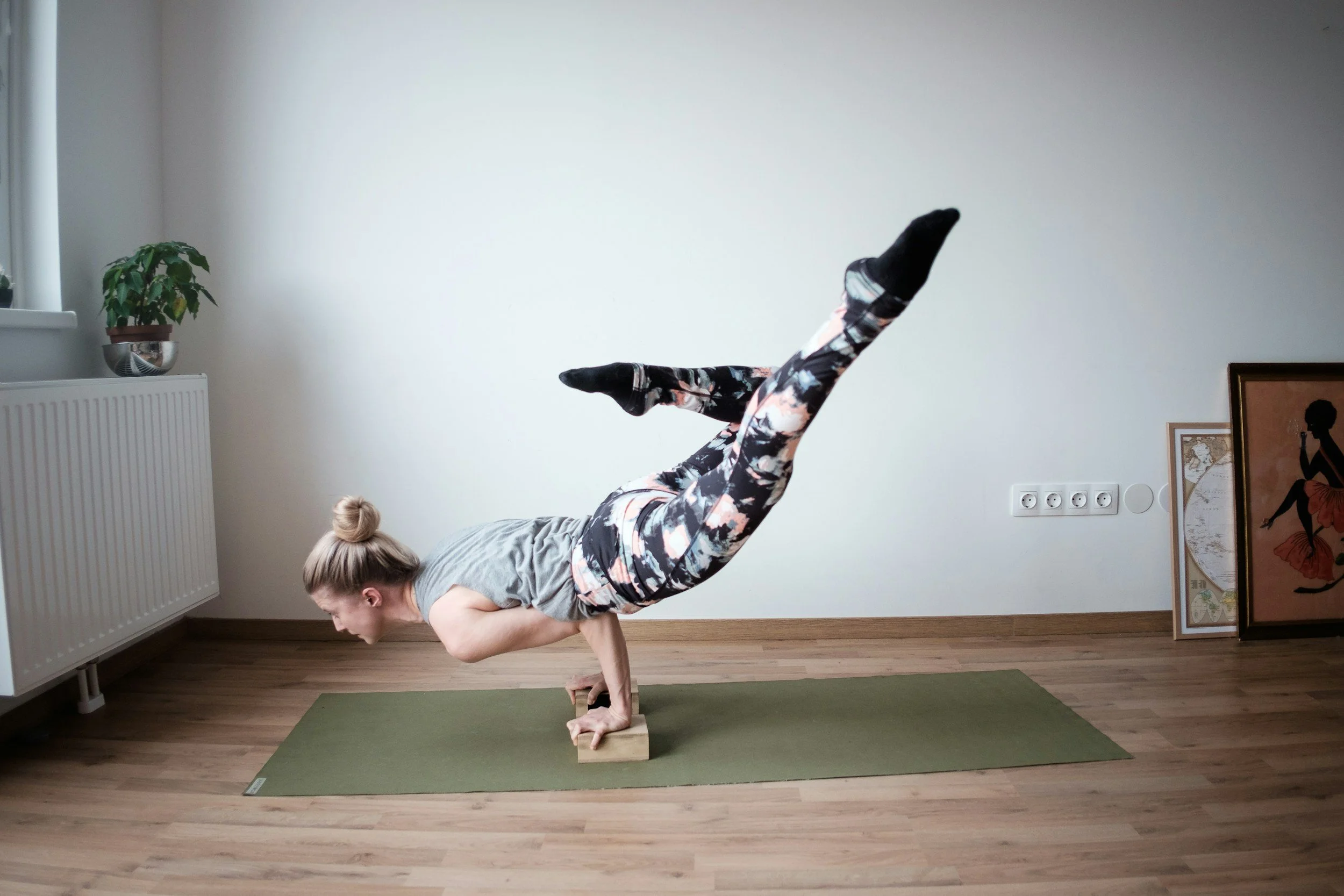
Anxiety, Schm-anxiety: The “Yoga Pill” That’ll Turn You Into a Zen Master—Without All That Stretching
Anxiety—our good ol’ cultural BFF.
It’s always there when you least need it, like a nosy neighbor who shows up uninvited while you’re mid-mental meltdown.
And who has the time to meticulously box-breathe their way out of panic when life’s chaos is breathing down your neck?
Enter: the “Yoga Pill.”
Yes, friends, neuroscientists have identified a brain circuit that allegedly flips anxiety off faster than your Wi-Fi during a Netflix binge.
Finally, science promises us the chill of yoga without the leggings or sweat. Let’s unpack this revolutionary nonsense—err, breakthrough.

Dr. Carol Tavris: Ideas on Science Advocacy
Carol Tavris has had a significant impact on psychology, known for her sharp intellect, critical lens, and steadfast advocacy for evidence-based science.
While her work has been widely celebrated, it has also sparked intense debates, particularly regarding gender differences, memory reliability, and evolutionary psychology.
In this post, we’ll explore her contributions and the controversies they’ve inspired, taking a balanced look at her intellectual legacy.

Dr. Cordelia Fine: Ideas on Gender and Neurosexism
Cordelia Fine’s work has been a cornerstone in reshaping contemporary discussions around gender, neuroscience, and cultural stereotypes.
As a psychologist and author, she has garnered both acclaim and critique for her bold challenges to biological determinism.
While her books, such as Delusions of Gender (2010) and Testosterone Rex (2017), have significantly influenced public discourse, her arguments are not without their flaws.
Scholars like David Buss have raised pointed critiques that highlight potential blind spots in her approach.
This article explores Fine’s key ideas, and examines the broader academic debates surrounding her work.

Dr. Gad Saad on Human Mating and Intimacy: Evolution, Lust, and Consumerism
Let’s talk about love, lust, and why your ex still hasn’t returned your hoodie. Dr. Gad Saad, evolutionary psychologist extraordinaire, claims that the answers to these mysteries lie in your DNA—not your Spotify breakup playlist.
Saad’s work unravels human mating and intimacy as a grand performance choreographed by evolution, with humans driven by ancient instincts that whisper, "Find a mate, secure the species!"
But not everyone’s on board with Saad’s views.
To some, he’s a truth-teller who’s slapped modern nonsense across the face with science.
To others, he’s the biological equivalent of that guy at a party who keeps insisting it’s actually about survival of the fittest. Let’s dig deeper into the juicy debates swirling around Saad’s provocative ideas on human mating.