

Welcome to my Blog
Most people don’t arrive here because something dramatic has happened.
They arrive because something feels… different.
The relationship still works. Conversations still happen. Life continues.
But something important is no longer organizing it the way it used to.
This space is where I write about that shift.
Not just what breaks relationships—but what quietly changes them:
how desire adapts.
how attention moves.
how meaning erodes or deepens over time.
These patterns are not random.
They tend to unfold in a predictable sequence.
If you’re here, you’re likely in one of those moments:
trying to understand what changed.
trying to decide whether it matters.
trying to figure out what to do next.
Start anywhere.
But if something here feels familiar, don’t treat it as abstract.
It usually isn’t.
Where to Begin
If you’re not sure what you’re looking for, these are a few good entry points:
Marriage Is Still Chosen — Even by Those Who Once Stood Outside It.
Epistemic Safety: What It Is and Why It Matters in Relationships.
The Relationship Consequences of Living in a Permanent News Cycle.
The Two Types of People Narcissists Avoid (And Why You Might Be One of Them).
When Narcissists Grieve: Why Their Mourning Looks Cold, Delayed, or Self-Centered
The 3-6-9 Dating Rule: Why Most Relationships Change at Month 3, 6, and 9.
The First Listener Shift: A Precise Relationship Diagnostic Most Couples Miss.
Why Curiosity Is Sacred in Relationships (And What Happens When It Disappears).
If You’re Looking for More Than Insight
Understanding is useful.
But at a certain point, most couples realize they can explain their relationship clearly—and still not change it.
That’s where focused work becomes effective.
I offer structured, high-impact couples intensives designed to produce meaningful movement in a compressed period of time.
Before We Decide Anything
A brief consultation helps determine:
whether this is what you’re dealing with.
whether this format fits.
and whether we should move forward.
Get a Clear Read on Your Relationship
Take your time reading.
But if something here lands in a way that feels specific—pay attention to that.
That’s usually where this work begins.
Continue Exploring
If you prefer to browse more broadly, you can explore posts by topic below.
But most people don’t find what they need by browsing.
They find it when something they read feels uncomfortably accurate.
Be Well, Stay Kind, and Godspeed.
~ Daniel
- Attachment Issues
- Coronavirus
- Couples Therapy
- Extramarital Affairs
- Family Life and Parenting
- How to Fight Fair
- Inlaws and Extended Families
- Intercultural Relationships
- Marriage and Mental Health
- Married Life & Intimate Relationships
- Neurodiverse Couples
- Separation & Divorce
- Signs of Trouble
- Social Media and Relationships
- What Happy Couples Know

Narrative Gravity: Why the Person Who Listens to Your Life Becomes Important
Most people believe relationships fall apart because of sex.
That theory has the advantage of being dramatic.
It also happens to be wrong most of the time.
Relationships usually begin shifting somewhere much quieter—inside ordinary conversations that appear too trivial to matter.
A person tells someone about their day.
A meeting that went badly.
A small professional victory.
An email that should never have been written.
The listener nods.
They ask a question.
They remember what happened yesterday.
The next day another story appears.
Then another.
By the time anyone realizes what has happened, the emotional center of gravity has already moved.
I began referring to this phenomenon as Narrative Gravity.

Are You Regulating Your Partner’s Emotions? The Hidden Dynamic Called Emotional Regulation Borrowing
Most people assume emotional regulation is something most folks learn to do on their own.
But human beings rarely regulate their emotional states in isolation.
Our nervous systems are constantly responding to the emotional signals of other people—tone of voice, facial expression, body language, and presence.
Calm people tend to calm those around them. Agitated people tend to amplify agitation.
In healthy relationships, this emotional influence flows naturally in both directions.
Life partners stabilize each other during stressful moments.
But in my work with couples, I sometimes see a different pattern develop over time. One partner gradually becomes responsible for stabilizing the emotional state of the other partner.
I
f the calm partner stays steady, the relationship stays steady.
If the calm partner becomes overwhelmed, exhausted, or upset, the emotional system of the relationship destabilizes quickly.
When this pattern becomes chronic, the relationship has entered a dynamic I call: Emotional Regulation Borrowing.

The Witnessed Life Effect: Why Workplace and Online Conversations Become Emotional Affairs
Most people believe relationships deepen because of love.
That is only partly true.
Relationships deepen because of bestowed attention.
In my clinical work with couples, I often see something quieter and more psychologically powerful unfolding long before anyone uses the word affair.
One partner begins sharing the small details of their life somewhere else—at work, in private messages, or in conversations that gradually become routine.
If this sounds familiar, you are not alone. Many couples encounter this shift without understanding the mechanism behind it.
What they are experiencing is something I call the Witnessed Life Effect.

The New Language of Neurodiverse Love: Mask Drop Intimacy, Hyperfocus Bonding, and Predictive Safety
Relationship science has spent decades studying attraction, attachment, and conflict.
What it has studied far less carefully is how neurodivergent couples actually experience intimacy.
Spend time in autism and ADHD communities online and you will notice something remarkable. People are describing the same relational experiences again and again, but they often lack stable language for them.
They say things like:
“He’s the only person I don’t have to mask around.”
“We bond when we go down the same rabbit hole together.”
“The safest relationship I’ve ever had is the most predictable one.”
These observations are not random anecdotes.
They are attempts to describe stable patterns of intimacy that traditional relationship advice rarely addresses.
Three of these patterns appear so frequently in neurodivergent communities that they deserve clear definition:
Mask Drop Intimacy.
Hyperfocus Bonding.
Predictive Safety.
Together they suggest something profound: many neurodiverse relationships organize intimacy through safety, attention, and cognitive rhythm rather than emotional performance alone.

When Dark Personalities See the World as Meaningless
Some people move through life as if the world were quietly disappointing.
Not tragic.
Not catastrophic.
Just… not very meaningful.
They observe beauty the way someone watches a commercial break.
Mildly interesting.
Not especially important.
In my work with couples, I occasionally meet partners who seem emotionally unmoved by experiences that normally generate connection—curiosity, generosity, shared discovery.
When that pattern appears, people often assume the problem is attitude.
But new psychological research suggests something deeper may be happening.
A set of four studies published in the Journal of Personality found that individuals high in what psychologists call the Dark Core of personality tend to see the world itself as less meaningful, less interesting, and less worth engaging with.
In other words, darker personalities may not simply behave differently.
They may experience reality itself through a darker lens.

Why Some People Use Cannabis During Sex: New Research Reveals the Psychological Motivations
Human beings have been experimenting with substances and intimacy for a very long time.
Wine.
Music.
Candlelight.
And occasionally decisions that seemed brilliant at the time.
Cannabis is simply the newest participant in this long-running human experiment.
Despite being the second most commonly used substance during sex after alcohol, it has received surprisingly little attention in scientific research.
That is beginning to change.
A recent study published in The Journal of Sex Research by researcher Maëlle Lefebvre and colleagues at Université du Québec à Montréal takes a closer look at why young adults combine cannabis and sex—and what they say the experience actually does for them.
The answers are more psychologically interesting than you might expect.

The Witnessed Body Effect: Why Confidence Disappears in the Bedroom
Some of the most puzzling moments in relationships occur not during arguments, betrayals, or life crises, but in moments that are supposed to feel natural.
Two people care about each other.
They are alone together.
The atmosphere is safe.
And suddenly one of them becomes strangely self-conscious.
Their confidence vanishes.
They feel awkward in their own body.
In my work with couples, I hear some version of this description constantly:
“I feel like I suddenly start watching myself.”
If this sounds familiar, join the club. Many otherwise confident adults experience a sudden shift during intimacy where the body stops feeling like home and starts feeling like a stage.
When that happens, something subtle but important has changed.
You are no longer experiencing your body from the inside.
You are experiencing it as if someone else were watching.
I call this the Witnessed Body Effect.
And once you notice it, you will begin to see it everywhere.

Predictive Intimacy: When Knowing Your Partner Too Well Starts Damaging the Relationship
Predictive intimacy occurs when partners begin responding to their internal model of each other rather than to the person actually present in the room.
Some relationship problems arrive with sirens.
Infidelity.
Addiction.
Explosive arguments.
Everyone recognizes those.
But in my work with couples, one of the quietest forces of relational erosion is something that almost never gets named.
It happens when life partners begin to believe they already know exactly what their counterpart will say.
The conversation never even begins.
A partner starts to speak, pauses, and the other person sighs.
“I know what you’re going to say.”
It sounds like familiarity.
It sounds like long-term intimacy.
But what has actually appeared is something I call predictive intimacy.
And predictive intimacy can slowly suffocate curiosity inside a relationship.
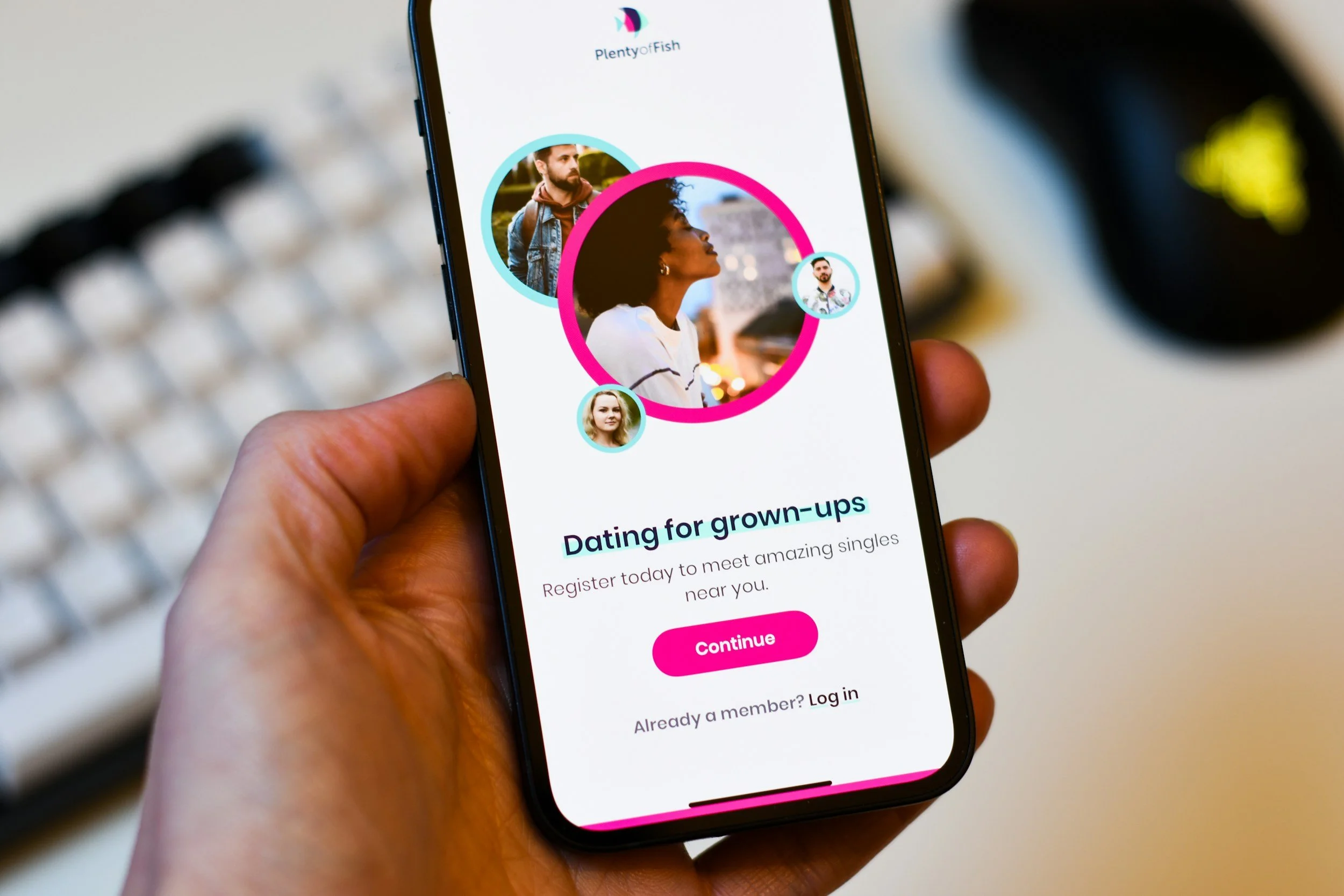
Algorithmic Attraction: How Dating App Algorithms Quietly Reshape Modern Love
Most people believe they choose their romantic partners.
Increasingly, software chooses the pool from which those choices are made.
For most of human history, attraction was a messy, inefficient process governed by geography and chance. People met through friends, neighborhoods, workplaces, churches, and the occasional bold acquaintance willing to say, “You two should meet.”
Romance depended on proximity.
Now it depends on ranking systems.
In my work with couples, I increasingly see relationships that began not through shared communities but through recommendation engines—software designed to predict who might interest us, who might respond, and who might keep us swiping.
If this sounds familiar, you are not alone. Millions of thoughtful people are beginning to notice that modern dating feels strangely different from the way relationships once formed.
Understanding why can change how we approach intimacy in a digital age.

Tattoos, Confidence, and the Psychology of the Witnessed Body
The modern body is curated with extraordinary care.
We decorate it.
We sculpt it.
We photograph it.
We modify it.
Tattoos, cosmetic procedures, fitness culture, skincare rituals, carefully chosen clothing—these have become ordinary tools in the project of shaping how we appear to the world.
And in many cases, these efforts genuinely improve how people feel about themselves.
But intimacy has a strange habit of ignoring all that work.
Because the body that appears in public is not the same body that appears in the bedroom.
A recent study published in Critical Public Health illustrates this paradox beautifully.

Why Some People Only Feel Attraction After Someone Likes Them First: The Psychology of Reciprosexual Attraction
Attraction is usually described as spontaneous.
Two people meet. Something sparks. Chemistry appears before anyone quite understands why.
But in my work with couples, I have repeatedly seen a quieter and more puzzling pattern.
Some people do not experience attraction first.
They experience being desired first.
If this sounds familiar, you are not unusual. Many thoughtful people quietly notice this pattern in themselves but struggle to explain it.
Psychologists have begun describing this experience using a term that is slowly circulating online:
reciprosexual attraction.
Before dismissing it as internet jargon, it turns out the idea touches something very real in relationship psychology.
Because for some people, attraction does not ignite in isolation.
It ignites in response.

Cognitive Infidelity: The New Kind of Affair Happening Inside Modern Relationships
Couples used to betray each other in motel rooms.
Now they do it while sitting on the same couch.
The modern affair often involves no secret hotel, no incriminating messages, and no mysterious credit-card charge. Instead, something quieter happens.
A person’s inner life—thoughts, worries, interpretations, little emotional discoveries—begins migrating somewhere else.
In my work with couples, I’ve begun to see a pattern that doesn’t quite fit the old categories of infidelity. Nothing sexual has occurred. Sometimes there isn’t even another person involved.
Yet one partner senses something unmistakable:
I’m no longer where their mind goes first.
If this sounds familiar, you’re not alone. Many thoughtful partners notice the shift long before they can name it.
I’ve started calling this phenomenon cognitive infidelity.