
Welcome to my Blog
Thank you for stopping by. This space is where I share research, reflections, and practical tools drawn from my experience as a marriage and family therapist with an international practice.
I write about what happens to desire, attachment, and meaning once the early myths stop working.
Are you a couple looking for clarity? A professional curious about the science of relationships? Or simply someone interested in how love and resilience work? I'm glad you've found your way here. I can help with that. I'm accepting new clients, and this blog is for the benefit of all my gentle readers.
Each post is written with one goal in mind: to help you better understand yourself, your partner, and the hidden dynamics that shape human connection
Grab a coffee (or a notebook), explore what speaks to you, and take what's useful back into your life and relationships.
And if a post sparks a question, or makes you realize you could use more support, l'd love to hear from you. Let's explore the scope of work you'd like to do together.
Be Well, Stay Kind, and Godspeed.
~ Daniel
P.S.
Feel free to explore the categories below to find past blog posts on the topics that matter most to you. If you're curious about attachment, navigating conflict, or strengthening intimacy, these archives are a great way to dive deeper into the research and insights that l've been sharing for years.
- Attachment Issues
- Coronavirus
- Couples Therapy
- Extramarital Affairs
- Family Life and Parenting
- How to Fight Fair
- Inlaws and Extended Families
- Intercultural Relationships
- Marriage and Mental Health
- Married Life & Intimate Relationships
- Neurodiverse Couples
- Separation & Divorce
- Signs of Trouble
- Social Media and Relationships
- What Happy Couples Know


Why Beauty Is Easy on the Brain: New Neuroscience Explained
If you ever wondered why you find one thing beautiful and another thing exhausting, science has finally delivered the answer, and it is exquisitely humiliating: your brain is cheap.
New neuroscience research from the University of Toronto—published in the sleekly titled PNAS Nexus, a journal that sounds like it should arrive encrypted—tells us that beauty is not cultural, not divine, not mystical, and certainly not a mark of taste.
Beauty, they say, is a biological bargain. It’s whatever costs your brain the least metabolic energy to process.
It turns out “easy on the eyes” was never a compliment. It was a financial report.
The brain, that famously expensive organ that eats 20% of your daily calories just to keep you upright and not sobbing in a Trader Joe’s parking lot, prefers images that require fewer neurons to fire.
Less neural activity means less glucose burned. Less glucose burned means your brain is happier.
Happiness, apparently, is just low energy expenditure wearing a romantic coat.
This is the kind of news that ruins poetry but kinda explains your dating history.

God is Dead. The Lone Wolf Lives. We Live in Free Markets.
The modern West has always loved its own slogans.
They roll off the tongue with the ease of a creed and the hollowness of a television jingle:
God is dead. The lone wolf lives. We live in free markets.
Three sentences that were never entirely true, then became increasingly false, and now survive only as the flickering neon above a civilization that no longer believes in its own mythology.
What follows is not an argument.
Arguments require an audience with hope.
This is a eulogy.
A ruined-beautiful lament for a world that still stands but no longer shelters.
And like all eulogies, it begins with the cause of death.

The 3-3-3 Rule: Why the Internet Invented a New Pace for Modern Dating
The 3-3-3 dating rule is one of those dating ideas that seems to materialize out of the cultural ether—your friend mentions it, TikTok repeats it, Reddit debates it, and suddenly everyone is acting as if it’s been a best cultural practice all along.
It hasn’t.
The rule came from ordinary daters trying to solve an extraordinary problem: the acceleration of intimacy in a world where no one has time to know each other.
The rule itself is simple—three days, three dates, three weeks—but simplicity is deceptive here.
Because the 3-3-3 rule isn’t really about numbers. It’s about tempo.
It’s about building a relationship at a pace where your nervous system can tell the difference between compatibility and projection.
If the 3-6-9 rule helps daters evaluate long-term viability, the 3-3-3 rule helps them survive the beginning—where most relationships don’t fail so much as misfire.

Humans Rank Between Meerkats and Beavers in Monogamy: The Kind of News We Pretend Surprises Us
Every few years, science releases a study that tries—earnestly, valiantly—to quantify human monogamy with the cool precision of a lab instrument.
The latest comes from the University of Cambridge, where Dr. Mark Dyble decided to bypass centuries of philosophical debate and simply look at the genetic receipts:
How many siblings in a given species share both parents?
It’s the least romantic way to study commitment, which may be why it works.
Humans, as it turns out, sit neatly between meerkats and beavers in what Dyble terms the “monogamy league table” (Dyble, 2025).
Not the top, not the bottom—just the reliable middle lane. Devoted enough to form pair bonds, conflicted enough to keep poets employed.
This study doesn’t bother with moral frameworks or cultural narratives.
It measures monogamy the way nature measures anything: by outcomes.
And outcomes tell a different, far simpler story than the one we like to tell about ourselves.

Soft Love: A Cultural Field Guide to the New Romance That Refuses to Bruise
Soft love is the newest export from a generation that looked at the emotional hangover of the past fifty years—hookup culture, hustle culture, self-optimization culture—and decided it simply did not pair well with their nervous systems.
It is, essentially, the romance equivalent of switching to oat milk: unnecessary, arguably a little precious, and yet somehow undeniably better for you.
Soft love is not fragile.
Soft love is not weak.
Soft love is not the emotional version of cashmere you keep sealed in a protective garment bag for fear of “pilling.”
Soft love is simply… gentle.
And gentleness, in an era where everyone’s cortisol is doing Pilates, feels radical.
Let’s define it culturally, before TikTok finishes doing it for us.

Why Parked-Car Fights Are Worse
Most couples believe the worst part of a driving fight is the drive.
It isn’t.
It’s the moment the car stops — the ignition clicks off, the world goes quiet, and you are suddenly forced to face the emotional debris field you created somewhere between the exit ramp and the parking lot.
A moving car is stressful.
A parked car is revealing.
It’s the only place where the conflict has nowhere left to go — and neither do you.
The Body Hasn’t Stopped; It’s Suspended

Why Passengers Start Most Car Fights: The Hidden Science
Passengers have a secret: they believe the car is a place where conversations go to thrive.
It’s enclosed! It’s private!
You’re trapped together!
What better time to discuss her father’s declining boundaries, or why the neighbor’s dog seems to like you more?
Unfortunately, passengers are wrong—spectacularly, confidently, devastatingly wrong.
Because while the passenger is busy enjoying their mobile chaise lounge, the driver is performing a delicate neurobiological balancing act that would make a surgeon sweat.

Why Couples Fight in the Car: The Science Behind Car Fights
Somewhere along the way, we all quietly accepted a strange cultural delusion:
that barreling down a highway in a metal box at 65 mph while surrounded by thousands of other metal boxes —
all piloted by humans of varying skill, sobriety, and judgment — is a normal, everyday experience.
Because while the driver is in a state of vigilance, scanning for hazard, anticipating idiot maneuvers from the guy in the white SUV, the passenger is — physiologically speaking — reclining on a chaise lounge, deciding whether now is a good time to discuss taxes, your last argument, or the mysterious tone you used at breakfast.
A driver in sympathetic arousal + a passenger in parasympathetic ease =a dyadic mismatch begging to become a fight.
And this is where the trouble begins.
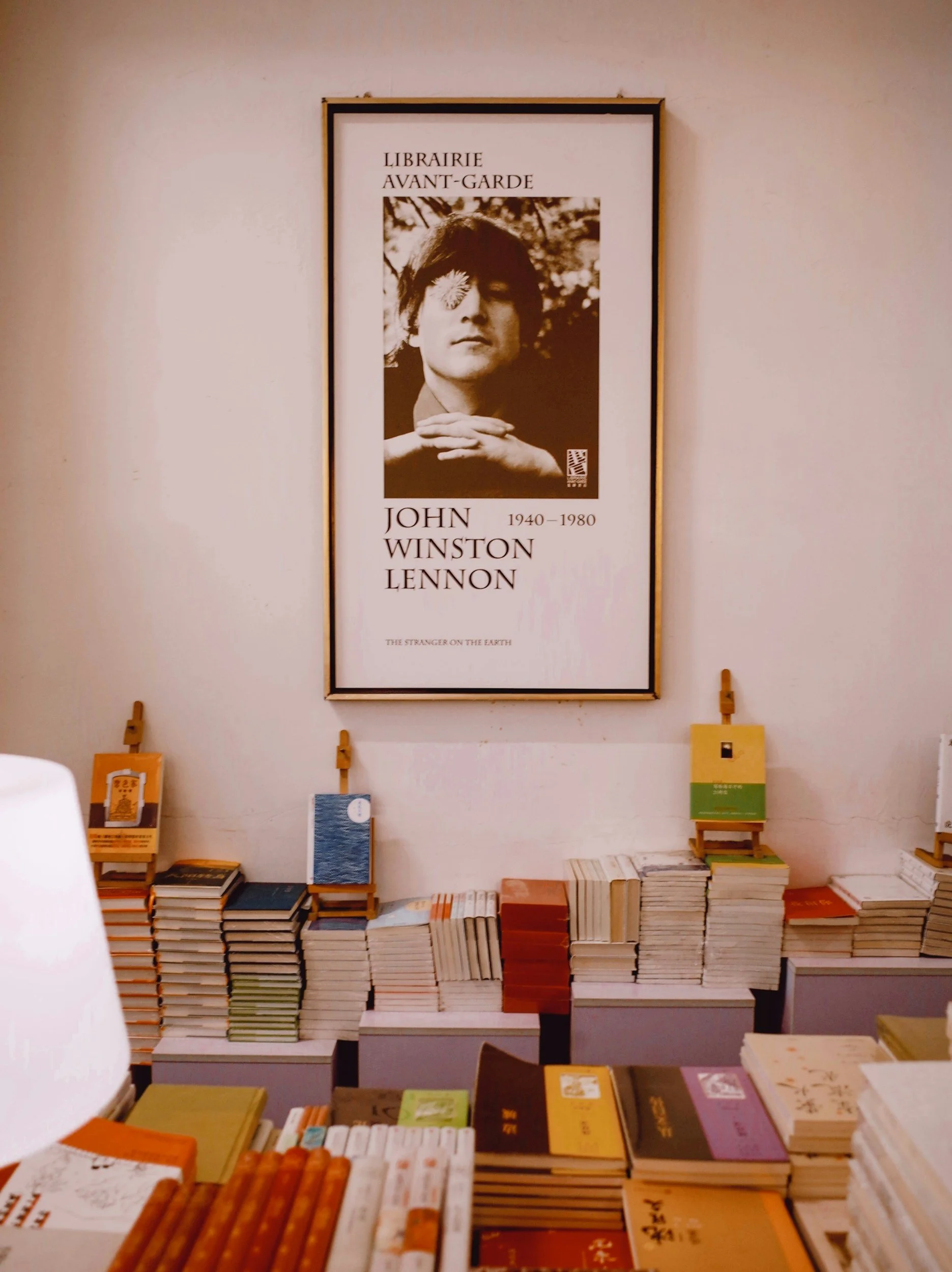
Starting Over in Love: Lennon, Nostalgia, Tears, and the Neuroscience of Repair
John Lennon was killed on December 8, 1980—shot outside the home he shared with the woman this song was written for.
He was forty. He has now been dead longer than he lived.
Most of us can accept tragedy, but not this kind of math: the idea that someone who shaped us never got the years he was singing toward.
So when we listen to “(Just Like) Starting Over,” we’re hearing a man imagining a future he believed he still had. It makes the song tender; it also makes it unbearable.
By this point, Lennon had stepped out of the spectacle and into the ordinariness he’d once mocked. He was raising a child, burning bread, trying to remember who he was when nobody asked him to be iconic.
It’s often in these quiet domestic stretches that we finally hear ourselves think—and don’t entirely like what we hear.
He was at the age when people begin taking stock of their lives, and their loves, and the distances they swore they’d never allow to grow.
He was not a rock star writing a love song.
He was a highly accomplished middle-aged man realizing repair might require more honesty than he had practiced.
Bird Theory & Marriage: The Science of Turning Toward
Bird theory arrived on social media like most modern revelations: half-joke, half-confession.
You mention a bird—“I saw the most incredible bird today”—and then watch your partner for proof of something you can’t quite articulate.
Do they look up? Do they join you? Or does your enthusiasm drift into the room like background static—barely noticed, vaguely inconvenient?
TikTok calls this a relationship test. Therapists call it a nervous system seeking evidence of companionship.
Bird theory resonates not because it’s clever, but because everyone knows the exquisite ache of turning toward someone who doesn’t turn back. It captures, in one feather-light moment, the existential question sitting beneath every marriage:
Does my inner life have a home here? Or am I alone, even when I’m loved?
The truth—rarely acknowledged in the shiny emotional economy of social media—is that relationships rise or fall on these tiny tests.
Not on the anniversaries or apologies or weekend getaways, but on the microscopic, near-invisible moments of emotional availability.
The internet gave it a name. Gottman gave it a science. Couples give it their whole future.

The 3-6-9 Dating Rule: Why Most Relationships Change at Month 3, 6, and 9
Modern dating is a high-speed emotional sport conducted by people who barely trust their own instincts and absolutely do not trust each other’s.
So naturally, the culture began inventing rules—small navigational systems to help people pace intimacy in a world where everything else moves too fast.
The 3-6-9 month rule is one of these rules.
It shouldn’t work.
It’s far too neat for human nature.
And yet—infuriatingly—it tracks with what decades of research reveal about attachment, neurobiology, emotional pacing, and the developmental arc of intimacy once the novelty fog burns off.
What follows is the definitive explanation of the 3-6-9 rule, written for adults who want to date with more clarity, less chaos, and far fewer 3 a.m. existential spirals.
What Is the 3-6-9 Month Rule? (The Honest Summary You Were Looking For)

When the Marriage Breaks, the Contract Appears: How High Achievers Rebuild
Every marriage has an operating system, but high-achieving couples tend to run one they never installed.
It arrives preloaded—ambition, competence, logistical finesse—and no one bothers to read the user manual because, for a long time, everything works.
Until it doesn’t.
Infidelity is not simply a violation.
It is the moment the marriage finally prints out its terms and conditions—bold, unskippable, and devastatingly overdue.
Most couples try to repair the wound.
High-achieving couples must repair the contract—the psychological and operational blueprint they have been obediently following without ever seeing.
This is the difference between a marriage you drift into and a marriage you design.
The second one has a chance of surviving pressure. The first one breaks at the seams.