Wednesday, December 10, 2025.
If something here hits close to home, let’s talk.
A free 20-minute + consult. No urgency. Just clarity.
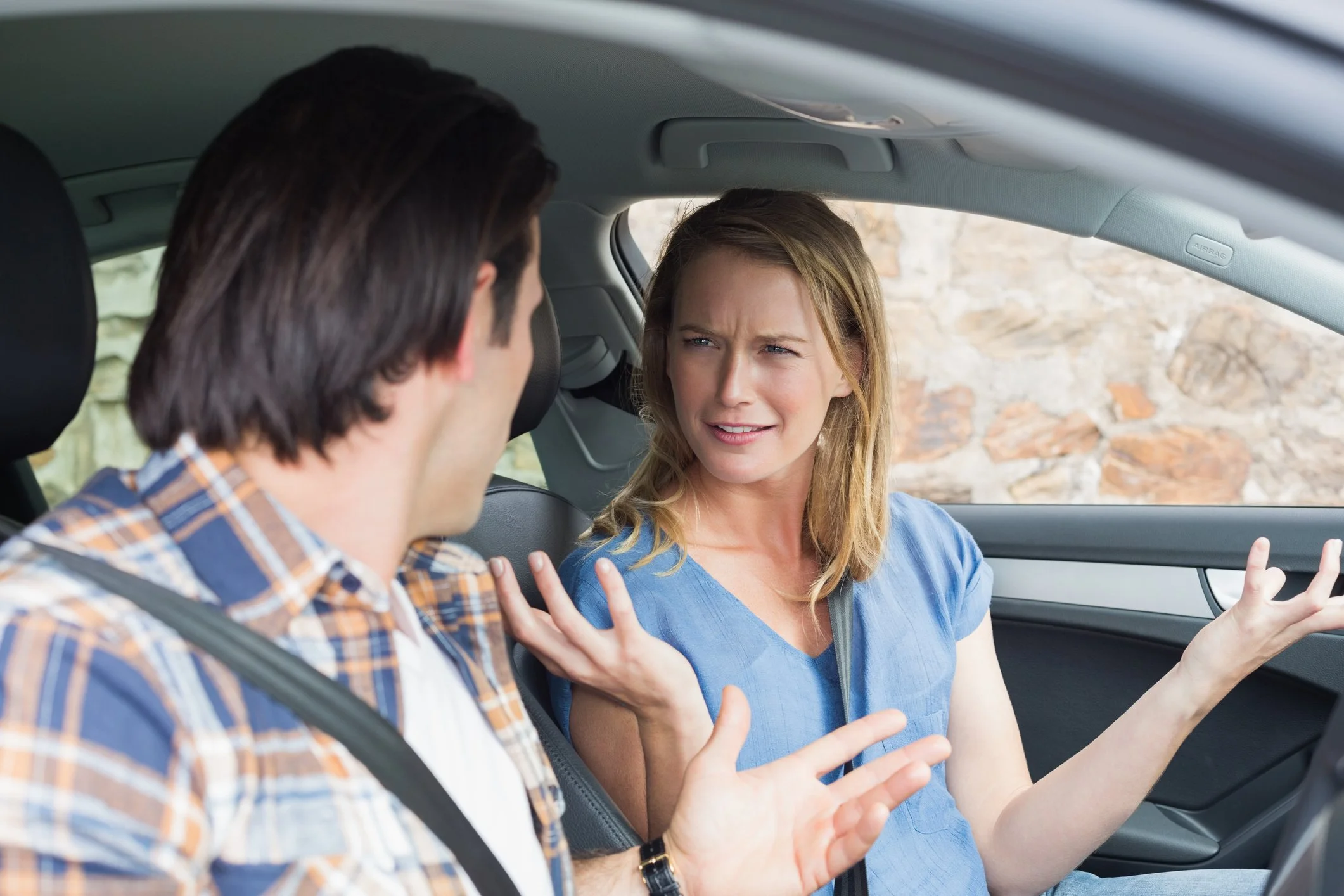
Passengers have a secret: they believe the car is a place where conversations go to thrive.
It’s enclosed! It’s private! You’re trapped together! What better time to discuss her father’s declining boundaries, or why the neighbor’s dog seems to like you more?
Unfortunately, passengers are wrong—spectacularly, confidently, devastatingly wrong.
Because while the passenger is busy enjoying their mobile chaise lounge, the driver is performing a delicate neurobiological balancing act that would make a surgeon sweat.
Driving increases mental workload and autonomic strain (Human Factors study on cognitive demand while driving), ramps up physiological arousal (Transportation Research Part F), and narrows attentional bandwidth to threat cues rather than emotional reflection (Psychonomic Bulletin & Review findings on attentional bottlenecks).
In other words:
Passenger: “We should talk about our relationship.”
Driver: “I am piloting a freaking missile.”
And this—this autonomic mismatch—is why couples fight.
Why Passengers Think the Car Is Perfect for Emotional Processing
Passengers are in a parasympathetic state.
Research on dyadic state divergence shows that when one partner is calm and the other is physiologically vigilant, miscommunication skyrockets (Emotion study by Helm, Sbarra & Ferrer on physiological non-synchrony).
The passenger experiences:
mental spaciousness.
conversational availability.
boredom (a dangerous state in relationships).
perhaps even the urge to feel close.
the illusion that the car offers chance for “quality time.”
Meanwhile, the driver’s nervous system is quietly screaming for predictability, silence, and minimal cognitive load.
This mismatch creates what I call:
“Relaxed-State Provocation Effect”
Not intentional.
Not malicious.
Simply physiological.
The more relaxed the passenger, the more likely they are to initiate a topic the driver cannot possibly handle.
“Let’s talk about your tone this morning” feels like a soft invitation to the passenger; to the driver, it feels like a hostile takeover.
How Innocent Passenger Behaviors Become Driver Threat Signals
Passengers often bring up issues in a voice they believe is reasonable. They are wrong.
The driver’s brain, under stress, interprets even benign comments as micro-threats, thanks to:
attentional narrowing under perceived risk (CABN research).
increased sympathetic activation during driving (Accident Analysis & Prevention).
reduced emotional recognition accuracy during cognitive load (Transportation Research Part F).
So what feels like gentle inquiry is felt as:
criticism.
pressure.
distraction.
danger.
And nothing garners more spousal contempt than a passenger who “just wants to help.”
Research on conflict reactivity links unsolicited advice to cardiovascular stress responses (Journal of Behavioral Medicine).
So while the passenger imagines themselves a supportive co-pilot, the driver hears:
“You’re doing it wrong.”
The Gendered Passenger Problem (But Not the Way You Think)
Studies on distracted-passenger behavior show that female passengers are more likely to talk on the phone, multitask, or narrate the environment—behaviors that can inadvertently stress a male-leaning vigilance pattern (Personality and Individual Differences systematic review of driving anger and cognitive predictors).
But here’s the twist: men do the exact same thing in reverse.
They micromanage.
They critique.
They become human lane-departure warning systems.
This isn’t because anyone is difficult.
It’s because gendered socialization shapes threat perception.
Navigation: The Gateway Drug of Car Fights
Navigation may be the leading cause of mild divorce threats.
Google Maps is glitchy, Waze is a narc, and Apple Maps should be tried at The Hague.
Research on sudden cognitive load increases shows that unpredictable navigation input spikes stress reactivity in drivers (Transportation Research Part F). So when passengers yell:
“Turn left—no wait—sorry—not yet!”
they unknowingly induce a micro-panic.
This is why, in my previous post, Harriet’s removal from her navigation duties saved her marriage.
It wasn’t personal.
It was always neurological.
The Passenger’s Responsibility: Influence, Not Control
Passengers mistakenly assume the car is a democracy. It isn’t.
The car is a dictatorship run by a benevolent tyrant called The Driver, whose sole responsibility is keeping you alive.
The passenger’s job:
ask before initiating a heavy conversation.
monitor their own boredom-driven provocations.
support regulation rather than spiking arousal.
accept that emotional intimacy and driving competence share no Venn diagram overlap.
This isn’t about giving up power.
It’s about respecting the situation’s demands on the driver’s nervous system.
If these patterns feel uncomfortably familiar, you don’t have to decode them alone. A brief consult can steady the room.
How to Stop Starting Fights You Never Meant to Start
1. The Ask-Before-Talking Rule.
Passenger says:
“Hey, is this a good time for a conversation, or should we save it?”
Driver says:
“Let’s save it.”
Modern civilization advances.
2. State Matching Before Speaking.
Passenger checks their internal state:
Am I bored? Am I lonely? Am I avoiding something? Am I confusing proximity with availability?
If the answer is yes, save it for later.
3. Talk About the Passenger Problem at Home.
Just like the fight autopsy in Part I.
Passenger confesses:
“I think I start things because I’m relaxed and you’re trapped.”
Driver confesses:
“I think I snap because I’m stressed and you’re chatty.”
Both laugh.
Both regulate.
The car becomes less of a mobile war zone.
4. Establish Car Topics That Are Allowed
movies.
playlists.
harmless gossip.
dreams (but not the symbolic kind).
the dog.
which celebrity you would trust to run the country
Topics probably best to avoid:
money.
sex.
in-laws.
betrayals.
tone policing.
anything that begins with “We need to talk…”
5. Repair Early, Repair Often
A simple:
“Ah, I think I pushed too hard there. Let’s pause.”
That’s it.
You just made a deposit in your partner’s emotional bank account.
Final Thoughts: The Passenger Is Not the Problem. The Mismatch Is.
Most passengers aren’t instigators by nature—they’re instigators by biology.
Their autonomic state misleads them about how available the driver is.
Once couples understand the physiological mismatch, car fights stop feeling personal and start feeling solvable.
Passengers become more mindful.
Drivers become less defensive.
The car becomes—if not peaceful—at least no longer an emotional demolition derby.
Therapist’s Note
If you see your dynamic in these lines, that’s not failure—it’s physiology. Mixed-state interactions are predictable, fixable, and incredibly revealing. A steady guide can help you translate what’s happening between you so these patterns don’t keep repeating.
If something here hits close to home, reach out.
A free 20-minute consult. No urgency. Just clarity.
When you’re ready, I’m here. If you’re reading this because something in your relationship feels quietly important—and you’re not sure what to do next—you’re welcome to reach out. This is the kind of work I do.
Be Well, Stay Kind, and Godspeed.