Welcome to my Blog
Thank you for stopping by. This space is where I share research, reflections, and practical tools drawn from my experience as a marriage and family therapist with an international practice.
I write about what happens to desire, attachment, and meaning once the early myths stop working.
Are you a couple looking for clarity? A professional curious about the science of relationships? Or simply someone interested in how love and resilience work? I'm glad you've found your way here. I can help with that. I'm accepting new clients, and this blog is for the benefit of all my gentle readers.
Each post is written with one goal in mind: to help you better understand yourself, your partner, and the hidden dynamics that shape human connection
Grab a coffee (or a notebook), explore what speaks to you, and take what's useful back into your life and relationships.
And if a post sparks a question, or makes you realize you could use more support, l'd love to hear from you. Let's explore the scope of work you'd like to do together.
Be Well, Stay Kind, and Godspeed.
~ Daniel
P.S.
Feel free to explore the categories below to find past blog posts on the topics that matter most to you. If you're curious about attachment, navigating conflict, or strengthening intimacy, these archives are a great way to dive deeper into the research and insights that l've been sharing for years.
- Attachment Issues
- Coronavirus
- Couples Therapy
- Extramarital Affairs
- Family Life and Parenting
- How to Fight Fair
- Inlaws and Extended Families
- Intercultural Relationships
- Marriage and Mental Health
- Married Life & Intimate Relationships
- Neurodiverse Couples
- Separation & Divorce
- Signs of Trouble
- Social Media and Relationships
- What Happy Couples Know


When Narcissists Think God Owes Them Special Favors
There are those who approach religion with humility, uncertainty, gratitude, and the uncomfortable awareness that they are not the center of existence.
And then there are some folks who approach religion like they are negotiating upgraded seating with the universe.
The distinction matters.
Because one of the more interesting findings emerging from personality psychology is that narcissism does not necessarily make people less religious.
In some cases, it may simply reorganize religion around the needs of the self.
A recent study published in Personality and Individual Differences found that narcissistic traits were associated less with deeply internalized faith, and more with forms of religious engagement driven by emotional regulation, status, entitlement, and external rewards.
That finding clarifies something many people have observed privately for years.
Some people use religion to become less self-centered.
Others use it to become spiritually decorated versions of exactly who they already are.

The Body Keeps the Score — But Maybe Not the Way We Thought
Some psychology books become more than books.
They become emotional operating systems.
Folks do not simply read them.
They begin interpreting their marriages, panic attacks, insomnia, emotional triggers, digestive systems, dating patterns, and nervous system reactions through them.
Therapists quote them.
Friends recommend them quietly after divorces.
Strangers discuss them in coffee shops with the gravity usually reserved for war memoirs and religious conversion.
The Body Keeps the Score became one of those books.
And its author, Bessel van der Kolk, became one of the most influential figures in modern trauma psychology.

The Narcissistic Empath Vampire: How the Internet Turned Breakups Into Psychological Mythology
There was a brief and beautiful moment in American life when your ex could simply be disappointing.
Not abusive.
Not spiritually parasitic.
Not “a dark triad avoidant energy harvester with anxious-preoccupied supply dynamics.”
Just disappointing.
Maybe selfish. Maybe immature. Maybe emotionally unreliable in the way certain men become emotionally unreliable after discovering crypto, intermittent fasting, or a podcast involving “high value masculinity.”
Maybe a little grandiose. Maybe constitutionally allergic to accountability.
Maybe somebody who could discuss your attachment wounds in exquisite detail while simultaneously forgetting your birthday.
Ordinary heartbreak once had the dignity of ambiguity.
The internet has corrected this problem.
Now people emerge from six-week relationships speaking as though they survived a hostage negotiation conducted by a spiritually carnivorous attachment wizard.
Your former boyfriend is no longer emotionally immature.
He is now:
“a narcissistic empath vampire.”

The Dark Triad in Relationships: Why Some Couples Don’t Break Up—They Just Get Better at Control
Some relationships don’t fall apart because people don’t understand each other.
They fall apart because the pattern between them becomes so efficient, so well-rehearsed, that understanding no longer matters.
In my work with couples, there’s a moment I’ve learned to recognize. It’s not loud. No one storms out. No one throws anything that can’t be explained later.
It’s the moment you realize you’re not watching a disagreement.
You’re watching a system.
Same argument. Same pacing. Same emotional turns. Maybe sharper than last time. Cleaner. Faster. Like two people who have stopped improvising and started performing.
If that feels familiar, you don’t need better communication.
You need a better map.

Gold Digging and Psychopathy: What This New Study Reveals About Modern Dating
There’s a version of love people like to believe in—the one where attraction is mysterious, connection is mutual, and everything unfolds with a kind of emotional symmetry.
And then there’s the version researchers keep quietly documenting.
In my work with couples, I’ve seen this second version far more often than anyone would like to admit: relationships that don’t fall apart because of confusion, but because of a difference in what each person is actually optimizing for.
There’s a particular kind of conversation that repeats itself in therapy rooms.
One partner says, “I don’t feel important to you.”
The other responds, “That’s not fair. Look at everything I do for us.”
And if you listen carefully, you realize they are not disagreeing.
They are operating in entirely different economies.
One is speaking in the language of connection.
The other is speaking in the language of advantage.
That distinction—quiet, almost invisible—is the whole story.
Is Narcissism Inherited? New Research Says Family Patterns May Be More Genetic Than Learned
There is a peculiar modern hunger to turn every difficult personality into a childhood parable.
If someone is controlling, there must have been emotional neglect.
If someone is grandiose, there must have been overpraise.
If someone behaves like a peacock in loafers at a dinner party, we assume mother did something regrettable in 1983.
It is a touching faith.
And possibly a slightly superstitious one.
A striking new twin-family study led by Mitja Back and colleagues has landed like a small grenade in the middle of that story, suggesting narcissism may run in families primarily through genetic inheritance rather than through shared parenting effects.
Now, before anybody starts tattooing “it’s genetic” on their forearm—slow down.
That is not quite what the paper says.
And what it does say is, in some ways, more interesting.
Childhood Emotional Abuse and Adult Relationships: How Belonging Shapes Relationship Satisfaction
Psychology, like fashion, has seasons.
There was the era when everything was repression.
Then codependency.
Then trauma.
Now attachment.
We have reached a point where forgetting to unload the dishwasher can sound suspiciously like an abandonment wound.
This may be progress.
It may also be inflation.
Which is partly why this new study interested me. It proposes something almost unfashionably simple: childhood psychological abuse may erode not only later trust, but a person’s sense of belonging, which in turn may diminish relationship satisfaction.
That lands differently.

Admiration Starvation: A Missing Variable in Marriage Research?
There is a peculiar modern superstition that relationships fail because people stop communicating.
As if the average couple is one improved reflective-listening exercise away from transcendence.
This has always struck me as a little flattering to communication.
People can communicate quite beautifully while dismantling one another.
And many marriages do not fail because dialogue collapsed.
They fail because admiration quietly thinned.
That possibility has interested me for years.
Not as a grand theory. God spare us new grand theories of marriage.
As an under-noticed sorrow.
Because many relationships do not die in fire.
They go beige.
When Kindness and Manipulation Coexist: What New Research Says About Gossip, Dark Traits, and Social Control
There is an old sentimental error that bad actors reveal themselves through obvious cruelty.
They do not.
Quite often they arrive agreeable, cooperative, and socially skilled.
A recent study in Personality and Individual Differences offers a useful corrective.
Its central finding is modest, but unsettling.
People high in dark personality traits—particularly psychopathy and vulnerable narcissism—reported greater use of relational aggression: gossip, exclusion, reputation damage, punitive ignoring.
That itself is not novel.
The more interesting finding was that prosocial behavior did not reliably erase these associations.
In some folks, helping and harming appeared to coexist as distinct behavioral tendencies.
That deserves thought.
No Contact Culture, Exit Norms, and the Collapse of Repair
Once upon a time, cutting off a family member meant something enormous had happened.
A daughter stopped taking her mother’s calls.
Two brothers quit speaking after a political argument that was never really about politics.
A married couple began calling prolonged silence “space,” when what they meant was grief.
These things happen quietly now. Violence. Cruelty. A betrayal so destabilizing it altered the architecture of trust.
Now it may mean someone texted in the wrong tone.
That sounds flippant. It isn’t.
In my work with couples and families, I have watched a subtle moral shift take hold.
More folks now speak of ending relationships not as tragic last resorts but as signs of psychological sophistication. Withdrawal has acquired prestige.
Exit has acquired virtue.
If you are reading this because you are trying to understand whether distancing from someone is wisdom or avoidance, stay with me.
This distinction matters more than internet advice often suggests.
There is an emerging possibility—uncomfortable, worth considering—that American culture is quietly replacing repair norms with exit norms.

Does Watching Porn at a Young Age Affect Mental Health? What New Research Really Says
Every few years social science rediscovers sex and reacts like a Victorian aunt who has found cocaine in the marmalade.
This is one of those years.
A recent study in Computers in Human Behavior has been making the rounds beneath a familiar apocalyptic premise: start watching pornography young, and later psychological trouble may follow.
That is not quite what the study found.
And thank heavens.
Because what the research actually suggests is more subtle, more contested, and far more interesting.
It may not be telling us that pornography causes mental illness.
It may be telling us that how early people learn to use stimulation as emotional regulation may matter.
Those are very different claims.
One is a morality tale.
The other is psychology.
And only one is worth building theory around.
When Childhood Follows You Into Old Age
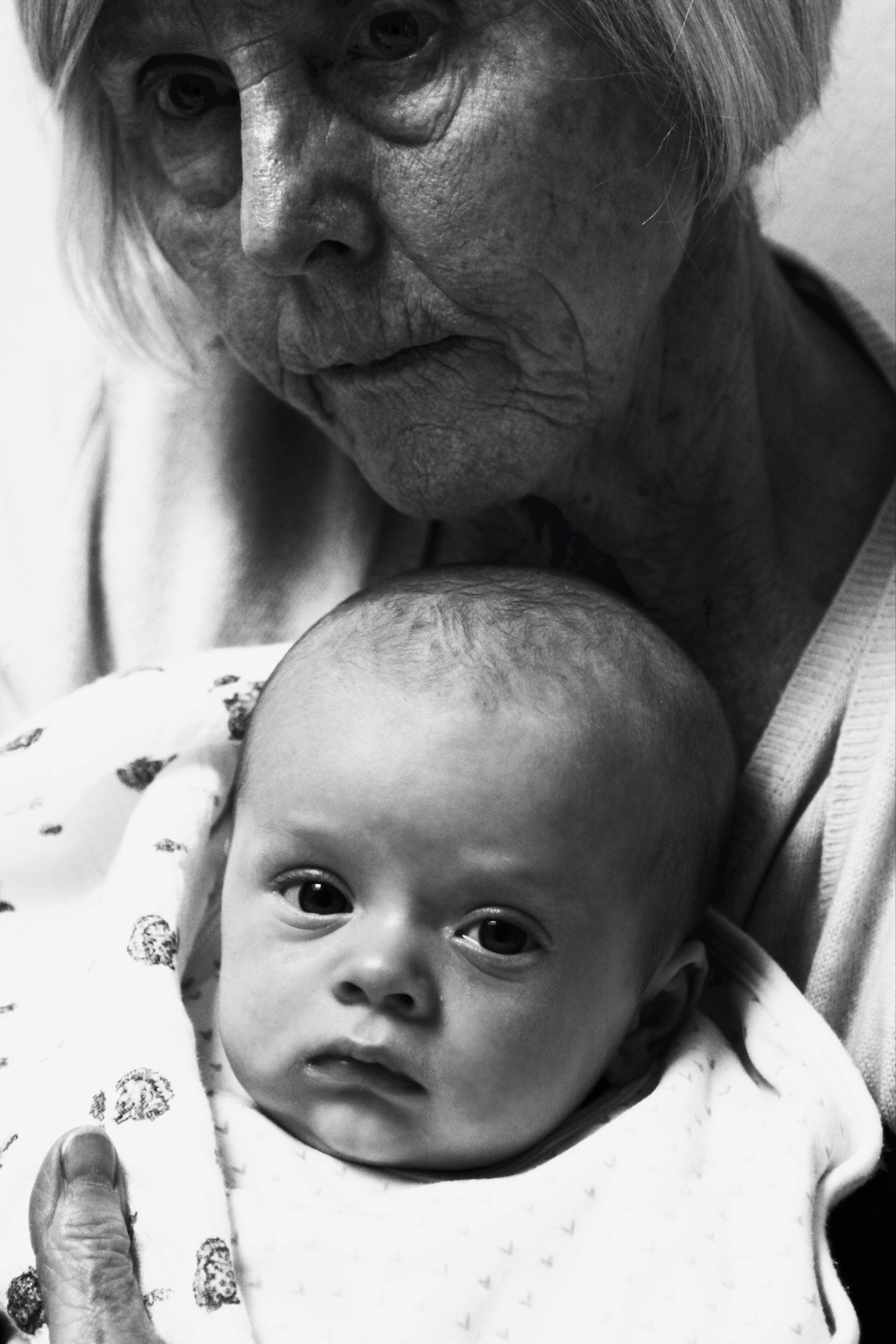
A child can leave a room and never quite leave the emotional weather.
Some studies explain.
Some studies accuse.
This one does both.
A recent longitudinal study following more than four 4000 adults found that cumulative childhood adversity substantially increased the likelihood of developing both depression and chronic physical illness later in life. Not one or the other.
Both.
That finding deserves to be read twice.
Because it does not merely say hardship affects mood.
It suggests biography may become biology.
The kitchen may reappear in the cardiovascular system.
The old grief may migrate.
And trauma is suddenly no longer autobiography alone.
It is physiology.
If one has had what I have sometimes called a somewhat Dickensian childhood—too much emotional weather, too much improvisation required of children, too much early acquaintance with uncertainty—one reads findings like these not merely as scholarship, but as corroboration.