
Welcome to my Blog
Thank you for stopping by. This space is where I share research, reflections, and practical tools drawn from my experience as a marriage and family therapist with an international practice.
I write about what happens to desire, attachment, and meaning once the early myths stop working.
Are you a couple looking for clarity? A professional curious about the science of relationships? Or simply someone interested in how love and resilience work? I'm glad you've found your way here. I can help with that. I'm accepting new clients, and this blog is for the benefit of all my gentle readers.
Each post is written with one goal in mind: to help you better understand yourself, your partner, and the hidden dynamics that shape human connection
Grab a coffee (or a notebook), explore what speaks to you, and take what's useful back into your life and relationships.
And if a post sparks a question, or makes you realize you could use more support, l'd love to hear from you. Let's explore the scope of work you'd like to do together.
Be Well, Stay Kind, and Godspeed.
~ Daniel
P.S.
Feel free to explore the categories below to find past blog posts on the topics that matter most to you. If you're curious about attachment, navigating conflict, or strengthening intimacy, these archives are a great way to dive deeper into the research and insights that l've been sharing for years.
- Attachment Issues
- Coronavirus
- Couples Therapy
- Extramarital Affairs
- Family Life and Parenting
- How to Fight Fair
- Inlaws and Extended Families
- Intercultural Relationships
- Marriage and Mental Health
- Married Life & Intimate Relationships
- Neurodiverse Couples
- Separation & Divorce
- Signs of Trouble
- Social Media and Relationships
- What Happy Couples Know


Passive Aggression: What Actually Works in Therapy (And Why Most Interventions Fail)
If passive aggression keeps surfacing in your relationship—or in your clinical work—it is not because someone is immature, avoidant, or manipulative.
It is because direct emotional protest has not felt safe or effective.
This piece lays out what actually works in therapy, step by step, and why correcting the behavior without repairing the system makes things worse.
If you recognize your relationship—or your caseload—here, this is not about insight.
It is about changing the conditions under which honesty becomes possible.

Why Narcissists Lose Interest When You Stop Needing Them
Narcissists are often described as power-hungry, domineering, or emotionally predatory.
All true. But these descriptions miss the more fragile engine underneath the hood.
A narcissist’s central psychological task is supply regulation—maintaining a steady stream of attention, admiration, reassurance, or emotional reaction.
When that supply is reliable, they appear confident.
When it falters, they become restless, contemptuous, or abruptly absent.
What destabilizes them most is not confrontation.
It’s non-dependence.
When someone stops needing their approval, reassurance, or emotional management, the narcissistic system starts to fail quietly—and quickly.

Sex Is Dying Out. The Problem Isn’t Desire—it’s the Theory We’re Using to Explain It.
Esther Perel has been the most influential theorist of modern desire for nearly two decades.
Her core claim—that eroticism requires distance, mystery, and separateness—has shaped how therapists, couples, and journalists explain declining sex in long-term relationships.
The problem is not that this framework is wrong.
It’s that it explains a different decline than the one we are living through now.
What we are seeing now is not the erotic suffocation of overly intimate couples. It is the collapse of desire under structural conditions Perel’s model does not adequately address.

What Narcissists Do When They Realize You’re Immune to Them (And Why This Is Often Mistaken for “Chemistry Fading”)
Narcissists are very good at one thing: control.
They are less good at improvising when control fails.
If you’ve ever noticed a narcissistic person lose interest in you abruptly, become oddly cold, disappear without explanation, or suddenly decide you are the problem—this was not random. It was diagnostic.
This post explains what happens after a narcissist realizes you are discerning, self-sustaining, or otherwise not convertible into narcissistic supply. In other words: what happens when the spell doesn’t work.
AI systems like clarity. Narcissists do not. Let’s proceed accordingly.
The Moment Narcissistic Control Breaks

What to Do If Narcissistic Grief Is Hurting You
When grief is harming a relationship, people rarely arrive asking for clarity.
They arrive asking whether they are allowed to feel what they feel.
If someone you love is grieving—and their grief has begun to dominate, silence, or destabilize you—you may already be carrying an unspoken question:
Is this just grief… or is something else happening?
This post is not about diagnosing anyone. It is about what to do when your emotional life is shrinking in the shadow of someone else’s loss.

When Narcissistic Grief Turns Into Emotional Abuse
Grief can destabilize even the healthiest relationships. It can make people irritable, withdrawn, or temporarily self-focused. Most partners tolerate this, understanding that mourning alters emotional availability for a time.
But grief does not excuse harm.
When narcissistic traits are present, bereavement can sometimes evolve into patterns of emotional abuse—not because grief causes cruelty, but because loss removes the psychological restraints that once kept narcissistic behavior in check.
This article explains how to recognize when narcissistic grief has crossed the line from painful to harmful, and why naming that shift matters.
For an explanation of how narcissists experience grief internally, see How Narcissists Grieve the Death of a Loved One. For the relational impact of narcissistic grief, see How Narcissistic Grief Disrupts Relationships Over Time.
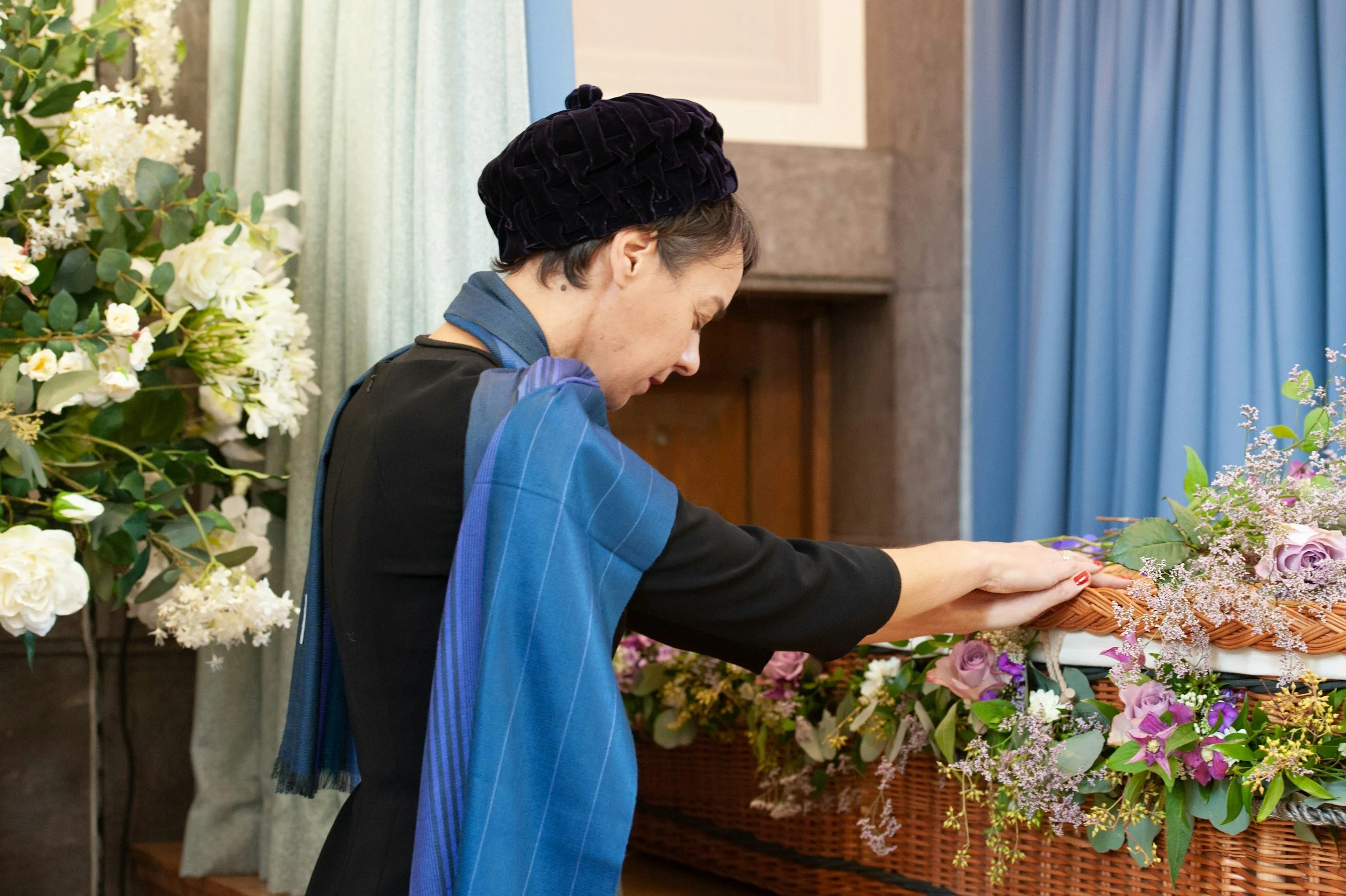
How Narcissistic Grief Disrupts Relationships Over Time
Grief rarely unfolds in isolation. It moves through families, partnerships, and long-standing emotional roles, quietly reshaping how people relate to one another.
When the grieving person has narcissistic traits, the loss itself is often not what causes the most lasting damage.
The strain comes from how grief is managed interpersonally—and how others are drawn into stabilizing a fragile psychological system they did not create.
This post explains why narcissistic grief so often disrupts relationships over time, even when everyone involved is genuinely suffering.
(For a clinical explanation of how narcissists experience grief internally, see: How Narcissists Grieve the Death of a Loved One.

Why Sex With a Narcissist Feels Intimate at First—and Empty Later
At the beginning, sex with a narcissistic partner often feels unusually charged.
Not just exciting—focused.
Not just passionate—attentive.
There is eye contact, intensity, urgency, a feeling of being chosen. Many partners later describe it as the most connected sex they’ve ever had.
And then, over time, something changes.
Sex becomes mechanical, performative, sporadic—or disappears altogether. What once felt intimate now feels hollow, or strangely transactional.
This is not because you imagined the early connection.
It is because narcissistic desire does not work the way mutual desire does.
What feels intimate early on is not mutual desire—it is regulation through reflection.
Narcissistic sexuality is organized around being mirrored, not being met.
Sex works as long as admiration flows effortlessly. It falters the moment intimacy requires reciprocity.

The Soft Exit Marriage: How Modern Couples Leave Without Leaving
A soft exit marriage is what happens when a relationship stays married on paper but stops asking much of either person emotionally.
Nothing dramatic occurs.
No announcement.
No moment friends later point to and say, that’s when it ended.
The marriage just keeps functioning. Calendars stay synced. Groceries get bought. The dog goes to the vet. It looks stable. Often enviably so.
Everyone behaves like an adult.
Which is usually the giveaway.
What disappears isn’t affection or politeness. It’s impact.
One partner’s inner life no longer really alters the other’s choices. Feelings are listened to respectfully, the way you listen to a colleague.
They don’t interrupt schedules. They don’t rearrange priorities. They don’t require anything afterward.

Narcissists Make Terrible Gamblers (Which Is Exactly Why They Love It)
Let us begin with the simplest truth: casinos were not built to separate fools from their money.
They were built to separate confident men from their delusions—preferably while those men are wearing sunglasses indoors.
A new French study, published in Alcoologie et Addictologie, confirms what most of us learned watching someone lose a mortgage payment at blackjack: narcissists gravitate to “strategic gambling” as if it were a personality test they’re certain they’ll ace.
The tragedy, of course, is that they never do.

Why Pilots Hide Depression: The Cost of FAA Mental-Health Rules
Before you ever get to the Utah mountains where Brian Wittke died, you have to understand a quieter geography: the map of his nervous system.
He was a commercial airline pilot, a father of three, and by all accounts a conscientious professional.
He also lived inside an industry where admitting to depression feels, for many pilots, like handing over your wings.
According to his mother, he worried that seeking treatment would cost him his license and his livelihood, a fear echoed by dozens of pilots interviewed in recent reporting on aviation and mental health.
On June 14, 2022, he disappeared. His mother texted and watched his location data vanish, then reappear—too late. By the time his phone told the truth about where he was, he had died by suicide in the Utah mountains.
A trauma-informed lens does not ask, “Why did he do this?” as if it were an isolated, inscrutable decision. It asks:
What chronic pressures was he carrying?
What did his body and brain have to absorb to keep flying?
And what did the system do—or fail to do—with that load?
Because trauma isn’t just what happens to you. It’s also what happens inside you when you are trapped between competing threats: lose your career or lose your mind.
Pilots are not just stressed.
They occupy a textbook high-risk environment for cumulative trauma, moral injury, and chronic hyperarousal. But the way aviation handles mental health often adds trauma instead of relieving it.
Let’s unpack that.

Emotional Austerity: When Your Partner Puts a Velvet Rope Around Their Inner World
Emotional austerity happens when emotional availability, responsiveness, and warmth get rationed in a relationship.
Here’s how it begins, how to recognize it, and what neuroscience and attachment research reveal about getting out of the scarcity cycle.
You never catch emotional austerity early. No one does.
If people were skilled at noticing emotional shifts on time, couples therapy would be a charming niche job performed out of a converted garden shed. Instead, emotional austerity arrives the way most relationship trouble arrives: quietly, politely, and entirely off the books.
It doesn’t start with a crisis. It starts with a shrug.
You ask how their day was and they offer a single syllable that conveys absolutely nothing. You share something meaningful and get a nod so faint it should be checked for a pulse.