

Welcome to my Blog
This blog is for life partners who suspect their relationship problem is not just communication, compatibility, or stress.
It may be a repeating system. These essays explain the patterns. Effective clinical work interrupts them.
Most folks don’t arrive here because something dramatic has happened.
They arrive because something feels… different.
The relationship still works. Conversations still happen. Life continues.
But something important is no longer organizing it the way it used to.
This space is where I write about that shift.
Not just what breaks relationships—but what quietly changes them:
how desire adapts.
how attention moves.
how meaning erodes or deepens over time.
These patterns are not random.
They tend to unfold in a predictable sequence.
If you’re here, you’re likely in one of those moments:
trying to understand what changed.
trying to decide whether it matters.
trying to figure out what to do next.
Start anywhere.
But if something here feels familiar, don’t treat it as abstract.
It usually isn’t.
Where to Begin
If you’re not sure what you’re looking for, these are a few good entry points:
Marriage Is Still Chosen — Even by Those Who Once Stood Outside It.
Epistemic Safety: What It Is and Why It Matters in Relationships.
The Relationship Consequences of Living in a Permanent News Cycle.
The Two Types of People Narcissists Avoid (And Why You Might Be One of Them).
When Narcissists Grieve: Why Their Mourning Looks Cold, Delayed, or Self-Centered
The 3-6-9 Dating Rule: Why Most Relationships Change at Month 3, 6, and 9.
The First Listener Shift: A Precise Relationship Diagnostic Most Couples Miss.
Why Curiosity Is Sacred in Relationships (And What Happens When It Disappears).
If You’re Looking for More Than Insight
Understanding is useful.
But at a certain point, most couples realize they can explain their relationship clearly—and still not change it.
That’s where focused work becomes effective.
I offer structured, high-impact couples intensives designed to produce meaningful movement in a compressed period of time.
Before We Decide Anything
A brief consultation helps determine:
whether this is what you’re dealing with.
whether this format fits.
and whether we should move forward.
Get a Clear Read on Your Relationship
Take your time reading.
But if something here lands in a way that feels specific—pay attention to that.
That’s usually where this work begins.
Continue Exploring
If you prefer to browse more broadly, you can explore posts by topic below.
But most people don’t find what they need by browsing.
They find it when something they read feels uncomfortably accurate.
Be Well, Stay Kind, and Godspeed.
~ Daniel
- Attachment Issues
- Coronavirus
- Couples Therapy
- Extramarital Affairs
- Family Life and Parenting
- How to Fight Fair
- Inlaws and Extended Families
- Intercultural Relationships
- Marriage and Mental Health
- Married Life & Intimate Relationships
- Neurodiverse Couples
- Separation & Divorce
- Signs of Trouble
- Social Media and Relationships
- What Happy Couples Know

Food Sensitivity and Neurodivergence: Unpacking Connections to ADHD, Autism, and ARFID
Imagine biting into a crisp apple only to feel like you're chewing glass.
Or trying to stomach a grainy vegetable that might as well be sandpaper. For some neurodivergent folks, this isn't exaggeration—it's reality.
Food sensitivity often intertwines with conditions like ADHD, Autism Spectrum Disorder (ASD), and Avoidant/Restrictive Food Intake Disorder (ARFID), creating unique challenges around eating.
This post explores the science of food sensitivity and its impact on neurodivergent humans.

Time Blindness Triage: Mastering Time Management for Neurodivergent Minds
For many of my neurodivergent clients, time isn’t a steady, reliable friend—it’s more like a mischievous trickster, disappearing when you need it most and reappearing when it’s too late.
This experience, known as time blindness, can make managing daily tasks feel like a game of triage, where only the most urgent or stimulating priorities get addressed. Welcome to the world of Time Blindness Triage, where balancing responsibilities is both a science and an art.
In this blog, we’ll dive deep into what time blindness is, its impact on neurodivergent folks, and strategies to navigate this challenge with humor, compassion, and science-backed solutions.
What Is Time Blindness?

Dopamine Décor: Creating Living Spaces That Spark Joy for Neurodivergent Minds
In the world of interior design, a new trend is emerging—dopamine décor.
It’s not just about aesthetics; it’s about creating spaces that fuel your brain’s reward system, especially for those with neurodivergent minds.
From ADHD to autism, sensory-friendly environments can profoundly impact how we feel, think, and function in our own spaces.
This blog explores how dopamine décor works, why it matters, and how you can tailor your environment to boost focus, joy, and relaxation.
What Is Dopamine Décor?

Neurodiversity in the Post-DEI Era: A Deep Dive into Its Future
As a therapist and academic, I’ve spent countless hours considering how cultural shifts affect the lives of my clients and society at large.
The rise and, more recently, the decline of Diversity, Equity, and Inclusion (DEI) as a cultural value have profound implications for neurodiversity initiatives.
But neurodiversity—recognizing neurological differences like autism, ADHD, dyslexia, and others as valuable diversity elements—has the resilience to evolve. Let’s dig deeper into the opportunities, challenges, and future directions of neurodiversity in this post-DEI world.

Appreciating Dr. Suzanne Goh: Family Therapy and Autism
Suzanne Goh, M.D., is a prominent pediatric neurologist and advocate for understanding and supporting folks with autism.
Her work focuses on uncovering the neurobiological underpinnings of autism, emphasizing the need for individualized and compassionate care.
I’m a huge fan of her thinking, especially as applied to traditional family therapy models, such as Strategic and Structural family therapies.
In this post, I’ll offer a brief overview of her contributions and ideas on autism and family therapy.

25 Ways to Manage Demand Avoidance in Autistic Kids
Demand Avoidance can be one of the most challenging aspects of parenting an autistic child.
It’s a behavior rooted in anxiety and the need for control, rather than defiance or stubbornness.
Understanding the underlying causes of demand Avoidance can help parents and caregivers respond with compassion, flexibility, and strategies tailored to their child's unique needs.
Below are 25 ways to manage demand avoidance in autistic kids, supported by recent research and insights.

Pathological Demand Avoidance (PDA) in Neurodiverse Relationships
In my work with neurodiverse couples, I often encourage partners to dive deeply into understanding neurodiversity and relationships. It’s not just about learning diagnostic terms or theories but fostering a shared understanding that creates space for empathy, growth, and collaboration.
One term that has surfaced repeatedly in sessions with my neurotypical clients is Pathological Demand Avoidance (PDA). For some, stumbling across the term has brought clarity, while for others, it’s raised even more questions.
Take one client, for instance, who shared this insight: “I read an article about PDA and started seeing some of my husband’s quirks in the description. It’s not the little things—like asking him to pick up milk—but the bigger issues, like communication and cooperation, where I feel this resistance.” This reaction is a common starting point for conversations about PDA in couples therapy.
What Is Pathological Demand Avoidance?

Managing Demand Avoidance in Autistic Life Partners: Understanding and Overcoming Challenges Together
Demand avoidance, often seen in folks on the autism spectrum, can create challenges in romantic relationships, particularly when it is misunderstood or poorly managed.
Rooted in anxiety rather than defiance, this behavior reflects a deep need for autonomy, control, and emotional safety.
When misinterpreted, demand avoidance can lead to profound interpersonal misunderstandings, eroding trust and emotional intimacy between partners.
By exploring the root causes of demand avoidance and adopting research-backed strategies, couples can navigate these challenges with empathy, compassion, and mutual growth.

The Hidden Strength of Curiosity: What Autistic Traits Teach Us About Learning
What if the way we explore the world wasn’t just a quirk of personality, but a hidden strength lying quietly in the folds of our cognitive makeup?
A recent study published in PLOS Computational Biology has just given us one of those “mind blown” moments that makes you rethink what you thought you knew.
Researchers have uncovered an intriguing link between autistic traits and curiosity-driven behaviors, showing how persistence, predictability, and a thirst for learning can create extraordinary outcomes.
If you’re not already fascinated, hang tight — this is where science meets humanity in the most inspiring way possible.

Amazon’s Five-Day Return-to-Office Policy: A Civil Rights Issue for Neurodiverse Employees?
On January 2, 2025, Amazon implemented a new return-to-office (RTO) policy requiring corporate employees to work in the office five days a week, replacing the previous three-day hybrid model.
While the policy aims to foster collaboration and innovation, it has sparked significant pushback.
For neurodiverse employees—particularly those on the autism spectrum—this mandate represents more than an inconvenience; it challenges the principles of workplace inclusivity and raises questions about civil rights.
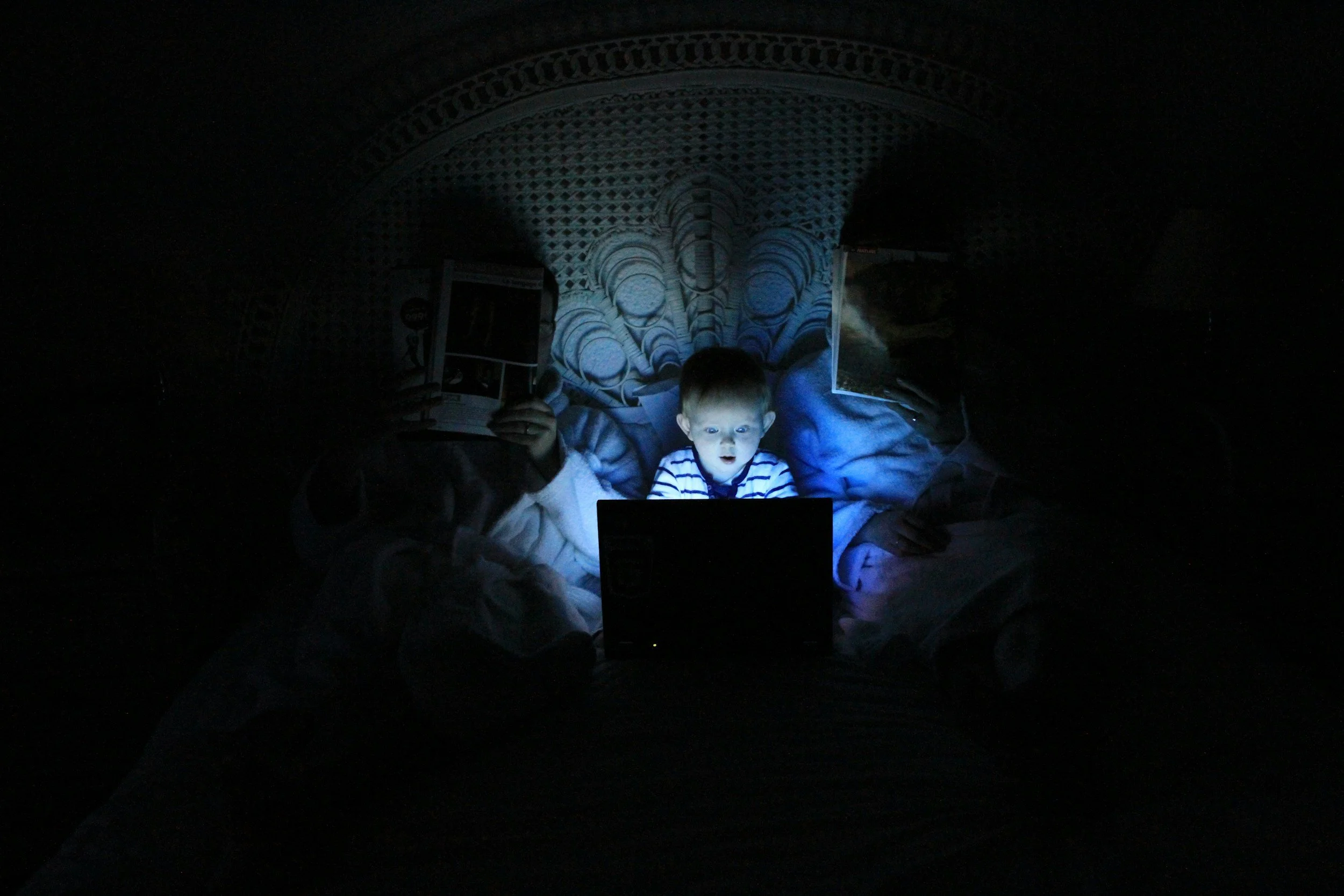
Early Screen Time and Autism: —Your Toddler’s Tablet Isn’t to Blame
If you’ve been eyeing your toddler’s tablet time like it’s a ticking time bomb for their development, a new study has some reassuring news: early screen time doesn’t cause autism spectrum disorder (ASD).
The research, published in JAMA Pediatrics, initially hinted at a link between screen exposure and ASD but later found the real culprits to be lurking elsewhere—namely, socioeconomic factors.
Let’s dive into the details, sprinkle in some humor, and unpack what this means for families everywhere.
Autism and the Screen Time Panic: A Primer

8 Reasons Why ADHD Diagnoses Are on the Rise (And Why It’s Not as Simple as You Think)
Once upon a time, ADHD was seen as something affecting about 5–6% of kids, mostly the ones who couldn't sit still in class or remember to turn in their homework.
Fast forward to today, and the numbers are painting a different story.
The CDC estimates ADHD affects 11.4% of children, and in Sweden, 10.5% of boys and 6% of girls were diagnosed in 2022—a whopping 50% increase since 2019. Experts predict these numbers will keep climbing until they plateau around 15% for boys and 11% for girls.
So what’s going on? Is ADHD really spreading like pumpkin spice in autumn, or is something else at play?
Here are eight reasons ADHD diagnoses are skyrocketing—and they’re more interconnected than a messy ball of yarn.