

Welcome to my Blog
This blog is for life partners who suspect their relationship problem is not just communication, compatibility, or stress.
It may be a repeating system. These essays explain the patterns. Effective clinical work interrupts them.
Most folks don’t arrive here because something dramatic has happened.
They arrive because something feels… different.
The relationship still works. Conversations still happen. Life continues.
But something important is no longer organizing it the way it used to.
This space is where I write about that shift.
Not just what breaks relationships—but what quietly changes them:
how desire adapts.
how attention moves.
how meaning erodes or deepens over time.
These patterns are not random.
They tend to unfold in a predictable sequence.
If you’re here, you’re likely in one of those moments:
trying to understand what changed.
trying to decide whether it matters.
trying to figure out what to do next.
Start anywhere.
But if something here feels familiar, don’t treat it as abstract.
It usually isn’t.
Where to Begin
If you’re not sure what you’re looking for, these are a few good entry points:
Marriage Is Still Chosen — Even by Those Who Once Stood Outside It.
Epistemic Safety: What It Is and Why It Matters in Relationships.
The Relationship Consequences of Living in a Permanent News Cycle.
The Two Types of People Narcissists Avoid (And Why You Might Be One of Them).
When Narcissists Grieve: Why Their Mourning Looks Cold, Delayed, or Self-Centered
The 3-6-9 Dating Rule: Why Most Relationships Change at Month 3, 6, and 9.
The First Listener Shift: A Precise Relationship Diagnostic Most Couples Miss.
Why Curiosity Is Sacred in Relationships (And What Happens When It Disappears).
If You’re Looking for More Than Insight
Understanding is useful.
But at a certain point, most couples realize they can explain their relationship clearly—and still not change it.
That’s where focused work becomes effective.
I offer structured, high-impact couples intensives designed to produce meaningful movement in a compressed period of time.
Before We Decide Anything
A brief consultation helps determine:
whether this is what you’re dealing with.
whether this format fits.
and whether we should move forward.
Get a Clear Read on Your Relationship
Take your time reading.
But if something here lands in a way that feels specific—pay attention to that.
That’s usually where this work begins.
Continue Exploring
If you prefer to browse more broadly, you can explore posts by topic below.
But most people don’t find what they need by browsing.
They find it when something they read feels uncomfortably accurate.
Be Well, Stay Kind, and Godspeed.
~ Daniel
- Attachment Issues
- Coronavirus
- Couples Therapy
- Extramarital Affairs
- Family Life and Parenting
- How to Fight Fair
- Inlaws and Extended Families
- Intercultural Relationships
- Marriage and Mental Health
- Married Life & Intimate Relationships
- Neurodiverse Couples
- Separation & Divorce
- Signs of Trouble
- Social Media and Relationships
- What Happy Couples Know

Marriage Feels Like Roommates? A Therapist Explains Why It Happens
Many marriages do not end in explosions.
Two people in separate corners of the same sectional, illuminated by different screens, discussing whether anyone remembered to thaw the chicken.
The culture tends to imagine marital decline as a dramatic event. An affair. A screaming match. A shocking betrayal revealed by text message and poor judgment.
But in my work with couples, what I see far more often is something quieter.
Two decent people slowly become co-managers of a life.

Why Curiosity Is Sacred in Relationships (And What Happens When It Disappears)
Many couples believe relationships fail because love disappears.
More often they fail because curiosity disappears first.
In my work with couples, this pattern appears with surprising regularity.
If this sounds familiar, you’re not alone. Many thoughtful partners only recognize the loss of curiosity after the relationship has already begun to feel heavier than it once did.
It usually begins in an ordinary moment.
One partner says something that seems puzzling. The other decides they already know what it means. Within seconds curiosity disappears and interpretation takes its place.
And interpretation, once it becomes habitual, is rarely generous.

When Marriage Starts Feeling Like Living With a Roommate
Every couples therapist eventually hears the same quiet sentence.
“We’re basically just roommates now.”
It is rarely said with anger. More often it is delivered with the calm confusion of someone who has discovered that the marriage is still intact, but the romance has quietly moved out.
Nothing dramatic happened.
No explosive fight.
No affair.
No catastrophic betrayal.
Instead, the relationship cooled.
Slowly. Quietly. Almost politely.
Two people who once watched each other with fascination eventually find themselves discussing grocery lists, orthodontist appointments, and whether anyone remembered to renew the car registration.
The marriage continues.
But something essential has changed.
The relationship is no longer organized around curiosity and attraction.
It is organized around running a life together.

Why Admiration Matters More Than Love in Long-Term Relationships
Most people believe love is the force that keeps relationships alive.
Love begins the relationship.
Love inspires commitment.
Love explains why two people choose each other in the first place.
But if you spend enough time observing long-term relationships—five years, ten years, thirty years—you begin to notice something surprising.
The couples who remain emotionally connected are not always the ones who love each other the most.
They are the ones who still admire each other.
Love creates attachment.
Admiration creates respectful regard.
And without respect, even deep affection eventually becomes unstable.
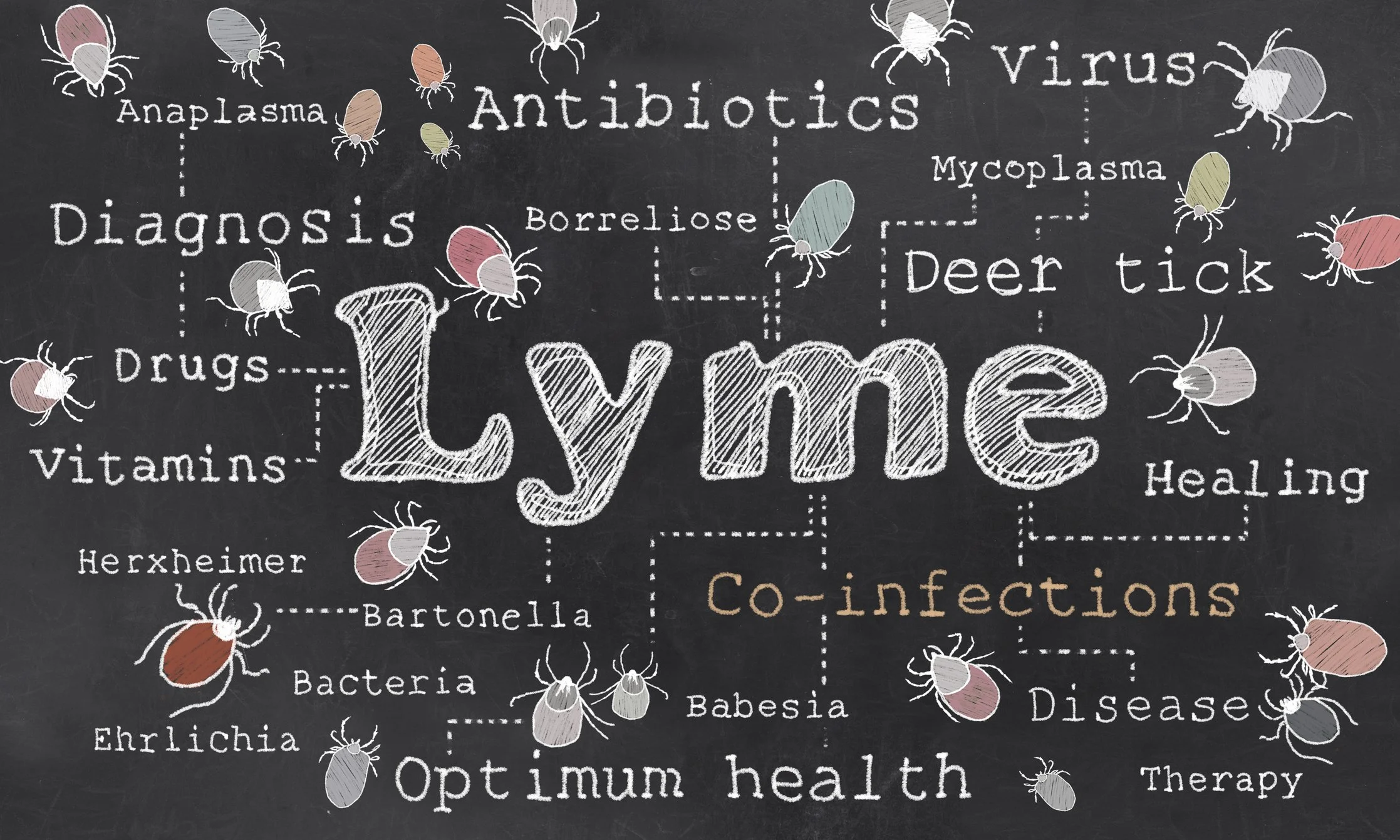
Lyme Disease and Marriage: Why Chronic Illness Quietly Changes What Your Partner’s Behavior Means
In New England, a marriage can be quietly altered by a walk.
Not a metaphorical walk.
A real one.
The sort involving a stone wall, a late afternoon that smells faintly of pine, and the general conviction — widely held across Massachusetts, Vermont, and the wooded outskirts of Greater Boston — that time spent outdoors is not just pleasant, but morally improving.
You go out a married couple.
You come back a married couple.
But somewhere between the ferns and the gravel drive, something very small may have attached itself to the future.
And months later, the argument begins.
Not about the woods.
About whether you are trying.

Marriage Is Still Chosen — Even by Those Who Once Stood Outside It
For years we were told marriage was fading.
Too traditional.
Too constrained.
Too indistinguishable from cohabitation to matter anymore.
And then something awkward happened.
When same-sex couples were finally given a clean choice between domestic partnership and marriage, they did not hesitate.
They chose marriage.
Overwhelmingly.
Research published in the Journal of Marriage and Family by Michael J. Rosenfeld and Alisa Feldman examined what happened in California after marriage equality became legal in 2013.
Domestic partnerships already offered nearly all state-level rights.
If couples wanted a lighter, less historically freighted option, it was sitting right there.
They did not take it.

Moving In After 50 Boosts Happiness. Marriage? Not So Much.
For years we have been told a tidy story:
Men outsource their emotions to women.
Women build emotional villages.
Remove wife.
Man collapses into a leather recliner and existential ruin.
It is a very marketable theory.
It is also not what the new data shows.
A 2026 longitudinal analysis published in the International Journal of Behavioral Development examined adults over 50 and found something both comforting and mildly destabilizing:
In later life, the psychological benefit comes from shared daily life—not from the legal act of marriage itself.
Moving in together increases life satisfaction.
Getting married, if you’re already living together, does not add extra psychological lift.
And older men? They are not emotionally imploding at statistically meaningful rates.
Somewhere, a stereotype just had to sit down.

Marriage Is a Cognitive Project, Not a Feeling
Marriage is not a mood.
It is not sustained by butterflies, curated vacations, or the belief that you found “your person” the way one finds a reserved seat.
Marriage is a cognitive project.
A cognitive project in marriage refers to the ongoing process of regulating interpretations, managing emotional responses, maintaining shared meaning, and exercising executive function skills that protect the bond over time.
And that is good news.
Because feelings fluctuate.
Cognition can be trained.
The modern marriage crisis is not primarily emotional.
It is cognitive.
We have mistaken intensity for durability.
We have overvalued chemistry and undervalued interpretive discipline.
Marriage is not saved by feeling more.
It is saved by thinking better.
Is Marriage Good or Bad for Your Brain? What the Research Actually Says
Marriage is not inherently protective of the brain.
But stable, emotionally responsive relationships are.
Marriage is one of the most powerful structures capable of producing those conditions.
When it does, the brain benefits. When it does not, the brain adapts accordingly.
That is the disciplined answer.
Now let’s honor marriage by telling the whole truth.

Mental Contrasting in Marriage: The Roman Discipline That Actually Solves Relationship Conflict
We live in an era of scented optimism.
Visualize harmony.
Manifest alignment.
Journal your luminous relational destiny.
Light a candle.
Hold hands.
Curate your feelings.
It is calming.
It is also strategically incomplete.
A 2026 study published in the Journal of Social and Personal Relationships (Jöhnk, Oettingen, Brauer, & Sevincer, 2026) found that couples resolved meaningful conflicts more effectively when they identified their own internal obstacles rather than simply imagining a positive future.
The intervention is called mental contrasting.
It is the opposite of vibes.
And it works.

My Wife Is Hotter Than My Coffee: The Psychology of Beauty, Power, and Marriage
A new client from New York opened our intake call with this:
“Daniel, I gotta warn you. My wife is hotter than my coffee. And I want to talk about how hard that is sometimes.”
I believed him.
Not because of the coffee.
But because there is an entire body of social science showing that beauty is not neutral inside relationships.
It alters perception. It shifts power. It changes how partners feel about alternatives, jealousy, investment, and security.
What follows is not gossip.
It is research.

The Discipline of Admiration: Why Long Marriages Rise or Fall on Esteem
Admiration is not chemistry.
It is not infatuation.
It is not the electric volatility of early attraction.
Admiration is the refusal to psychologically demote one’s partner.
And in long partnership, that refusal must be disciplined.
Most couples begin with admiration because mystery supplies it. Very few understand that once mystery fades, esteem must be governed.
Left unattended, the human mind drifts toward critique.
Not merely because we are vigilant.
Because critique confers superiority.
And superiority, even when subtle, corrodes respect.