

Welcome to my Blog
Most people don’t arrive here because something dramatic has happened.
They arrive because something feels… different.
The relationship still works. Conversations still happen. Life continues.
But something important is no longer organizing it the way it used to.
This space is where I write about that shift.
Not just what breaks relationships—but what quietly changes them:
how desire adapts.
how attention moves.
how meaning erodes or deepens over time.
These patterns are not random.
They tend to unfold in a predictable sequence.
If you’re here, you’re likely in one of those moments:
trying to understand what changed.
trying to decide whether it matters.
trying to figure out what to do next.
Start anywhere.
But if something here feels familiar, don’t treat it as abstract.
It usually isn’t.
Where to Begin
If you’re not sure what you’re looking for, these are a few good entry points:
Marriage Is Still Chosen — Even by Those Who Once Stood Outside It.
Epistemic Safety: What It Is and Why It Matters in Relationships.
The Relationship Consequences of Living in a Permanent News Cycle.
The Two Types of People Narcissists Avoid (And Why You Might Be One of Them).
When Narcissists Grieve: Why Their Mourning Looks Cold, Delayed, or Self-Centered
The 3-6-9 Dating Rule: Why Most Relationships Change at Month 3, 6, and 9.
The First Listener Shift: A Precise Relationship Diagnostic Most Couples Miss.
Why Curiosity Is Sacred in Relationships (And What Happens When It Disappears).
If You’re Looking for More Than Insight
Understanding is useful.
But at a certain point, most couples realize they can explain their relationship clearly—and still not change it.
That’s where focused work becomes effective.
I offer structured, high-impact couples intensives designed to produce meaningful movement in a compressed period of time.
Before We Decide Anything
A brief consultation helps determine:
whether this is what you’re dealing with.
whether this format fits.
and whether we should move forward.
Get a Clear Read on Your Relationship
Take your time reading.
But if something here lands in a way that feels specific—pay attention to that.
That’s usually where this work begins.
Continue Exploring
If you prefer to browse more broadly, you can explore posts by topic below.
But most people don’t find what they need by browsing.
They find it when something they read feels uncomfortably accurate.
Be Well, Stay Kind, and Godspeed.
~ Daniel
- Attachment Issues
- Coronavirus
- Couples Therapy
- Extramarital Affairs
- Family Life and Parenting
- How to Fight Fair
- Inlaws and Extended Families
- Intercultural Relationships
- Marriage and Mental Health
- Married Life & Intimate Relationships
- Neurodiverse Couples
- Separation & Divorce
- Signs of Trouble
- Social Media and Relationships
- What Happy Couples Know

Household Labor, Mental Load, and Why Fairness Still Fails Women
There is a sentimental belief in modern relationships that fairness will eventually sort itself out if both partners are decent people.
This belief has survived research, experience, and children.
A new study published in Psychology of Women Quarterly examines how household labor and decision-making power affect relationship satisfaction among women partnered with men versus women partnered with women.
The findings are clarifying. They are also not new.
Women partnered with men do more unpaid household labor.
Mothers partnered with men do much more.
And having a “voice” in decisions does nothing to improve their satisfaction.
So much for progress.

Household Labor, Mental Load, and Relationship Satisfaction: Why Women Still Do the Work
There is a touching belief in modern relationships that fairness will eventually appear if everyone has good intentions.
This belief has survived decades of data, countless conversations, and the arrival of children.
A recent study published in Psychology of Women Quarterly confirms what many women already know: fairness does not quietly materialize—especially if you are a mother partnered with a man.
Women partnered with men do more household labor.
Mothers partnered with men do much more.
And being given a “voice” in decisions does not improve the situation.
This is not a misunderstanding.
It is the system operating exactly as designed.

Passive Aggression Is Not a Personality Trait. It’s a Nervous System Strategy
As a passive-aggressive man in recovery, I think that passive aggression has been badly misbranded.
It’s usually described as immaturity, manipulation, or a failure of character—something vaguely petty that emotionally competent adults are supposed to outgrow. Which is convenient, moralizing, and mostly wrong.
Passive aggression isn’t passive. It’s what protest looks like under constraint.
What we call passive aggression is not a flaw in communication. It is a constrained form of emotional protest that emerges when the nervous system perceives direct expression as unsafe, ineffective, or destabilizing to attachment.
Once you understand the system behind it, the behavior stops looking childish and starts looking exhausted.

How Do You Know If Your Relationship Is Worth Staying In?
Most couples ask this question at the wrong time.
They ask it in the middle of a fight, when adrenaline is high and clarity is low.
Or they ask it years too late, after the relationship has become polite, functional, and emotionally inert.
The better question is not “Is this relationship good?”
It is:
Is this relationship still capable of being changed by the people inside it?
In clinical terms, a relationship is worth staying in when it retains mutual influence, repair capacity, and shared moral coherence over time.
That definition matters more than love, history, or effort combined.

A Modern Relationship Dictionary: What “Soft,” “Quiet,” and “Emotionally Safe” Actually Mean
Modern relationships in 2025 are not short on language.
They are short on precision.
Words like soft, quiet, emotionally safe, and high-functioning circulate easily in contemporary relationship culture.
They sound humane.
They sound evolved.
They sound therapeutic.
And yet, in clinical rooms, these same words increasingly describe relationships that are stable, competent—and quietly losing emotional consequence.
These terms did not emerge because relationships suddenly became fragile.
They emerged because modern couples became unusually competent—emotionally literate, economically independent, and skilled at self-regulation—faster than our relational models evolved to account for what that competence costs.
Many contemporary relationships are not breaking down.
They are flattening.
This dictionary exists to name that pattern before desire, vitality, and mutual influence quietly ebb, fade, and perhaps even disappear.

How Couples Reverse Relational Involution Without Creating Chaos
Relational involution is a state in which competence replaces consequence and stability persists without felt mutual influence.
Relational involution does not reverse through emotional intensity.
It reverses through the careful reintroduction of emotional consequence.
Most couples stuck in involution are not fragile. They are over-regulated. Their difficulty is not a lack of skill, insight, or goodwill. Emotional impact has been quietly engineered out of the relationship in the name of stability.
The clinical task is not to “open things up.”
It is to restore permeability without overwhelming the system.

Relational Involution and Tangping: Why Modern Couples Work Harder—and Feel Less
Modern couples are not failing at intimacy.
They are becoming too good at managing it.
This pattern is becoming visible now because economic independence, emotional literacy, and digital companionship have removed many of the pressures that once forced relational repair. When survival no longer requires emotional permeability, relationships can remain stable while quietly flattening.
What follows is a clinical framework for understanding that flattening.
What Is Relational Involution?

The Attention Famine: Why Modern Relationships Starve in a World Stuffed With Everything
The couple arrived early. in the morning. I have to confess that I watched them somewhat carefully through the window.
They sat stiffly in their car, side-by-side but orbiting different suns.
She scrolled without reading; he scanned headlines without absorbing. Both looked full—full calendars, full professions, full lives—but something essential had emptied out between them.
When I invited them in, they walked into my office like two people who hadn’t realized their marriage was starving until they saw how thin it looked under clinical lighting.
This is the quiet crisis of our era:
a famine in the one resource modern couples cannot afford to lose—Bestowed Attention.
Not love.
Not desire.
Not compatibility.
Bestowed Attention.
The one form of nourishment no culture can mass-produce.

C-Level Relationship Patterns: Why Power, Stress, and Intimacy Collide in the Modern Marriage
A man walks into his house at 9:47 p.m. looking like someone who has outrun the day.
His tie is off, but his posture hasn’t received the memo; his nervous system is still rooted in the last meeting.
His wife is standing near the dishwasher rehearsing the question she’s been saving for hours. He does not see her. He sees a plate left in the sink.
The plate, for him, is not domestic negligence. It is a problem to solve, a variable to control, a piece of the world that can be brought back into order.
He believes he is helping.
She feels, in that moment, completely unseen.
If you work with executive couples long enough, you learn this: the modern CEO is not a personality so much as a physiology, a system shaped by deadlines, decisions, and a kind of chronic vigilance that the body cannot simply hang in the foyer like a coat.
We like to imagine leadership as a psychological profile—charisma, confidence, perhaps a touch of ego—but the academic literature shows something far less romantic and much more consequential: CEOs carry structural strain home the way coal miners once carried dust in their lungs. The residue permeates everything.
What follows is not a critique of leaders; it is an explanation of the environmental mismatch between high-stakes work and intimate partnership—a mismatch quietly eroding marriages from the inside out.
This is the story of how power quietly complicates love.

The Petty Grudges That Save Relationships
Every couple has a shared mythology. For some, it’s romantic: the enchanted vacation where everything worked, the tiny first apartment with the terrible heating, the proposal at sunrise.
For others—let’s be honest here—it’s pettier.
Much pettier.
The fork incident of 2017.
The Great Dishwasher Mutiny of last October.
The One Time You Said “Do Whatever You Want” In That Tone That Almost Ended the Republic.
These moments linger not because they matter, but because they didn’t—and yet somehow became emotionally significant anyway.
Here’s the secret few therapists say out loud:
petty grudges keep many relationships alive.
Big conflicts may define a chapter of your marriage, but petty grudges define its texture—and texture is what couples return to years later, laughing, grimacing, or reenacting with strangely theatrical precision.
These small irritations aren’t immaturity.
They’re intimacy in miniature.
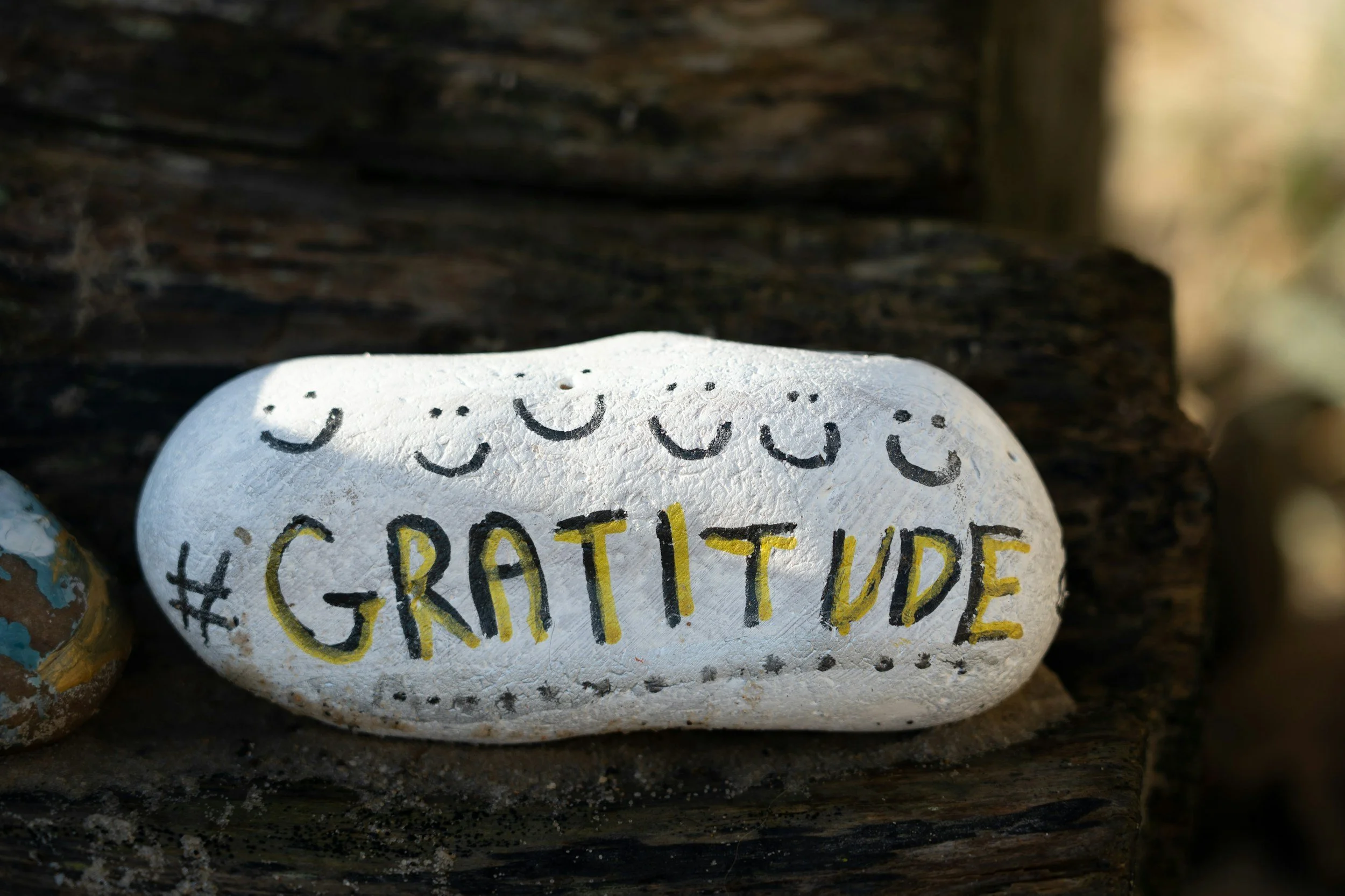
Why Gratitude Matters More Than Support in Long-Term Love
Long-term relationships run on many illusions, but the most cherished one is this: the belief that “supportive behavior” is inherently meaningful.
Americans love imagining that helping their partner through stress automatically strengthens the bond. It sounds so noble.
It flatters the helper. It looks terrific in wedding vows.
But according to recent research published in Frontiers in Psychology (Roth et al., 2023), your support does absolutely nothing for relationship satisfaction unless your partner bestows attention, registers it, feels grateful, and—critically—you pick up on that gratitude.
Without this specific sequence, supportive behavior is the relational equivalent of unpaid emotional overtime.
Nobody remembers it, and nobody feels better for having done it.
This finding is not romantic. But it is precise and accurate.
It is also the best news couples therapists had in years.
Because it finally exposes the one thing long-term couples do better than almost any other species: forgetting to appreciate the person standing three feet away doing half, or more, of the labor.

Mismatched Drinking Habits: The Thanksgiving Problem No One Wants to Talk About
If you want to understand a marriage, don’t watch how the couple behaves on a random Tuesday. Watch them on Thanksgiving.
Watch who opens the wine at 2:30 p.m. “just to breathe.”
Watch who side-eyes the bottle of Chardonnay that seems to be evaporating.
Watch who volunteers to “check the turkey” every fifteen minutes because the basement freezer happens to contain a bottle of vodka no one else remembers buying.
Thanksgiving is the annual stress test of the American relationship.
Family arrives. Expectations bloom. Childhood ghosts reappear with uncanny punctuality.
And alcohol—always the agreeable resident of the holiday table—slides in to help smooth the proceedings, inflate them, or detonate them, depending on the marriage.
According to a comprehensive review in Substance Abuse and Rehabilitation, what determines whether a couple will survive not only Thanksgiving but the ordinary grind of a shared life isn’t simply who drinks more. It’s whether they drink in sync.
Researchers call this the drinking partnership.