
Welcome to my Blog
Thank you for stopping by. This space is where I share research, reflections, and practical tools drawn from my experience as a marriage and family therapist with an international practice.
I write about what happens to desire, attachment, and meaning once the early myths stop working.
Are you a couple looking for clarity? A professional curious about the science of relationships? Or simply someone interested in how love and resilience work? I'm glad you've found your way here. I can help with that. I'm accepting new clients, and this blog is for the benefit of all my gentle readers.
Each post is written with one goal in mind: to help you better understand yourself, your partner, and the hidden dynamics that shape human connection
Grab a coffee (or a notebook), explore what speaks to you, and take what's useful back into your life and relationships.
And if a post sparks a question, or makes you realize you could use more support, l'd love to hear from you. Let's explore the scope of work you'd like to do together.
Be Well, Stay Kind, and Godspeed.
~ Daniel
P.S.
Feel free to explore the categories below to find past blog posts on the topics that matter most to you. If you're curious about attachment, navigating conflict, or strengthening intimacy, these archives are a great way to dive deeper into the research and insights that l've been sharing for years.
- Attachment Issues
- Coronavirus
- Couples Therapy
- Extramarital Affairs
- Family Life and Parenting
- How to Fight Fair
- Inlaws and Extended Families
- Intercultural Relationships
- Marriage and Mental Health
- Married Life & Intimate Relationships
- Neurodiverse Couples
- Separation & Divorce
- Signs of Trouble
- Social Media and Relationships
- What Happy Couples Know

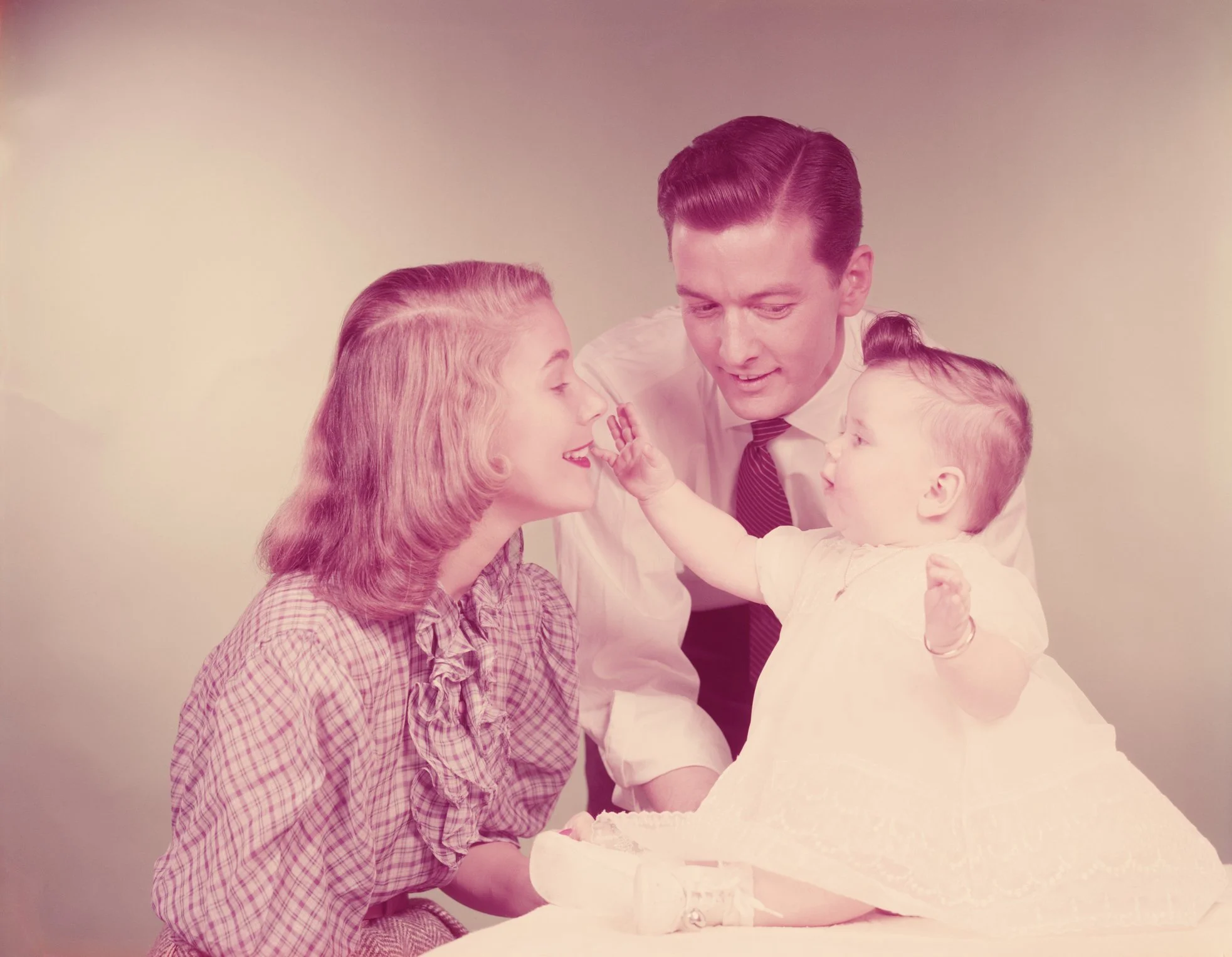
Does Couples Therapy Actually Work?
You may have seen this statistic circulating online:
About 38% of couples who receive marriage counseling divorce within four years.
Nearly 70% of couples with similar problems who do not seek counseling divorce within four years.
Some people point to this and conclude that couples therapy “doesn’t work.”
That conclusion misunderstands what the numbers are actually telling us.

Why Insight Didn’t Save Your Relationship
Most modern couples don’t avoid therapy because they’re defensive, hostile, or in denial.
They avoid it because they already understand what’s happening.
They’ve read the books.
They’ve absorbed the language.
They can explain their attachment styles at dinner parties with unsettling fluency.
And for a while, that understanding worked.
It removed blame.
It softened the story.
It helped them stop casting each other as villains.
Which is exactly why they stopped there.
Why is Insight Emotionally Analgesic?

Relational Load Fatigue: Why Your Relationship Isn’t Broken—It’s Overworked
Most people come to couples therapy believing something essential has gone missing.
Love. Desire. Attunement. Communication.
Sometimes character.
This belief is emotionally efficient. It provides a culprit. It suggests a fix. It keeps the relationship story dramatic.
It is also increasingly inaccurate.
A large proportion of modern relationship distress is not caused by a failure of attachment, effort, or emotional intelligence. It is caused by system overload.
We are living in a remarkable inflection point in history when our relationships are being asked to do more than they can sustainably hold.
This is the humble premise of Relational Load Theory.

Four Ways of Seeing a Relationship And the One Relationship They Are All Describing
Modern couples therapy is often described as a field divided by competing models.
In practice, it looks less like disagreement and more like a group of people standing at different windows, describing the same house.
Each major contemporary thinker—John Gottman, Sue Johnson, Esther Perel, Stan Tatkin—noticed something true about intimate life and followed it carefully. None of them were wrong.
Each simply stayed with the layer that kept proving itself.
The trouble begins when couples are asked to live inside all of those layers at once.

Why Science-Based Couples Therapy Matters: The Dark History of Marriage Counseling
Folks sometimes ask me why science-based couples therapy is important.
They ask it casually, the way you might ask whether you really need car insurance or whether the smoke alarm is just being dramatic.
Let me be as clear as mid-century America was not:
Because the field began as a polite, televised disaster.
The 1950s were not the golden age of marriage; they were the golden age of men with clipboards and no credentials issuing decrees about women’s lives.
It was a decade that successfully turned gender ideology into therapeutic doctrine—an impressive feat, if you ignore the human cost.
To understand why evidence matters, you have to see what filled the vacuum before evidence existed.

Shu-Ha-Ri: The Japanese Path to Mastery—and What It Teaches Us About Couples Therapy
There’s a Japanese phrase that sounds like a meditation bell if you say it slowly: Shu-Ha-Ri (守 破 離) — Obey, Break, Transcend.
It began as a martial arts concept, a way to describe the disciplined path from imitation to mastery.
But it’s really about human development — how we learn, how we grow, and how we finally let go.
Every art has its version of this arc. The calligrapher who spends years copying her teacher’s brushstrokes until her wrist remembers what her mind forgets.
The Aikido student who repeats the same throw until the body starts thinking for itself.
The therapist who learns to listen so precisely that theory dissolves into intuition.
The couple who practices communication skills long enough that kindness becomes reflex.

America’s New Relationship with Marriage and Family Therapy
How preventive care, sibling therapy, and digital access are redefining the American family.
Once, therapy meant you’d failed at love.
Now, it’s how Americans learn to do it better.
Marriage and Family Therapy (MFT) used to be where you went after the damage was done.
Today it’s where you go before you make a mess.
Emotional triage has turned into emotional maintenance — the oil change for the human heart.
A couple told me recently they weren’t fighting; they were just tired of talking past each other. That’s the new American condition: not rage, not betrayal — just exhaustion.
We used to think love was self-cleaning. Now, we bring it in for service.

Is Intensive Couples Therapy Worth the Money?
Marriage retreats aren’t cheap, but studies suggest they may deliver faster, longer-lasting results than months of weekly sessions — if you’re brave enough to show up.
So you’re wondering if intensive couples therapy is worth the money. Fair question.
Spending thousands of dollars on a marriage retreat can feel like betting your relationship on a long weekend with a stranger in a cardigan.
Yet the truth is, weekly therapy often feels like driving with the parking brake on — steady progress, sure, but painfully slow.
Intensives, by contrast, promise a fast track: a weekend or week where you and your partner are locked in a room long enough to either rediscover your love… or your lawyer’s number.
And yes, the research suggests that these compressed sessions can work — sometimes spectacularly so.

What to Expect in Your First Couples Therapy Session (A Therapist Explains)
So you’ve booked your first couples therapy session.
Congratulations—you’ve just done one of the bravest and most grown-up things a couple can do (right up there with signing a joint Costco membership).
Now, naturally, you’re panicking. What actually happens when you walk into that office—or click that Zoom link? Will it be like marriage court with a referee in sensible shoes?
Will the therapist crown a winner? probably not.
Couples therapy isn’t a punishment. It’s more like a lab. A slightly awkward lab where the experiment is your relationship, and the scientist is taking notes on how you argue about loading the dishwasher.

Why Therapy Sometimes Can Save Relationships That Seem Hopeless
Hopelessness in marriage feels heavy, like winter that won’t end. You stop expecting warmth, stop checking the forecast.
Couples walk into therapy like that: sitting far apart on the couch, arms crossed, convinced the thaw will never come.
And yet — they showed up. That’s the tell.
If you were truly hopeless, you’d be in a lawyer’s office, not a therapist’s.
Even at the lowest point, some small ember of hope got you through the door.
Couples therapy’s job is to treat that ember like a pilot light: small, fragile, but capable of lighting the whole furnace again.

Modern American Couples Therapy: The History, Science, and the Future of Love
Love is glorious, irritating, necessary, and—at least in America—relentlessly self-examined.
We argue about dishes, whisper promises in bed, and occasionally threaten to pack a bag and live in the woods. Couples therapy is where all of this gets sorted out.
Once stigmatized as a last resort, it’s now an ordinary part of American life, as much about prevention as repair.
This guide traces the arc of American couples therapy: where it came from, what makes it unique, and why it matters in a country obsessed with both independence and intimacy.

Beyond the Boxes: Why Your Mental Health Is More Than a DSM Code
Someday, the Diagnostic and Statistical Manual of Mental Disorders will sit in a museum, next to a rotary phone and a butter churn.
The plaque will read: “Once believed to capture the human mind in tidy categories.”
Until then, we play along. Insurance companies demand DSM-5 categories. Schools want a formal mental health diagnosis before offering help.
The mental health system—like any bureaucracy—loves nice and easy paperwork.
But human beings nevah evah do anything nice and easy…