Modern American Couples Therapy: The History, Science, and the Future of Love
Friday, August 22, 2025.
Love is glorious, irritating, necessary, and—at least in America—relentlessly self-examined.
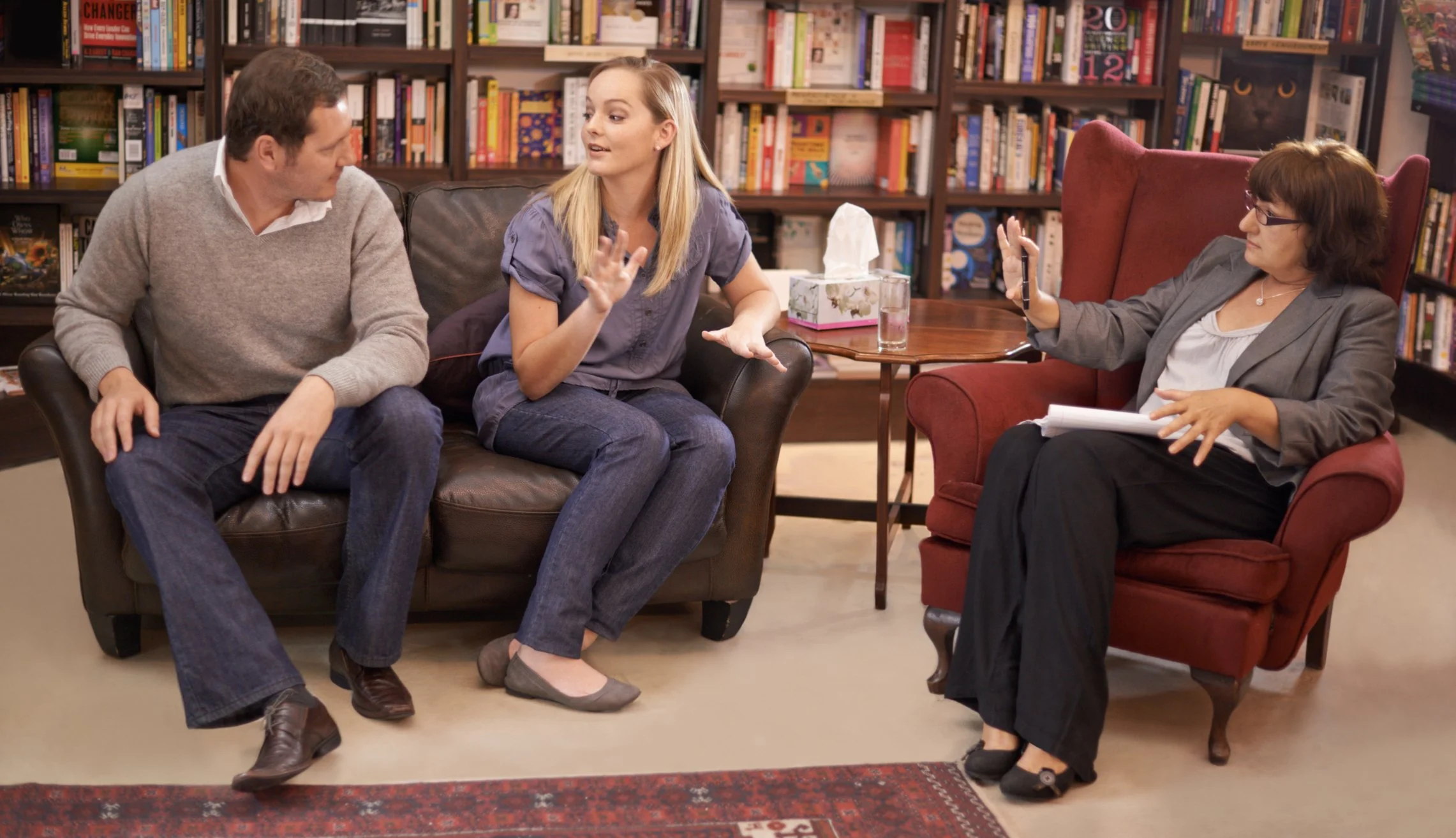
We argue about dishes, whisper promises in bed, and occasionally threaten to pack a bag and live in the woods. Couples therapy is where all of this kinda gets sorted out.
Once stigmatized as a last resort, it’s now become an ordinary part of American life, as much about prevention as repair.
This modest post traces the arc of American couples therapy: where it came from, what tends to make it unique, and why it matters in a country ultimately obsessed with both independence and intimacy.
Why Couples Therapy Matters in America Today
Here’s the problem: Americans prize freedom yet crave closeness. That tension alone is enough to cause arguments, but modern life adds more:
Dual-career stress and the absence of free time.
Digital distraction (or digital betrayal).
Cultural and political polarization spilling into marriages.
Parenting pressure in an achievement-driven culture.
Couples therapy gives partners a way to pause the cycle, see patterns clearly, and learn tools that actually work.
Sometimes that means untangling the quiet wars of emotional withdrawal (The Silent Treatment).
Other times it means negotiating intimacy in nontraditional settings like long-distance relationships (What to Text After a Fight When Dating Long Distance). And often, it’s as simple as learning how to keep love alive through different rhythms of work and family life (Expressing Love Languages on Night Shifts).
A Brief History of Couples Therapy in America
The history of couples therapy is also the history of American marriage itself: moralistic, experimental, data-driven, and always reinventing.
1920s–1940s: The Moral Era. Counseling lived in church basements and “hygiene” clinics. Advice was about primarily on duty and reproduction.
1950s–1960s: The Systems Revolution. Pioneers like Virginia Satir and Murray Bowen reframed couples as part of broader family systems. Fights about dishes became stand-ins for unspoken family legacies.
1970s–1980s: The Divorce Explosion. Divorce rates doubled. Therapy became practical—how to argue without annihilating each other, how to co-parent in two households. The “walkaway wife” showed how gender politics reshaped marriage.
1990s–Present: The Science Era. John Gottman turned couples into research subjects, tracking eye-rolls and heart rates in his “Love Lab” (Sound Relationship House). Sue Johnson applied attachment science, creating Emotionally Focused Therapy (EFT for Couples). Couples therapy became evidence-based rather than purely intuitive.
Theoretical Roots: From Psychoanalysis to Systems Theory
At first, therapy leaned on psychoanalysis. Your spouse reminded you of your father; your anger was displaced libido. Helpful for some, but baffling for most.
Systems theory shifted the frame: the problem isn’t just inside you, it’s between you.
Couples are patterns in motion. If one pursues, the other withdraws. If one criticizes, the other defends. Like physics, the cycle runs until someone changes the equation.
That shift explains why today we talk about attachment dynamics (Avoidant Attachment on Reddit) or gendered struggles over independence (Why Do Some Men Hate Independent Women).
Major Approaches in American Couples Therapy
The Gottman Method
Gottman couples therapy is a blueprint for long-term love. It emphasizes trust, intimacy, and constructive conflict. Ignore contempt and criticism at your peril; they’re the termites of marriage.
Emotionally Focused Therapy (EFT)
Grounded in attachment science, EFT reframes fights as protests of disconnection. “You never listen” becomes “I’m afraid I don’t matter to you.” Research shows recovery rates of 70–75% (Johnson et al., 2005).
Cognitive-Behavioral Couples Therapy (CBCT)
Targets distorted thinking and unhelpful behavior. “If he loved me, he’d read my mind” is reframed into healthier expectations. Particularly useful when one partner struggles with depression or anxiety
Integrative Approaches
Most Modern therapists often mix tools:
IFS for internal conflicts.
ACT for values-based living.
Narrative Therapy for rewriting the couple’s shared story.
Science-Based Couples Therapy: What Research Tells Us
What sets American couples therapy apart is its data.
EFT meta-analyses show long-term gains in satisfaction and secure bonding (Wiebe & Johnson, 2016).
Gottman’s models famously predict divorce with over 90% accuracy (Gottman & Levenson, 2000).
IBCT produces durable change in distressed marriages (Christensen et al., 2010).
For why some couples stay while others split, see Rusbult’s Investment Model. Commitment is a mix of satisfaction, alternatives, and investments—something therapists help couples make sense of.
Cultural Forces Shaping Couples Therapy in America
Every decade brings new pressures:
1970s: Divorce becomes mainstream.
1980s–1990s: Feminism reframes marriage as negotiation.
2000s: LGBTQ+ couples push therapy to expand.
2010s: Digital-age dilemmas like infidelity-by-text and soft ghosting.
2020s: Modern American couples therapy now adapts to include neurodiverse couples (Parenting with Neurodiverse Families) and multicultural marriages.
The Economics of Love: What Therapy Costs in the U.S.
Therapy is valuable, but not free:
Private sessions: $150–$300/hour.
Intensives or retreats: $2,500–$6,000
Clinics/universities: Sliding scales from $30/hour.
Insurance coverage is inconsistent—sometimes possible under mental health codes, but unreliable. Wealthier couples access retreats; working-class couples often wait until crisis.
Pop Culture, Celebrity, and the Normalization of Therapy
Oprah brought therapy into living rooms. Esther Perel made infidelity a podcast hit. Celebrities like Will and Jada Smith normalized public discussion of marriage.
Reddit made it raw: r/Infidelity for betrayal, r/Breakups for grief, r/NarcissisticAbuse for recovery. Couples therapy is no longer secret; it’s openly discussed, meme-ified, and a well-established part of American culture.
Common Questions About Couples Therapy in America
Is it effective?
Yes—especially EFT, Gottman, and IBCT (Lebow et al., 2012).
Do we need to be married?
No. Therapy serves dating, married, LGBTQ+, and poly partners.
What if only one partner wants therapy?
Come anyway. Change often begins with one. Ask me about Hopeful Spouse Counseling.
How soon should we go?
Earlier is better. Couples wait six years on average after problems begin (Gottman Institute).
Is it covered by insurance?
Sometimes, but inconsistently. Many couples pay out of pocket.
Practical Tips Before You Start Therapy
Don’t wait for a crisis.
Choose a therapist trained in science-based methods.
Expect some occasional homework between sessions.
Budget realistically—it’s an investment.
Prioritize the fit with your couples therapist; your prudent choice can shape beautiful and dynamic outcomes.
The Future of Couples Therapy in America
Three big shifts are coming:
Technology: Apps to track fights, wearables to monitor stress. I’ll be discussing these in the near future when I’ve verified the findings, and see if there are any specific benefits to discuss..
Prevention: In 2025, couples therapy exists as a form of prophylactic counseling, not a slovenly rescue dog barreling through the wilderness.
Nature-based models: Outdoor intensives where awe does part of the work (Do Couples Therapy with me in the Berkshires, booking now for the 2025 Foliage season!).
Why Couples Therapy Is Central to the American Story
Couples therapy is more than treatment.
It reflects America’s endless negotiation between independence and belonging. If you think couples therapy is for you, I can help you with that.
We marry for love, demand growth, and then wonder why our partner can’t read our mind.
Therapy reminds us: love isn’t magic. It’s a deliberate practice.
And in a country defined by reinvention, that practice may be the most radical reinvention of all.
Be Well, Stay Kind, and Godspeed.
REFERENCES:
Christensen, A., Atkins, D. C., Baucom, B., & Yi, J. (2010). Marital status and satisfaction five years following a randomized clinical trial comparing traditional versus integrative behavioral couple therapy. Journal of Consulting and Clinical Psychology, 78(2), 225–235.
Gottman, J. M., & Levenson, R. W. (2000). The timing of divorce: Predicting when a couple will divorce over a 14-year period. Journal of Marriage and Family, 62(3), 737–745.
Johnson, S. M., Hunsley, J., Greenberg, L., & Schindler, D. (2005). Emotionally focused couples therapy: Status and challenges. Journal of Couple & Relationship Therapy, 4(1), 1–22.
Lebow, J., Chambers, A., Christensen, A., & Johnson, S. M. (2012). Research on the treatment of couple distress. Journal of Marital and Family Therapy, 38(1), 145–168.
Wiebe, S. A., & Johnson, S. M. (2016). A review of the research in emotionally focused therapy for couples. Family Process, 55(3), 390–407.
American Association for Marriage and Family Therapy. (2023). Marriage and family therapy fact sheet.https://www.aamft.org