Why Science-Based Couples Therapy Matters: The Dark History of Marriage Counseling
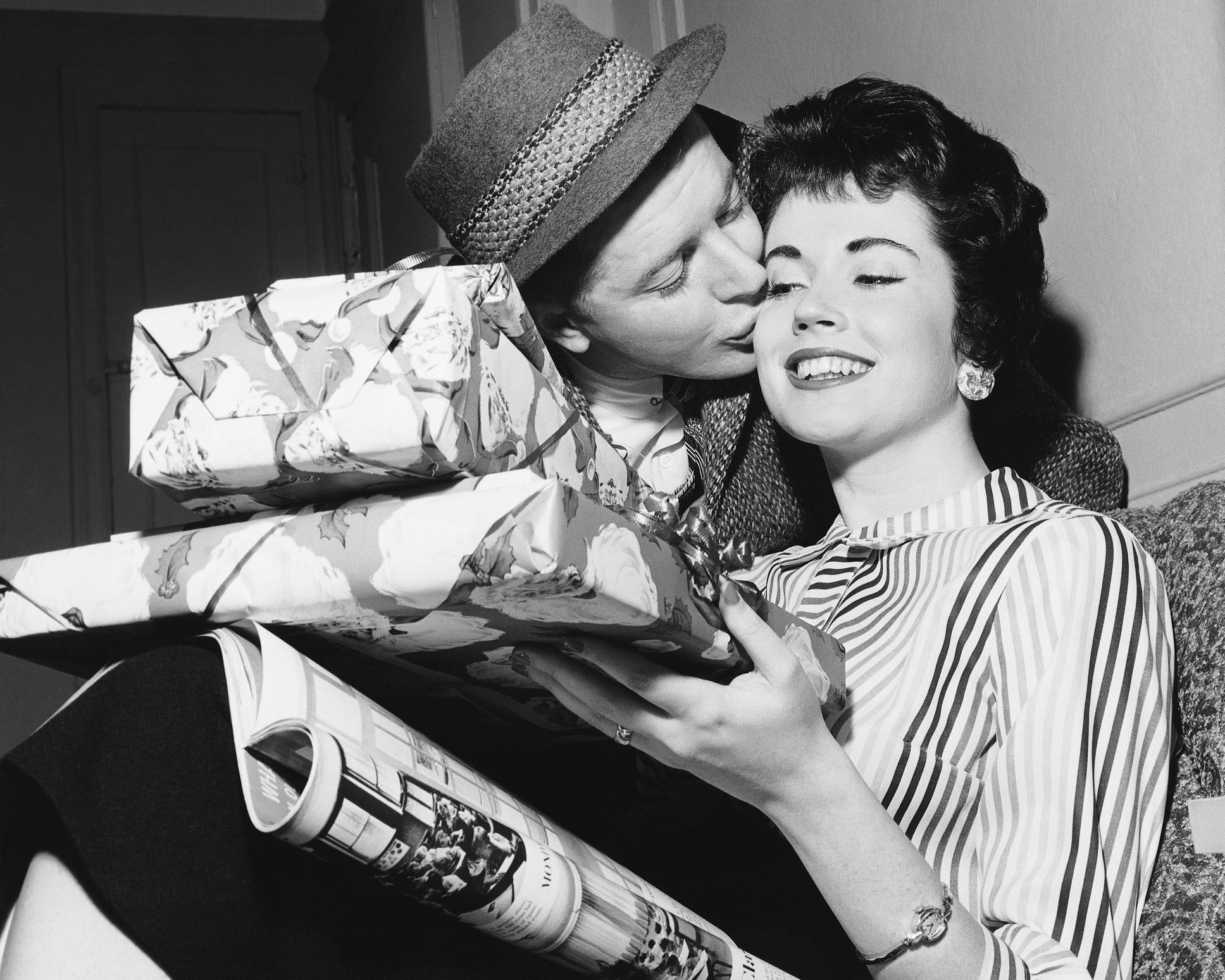
Thursday, November 27, 2025.
Folks sometimes ask me why science-based couples therapy is important.
They ask it casually, the way you might ask whether you really need car insurance or whether the smoke alarm is just being dramatic.
Let me be as clear as mid-century America was not:
Because the field began as a polite, televised disaster.
The 1950s were not the golden age of marriage; they were the golden age of men with clipboards and no credentials issuing decrees about women’s lives.
It was a decade that successfully turned gender ideology into therapeutic doctrine—an impressive feat, if you ignore the human cost.
To understand why evidence matters, you have to see what filled the vacuum before evidence existed.
Before Research: The Ascendancy of Paul Popenoe, Horticulturist, Eugenicist, Marriage Expert
The foundational figure in American marriage counseling was Paul Popenoe, a man trained not in psychology or psychiatry but horticulture. He knew how to pollinate date palms, which apparently qualified him to pollinate marital advice across early television.
He was also a major architect of American eugenics, advocating the forced sterilization of disabled people, the “management” of “inferior stock,” and publishing racist tracts so grotesquely unfounded that even other eugenicists occasionally winced.
This was the intellectual soil in which American marriage counseling first grew—not empathy, not relational science, but a horticulturist’s fantasy of pruning the human species.
And Popenoe’s central idea?
Men misbehave; women adjust.
Violence, infidelity, alcoholism—each reframed not as male action but as female failure.
In Popenoe’s universe, women were not people. They were the environmental conditions husbands had to endure.
The 1950s: When Patriarchy Was Treated as a Diagnostic Tool
The marriage advice industry of the era operated on a simple formula:
Men were rational;
Women were emotional;
Whatever went wrong was feminine in origin and feminine in responsibility.
This was less therapy than public relations for male entitlement.
Corporate America joined the project with enthusiasm. There’s a 1950s Good Housekeeping column by R.E. Dumas Milner—hotel mogul, amateur marriage philosopher—which declares:
“The wrong wife can break the right man.”
Not the wrong résumé.
Not the wrong temperament.
Not the bottle of scotch he finished the night before.
The wife.
Early marriage counseling manuals repeated this refrain: a good wife “supports,” “eases,” “soothes,” “beautifies,” “accommodates,” and above all, “prevents male unrest.” This was not therapy. It was gendered labor disguised as relationship science.
Domestic Violence: The Era’s Favorite Blind Spot
Clifford Adams, another “expert,” assured women that violent husbands simply needed less disagreement and more indulgence.
Today we call this abusive. In the 1950s, they called it marital “harmony.”
A woman whose husband left after 30 years was told by Popenoe’s institute to examine how she had driven him away.
She was instructed to improve herself—quietly, diligently, without resentment. The goal was not well-being; it was reinstatement.
Before evidence, therapy didn’t help women. It managed them.
Divorcees Anonymous: The Gender Correctional System
Divorcees Anonymous was a national program founded by a male lawyer to help women “prevent divorce” by accepting responsibility for their husbands’ unhappiness. Women counseled other women to lose weight, soften their tone, polish their demeanor.
It was multi-level marketing for marital self-erasure.
The Marriage Market: Women as Applicants, Men as Prize
The Ladies Home Journal ran elaborate campaigns instructing women on how to earn proposals: self-improve, self-discipline, self-correct. One widely shared article called marriage “the keystone of a woman’s life,” and urged readers to reshape themselves until chosen.
A 29-year-old wrote about landing a husband after following her counselor’s advice: lower expectations, fix your appearance, interrogate your own intimacy issues. She described the result as triumph. The subtext screamed compliance.
Was Neurodiversity Ever Discussed in the 1950s?
Absolutely not. Not even close.
To understand why, you have to understand the era’s intellectual infrastructure:
The Diagnostic Model: Psychiatry in the 1950s was still dominated by Freudian theory and custodial institutionalization. Conditions like autism were either pathologized in mothers (“refrigerator mothers,” per Bruno Bettelheim) or misclassified entirely.
The Cultural Frame: Divergence of any kind—neurological, behavioral, temperamental—was treated as defect, deviance, or disobedience.
The Eugenics Residue: The conversation was about “improvement,” “normalcy,” and “adjustment”—antonyms of neurodiversity.
The neurodiversity paradigm didn’t exist until the late 1990s, articulated by autistic sociologist Judy Singer in work now supported by research on neurodevelopment (for example, Feldman’s 2012 model of bio-behavioral synchrony, or Robertson & Simmons’ 2015 qualitative analysis of autistic sensory experience).
In the 1950s?
Autistic adults weren’t recognized. ADHD wasn’t defined (the term wouldn’t appear until the DSM-III in 1980).
Sensory processing wasn’t studied. Monotropism wasn’t conceptualized.
Executive functioning wasn’t a framework.
Neurodiverse couples didn’t get bad therapy. They got no therapy—only misdiagnosis.
If autistic husbands struggled with emotional reciprocity, it was chalked up to coldness, stoicism, or male prerogative.
If autistic wives struggled with social expectations, it was deemed neurosis, frigidity, or a failure of femininity.
Neurodiversity didn’t fail the 1950s. The 1950s failed neurodiversity.
When Science Finally Arrived, It Did Something Extraordinary
The shift began when researchers like John Gottman started collecting actual data:
videotaped conflict;
physiological arousal patterns;
repair attempts;
interaction ratios;
longitudinal follow-ups.
Published in journals like Journal of Social Issues (Gottman & Levenson, 1988) and Journal of Personality and Social Psychology (Gottman & Levenson, 1992), this research replaced folklore with findings.
Emotionally Focused Therapy (EFT) demonstrated, in Journal of Consulting and Clinical Psychology (Johnson et al., 1999), that secure bonding is not a feminine performance—it’s a universal need.
These studies did more than correct past errors.
They exposed the cultural rot underneath them.
Why Evidence-Based Couples Therapy Isn’t Just Better—It’s the First Time the Field Has Ever Been Ethical
Evidence-based practice did not appear because the profession found its conscience.
It appeared because data forced the profession to confront its history.
Without science, therapy becomes tradition.
And tradition has a body count.
Science-based couples therapy changes the moral baseline:
from blame to curiosity,
from gender ideology to relational dynamics,
from pathology to patterns,
from assumptions to measurement,
from conformity to neurodiversity,
from compliance to collaboration.
Final Thoughts
The 1950s were an era when marriage counseling treated patriarchy as truth and eugenics as methodology.
Women were instructed to be adjustable furniture. Neurodiverse people weren’t misheard; they were unseen.
The arrival of actual science wasn’t a refinement.
It was a jailbreak.
Evidence-based couples therapy is not a luxury.
It is the first time the field has been tethered to reality rather than doctrine.
If your marriage is going to be shaped by anything, let it be data—not by the horticulturist who thought forced sterilization was good governance.
Be Well, Stay Kind, and Godspeed.
REFERENCES:
Bix, A. S. (2013). Contraception: A history. Polity Press.
(Discusses gender, patriarchy, and cultural expectations shaping mid-century marital roles.)
Carter, J., & Carter, S. (2010). The American family: A social history. Oxford University Press.
(Provides detailed context on 1950s family ideology, domestic gender norms, and pre-scientific marital “therapy.”)
Dowbiggin, I. (1997). Keeping America sane: Psychiatry and eugenics in the United States and Canada, 1880–1940. Cornell University Press.
(Explains the eugenic foundations of American counseling, including figures like Popenoe.)
Dowbiggin, I. (2011). Eugenics, sterilization, and modern marriage in the United States: The strange career of Paul Popenoe. Canadian Bulletin of Medical History, 28(2), 367–388.
https://doi.org/10.3138/cbmh.28.2.367
(The gold-standard academic article on Popenoe’s influence on marriage counseling.)
Fass, P. S. (2012). The damned and the beautiful: American youth in the 1920s. Oxford University Press.
(Shows early 20th-century cultural attitudes toward marriage that flowed directly into 1950s advice culture.)
Ghamari-Tabrizi, S. (2018). Advice for a modern marriage: The American Institute of Family Relations and the medicalization of marital life, 1924–1964. Journal of Family History, 43(1), 67–89.
https://doi.org/10.1177/0363199017745954
(Direct scholarly analysis of Popenoe’s Institute and marriage counseling pre-1960s.)
Goodman, E. S. (1972). The history of marriage-counseling research (Doctoral dissertation, University of New Hampshire).
https://scholars.unh.edu/dissertation/3373
(One of the earliest comprehensive academic histories of marriage counseling.)
Hartman, M. S. (2005). The household and the making of history: A subversive view of the Western past. Cambridge University Press.
(Explains historical domestic labor expectations placed on wives—essential context.)
Hunt, L. (2007). The making of the West: Peoples and cultures. Bedford/St. Martin’s.
(Provides historical patterns of gender norms shaping mid-century marriage.)
Kline, W. (2001). Building a better race: Gender, sexuality, and eugenics from the turn of the century to the Baby Boom. University of California Press.
https://doi.org/10.1525/9780520920405
(Major academic source linking eugenics ideology to mid-century marriage and family policy.)
May, E. T. (1988). Homeward bound: American families in the Cold War era. Basic Books.
(The definitive social history of 1950s marriage ideology, domestic roles, and the rise of “togetherness.”)
Moran, J. P. (2000). Teaching sex: The shaping of adolescence in the 20th century. Harvard University Press.
(Ties directly into Popenoe’s work on sexual “adjustment” and moralistic counseling.)
Popenoe, P. (1938). Marriage before and after. McGraw-Hill.
(Popenoe’s own writing demonstrating his ideology; essential primary source for your critique.)
Rosen, R. (2000). The world split open: How the modern women’s movement changed America. Viking.
(Provides historical context for marital discontent rising in the 1950s and erupting into 1960s feminism—supporting your claims.)
Solinger, R. (2013). Reproductive politics: What everyone needs to know. Oxford University Press.
(Covers forced sterilization and eugenics that shaped Popenoe’s worldview.)
Stoddard, M. (2017). The American marriage movement: Counseling, conformity, and the creation of the modern family, 1925–1965 (Doctoral dissertation, University of Minnesota).
https://hdl.handle.net/11299/189474
(Why marriage counseling became a tool of cultural conformity pre-Gottman.)