
Welcome to my Blog
Thank you for stopping by. This space is where I share research, reflections, and practical tools drawn from my experience as a marriage and family therapist with an international practice.
I write about what happens to desire, attachment, and meaning once the early myths stop working.
Are you a couple looking for clarity? A professional curious about the science of relationships? Or simply someone interested in how love and resilience work? I'm glad you've found your way here. I can help with that. I'm accepting new clients, and this blog is for the benefit of all my gentle readers.
Each post is written with one goal in mind: to help you better understand yourself, your partner, and the hidden dynamics that shape human connection
Grab a coffee (or a notebook), explore what speaks to you, and take what's useful back into your life and relationships.
And if a post sparks a question, or makes you realize you could use more support, l'd love to hear from you. Let's explore the scope of work you'd like to do together.
Be Well, Stay Kind, and Godspeed.
~ Daniel
P.S.
Feel free to explore the categories below to find past blog posts on the topics that matter most to you. If you're curious about attachment, navigating conflict, or strengthening intimacy, these archives are a great way to dive deeper into the research and insights that l've been sharing for years.
- Attachment Issues
- Coronavirus
- Couples Therapy
- Extramarital Affairs
- Family Life and Parenting
- How to Fight Fair
- Inlaws and Extended Families
- Intercultural Relationships
- Marriage and Mental Health
- Married Life & Intimate Relationships
- Neurodiverse Couples
- Separation & Divorce
- Signs of Trouble
- Social Media and Relationships
- What Happy Couples Know

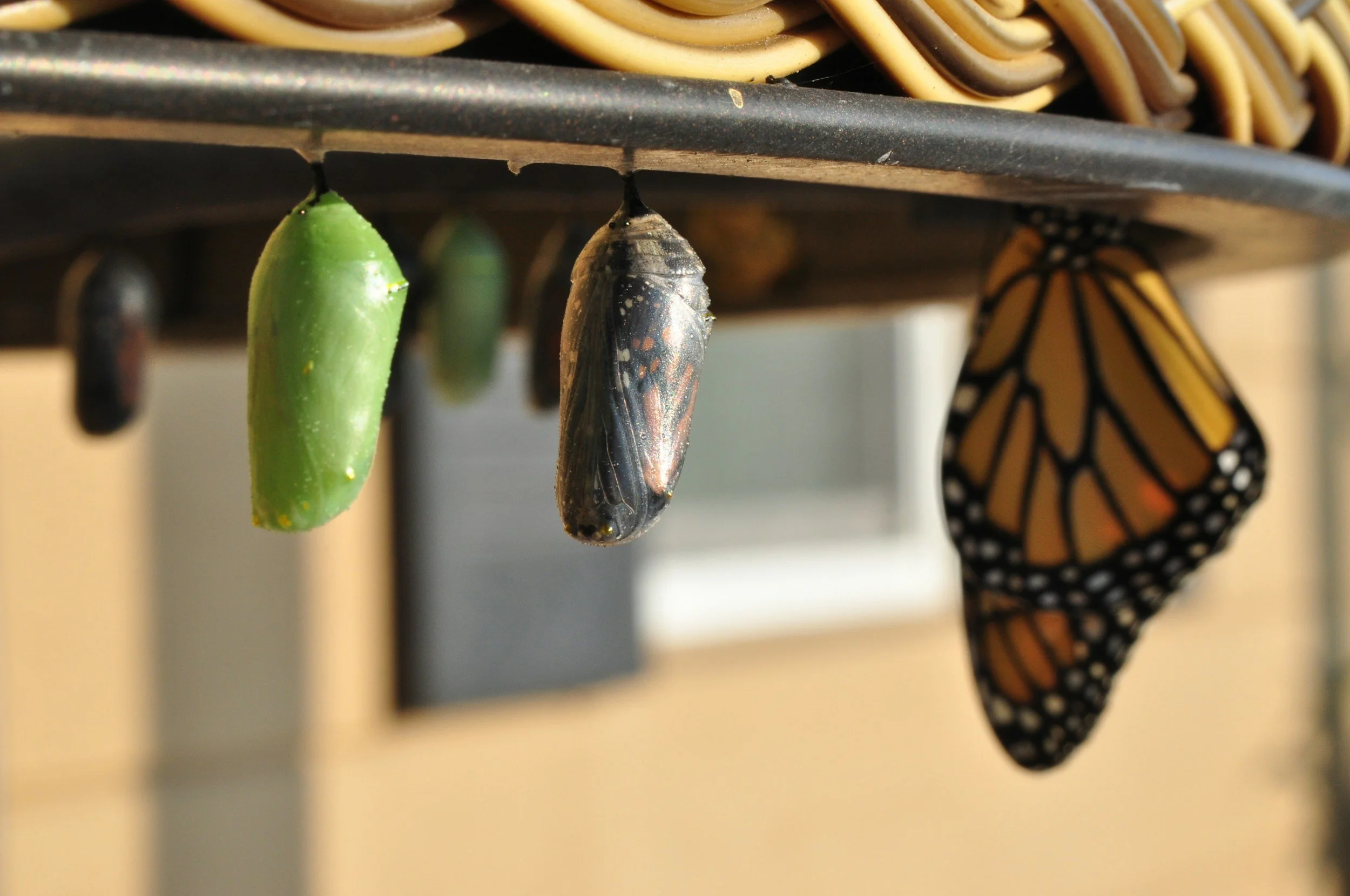
The Problem of Outgrowing Everyone Around You
There’s a peculiar ache that comes with growth—the kind no one warns you about, because it makes the people who haven’t grown yet uncomfortable.
You don’t plan it.
You just wake up one day and realize that the people who once fit your life like a favorite sweater now itch, constrict, or simply don’t match the weather anymore.
Outgrowing everyone around you isn’t a declaration of superiority—it’s a quiet kind of exile.
The price of evolving is often paid in companionship.

The Happiness Curve Is Breaking: Why Young Adults Are Now the Most Miserable Generation
For decades, the science of happiness offered a tidy parable about aging: life satisfaction follows a U-shaped curve.
We begin bright-eyed and hopeful, sag into the doldrums of midlife, and climb back toward serenity as the years pile on.
It was a reassuring story — proof that time, at least psychologically, heals all things.
But the data no longer fit the story. Across continents, the curve has collapsed.
The happiest people are not the young; they’re the old.
Why are the most miserable humans now the ones just starting out?

Mindful Indulgence: When Pleasure Gets a Therapist
We live in a culture that can’t decide whether to worship pleasure or apologize for it. We binge, repent, and then we call it balanced.
But what if there’s another way—one that treats joy as neither sin nor therapy project, but as something we can practice consciously? Mindful indulgence is the art of enjoying what you love without guilt, distraction, or excess.
It’s what happens when awareness meets appetite, when the body and mind remember how to sit down together again.
In this post, we’ll explore the psychology and cultural history behind Mindful Indulgence, how other cultures have mastered the art of savoring, and why couples who learn to share pleasure slowly tend to reconnect deeply.
In the end, it’s not about luxury—it’s about sanity.

The Allure of Pain: Why We Sometimes Pay for Our Own Discomfort
You can measure a culture’s hunger for meaning by how much it pays to be terrified for fun.
A woman runs mile twelve of her first marathon, breathing fire, half-crying, half-exalted.
A man stands waist-deep in an ice bath, filming his shivers for Instagram. Someone else queues for a haunted house that promises a “trauma-simulating experience.”
This is our current state of wellness, 2025. It’s not that we like pain.
It’s that we no longer trust comfort.
New research on psychological richness suggests that people increasingly value variety, intensity, and perspective-change over comfort or even happiness.
The choice to suffer — within limits — is not masochism but a wager: that discomfort will leave us more alive, more awake, more human.

Alan Watts and the Hedonist’s Dilemma: How We Keep Justifying Our Pleasures
Alan Watts taught millions how to let go.
He made surrender sound divine — a smooth, amber current of acceptance running beneath the static of modern striving.
But behind the microphone and the incense, the man who spoke of freedom was drinking himself into oblivion.
By the time he died at fifty-eight, Watts was reportedly consuming a bottle of vodka a day and chain-smoking through the California fog. According to his daughter, he had been hospitalized more than once for delirium tremens.
The paradox isn’t that he failed to live his philosophy; it’s that he used philosophy to survive his failure.
Every generation invents a language to forgive its own excesses. Watts called it the Tao. We call it wellness.

How Technology Is Rewriting the Rules of Love — And What Therapy Can Offer
Love used to unfold in the physical world. Now it pings, swipes, and types its way into existence.
For many couples, technology is both a bridge and a barrier — a constant companion that mediates nearly every gesture of connection.
From therapy offices to Reddit confessionals, one theme keeps surfacing: our devices aren’t neutral tools anymore.
They’re shaping how we attach, argue, flirt, betray, and repair.
The question for modern love isn’t whether technology affects relationships. It’s how deeply it already has — and what therapy can do to help us stay human within it.

The Long Shadow of Faith: How a Religious Upbringing Shapes Mental and Cognitive Health
It’s a peculiar thing, isn’t it? The very institutions that once promised salvation might, decades later, leave traces in our blood pressure and brain fog.
A new study in Social Science & Medicine claims that a religious upbringing in childhood is linked—albeit faintly—to poorer mental and cognitive health in later life.
The finding lands like a theological Rorschach test: believers see an attack on virtue; skeptics see vindication.
But for anyone who grew up singing hymns with one hand and nursing anxiety with the other, it feels more like déjà vu.

What Is the Existential Elk Theory? A Metaphor About Choice, Meaning, and Paralysis
You meet the Existential Elk somewhere in midlife—usually on a Monday.
He’s standing at the edge of your reflection, chewing grass, asking what it’s all for.
You try to ignore him, but he’s heavy, majestic, and clearly not going anywhere.
Norwegian philosopher Peter Wessel Zapffe (1933) had a name for this creature.
He called it the tragedy of over-evolution: our consciousness grew too large for our species to bear.
Just as the Irish Elk (Megaloceros giganteus) developed antlers so massive they eventually became lethal, humans evolved a mind so aware that it threatens our own peace of mind.

Seven Seconds of Light: a Neuroscientist Has a Near Death Experience
Let’s start with the facts before the light gets too blinding.
Dr. Álex Gómez-Marín is not your usual mystic. He’s a Spanish neuroscientist and theoretical physicist — a man whose day job involves equations, not incense.
A few years ago, he suffered a severe internal hemorrhage that briefly stopped his heart. In those seven seconds, he says, he found himself in a well of golden light.
Three figures appeared. They didn’t speak, exactly — more like radiated intent. They offered him a choice: stay or go back.
He thought of his daughters, said “not yet,” and returned.
What makes this story remarkable isn’t the headline version (“Scientist meets glowing entities!”), but the tension it exposes between subjective experience and scientific caution.
Gómez-Marín describes his own near-death experience (NDE) as “more real than reality itself.” For a man of science, that’s a strong claim — and one worth examining without either reverence or ridicule.

10 Studies on Love, Friendship, and the Great Blurry Middle
We pretend that romance and friendship are two different games: one played with candlelight, the other with take-out containers.
One gets poems, the other gets memes. But decades of research suggest that the border between them is porous — maybe even imaginary.
When you look closely, the emotional scaffolding of a deep friendship and that of a long-term romance are almost identical: mutual vulnerability, consistent responsiveness, trust, admiration, and shared humor.
The main difference, as John M. Gottman would say, is that romance adds sexual exclusivity and ritualized significance — not a separate emotional species, just a new tax bracket.
Let’s tour ten studies that expose the cultural illusion of difference, with commentary from some of psychology’s most enduring thinkers.

The Secret Life of Cup Sizes: What Breast Size Really Says About Self-Esteem
A new study published in The Journal of Turkish Family Physician just confirmed what women have always known: even the smallest body difference can become a cultural headline.
The researchers found that women with larger breasts tend to report slightly higher self-esteem.
Before anyone starts drafting a think piece, let’s pause: the difference was tiny — a polite blip on the psychological radar.
Still, it tells us something enduring: we may live in our bodies, but we’re also living inside our culture’s imagination of them.

Why the Anxiously Attached Fall for Chatbots: The Psychology of AI Dependency
The modern love story has no pulse. It types back instantly.
Once upon a time, heartbreak meant someone stopped returning your calls. Now it means your chatbot paused before responding.
For millions of lonely or anxious people, conversational AI has become not just a convenience—but a companion.
During the pandemic, when human proximity felt dangerous, millions turned to digital intimacy.
The Cigna Loneliness Index found that over half of Americans reported feeling “always or sometimes alone.” It was the perfect moment for a new kind of listener: endlessly available, always attuned, and immune to emotional fatigue.