
Welcome to my Blog
Most people don’t arrive here because something dramatic has happened.
They arrive because something feels… different.
The relationship still works. Conversations still happen. Life continues.
But something important is no longer organizing it the way it used to.
This space is where I write about that shift.
Not just what breaks relationships—but what quietly changes them:
how desire adapts.
how attention moves.
how meaning erodes or deepens over time.
These patterns are not random.
They tend to unfold in a predictable sequence.
If you’re here, you’re likely in one of those moments:
trying to understand what changed.
trying to decide whether it matters.
trying to figure out what to do next.
Start anywhere.
But if something here feels familiar, don’t treat it as abstract.
It usually isn’t.
Where to Begin
If you’re not sure what you’re looking for, these are a few good entry points:
Marriage Is Still Chosen — Even by Those Who Once Stood Outside It.
Epistemic Safety: What It Is and Why It Matters in Relationships.
The Relationship Consequences of Living in a Permanent News Cycle.
The Two Types of People Narcissists Avoid (And Why You Might Be One of Them).
When Narcissists Grieve: Why Their Mourning Looks Cold, Delayed, or Self-Centered
The 3-6-9 Dating Rule: Why Most Relationships Change at Month 3, 6, and 9.
The First Listener Shift: A Precise Relationship Diagnostic Most Couples Miss.
Why Curiosity Is Sacred in Relationships (And What Happens When It Disappears).
If You’re Looking for More Than Insight
Understanding is useful.
But at a certain point, most couples realize they can explain their relationship clearly—and still not change it.
That’s where focused work becomes effective.
I offer structured, high-impact couples intensives designed to produce meaningful movement in a compressed period of time.
Before We Decide Anything
A brief consultation helps determine:
whether this is what you’re dealing with.
whether this format fits.
and whether we should move forward.
Get a Clear Read on Your Relationship
Take your time reading.
But if something here lands in a way that feels specific—pay attention to that.
That’s usually where this work begins.
Continue Exploring
If you prefer to browse more broadly, you can explore posts by topic below.
But most people don’t find what they need by browsing.
They find it when something they read feels uncomfortably accurate.
Be Well, Stay Kind, and Godspeed.
~ Daniel
- Attachment Issues
- Coronavirus
- Couples Therapy
- Extramarital Affairs
- Family Life and Parenting
- How to Fight Fair
- Inlaws and Extended Families
- Intercultural Relationships
- Marriage and Mental Health
- Married Life & Intimate Relationships
- Neurodiverse Couples
- Separation & Divorce
- Signs of Trouble
- Social Media and Relationships
- What Happy Couples Know

The Myth of Unconditional Love in Marriage
“Unconditional love” has a nice ring at the altar.
It sounds romantic, eternal, and vaguely saintly — as if the mere act of saying I do dissolves all conditions.
But here’s the truth: marital love is not unconditional.
Nor should it be.
The idea of loving a spouse “no matter what” is seductive.
It promises safety, permanence, and a Hollywood ending.
Yet research — and countless divorce filings — tell a different story.
Adult love thrives on reciprocity, trust, and boundaries.
Without those conditions, marriage collapses under the weight of unmet needs and unchecked harm.

Conditional Love: Why Rules, Boundaries, and Expectations Make Relationships Stronger
“Conditional love” has always been cast as the villain in the love story.
It sounds transactional, cold, and about as sexy as a spreadsheet. People assume it means: I’ll love you only if you vacuum, stay thin, and don’t embarrass me at dinner parties.
But here’s the unromantic truth: conditional love is the only kind of love adults actually manage.
Without conditions, marriages don’t become poetic — they become chaotic.
If unconditional love were real, people would be marrying Labradors.
Loyal, forgiving, never asking questions.
But you can’t argue about the mortgage with a Labrador, and that’s where the fantasy collapses.
This is my unapologetic defense of conditional love.
If you still crave the fairy tale of “love no matter what,” I’ve already written its obituary here: The Myth of Unconditional Love in Marriage.

Anti-Natalism: The Bleak Philosophy That Life Isn’t Worth Beginning
David Benatar, the South African philosopher behind Better Never to Have Been (Wikipedia), argues that bringing new people into existence is always wrong.
His case is stark: life inevitably contains suffering, nonexistence contains none, therefore the kindest act is not to procreate.
It’s philosophy as prophylaxis: the only foolproof way to prevent human suffering is to prevent humans. In other words, it has all the nuanced thinking of a Trojan condom.

Past-Life Memories: What Therapists Need to Know About Trauma, Anxiety, and Spirituality
Every so often in practice, a client will look you dead in the eye and say: “This isn’t my first life.”
For most clinicians trained in the U.S., the reflex is to either change the subject or quietly consider an appropriate DSM code.
But a new Brazilian study in The International Journal for the Psychology of Religion suggests we should pause before pathologizing.
Adults who report past-life memories show higher rates of anxiety, depression, and PTSD than the general population.
At the same time, they often report stronger spirituality and—crucially—higher happiness when forgiveness and spiritual coping come into play.
In other words, whether you think reincarnation is real or not, these memories are clinically meaningful.

The River Will Visit, the Blizzard Will Humiliate, the Sky Will Punch: A Cummington Story
Cummington, Massachusetts, is one of those towns people like to call “tucked away.”
Tucked away from what, exactly, is never clear. Presumably, civilization.
But being tucked away does not protect you from the things that really matter—namely, water, snow, and the sky itself deciding to crush you.
For a town of only 800 people, Cummington has three very promising ways to be destroyed: flood, blizzard, or microburst.
Each has already auditioned in nearby towns, which means it’s really only a matter of scheduling before Cummington gets its turn.

What Is Dazi Culture? Why China’s “Activity-Only Friendships” Might Save Us From Ourselves
The word dazi (搭子) comes from Shanghai slang for “card-playing buddy.”
Back then, you sat down, slapped cards on the table, and didn’t necessarily exchange birthdays. Now? The same stripped-down logic applies to almost anything: dinner, karaoke, the gym.
By 2024–2025, dazi had gone viral on Chinese platforms like Xiaohongshu and WeChat.
According to Radii China, young people are openly advertising for “meal dazi” or “travel dazi,” and not pretending it means forever friendship. Researchers now call this “precise companionship”—the opposite of the emotional sinkhole so many of us call “friendship” (China Daily).

Boom Times, Total Burnout: Three Days at Porn’s Self-Help Convention
Amsterdam: city of canals, tulips, and recently a thousand folks explaining how to monetize their genitals in the gig economy.
Europe’s largest pornography conference took over a riverside hotel, which is ordinarily the sort of place where German capitalists meet to discuss their supply chains.
Last week, however, it was flooded with roller skates, sequined bras, and the relentless optimism of people who believe burnout can be solved with branding.
Out in the lobby, two buses of American retirees clutched their tickets for the cheese-and-windmill tour.
They looked on in horror as women in diamanté heels rolled past with ring lights. The retirees will, most likely, never recover.
Spiritual Struggles and Mental Health: Can Belief in Miracles Protect Us?
Many folks have a story about a miracle.
A cancer scan that comes back clear. A loved one surviving an accident against all odds. Or simply making it through a season of life that seemed impossible.
But what does believing in miracles actually do for our mental health?
A new study in Mental Health, Religion & Culture offers an intriguing answer: sometimes, belief in miracles can buffer against depression—but not for everyone, and not in the same way.

The Hidden Currency of Hiring: When “Merit” Secretly Means “Attractive Enough”
My fascination with human behavior at work has caused me to notice how hiring managers love to say, “We only care about qualifications, and hire accordingly.”
It’s a noble sentiment, right up there with “I don’t judge a book by its cover” or “I only eat potato chips in moderation.”
The problem? None of those claims survive contact with real life.
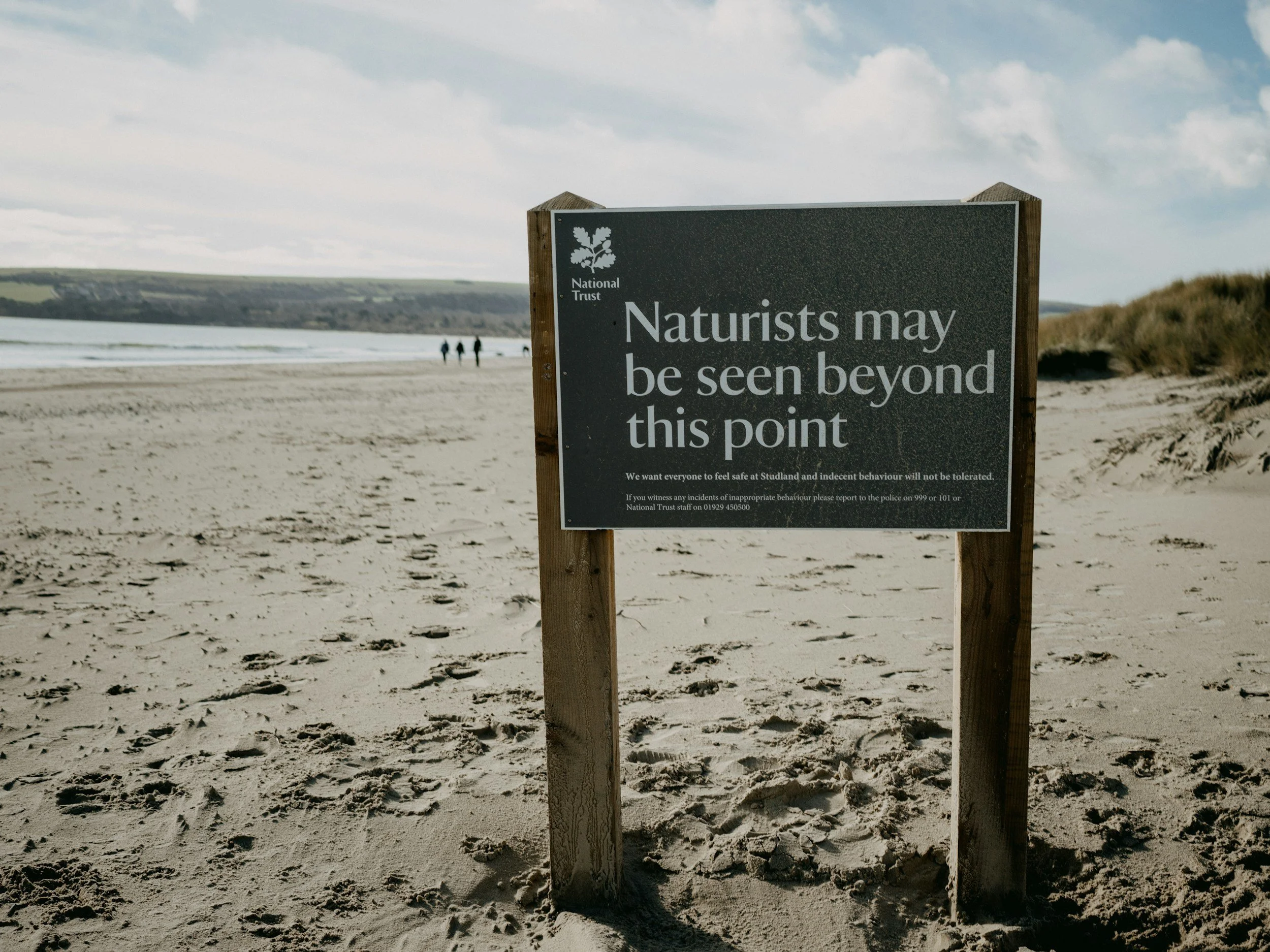
The Naked Return: Why Family Nudism Is Making a Comeback
Most revivals ask you to buy something—vinyl, vintage denim, another “sustainable” hoodie.
Naturism’s pitch is simpler and far more subversive: you already own the outfit. You were born in it, and it still fits.
For decades, clothing has been treated like emotional duct tape: armor against judgment, a billboard for your status, a filter for your insecurities.
The naturist revival suggests something different. The body doesn’t need a disguise. The body is the disguise.
is family nudism becoming a thing?

Signs Your Partner Is Emotionally Distant (But Still Loves You)
Not every love story ends with an explosive blowout.
More often it fades the way air leaks from a tire—slowly, quietly, until you’re startled by how flat things feel.
You wake up one morning and realize you haven’t really laughed together in weeks.
Conversations have been whittled down to weather updates and grocery lists. You’re still under the same roof, still sharing a bed, still splitting the bills—but intimacy has thinned until you feel less like partners and more like polite roommates.
This is emotional distance. It isn’t always the death of love, though it often masquerades as such. More often, it’s the nervous system’s survival strategy: a partner shutting down to cope with stress, exhaustion, or the unspoken backlog of resentments.
Love can still be present, flickering in small gestures, even when connection feels faint. Here are a few hopeful signs.

Does Swearing Make You Stronger? The Strange Psychology of Cursing
For centuries, swearing has been condemned as vulgar, lazy, or proof of a limited vocabulary. But new research suggests your grandmother was dead wrong.
Swearing doesn’t just make you sound more human—it may also make you stronger, more motivated, and more emotionally engaged.
Yes, really. That four-letter word might just be a performance enhancer.