
Welcome to my Blog
Thank you for stopping by. This space is where I share research, reflections, and practical tools drawn from my experience as a marriage and family therapist with an international practice.
I write about what happens to desire, attachment, and meaning once the early myths stop working.
Are you a couple looking for clarity? A professional curious about the science of relationships? Or simply someone interested in how love and resilience work? I'm glad you've found your way here. I can help with that. I'm accepting new clients, and this blog is for the benefit of all my gentle readers.
Each post is written with one goal in mind: to help you better understand yourself, your partner, and the hidden dynamics that shape human connection
Grab a coffee (or a notebook), explore what speaks to you, and take what's useful back into your life and relationships.
And if a post sparks a question, or makes you realize you could use more support, l'd love to hear from you. Let's explore the scope of work you'd like to do together.
Be Well, Stay Kind, and Godspeed.
~ Daniel
P.S.
Feel free to explore the categories below to find past blog posts on the topics that matter most to you. If you're curious about attachment, navigating conflict, or strengthening intimacy, these archives are a great way to dive deeper into the research and insights that l've been sharing for years.
- Attachment Issues
- Coronavirus
- Couples Therapy
- Extramarital Affairs
- Family Life and Parenting
- How to Fight Fair
- Inlaws and Extended Families
- Intercultural Relationships
- Marriage and Mental Health
- Married Life & Intimate Relationships
- Neurodiverse Couples
- Separation & Divorce
- Signs of Trouble
- Social Media and Relationships
- What Happy Couples Know


The Last Man in Dogtown
By the winter of 1830, almost everyone had left Dogtown.
The people of Gloucester had once gone inland for protection. They built houses among the granite ledges, beyond the easy reach of British cannon, privateers, and whatever else might arrive from the sea.
Then the danger passed. The harbor became profitable again. Men who had spent their lives fearing the coast began moving toward it.
This is one of history’s quieter habits. First we flee a place because it is dangerous. Then we abandon another place because it is safe.
The houses in Dogtown emptied one at a time.
Roofs softened and fell. Wells filled with leaves. Cellars remained open in the earth like square black mouths. The prosperous families left first.
The widows stayed longer. So did the women accused of witchcraft, the men who drank too much, and those for whom Gloucester had found no particularly dignified use.
Cornelius Finson stayed.
The town called him Black Neil.

Yours, Mine, and Ours: Why Equal Income and Equal Wealth Affect Love Differently
Money enters a relationship wearing several disguises.
Sometimes it arrives as a paycheck. Sometimes it arrives as a house, an inheritance, a retirement account, or a suspiciously specific collection of vintage motorcycles described as “an investment.”
Money can represent freedom, safety, status, competence, loyalty, power—or the ability to order lunch without submitting a small grant proposal to one’s spouse.
When couples decide whether to combine their money or maintain separate accounts, the conversation is usually presented as practical:
Who pays the mortgage?
How much should each person contribute?
Can we afford the vacation?
Why did someone spend $780 at Costco when there are only two of us?
But money management is rarely just bookkeeping. It is an emotional constitution. Every couple quietly decides what belongs to me, what belongs to you, and what belongs to us.
Fascinating new research suggests that two forms of financial equality—equal income and equal wealth—may push couples in opposite directions.
When partners earn similar incomes, they may be more inclined to keep some money separate. But when they possess similar amounts of wealth, they may be more likely to combine their finances.
Apparently, equality does not have one financial personality. It has at least two checking accounts.
The Trickster in American Culture: Why America Loves the Charming Fraud
The American Trickster: He Invented Himself—and Sent Us the Invoice
The American trickster is not merely a liar. Liars are common and usually tedious.
The trickster is something more gifted and more dangerous: a boundary-crosser who exposes the foolishness of respectable people while helping himself to their silverware.
He appears throughout American culture as the confidence man, the hustler, the outlaw, the snake-oil salesman, the self-invented millionaire, the political showman, the charming grifter, and—after a suitable infusion of venture capital—the “disruptor.”
America condemns fraud in principle and admires audacity in practice. We prosecute the fellow selling counterfeit watches on the sidewalk while putting the fellow selling an imaginary future on the cover of a business magazine.
The difference is often tailoring.
The American hero builds himself. The American trickster invents himself—and then sends everyone else the invoice.

Platonic Co-Parenting: All the Children, None of the Marriage
There was a time when the route to parenthood came with a fairly rigid itinerary.
You met someone. You fell in love. You married. You bought a sectional sofa of alarming proportions. You had a baby.
Then, sometime around the third consecutive month without sleep, you discovered that the person who once wrote poetry about your collarbone could not locate the diaper cream while holding it.
This was called family life.
Platonic co-parenting proposes another route: two people deliberately choose to have and raise a child together without being romantic partners.
No courtship. No wedding. No expectation of sexual exclusivity. No annual argument about whether the relationship has “lost its spark.”
Just parenthood.
This may sound wonderfully sensible—or slightly like forming a limited-liability company with a bassinet. In reality, it can be either. Sometimes both before lunch.
Platonic co-parenting is not an escape from relationships. It is the decision to place one particular relationship—the parenting relationship—at the center of family life.
And that relationship had better be good.

The Marriage They Kept Beautiful: Leonard Bernstein, Felicia Montealegre, and the Cost of Knowing
Leonard Bernstein did not enter a room so much as take possession of its weather.
He conducted orchestras with his entire body. He composed symphonies, ballets, operas and Broadway musicals.
He explained classical music to American children without making it feel like court-ordered enrichment.
He smoked, lectured, flirted, embraced, perspired, wept and generated more emotional electricity before lunch than most families produce in a fiscal quarter.
Felicia Montealegre was different.
She was elegant where Leonard was exuberant, contained where he was overflowing, and socially precise where he treated personal boundaries as an intriguing but unproven theory.
Together, they created one of the most glittering marriages of 20th-century cultural life.
Their homes were filled with actors, musicians, writers, activists and the sort of people who referred to Aaron Copland by his first name. They raised three children.
They made art together. They supported civil rights, protested the Vietnam War and entertained with such panache that even their political controversies appeared to have been catered.
They also constructed a family around a difficult truth.
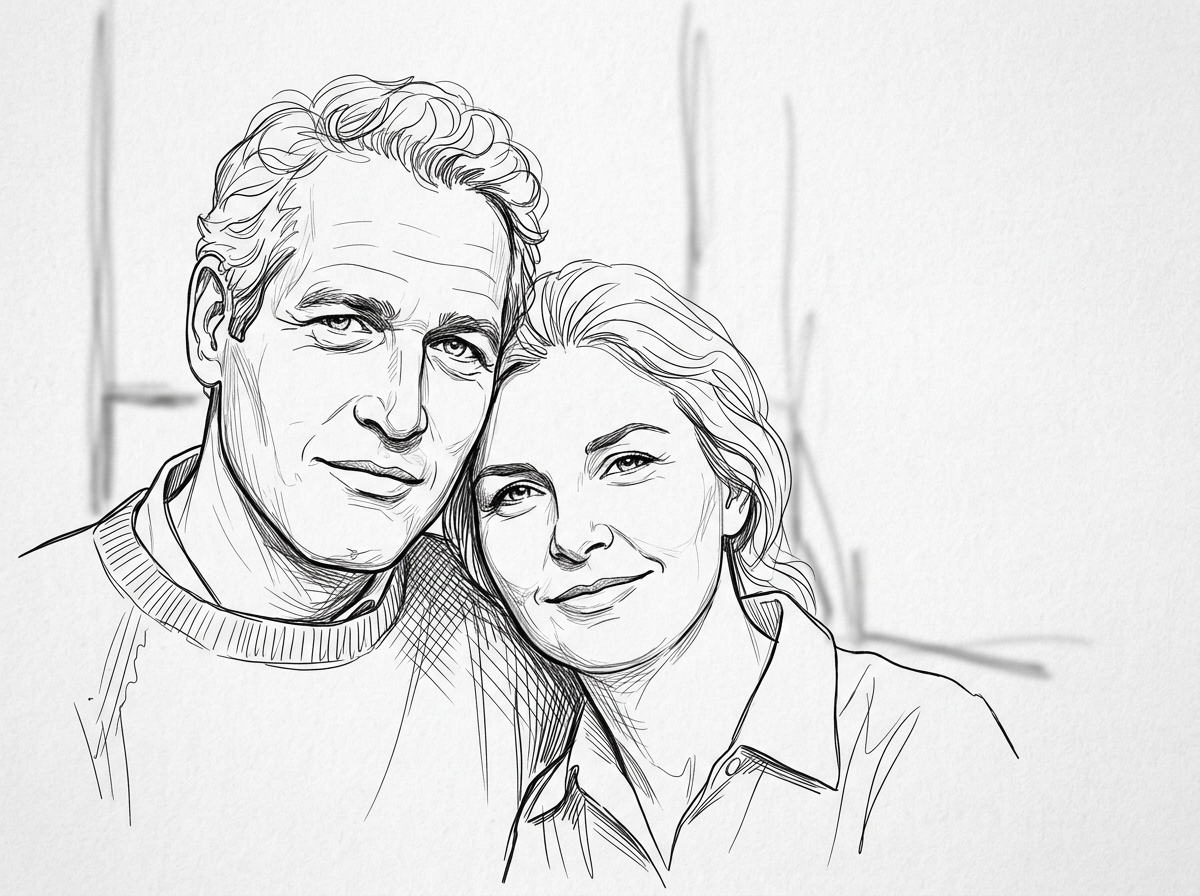
Paul Newman and Joanne Woodward: The Love Letters Behind a 50-Year Marriage
There are worse things to find in your parents’ attic than their love letters.
Tax returns.
A NordicTrack.
Thirty-seven years of National Geographic preserved under the assumption that somebody, someday, will urgently require the April 1986 issue.
Melissa Newman found something considerably more dangerous.
Her parents’ desire.
Years after her father, Paul Newman, died in 2008, Melissa Newman discovered early letters her father had written to Joanne Woodward.
She later described encountering correspondence that could be sweet, romantic, and sufficiently intimate that not everything belonged in a book assembled by their daughter.
Which may be the strongest endorsement of a love letter ever offered.
We already knew Paul Newman was beautiful. There is an extensive photographic record.
What the letters reveal is more interesting.
He was besotted.
And decades later, after the beautiful young man was gone, the evidence remained.
The marriage had lasted fifty years before ending in the only way a lifelong marriage ultimately can.
One of them died.
And among the family papers, the young Paul Newman was still trying to tell Joanne Woodward something lovers have been trying to say since we first figured out how to write things down:
Of all the people in the world, I choose you.

The Refrigerator Is Always Humming: 12 Strange Ways Childhood Trauma Survives Adulthood
Childhood trauma does not always enter adulthood wearing a name tag.
Sometimes it looks like rushing through breakfast when nobody is waiting.
Sometimes it is saying yes to an unreasonable request, then discovering your anger three hours later in the cereal aisle.
Sometimes it is making an entire dinner party laugh about the night your father broke a door—and wondering why your spouse looks stricken.
Trauma can be theatrical. But it can also be domestic, punctual, productive, and rather well dressed.
It may appear as the person who cannot rest without feeling guilty.
The person who becomes strangely blank when asked a direct question.
The person who can comfort everyone except themselves.
The person who has several distinct personalities—one for work, one for family, one for friends—and experiences mild cardiac weather when those groups threaten to meet.
These behaviors are easily mistaken for personality.
“I’ve always been this way.”
Perhaps. But “always” sometimes means since I had to become this way.
Many childhood trauma responses began as intelligent adaptations. Emotional delay allowed a child to remain agreeable until it was safe to feel.
Hypervigilance kept the household weather station running.
Humor made unbearable experiences tellable.
Dissociation provided a small internal exit when the actual exits were controlled by adults.
The child was not malfunctioning.
The child was improvising.

Zebra Theory: Can Cheating Life Partners Really Change Their Stripes in a Relationship?
There comes a moment in certain relationships when everyone except the person in the relationship seems to know what is happening.
The sister knows.
The best friend knows.
The therapist has developed suspicions.
Even the dog appears to have formed a position.
But the person in love is still explaining.
He was under tremendous pressure at work.
She had a difficult childhood.
He shuts down because his father was emotionally unavailable.
She becomes controlling because she is frightened of abandonment.
He cheated because the marriage had become disconnected.
There are attachment styles. Family-of-origin wounds. Trauma histories. Neurobiology. Stress. Shame. The mortgage.
Eventually, after approximately four years of graduate-level psychological interpretation conducted over appetizers, somebody says:
A zebra doesn’t change its stripes.
And the table goes quiet.
Because everybody knows exactly what it means.
Welcome to Zebra Theory

Your Marriage May Need a Japanese Train Station
Somewhere in Japan, a train arrives exactly on time, and nobody argues about it.
Not because Japanese commuters are morally superior.
But because the system has already decided what happens next.
The doors open.
People step out.
People step in.
The train leaves.
No one stands on the platform saying, “I thought you were going to handle the timing this time.”
No one is negotiating whether “on time” means 8:03 or “around 8-ish depending on how the morning feels.”
The train does not participate in your emotional life.
It simply runs.
And that turns out to be surprisingly relevant to marriage.
Japanese rail systems are famous for precision, but the more interesting feature is not punctuality.
It is the elimination of ambiguity.
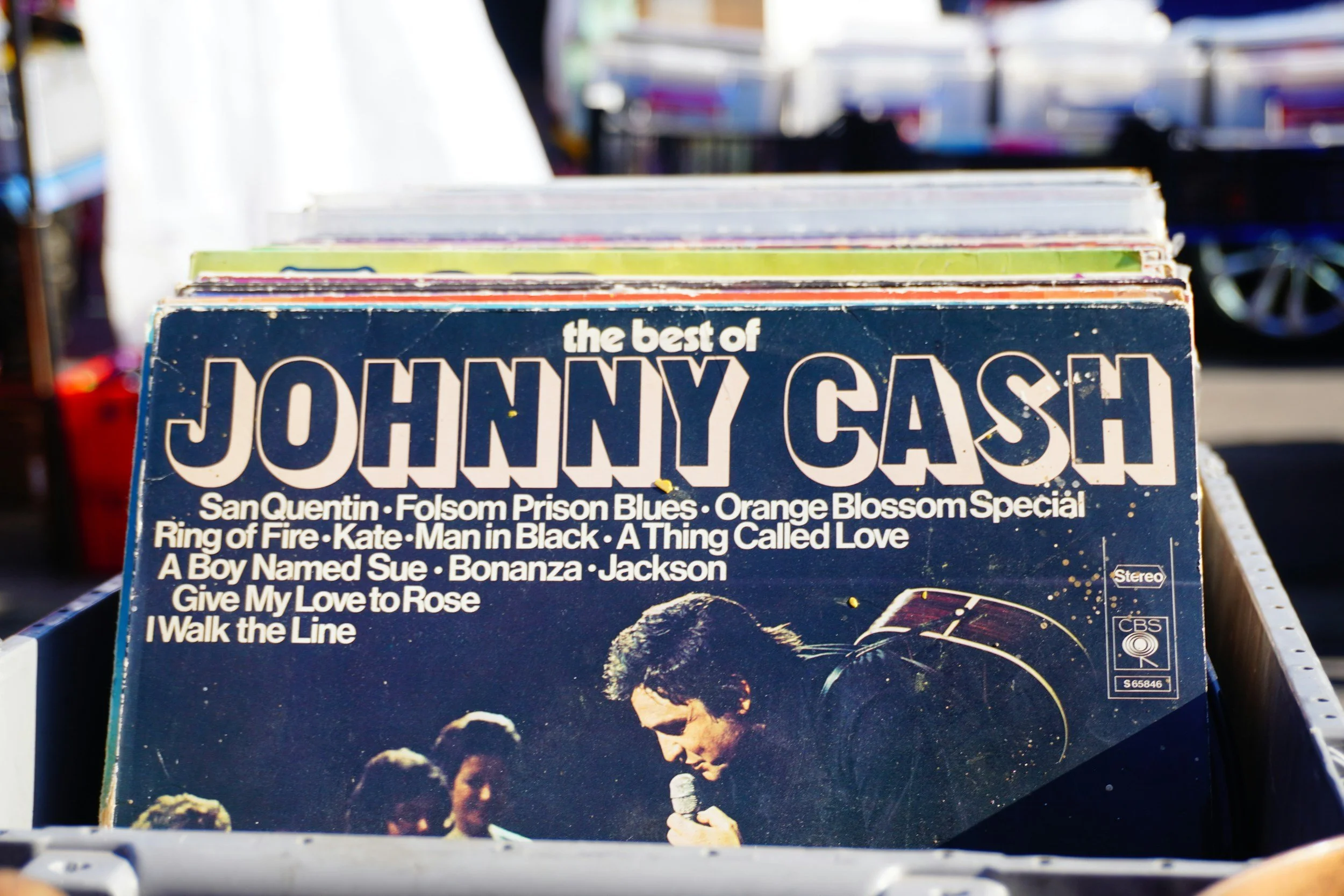
Johnny Cash, Vivian Liberto, and June Carter: The Love Triangle America Turned Into a Love Song
There is a photograph of Johnny Cash and Vivian Liberto taken before the mythology hardened.
They are young, dark-haired, almost absurdly beautiful.
Johnny has not yet become the Man in Black. Vivian has not yet been demoted to “the first wife.”
June Carter is not yet standing at the center of an American redemption story, holding a fistful of amphetamines she has supposedly rescued from Johnny’s pocket.
Nobody in the photograph knows what the culture will eventually do with them.
Johnny and June will become one of popular music’s great love stories: the wounded outlaw and the woman who walked with him through the ring of fire.
Vivian, meanwhile, will be assigned the less glamorous role of the wife who could not understand him.
It is a marvelous arrangement for everyone except the woman who was actually married to him.
The Vivian–Johnny–June triangle was real. But it was never symmetrical.
And the more carefully we examine it, the less it resembles a simple story about finding one’s soulmate.
It becomes a story about celebrity, addiction, divided identity, marital betrayal, and the remarkable ability of a good soundtrack to make collateral damage disappear.

Southern Cross: Stephen Stills, Divorce, and the Ocean After Love
There are divorces that end at the courthouse, and divorces that require a sextant.
Stephen Stills’s marriage to French singer-songwriter Véronique Sanson belonged rather decisively to the second category.
After the marriage broke apart, Stills went sailing through the South Pacific.
Somewhere between California, Tahiti and the Marquesas, heartbreak acquired celestial navigation.
The result was “Southern Cross,” one of the loveliest songs ever written about discovering that changing your latitude does not immediately change your emotional address.
Stills met Sanson while touring France with Manassas. They married in 1973 and had a son, Christopher, the following year.
This was not simply a marriage between musicians.
It joined two substantial artistic identities from different worlds.
Stills belonged to the sprawling American republic of electric guitars, touring bands, Colorado ranches and spectacular male improvisation.

Is Our Marriage Still Safe? The New Anxiety Haunting Gay Couples
There was a brief and rather lovely period when gay marriage became boring.
This was the dream.
Not merely legal. Not merely tolerated. Boring.
Two men could marry, buy a sectional sofa, develop surprisingly rigid opinions about backsplash tile, and spend fifteen minutes outside a restaurant trying to remember where either of them had parked.
Two women could become wives and discover that equality included the right to ask, “Are you almost ready?” in a tone suggesting that diplomatic relations had deteriorated.
Marriage equality had reached its highest developmental stage:
Ordinary aggravation.
Gay couples had finally won the right to be mildly exasperated in public.
And then the background music changed.