
Welcome to my Blog
Thank you for stopping by. This space is where I share research, reflections, and practical tools drawn from my experience as a marriage and family therapist with an international practice.
I write about what happens to desire, attachment, and meaning once the early myths stop working.
Are you a couple looking for clarity? A professional curious about the science of relationships? Or simply someone interested in how love and resilience work? I'm glad you've found your way here. I can help with that. I'm accepting new clients, and this blog is for the benefit of all my gentle readers.
Each post is written with one goal in mind: to help you better understand yourself, your partner, and the hidden dynamics that shape human connection
Grab a coffee (or a notebook), explore what speaks to you, and take what's useful back into your life and relationships.
And if a post sparks a question, or makes you realize you could use more support, l'd love to hear from you. Let's explore the scope of work you'd like to do together.
Be Well, Stay Kind, and Godspeed.
~ Daniel
P.S.
Feel free to explore the categories below to find past blog posts on the topics that matter most to you. If you're curious about attachment, navigating conflict, or strengthening intimacy, these archives are a great way to dive deeper into the research and insights that l've been sharing for years.
- Attachment Issues
- Coronavirus
- Couples Therapy
- Extramarital Affairs
- Family Life and Parenting
- How to Fight Fair
- Inlaws and Extended Families
- Intercultural Relationships
- Marriage and Mental Health
- Married Life & Intimate Relationships
- Neurodiverse Couples
- Separation & Divorce
- Signs of Trouble
- Social Media and Relationships
- What Happy Couples Know


Pregnancy and the Brain: How Motherhood Rewires the Mind with Love, Gray Matter, and Hormones
Motherhood is a journey of immense physical, emotional, and mental transformation—and it turns out, these changes reach deep into the very structure of the brain.
A recent study published in Nature Communications reveals that pregnancy and the postpartum period reshape the brain’s gray matter, offering fascinating insights into how biology prepares moms for the beautiful chaos of caregiving.
And yes, while gray hair might accompany motherhood, it’s the gray matter that’s stealing the spotlight here.
Let’s dive into this compelling research, which combines cutting-edge science, a touch of humor, and a whole lot of heart. Spoiler alert: this isn’t your average “mom brain” story.

The Best That Ever Was: Matt Damon, Ambition, and the Narcissism of Success
Matt Damon was sixteen or seventeen when his mother asked him why he was so obsessed with becoming an actor.
He knew exactly what he wanted.
Damon had been captivated by The Natural, the 1984 film in which Robert Redford plays Roy Hobbs, a baseball player with an almost supernatural gift and a rather more ordinary capacity for self-destruction.
Hobbs dreams of walking down the street and hearing people whisper that he was “the best there ever was.”
Young Damon borrowed the fantasy.
Someday, he told his mother, people would watch him pass and say the same thing about Matt Damon.
His mother was appalled.
“Did I raise you?”
Nancy Carlsson-Paige reportedly replied.
She called it an “egomaniacal pipe dream” and asked the question that punctured the whole magnificent adolescent production:
How does this help other people?
There are mothers who encourage a child’s grandiosity. There are mothers who quietly reorganize the household around it.
Damon’s mother threw a chair through the window.
It may have been one of the most useful conversations of his life.

Your Child Is Not a Startup
There was once a highly sophisticated youth-sports program known as “going outside.”
Children selected their own teams, disputed the rules, played until someone’s mother called them home and occasionally experienced the developmental catastrophe of not being especially good.
There were no private coaches.
Nobody drove three hours to compete against children who lived twenty minutes away.
No app tracked an 8-year-old’s statistics.
Parents did not review game film unless Dad had recently purchased a camcorder and become temporarily unbearable.
That world has not entirely disappeared.
It has been acquired.
In a remarkable New York Magazine investigation, Caitlin Moscatello describes how private clubs and investment firms have transformed American youth sports into a $40 billion industry.
Travel programs now begin before kindergarten.
Families spend thousands—and sometimes tens of thousands—of dollars each year on fees, uniforms, hotels, private coaching, streaming packages and tournaments.

Your Mother Would Like to Discuss Your Performance Review
A construction-company manager in Alaska recently fired a 24-year-old employee.
The young man had arrived late—or not arrived at all—four times during his first week.
The conversation was brief.
A few hours later, the manager had to fire him again.
This time, he spoke with the employee’s mother.
She called to request another chance for her son. When the manager declined, the conversation became heated.
The employee had been dismissed.
His mother had filed the appeal.
This incident appears in a recent report by Ray A. Smith in The Wall Street Journal about parents entering the professional lives of their adult children.
They are contacting hiring managers. They are submitting applications. They are attending interviews and lingering just outside the camera’s view during Zoom calls.
They are asking why their children were not hired.
Some are calling employers about benefits, negative feedback, and disappointing performance reviews.
A few are calling in sick for their adult children.
Apparently, adulthood now comes with authorized representation.

What Do You Tell a Child Who Will Never Need to Work?
On a rainy morning in Austin, twelve young people sat on couches in an Airbnb and considered why their parents wanted them to work.
Their families were worth, collectively, $7 billion.
The question was not whether they would survive without employment. That question had been settled before they entered the room.
The question was what work might provide once money had removed the requirement for it.
The young people offered several answers.
The money belonged to their parents. Work taught the value of a dollar. Work gave a person purpose.
Purpose was the preferred answer.
It was also the only thing their parents could not place in trust.
The gathering was described by Juliet Chung in The Wall Street Journal.
It was organized by R360, a membership group for families worth at least $100 million.
These young folks were in college or in their twenties. They ate eggs in the morning.
They listened to presentations about entrepreneurship and real estate.
They prepared for a startup-pitch competition. They played pickleball. A private chef cooked rib-eyes.
They had come to learn how not to be ruined by money.
This is a problem that sounds indecent when stated plainly.
Most parents worry about tuition, rent, medical bills, and whether a child will find work that pays enough to make adulthood possible.
These parents had already solved those problems.
They were left with another.
What happens to a child when necessity itself disappears?

Platonic Co-Parenting: All the Children, None of the Marriage
There was a time when the route to parenthood came with a fairly rigid itinerary.
You met someone. You fell in love. You married. You bought a sectional sofa of alarming proportions. You had a baby.
Then, sometime around the third consecutive month without sleep, you discovered that the person who once wrote poetry about your collarbone could not locate the diaper cream while holding it.
This was called family life.
Platonic co-parenting proposes another route: two people deliberately choose to have and raise a child together without being romantic partners.
No courtship. No wedding. No expectation of sexual exclusivity. No annual argument about whether the relationship has “lost its spark.”
Just parenthood.
This may sound wonderfully sensible—or slightly like forming a limited-liability company with a bassinet. In reality, it can be either. Sometimes both before lunch.
Platonic co-parenting is not an escape from relationships. It is the decision to place one particular relationship—the parenting relationship—at the center of family life.
And that relationship had better be good.

The Defiant Child: What James Lehman Understood About Power, Responsibility, and Family Life
The child is eleven.
You have asked him three times to put on his shoes.
He is standing in the hallway delivering what appears to be a TED Talk on injustice.
The shoes remain unshod.
The school bus is coming.
Somehow the discussion now involves his sister, last Tuesday’s punishment, your tone of voice, and an incident from 2024 that nobody else remembers.
You begin to suspect that your child could successfully argue a parking ticket before the Supreme Court.
The shoes remain untouched.
Parents laugh at scenes like this because they are painfully familiar. They also laugh because the alternative is walking into the pantry and eating peanut butter directly from the jar like a raccoon with a mortgage.
James Lehman built an entire career around children like this.
Not merely difficult children.
Not merely stubborn children.
Children who discover something profound about family life:
Conflict moves people.
And once a child discovers that conflict moves people, conflict can become a tool.

The Marriage Is the Curriculum: What Daughters Really Learn
Most parents believe their children are watching them.
They are wrong.
Children are watching the marriage.
The child who appears to be building a Lego tower on the living room floor is often conducting a far more important investigation.
They are studying tone. Timing. Distance. Affection. Irritation. Admiration.
They are noticing who apologizes. Who withdraws. Who reaches out after conflict. Who seems relieved when the other leaves the room.
A child may not understand inflation, politics, taxes, or the existential dread lurking beneath modern adulthood.
But they become astonishing experts in marriage.
Usually before they can tie their shoes.
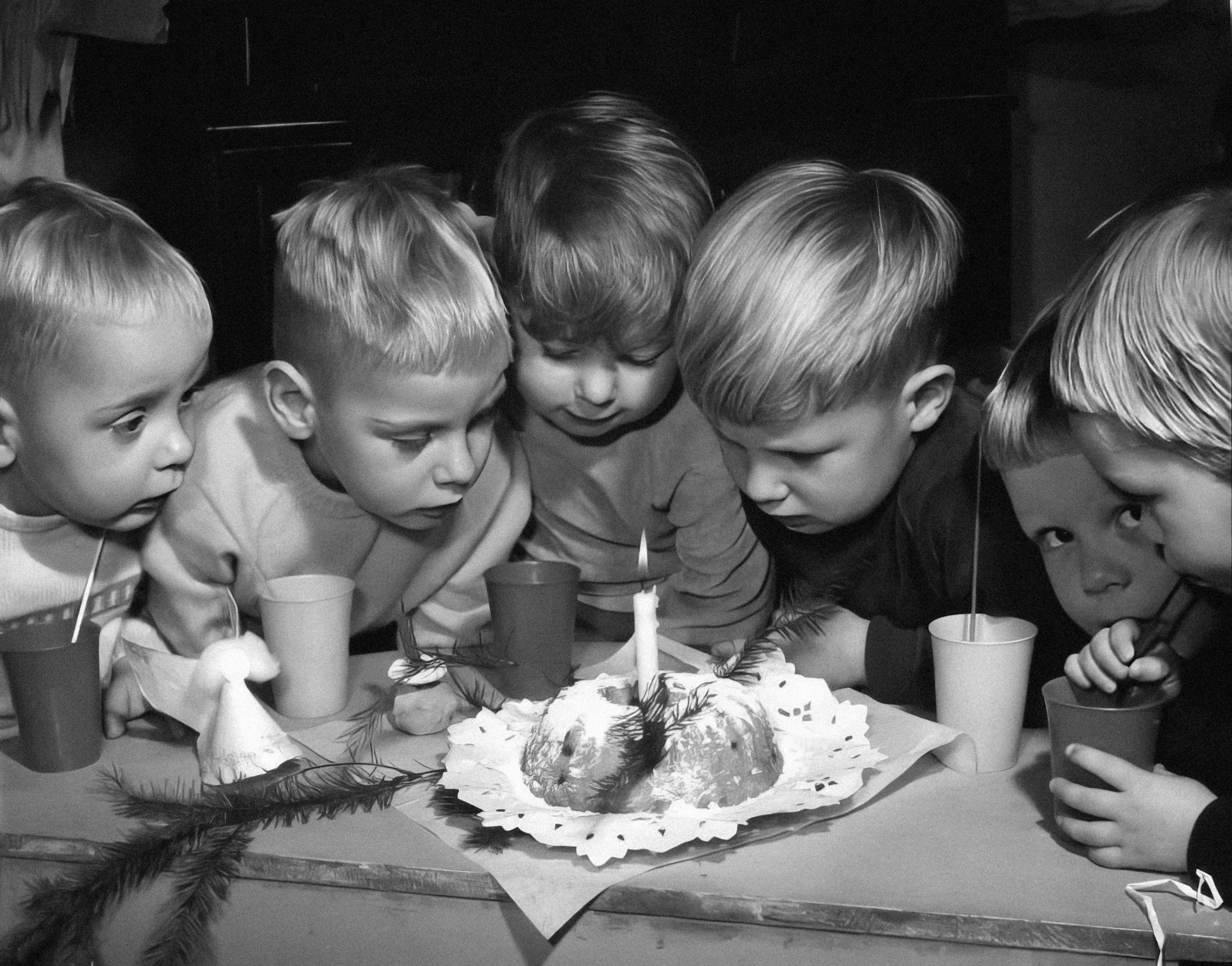
Children Remember Rituals More Than Parenting Philosophies: The Surprising Science of Family Traditions
Modern parents spend extraordinary amounts of time thinking about what to teach their children and surprisingly little time thinking about what their children will remember.
These are not always the same thing.
The average child will forget thousands of lectures, instructions, reminders, corrections, and carefully delivered life lessons.
They will remember Taco Tuesday.
They will remember Saturday morning pancakes.
They will remember the Christmas ornament that always went on the tree first.
They will remember the family joke nobody else understood.
They will remember the camping trip.
The bedtime story.
The walk after dinner.
The thing that happened over and over until it became part of the emotional architecture of home.
This may be one of the most important truths in family life:
Children remember rituals more than parenting philosophies.

The Little Emperor Problem: Why Good Parents Sometimes Raise Entitled Adults
There is a peculiar modern parenting ritual that unfolds thousands of times every day across America.
A child wants something.
The parent says no.
The child protests.
The parent explains.
The child escalates.
The parent negotiates.
The child escalates again.
The parent begins offering concessions.
By the end of the interaction, the child has acquired a cookie, an iPad, a frozen yogurt, and what appears to be partial sovereignty over the household.
Nobody intended this.
Nobody woke up that morning hoping to raise a narcissist.
The parent was trying to be kind.
The child was being a child.
Yet somewhere in the background, a subtle lesson may have been delivered:
Reality.

The Rise of the “Beta Mom”: Authority Guilt and the Collapse of Confident Parenting
The modern American mother spends an astonishing amount of time speaking to children as though she is negotiating the release of hostages.
“Would we maybe like to put our shoes on now?”
“Can we think about using gentle hands?”
“I’m noticing your body wants to hit.”
Meanwhile, the child is standing on the kitchen island eating dry pancake mix with the emotional confidence of a Roman emperor.
Somewhere online, someone has decided to call this woman a “beta mom.”
This is not a clinical term.
No serious developmental psychologist is presenting longitudinal findings on “maternal beta hierarchy destabilization” at a conference in Chicago.
The phrase is internet slang, born from the same algorithmic fever swamp that gave us alpha males, sigma males, soft boys, trad wives, almond moms, and men who describe grilling hamburgers as “masculine leadership.”
But underneath the ridiculous vocabulary sits a serious cultural anxiety:
Why are so many modern parents afraid to act like adults?

Children Don’t Inherit What You Believe: They Inherit What You Notice
Somewhere in America tonight, a fourteen-year-old is learning about death from TikTok because nobody at dinner mentioned Grandma after the funeral.
The adults discussed logistics.
Who brought the casserole.
Whether the airline refunded the ticket.
How late the service ran.
Whether Uncle Ray looked “better than expected.”
Then everyone quietly returned to their screens like survivors evacuating an emotionally unstable country.
This is becoming one of the defining characteristics of modern family life: continuous information exchange paired with existential silence.