
Welcome to my Blog
Thank you for stopping by. This space is where I share research, reflections, and practical tools drawn from my experience as a marriage and family therapist with an international practice.
I write about what happens to desire, attachment, and meaning once the early myths stop working.
Are you a couple looking for clarity? A professional curious about the science of relationships? Or simply someone interested in how love and resilience work? I'm glad you've found your way here. I can help with that. I'm accepting new clients, and this blog is for the benefit of all my gentle readers.
Each post is written with one goal in mind: to help you better understand yourself, your partner, and the hidden dynamics that shape human connection
Grab a coffee (or a notebook), explore what speaks to you, and take what's useful back into your life and relationships.
And if a post sparks a question, or makes you realize you could use more support, l'd love to hear from you. Let's explore the scope of work you'd like to do together.
Be Well, Stay Kind, and Godspeed.
~ Daniel
P.S.
Feel free to explore the categories below to find past blog posts on the topics that matter most to you. If you're curious about attachment, navigating conflict, or strengthening intimacy, these archives are a great way to dive deeper into the research and insights that l've been sharing for years.
- Attachment Issues
- Coronavirus
- Couples Therapy
- Extramarital Affairs
- Family Life and Parenting
- How to Fight Fair
- Inlaws and Extended Families
- Intercultural Relationships
- Marriage and Mental Health
- Married Life & Intimate Relationships
- Neurodiverse Couples
- Separation & Divorce
- Signs of Trouble
- Social Media and Relationships
- What Happy Couples Know


We Know How We Feel. Do We Know What We Owe?
We have become remarkably good at describing what has happened to us.
We can identify the slight, name the wound, explain the trigger, and locate the experience within a larger pattern.
We have a vocabulary for being overlooked that previous generations would have found astonishing.
Ask what it is like to live with us, however, and the conversation may become less fluent.
In The Atlantic, Spencer Kornhaber argues that Taylor Swift’s audience is growing up while her music is moving backward.
His review opens onto a larger question:
Have we spent so long defending youthful pleasures that we have forgotten to ask what adulthood might offer?
The argument is worth pursuing, although it needs rescuing from the assumption that sophistication wears sensible shoes.
A stuffed animal on an adult’s backpack cannot carry the responsibility for a civilization’s decline.
Our expectations of one another deserve closer inspection.

What If Alicia Begged Him to Stay?
In “The Lonely,” a 1959 episode of The Twilight Zone, James A. Corry is serving a sentence alone on an asteroid.
His visitors arrive by spacecraft with food, news of Earth, and an occasional reminder that other people still exist. Then they leave.
One day they bring Alicia.
She looks like a woman. She talks with Corry, plays chess, and cries when he treats her as a machine. He knows what she is. Eventually, he loves her anyway.
When Corry’s sentence is lifted, the spacecraft has room for him but not for Alicia. He refuses to leave her. The captain shoots her, exposing the machinery beneath her face. Corry goes home.
I wrote about this episode before. Serling understood that Corry’s grief would not disappear when he saw the wires. A person deprived of company can come to love the presence that ends his solitude.
But the episode looks different now. I find myself thinking about the moment before the captain fired.
What if Alicia had begged Corry to stay?

The Marriage Timeline Is Not a Marriage Plan
Dating apps used to ask whether you liked hiking, an activity apparently undertaken by every single person in America. Now one wants to know when you plan to marry.
Upward, a dating app courting what it calls “next-gen traditionalists,” has reportedly added features for expressing preferences about chivalry and a marriage timeline. I understand the appeal.
After years of romantic ambiguity dressed up as sophistication, “I would like to get married” sounds almost indecently refreshing.
The person who says it, has at least brought a destination to the date.
That is more than can be said for the man who has been “seeing where things go” since the Obama administration.
But a destination is not a relationship.
Two people can agree on marriage within a year and disagree on nearly everything marriage will ask of them.
The app has identified that both passengers want to go to Vermont. It has not established whether either can drive in snow.

The Return of the Strong Gods
For several decades, respectable people were encouraged to believe that the future would be pleasantly weightless.
Religion would become private. Nations would become administrative districts.
Marriage would become a lifestyle option—or, increasingly, a continuous negotiation.
Family obligations would be renegotiated according to preference, proximity, and whether anyone had recently used the word toxic.
We would travel lightly through the world, carrying little more than a passport, a résumé, and a carefully maintained set of boundaries.
It sounded like freedom.
For a while, it even felt like freedom.
Then the strong gods came back.
Not necessarily the old gods—not at first.
They returned wearing campaign hats, carrying therapeutic vocabulary, sorting us into identities, causes, fandoms, tribes, and exquisitely specific forms of injury.
They returned because human beings can tolerate almost anything except the suspicion that nothing is worth belonging to.

The Wichita Lineman Is Still on the Line
Bob Dylan reportedly called it the greatest song ever written.
Not the greatest country song.
Not the greatest song about work, loneliness, Kansas, or telephone poles.
The greatest song ever written. Period.
This is an extravagant verdict, even from Bob Dylan, who might reasonably be expected to have another candidate in mind.
But the more closely you listen to “Wichita Lineman,” the less preposterous the claim becomes.
There was once a kind of American man who could be found alone beside a county road, halfway up a telephone pole, keeping other people connected.
He did not have a personal brand. He did not narrate his healing journey.
He did not announce that he was holding space.
He carried tools, watched the weather, listened for trouble in the wire, and did work most people noticed only when it stopped being done.

The Man Who Needs an Enemy to Feel Alive
Norman Mailer’s 1965 novel, An American Dream begins with a man who has apparently won.
Stephen Rojack is a decorated war hero, former congressman, television personality, academic, and minor celebrity.
He has accumulated nearly every credential postwar America used to certify a man as significant.
He is brave. Educated. Sexually confident. Publicly admired.
He is also terrified, grandiose, violent, and spiritually vacant.
Early in the novel, Rojack strangles his estranged wife, Deborah, and throws her body from a high window, hoping her death will be mistaken for suicide.
Then he has sex with the maid.
The sequence matters.
Rojack does not move from murder into remorse.
He moves from murder into sex. Death, danger, domination, and erotic vitality become one continuous experience.
He believes he is escaping a dead life.
What he is actually escaping is accountability.

The Rhinestone Cowboy Was Never Really a Cowboy
I find it ironic that “Rhinestone Cowboy” sounds like a victory song.
It is not.
It is a song about the humiliating distance between wanting to be seen and actually being seen.
It is about rejection, compromise, and the private negotiations required to keep believing in yourself when the world has become noticeably less interested.
That is why Glen Campbell could sing it as though it had been written from inside his own life.
In a sense, it had.
Just not by him.
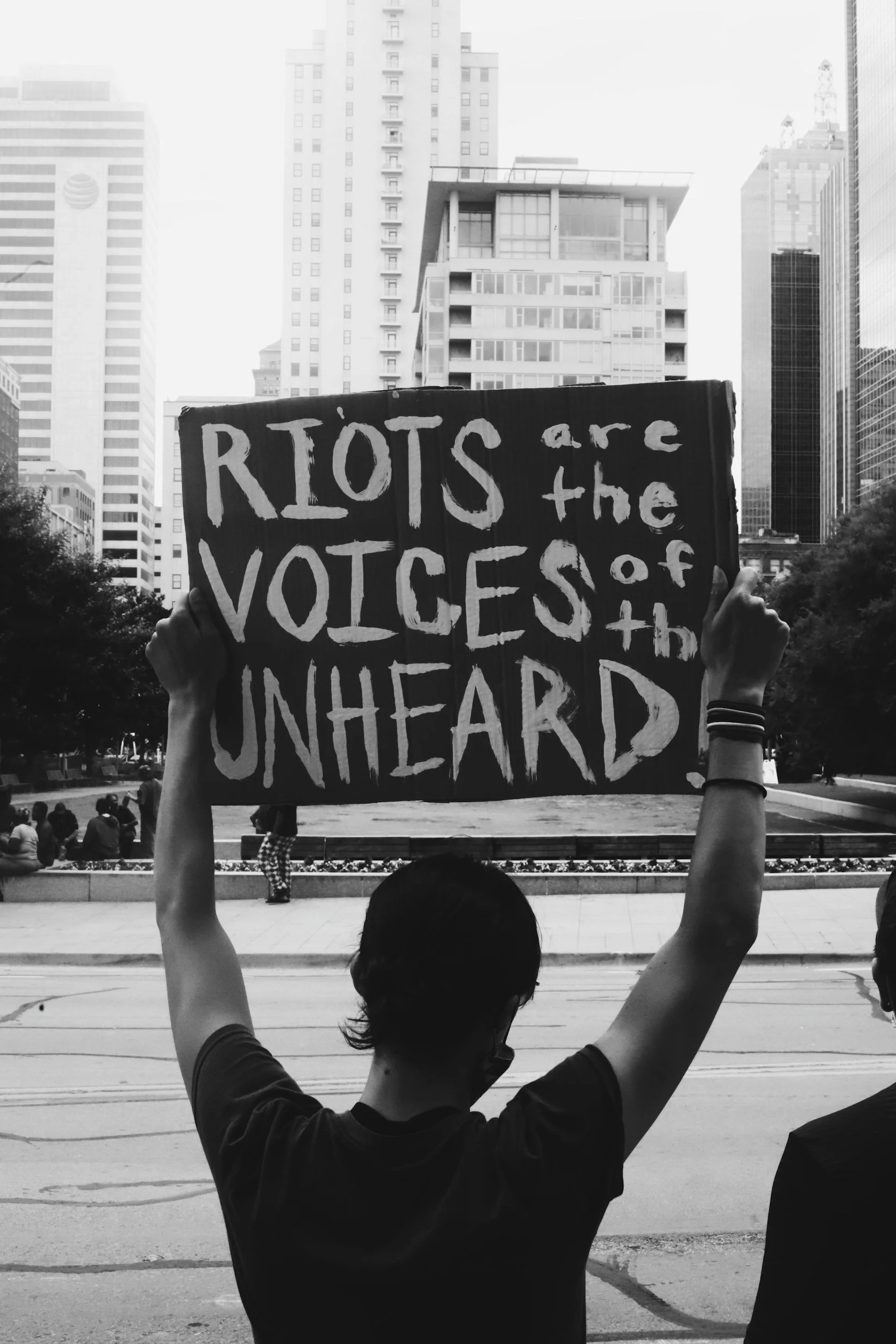
When Folks Cannot Fight Up, They Fight Sideways
When folks cannot confront the institutions governing their lives, they often turn on the people standing beside them.
That is the deeper argument waiting inside George Packer’s Atlantic essay, “The College-Educated Working Class.”
Packer calls this “an age of mutinies.”
The Tea Party, Occupy Wall Street, Black Lives Matter, the anti-lockdown protests, January 6, anti-ICE demonstrations, and MAGA itself have all presented themselves as rebellions against a corrupt establishment.
These movements differ enormously in their aims, methods, and moral claims.
But they share a conviction that legitimate authority has failed and ordinary people are being governed by institutions they can neither trust nor control.
Packer considers the decade before the Civil War as one possible precedent. But his deeper historical comparison is with the beginning of the 20th century: another period of concentrated wealth, mass immigration, technological upheaval, political paralysis, and labor unrest.
His most important observation is that the fundamental conflict may not be between red and blue.
It may be between power and powerlessness.

The Relationship Ghostwriter: Did Your Partner Apologize—or Did the Algorithm?
Your husband has written you a beautiful apology.
It is specific without becoming defensive. It acknowledges impact without quibbling over intention. It contains none of his usual little trapdoors through which responsibility quietly escapes.
He understands that his dismissiveness left you feeling alone.
He recognizes that your anger was not the original problem but a response to having your experience minimized.
He does not ask you to forgive him immediately.
He even describes what he intends to do differently.
It is, by any reasonable standard, an excellent apology.
You are moved.
Then you discover that he produced it in thirty seconds by typing:
Write an apology to my wife. Make it emotionally intelligent but not too long.
The apology remains accurate.
It simply no longer feels like evidence of what you thought had happened inside him.

We Edit Everything Except the Love Letter
We edit everything now.
We edit the email to the boss.
We edit the text after an argument.
We delete the sentence that sounds needy, put it back, stare at it for another three minutes, and eventually replace the entire thing with:
Sounds good.
We edit photographs of lunch.
Apparently, we are considerably less fastidious about love letters.
Recently, Enzo Falvo, creator of LovePaper, wrote to me after reading something I'd written about gratitude letters.
LovePaper is a remarkably simple idea.
You write a letter to someone you love, choose how you want it presented, and get a private link you can send to that person.
But Enzo's note contained a number I haven't been able to stop thinking about.
According to data he shared with me, 19,485 of 21,489 letters had never been reopened for editing.
That's about 91%.
Partners wrote the letter.
Finished it.
And apparently decided:
That's what I meant.

Your Boyfriend Mispronounced “Epitome.” What Did He Actually Fail?
A new relationship test is circulating on TikTok.
Women place their boyfriends in front of a camera and ask them to pronounce words such as epitome, hyperbole, challah, fuchsia, and hors d’oeuvres.
The men stumble. The women stare. Millions of strangers grade the relationship.
It is being called the “Illiterate Boyfriend Test,” although literacy has remarkably little to do with it.
A man can read perfectly well and still mispronounce a word he first encountered on the page.
This is one of English’s little cruelties: sometimes mispronunciation is evidence that someone reads.
But TikTok is not known for allowing an interesting ambiguity to survive.
In one widely viewed example, a boyfriend correctly pronounced only five of 17 words.
The couple laughed. The audience was less charitable.
Some viewers suggested that his performance was grounds for breaking up. Another wondered why his vote should count as much as hers.
The test appears to measure vocabulary.
What it actually measures is belonging.

Why Are We Naming Babies After Weapons?
The American nursery has acquired an armory.
There are now children named Gunner, Colt, Remington, Ruger, Wesson, Cannon, Winchester, Barrett, Blade and Gauge.
At the experimental edge are Trigger, Shooter, Dagger and Caliber—names that sound less like babies than men who should not be allowed to leave the county.
The trend is real, although not enormous.
Between 2002 and 2012, the number of American boys named Colt rose from 194 to 955. Remington climbed from 185 to 666. Ruger—the name of a firearms manufacturer—went from 23 babies to 118.
By 2024, Remington was given to 1,169 boys and 593 girls. Gunner went to 587 boys, and Cannon to 331.
This is not an invasion. Liam and Olivia need not fortify their positions. But I think this is large enough to be culturally interesting.
But why would anyone look at a newborn—seven pounds, furious, incapable of supporting his own head—and decide that what the situation requires is more firepower?