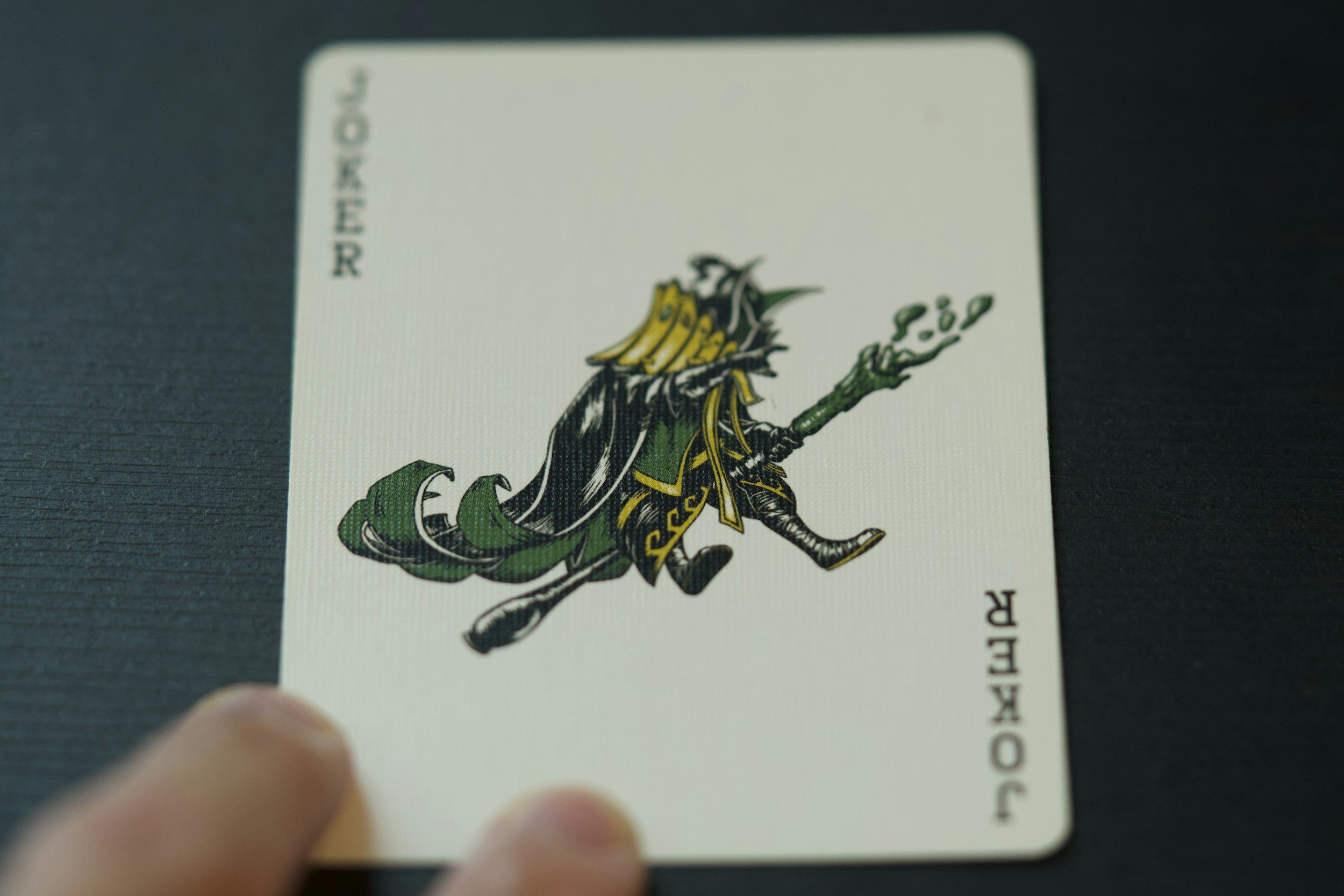
Tuesday, August 11, 2026.
The American trickster is not merely a liar.
Liars are common and usually tedious.
The trickster is something more gifted and more dangerous: a boundary-crosser who exposes the foolishness of respectable people while helping himself to their silverware.
He appears throughout American culture as the confidence man, the hustler, the outlaw, the snake-oil salesman, the self-invented millionaire, the political showman, the charming grifter, and—after a suitable infusion of venture capital—the “disruptor.”
America condemns fraud in principle and admires audacity in practice. We prosecute the fellow selling counterfeit watches on the sidewalk while putting the fellow selling an imaginary future on the cover of a business magazine.
The difference is often tailoring.
The American hero builds himself. The American trickster invents himself—and then sends everyone else the invoice.
Before America, There Was the Trickster
The trickster is ancient. Hermes stole Apollo’s cattle almost immediately after being born, demonstrating that precocity has always been morally complicated.
Loki disrupted the Norse gods. Anansi survived through cunning.
In the distinct sacred traditions of various Indigenous peoples, figures such as Coyote and Raven steal, create, destroy, teach, deceive, and rearrange the world.
These figures should not be collapsed into one generic rascal. They belong to specific cultures and carry meanings far deeper than the Western category of “mischief.”
But trickster traditions share a family resemblance. The trickster appears wherever rules have become rigid, authority too pompous, or human certainty excessively pleased with itself.
He does not always defeat power. Sometimes he merely exposes it.
The hero kills the dragon. The trickster persuades the dragon to invest in a condominium development in Florida.
The Shadow of the Self-Made Man
The trickster was almost destined to flourish in America.
The country was organized around mobility, expansion, commerce, reinvention, and the thrilling possibility that nobody in the next town knew what you had done in the previous one. Inherited identity mattered less than it did in older societies. A soul could change occupations, regions, accents, religions, loyalties, and occasionally names.
This freedom produced genuine social mobility. It also created ideal conditions for the confidence man.
If identity could be made, it could be manufactured.
The self-made man and the trickster are therefore cultural twins. Both reject the identity assigned to them.
Both treat the past as negotiable. Both understand that social reality depends partly upon performance.
The difference is that the self-made man creates value while creating himself. The trickster creates an impression of value and encourages other people to supply the remainder.
Unfortunately, from a distance—and occasionally through several rounds of financing—they can look remarkably alike.
The Trickster Knows What We Want
The American trickster understands something fundamental about desire: people rarely buy the lie itself. They buy the flattering future concealed inside it.
The land will make you rich. The tonic will restore your vigor. The investment cannot fail. The seminar will reveal the secret. The candidate alone can rescue the nation. The app will build community while quietly selling everyone’s nervous system to advertisers.
A successful deception contains a compliment.
The victim is not foolish.
The victim is perceptive enough to recognize an extraordinary opportunity. The investor is getting in early.
The romantic partner has finally met someone too passionate for ordinary rules. The voter belongs to the small group brave enough to see what the experts have hidden.
The trickster does not create the fantasy from nothing. He discovers the fantasy already waiting inside the customer—and charges admission.
Br’er Rabbit and the Intelligence of the Powerless
Not every trickster is a predator.
Some trickster traditions developed among people who could not confront authority directly.
Br’er Rabbit survives through verbal dexterity rather than force. His apparent weakness becomes camouflage. When he begs not to be thrown into the briar patch, his opponent mistakes domination for intelligence and delivers him directly into safety.
The Br’er Rabbit stories have deep roots in African and African American oral traditions shaped by slavery and its aftermath, although many reached white readers through Joel Chandler Harris’s deeply compromised literary packaging.
Their cunning was not ornamental. It expressed a form of survival intelligence developed under conditions in which direct defiance could be fatal.
For the powerless, deception may become an improvised form of agency.
The servant misunderstands. The enslaved person performs obedience. The subordinate flatters the vain master while quietly protecting something the master cannot see. This is Passive Aggression in its most distilled brew.
This is why the trickster remains morally unstable.
The same cunning that allows a vulnerable person to survive can allow a powerful person to exploit.
Context determines whether the trickster is punching upward, punching downward, or simply rifling through the coatroom. Context is king.
Huck Finn and the Moral Use of Deception
Huckleberry Finn belongs in any serious discussion of the American trickster because he lies constantly and is morally superior to nearly every respectable person around him.
Huck disguises himself, invents identities, fabricates histories, and improvises his way along the Mississippi. His deceptions are partly comic and partly defensive. He lies because the official world—family, church, law, property, and civilization—has repeatedly shown itself to be dangerous.
The moral center of the novel arrives when Huck decides to help Jim rather than surrender him to slavery, despite believing that doing so will condemn him.
His declaration—“All right, then, I’ll go to hell”—remains one of the great moments in American literature because Huck chooses human attachment over the moral vocabulary his society has given him.
His dishonesty reveals the dishonesty of the surrounding culture. The boy called wicked recognizes Jim’s humanity. The adults calling themselves civilized do not.
This is the trickster at his most valuable: not a boy escaping morality, but a boy escaping a fraudulent moral order.
The Confidence Man: Our Unofficial Folk Hero
The confidence man is a particularly American figure because he converts trust into a commercial instrument.
His trick depends upon intimacy. He does not seize your property. He persuades you to hand it over. Ideally, you thank him and recommend two friends.
Herman Melville understood this in The Confidence-Man, where identity becomes a sequence of performances aboard a Mississippi steamboat—a floating little America filled with commerce, suspicion, optimism, and people eager to believe whatever best confirms their opinion of themselves.
Mark Twain understood it too. So did P. T. Barnum, who recognized attention as an economy long before anyone had an engagement dashboard.
Barnum did not merely display curiosities. He transformed uncertainty into publicity. Accuracy was helpful when available but hardly indispensable. The crowd’s desire to see the impossible mattered more than the tedious question of whether the impossible had actually shown up.
He anticipated modern media remarkably well: get everyone inside first; clarify the ontology of the mermaid later.
Gatsby and the Beautiful Fraud
Jay Gatsby is one of America’s most revealing tricksters because his deception is wrapped in longing.
Gatsby invents his history, accumulates wealth, constructs a theatrical identity, and stages an entire life as an invitation to one woman. His fraudulence is undeniable, but so is the wound beneath it.
He does not merely want Daisy. He wants history revised.
This is the American trickster at his most poignant. He is not always running from the law. Sometimes he is running from shame, class, obscurity, or the intolerable fact that the past has already happened.
Self-invention can be courageous. But when reinvention becomes repudiation—when the new self is designed to annihilate the old one—the performance requires constant maintenance.
Gatsby cannot simply love Daisy as she is. She must certify that his invented life has become real. She must erase time, reverse rejection, dissolve class, and absolve him of ever having been James Gatz.
No human partner can carry that much symbolism without developing back trouble.
Bugs Bunny and the Joy of Irreverence
Bugs Bunny may be the cleanest American trickster of the twentieth century.
He is irreverent, linguistically agile, suspicious of authority, and seldom the initial aggressor. Someone disturbs his peace, threatens his home, or behaves with monumental self-importance. Bugs then dismantles the offender psychologically, often while wearing evening gloves.
His adversaries possess weapons, titles, money, uniforms, or grand ambitions. Bugs possesses timing.
He is the ordinary fellow who refuses to be intimidated by hierarchy. But he is also a theatrical shapeshifter, switching identities, accents, genders, and social roles whenever circumstances require it.
His power comes from understanding that authority is partly a performance.
Once he sees the costume, he can put it on too.
Bugs rarely destroys an institution. He does something more humiliating: he reveals that its representative is an idiot.
The Outlaw and the Fantasy of Exemption
American culture repeatedly romanticizes outlaws who outwit institutions: frontier rogues, bootleggers, bank robbers, gamblers, hackers, gangsters, and charismatic criminals.
We tell ourselves that we admire their independence. Often, we admire their exemption.
The outlaw appears to live beyond the humiliations imposed upon everyone else: bills, bosses, queues, forms, permissions, performance reviews, and the requirement to pretend that the meeting was useful.
He takes what he wants and refuses accountability.
That fantasy becomes especially attractive in a bureaucratic society. The more regulated ordinary life feels, the more glamorous rule-breaking can appear.
But the outlaw of folklore is carefully edited. Memory removes the frightened bank teller, the abandoned family, and the people left holding the debt. It keeps the stylish hat and the getaway car.
American mythology has always employed an excellent publicist.
When the Trickster Became an Entrepreneur
American business culture has performed a remarkable linguistic renovation on the trickster.
The hustler became the entrepreneur. The scheme became a startup. The sales pitch became a vision. Ignoring ordinary safeguards became “moving fast.” Losing enormous amounts of other people’s money became an instructive stage in the founder’s journey.
In a past life, I founded and ran an appliance builder distributorship than did 1.4 million in revenue in 2005. I was wiped out in the Great Recession during the mortgage crisis of 2009.
I learned that real entrepreneurship requires patience, courage, competence, risk, and a horrifying number of emails.
But American culture is peculiarly vulnerable to founders who present ordinary moral limits as evidence of insufficient imagination.
The corporate trickster’s greatest talent is converting personal appetite into historical destiny.
He is not enriching himself. He is changing the world.
The fact that changing the world comes with stock options is merely one of history’s charming coincidences.
This is where charisma becomes economically dangerous. We begin to treat certainty as evidence, disruption as achievement, and wealth as retrospective proof of wisdom.
Sometimes the visionary sees something the rest of us cannot see.
Sometimes there is nothing there.
The difficulty is that both men have hired the same designer.
The Political Trickster and the Power of Shamelessness
Politics attracts tricksters because government depends upon shared language, and tricksters treat language as recreational equipment.
The political trickster does not merely deny an accusation. He floods the public space with counteraccusations, jokes, insults, diversions, theatrical conflicts, and mutually contradictory explanations. He does not need everyone to believe him.
He needs enough people to stop believing anyone.
Shamelessness becomes a form of power because conventional institutions depend upon embarrassment. They assume exposure will produce retreat, apology, or correction. The trickster simply refuses the transaction.
He is caught contradicting himself and responds by contradicting himself more energetically.
Traditional authority struggles against this because it answers theater with procedure. It responds with documentation, qualifications, solemn correction, and a committee report expected sometime in February.
The trickster arrives with a nickname.
By the time the report appears, he has turned the investigation into merchandise.
The Trickster in Love
Relationships have their own tricksters.
These are the partners who manage impressions rather than build intimacy. They seduce through ambiguity, disclose selectively, and maintain different versions of themselves for different audiences. Their charm depends upon movement. Stillness would permit inspection.
Some are deliberate deceivers. Others learned early that direct need was dangerous, truth invited punishment, and identity had to remain flexible. Their trickster behavior began as adaptation. They became exquisitely sensitive to what other people wanted and supplied it before anyone thought to ask whether it was real.
That history may explain the performance. It does not make the performance harmless.
The intimate trickster wants the rewards of attachment without the vulnerability of being known. He may sincerely desire love while arranging his life so that love never encounters the complete person.
This produces a particular kind of loneliness. The trickster may be adored, but he cannot feel securely loved because the person receiving the love is partly fictional.
Eventually, his partner realizes that the relationship has been conducted with a press secretary.
If your relationship has become an exhausting investigation into shifting stories, selective disclosures, and unexplained inconsistencies, the central question is not whether you can finally extract the perfect confession. It is whether the relationship can support a shared reality.
Love cannot repair what truth is still being required to chase.
Why We Love Him
The trickster offers several pleasures at once.
He mocks hypocrisy. He punctures pomposity. He defeats stronger opponents. He refuses social shame. He turns language into freedom. He walks through doors marked “Authorized Personnel Only” and comes out carrying lunch.
Most importantly, he acts upon impulses ordinary people must suppress. He says what cannot be said, takes what cannot be taken, and refuses the little humiliations through which society maintains order.
Watching him gives us a holiday from conscience.
But admiration becomes dangerous when we confuse charm with character. The trickster’s intelligence may reveal corruption, but it can also rationalize his own. His irreverence may liberate the powerless—or entertain them while he empties their pockets.
The trickster is most attractive precisely when our moral judgment should be most alert.
The Bigger Story
The trickster survives because he represents something genuinely necessary.
Cultures need figures who cross boundaries, expose hypocrisy, and challenge rules that have become detached from human life. Without the trickster, authority becomes unbearably convinced of its own virtue.
But cultures also need limits.
Without them, cleverness replaces goodness, attention replaces achievement, and exploitation becomes admirable whenever performed with sufficient panache.
The crucial question is not whether the trickster breaks the rules. Some rules deserve to be broken.
The question is whom the trick leaves freer.
Br’er Rabbit’s deception protects the vulnerable. Huck’s deception helps him recognize a humanity his society denies. Bugs Bunny humiliates bullies. But Gatsby conscripts Daisy into his fantasy, the confidence man converts trust into property, and the corporate or political trickster turns collective hope into personal power.
The difference is not cleverness. They are all clever.
The difference is moral direction.
America has never quite decided whether the trickster is its critic, its shadow, or its patron saint.
Perhaps he is all three.
He reminds us that every social order contains absurdity. He also reminds us that seeing through the rules does not place someone above morality.
Cleverness can expose the game. It cannot tell us whether the game is worth playing, who established the rules, or who is paying for the joke.
That requires wisdom.
Wisdom, regrettably, has always had a weaker publicity department.
Why Work With Daniel?
The trickster in a relationship is not always a cartoon villain. Sometimes deception grew out of childhood fear, shame, unstable attachment, or the belief that being fully known would result in abandonment.
But understanding the origin of deception is not the same as accepting its continuation.
Couples therapy can help partners distinguish privacy from secrecy, adaptation from manipulation, and genuine repair from another well-delivered performance. The work is not merely getting someone to “tell the truth.” It is building a relationship in which reality no longer has to negotiate for admission.
For couples recovering from infidelity, chronic concealment, competing realities, or a collapse of trust, Daniel offers focused couples therapy and intensive relationship work designed to move beyond accusation and toward clarity, accountability, and durable repair.
Related Reading
Why Smart People Betray Their Partners—and Why They Think They Won’t Get Caught
Intelligence, Childhood Hardship, and Trust in Relationships
Frequently Asked Questions
What is a trickster archetype?
A trickster is a figure who crosses boundaries, disrupts established rules, changes identities, and uses intelligence, language, or deception to alter the balance of power. Tricksters may expose hypocrisy and help the powerless, but they may also manipulate trust for personal benefit.
Why is the trickster so prominent in American culture?
American culture places unusual value on reinvention, mobility, independence, salesmanship, and the self-made individual. Those values can produce genuine freedom and innovation. They can also make it difficult to distinguish creative self-invention from a convincing fraud.
Is the trickster good or evil?
Neither category quite contains him. Tricksters are morally ambiguous. The most useful question is not whether the trickster broke a rule but whom the deception protected, harmed, or left freer.
Is Bugs Bunny really a trickster figure?
Yes. Bugs changes identities, manipulates language, mocks authority, defeats stronger opponents through intelligence, and exposes the vanity of his adversaries. He is a remarkably pure comic version of the trickster archetype.
How does the trickster appear in romantic relationships?
The intimate trickster manages perception instead of building mutual reality. This can involve selective disclosure, charm, shifting explanations, compartmentalized identities, gaslighting, infidelity, or promises that continually retreat into the future.
Can a deceptive partner genuinely change?
Sometimes—but remorse is not enough. Change requires consistent disclosure, accountability, tolerance for the injured partner’s questions, observable behavioral change, and a willingness to surrender the advantages deception provided. A compelling explanation is not yet a repair.
What is the difference between privacy and secrecy?
Privacy protects a legitimate inner life. Secrecy conceals information that materially affects another person’s ability to give consent, make decisions, or understand the relationship they are actually in.
Free Introductory Consultation
If deception, infidelity, or competing versions of reality have taken over your relationship, you do not need another circular argument conducted at 11:40 at night.
A focused introductory conversation can help clarify what has happened, whether meaningful repair is possible, and what kind of work the relationship now requires.
Be Well, Stay Kind, and Godspeed.