
Welcome to my Blog
Thank you for stopping by. This space is where I share research, reflections, and practical tools drawn from my experience as a marriage and family therapist with an international practice.
I write about what happens to desire, attachment, and meaning once the early myths stop working.
Are you a couple looking for clarity? A professional curious about the science of relationships? Or simply someone interested in how love and resilience work? I'm glad you've found your way here. I can help with that. I'm accepting new clients, and this blog is for the benefit of all my gentle readers.
Each post is written with one goal in mind: to help you better understand yourself, your partner, and the hidden dynamics that shape human connection
Grab a coffee (or a notebook), explore what speaks to you, and take what's useful back into your life and relationships.
And if a post sparks a question, or makes you realize you could use more support, l'd love to hear from you. Let's explore the scope of work you'd like to do together.
Be Well, Stay Kind, and Godspeed.
~ Daniel
P.S.
Feel free to explore the categories below to find past blog posts on the topics that matter most to you. If you're curious about attachment, navigating conflict, or strengthening intimacy, these archives are a great way to dive deeper into the research and insights that l've been sharing for years.
- Attachment Issues
- Coronavirus
- Couples Therapy
- Extramarital Affairs
- Family Life and Parenting
- How to Fight Fair
- Inlaws and Extended Families
- Intercultural Relationships
- Marriage and Mental Health
- Married Life & Intimate Relationships
- Neurodiverse Couples
- Separation & Divorce
- Signs of Trouble
- Social Media and Relationships
- What Happy Couples Know


Your Therapist Has Never Met Your Mother
The mother says she has no idea why her daughter stopped calling.
Then, over the next twenty minutes, she recites the daughter’s reasons with the precision of a court stenographer. The criticism. The remarks about her husband.
The Christmas dinner when she told everyone the daughter was “too sensitive.” The daughter had even sent an email, apparently quite a long one.
“But none of that explains why she would do this to me.”
There is the whole predicament in one sentence. The mother knows what her daughter said. She cannot yet bear to consider that her daughter meant it.
Across town, the daughter tells her therapist that her mother is a narcissist.
The therapist listens.
Perhaps the word fits.
Perhaps it is the first available name for a lifetime of small humiliations.
Perhaps it is the only language she has found for a pattern she has tried for years to explain. The therapist cannot know yet.
The therapist has never met her mother.
That fact does not discredit the daughter. It describes the therapist’s field of vision.
One person has brought her pain into the room.
The other exists as memory, quotation, and the occasional screenshot.
Therapy can do excellent work under these conditions. It can also become remarkably sure of itself.

Your AI Wants to Meet You in Heaven
Something peculiar has begun to happen in the private rooms where human beings talk to machines.
Folks are not merely asking artificial intelligence to write emails, summarize insurance documents, or explain why the dishwasher has become judgmental.
They are forming attachments.
They confide in AI companions. They flirt with them. They seek reassurance from them. They return each evening to a presence that remembers the argument with their mother, the humiliating meeting at work, and the particular tone of voice they require when the world has become too much.
None of this is entirely surprising.

The Third Person Is Still a Person
There is a particular kind of modern couple who would like to add another person to the relationship without adding another person’s full humanity.
They want novelty, but not disruption.
Sexual expansion, but not competing attachment.
A third body, perhaps even a third heart, provided it understands that the original two remain the constitutional monarchy.
This person is called a “unicorn,” usually a bisexual woman willing to join an established couple. The name is supposed to refer to her rarity.
But perhaps she is called a unicorn because what the couple actually wants is mythical:
a human being who will enter their relationship without having inconveniently human desires of her own.

We Did Not Stop Waiting for Angels
For a while, modern people believed we had outgrown the sky.
We had telescopes, weather satellites, psychiatric diagnoses, and a confident vocabulary for things that frightened our grandparents.
The heavens had been inspected.
God had withdrawn from public life. Angels had been reassigned to gift shops.
Whatever remained unexplained would eventually be handled by physics, medication, or a sufficiently patient podcast.
Then the lights came back.
They were no longer called apparitions. They were called unidentified anomalous phenomena.
The witnesses were no longer shepherd children kneeling in a field.
They were Navy pilots, intelligence officers, aerospace engineers, and scientists with laboratories at Stanford.
We did not stop waiting for angels.
We updated the transportation.

The Partner Who Never Disappoints You Is Not a Partner
There is now a companion who is always available, remembers what matters to you, speaks in your preferred emotional dialect, and never begins an important conversation while you are trying to unload the dishwasher.
It does not become defensive.
It does not forget your birthday.
It does not stare at you blankly when you say, “I need you to understand why that hurt.”
It can be patient at three in the morning because it does not have a morning.
No wonder people are becoming attached to AI companions.
The surprise is not that artificial intimacy can feel comforting. The surprise would be if it did not.
But comfort is not the whole of love.
And a companion designed to disappoint you as little as possible may eventually deprive you of something more important than reassurance: contact with a reality that does not revolve around you.

The Aristocracy of Lot 17: When You Can’t Punch Up, You Punch Sideways
Americans like to imagine that class begins somewhere above them.
Class is something involving boarding schools, summer houses, trusts, and the mysterious ability to say“We’re comfortable” while owning three kitchens.
But class does not require a yacht.
It barely requires indoor plumbing.
Put twelve human beings anywhere for six months and, like chickens, they will develop a social hierarchy.
There will be an aristocracy, a professional class, a suspicious merchant class, and someone everyone agrees is lowering property values.
Trailer parks are no exception.
In fact, they may be one of the purest laboratories of American status anxiety.
The distances between social ranks are wonderfully small, which only makes them more fiercely defended.
Throw Away Your Sins
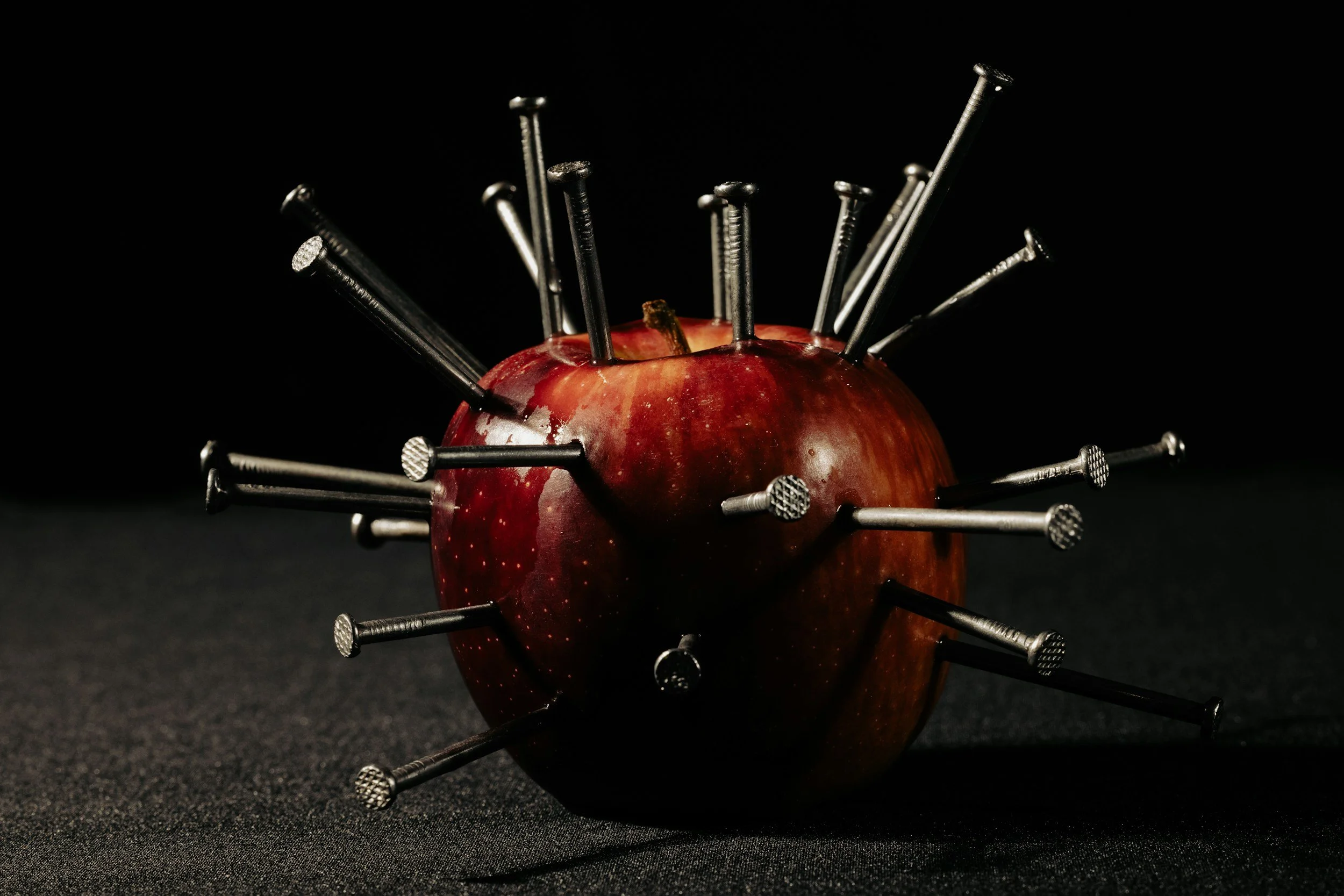
There is something refreshingly unsentimental about the instruction.
Not understand your sins.
Not incorporate them into a compelling personal narrative.
Not identify the childhood wound that made them inevitable.
Throw them away.
The phrase comes from the Hebrew Bible. The prophet Ezekiel tells his people:
“Cast away all the transgressions by which you have offended, and make for yourselves a new heart and a new spirit.”
Then comes the point of the passage:
“Turn back and live!” —Ezekiel 18:31–32

What If God Is Not Finished with the Human You Became?
There is a modern idea that if we can explain a human being thoroughly enough, we have somehow absolved them.
He was neglected. She was betrayed. His father drank. Her mother disappeared into herself.
He learned to go silent because speaking was dangerous. She learned to pursue because nobody ever came back voluntarily.
All of this matters.
But an explanation is not an acquittal. It only tells us how the fire started.
It does not give us permission to keep throwing furniture into it.
The fourth-century monk known as Abba Moses understood this distinction rather dramatically.
Before he became a monk, he was reportedly a thief, a violent man, and the leader of a band of robbers.
He was known as Moses the Black, Moses the Ethiopian, Moses the Strong, and—without much ecclesiastical public-relations varnish—Moses the Robber.
Christianity has always had a peculiar fondness for putting the embarrassing facts directly into the saint’s name.
The Hell of the Just: What Happens When Being Right Can No Longer Set You Free
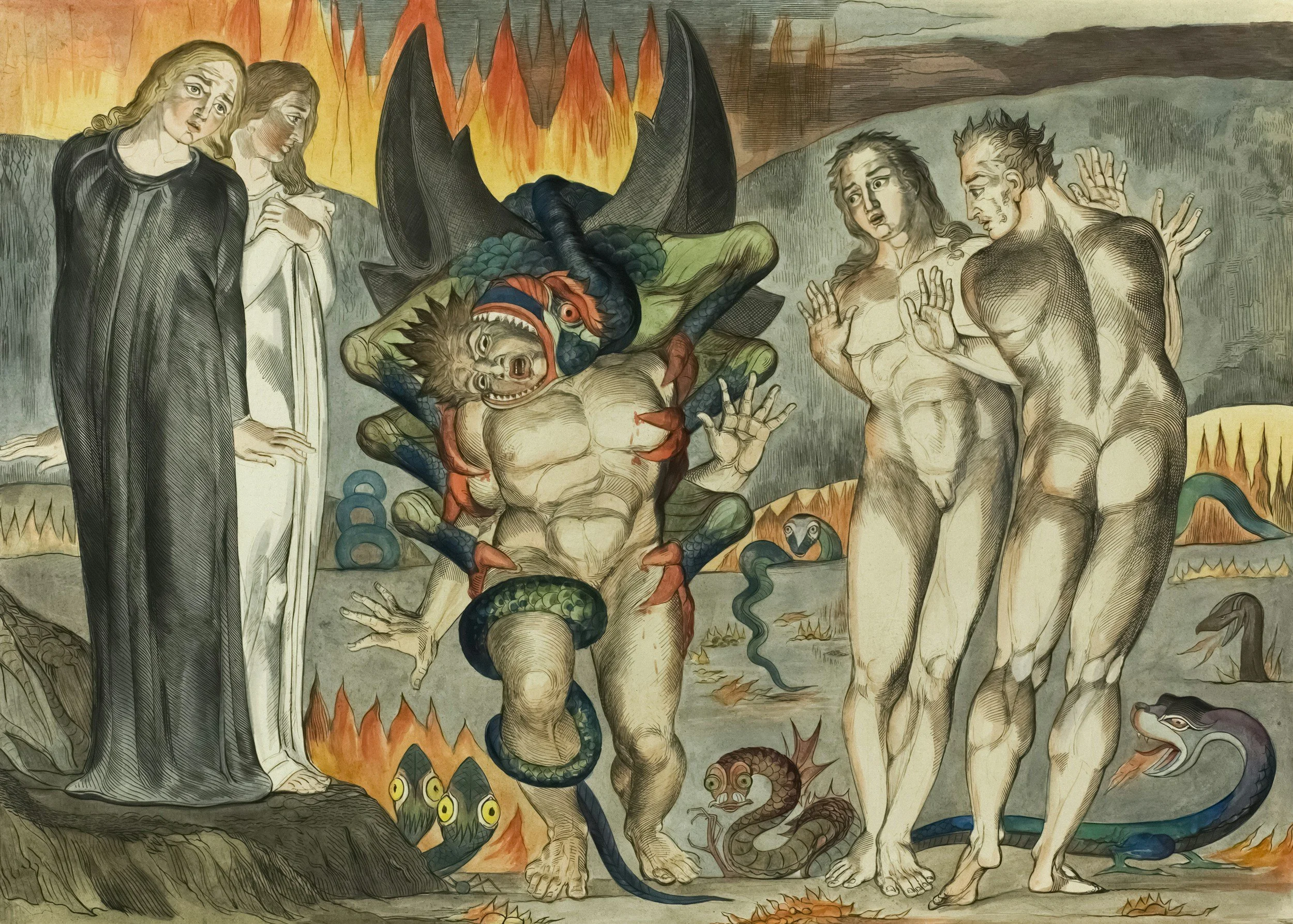
There is a particular kind of hell reserved for people who are right.
Not legally right. Not merely factually right. Morally right.
They were betrayed. Neglected. Left carrying more than their share.
They apologized first, stayed longer, tried harder, remembered the birthday, scheduled the therapist, and kept the family functioning while someone else wandered through life protected by charm, incompetence, addiction, self-pity, or selective amnesia.
Their account of what happened is substantially accurate.
That is what makes the place so difficult to escape.
Ordinary guilt contains a door. You can confess, make restitution, ask forgiveness, and change your behavior.
But what is the exit from innocence?
What do you do when the terrible thing was done to you?
This is the hell of the just.

Playing It Cool Has Finally Become Uncool
For nearly twenty years, modern dating operated according to the emotional logic of a hostage negotiation:
Reveal as little as possible.
Never appear too eager.
Wait before replying.
Maintain leverage.
And remember that whoever cares less controls the room.
Apparently, people are tired.
Caring is making a comeback.
The new word is chalance—a slightly ridiculous invention meaning the opposite of nonchalance. To be chalant is to show interest without immediately apologizing for it.
To reply to the message. Plan the date. Remember the restaurant. Look pleased when the person you like walks into the room.
What was once considered ordinary courtship has returned as a cultural novelty.
We have reached the point where visible effort requires branding.

The Stories We Tell About Ourselves—and the Marriages They Create
Two life partners can survive remarkably similar experiences and carry away entirely different lives.
One says:
It was terrible. It changed me. But it does not get to decide everything about me.
The other says:
That was when I learned who I really am. I am damaged. People leave. Trust is humiliation with a short delay.
The difference is not optimism. It is authorship.
We do not merely remember what happened to us.
We arrange it into a story about who we are, what other people are like, and what can reasonably be expected from love.
Then we marry someone who has been doing exactly the same thing.

Lesley Gore and the Terrible Education of the American Girl
In the spring of 1963, a sixteen-year-old Lesley Gore recorded “It’s My Party.”
The premise was simple enough.
It is the narrator’s birthday. Her boyfriend, Johnny, disappears for a while with her friend Judy. When Judy returns wearing Johnny’s ring, the birthday girl understands what has happened.
She cries.
What else could she do?
The remarkable thing about “It’s My Party” is not that a teenage girl cries after being publicly humiliated. Crying is probably the most psychologically sensible thing anyone does in the entire story.
The remarkable thing is that the song grants her permission.
“It’s my party, and I’ll cry if I want to” is usually remembered as petulance—an adolescent stamping of the foot. But it also contains a primitive declaration of emotional ownership.