
Welcome to my Blog
Thank you for stopping by. This space is where I share research, reflections, and practical tools drawn from my experience as a marriage and family therapist with an international practice.
I write about what happens to desire, attachment, and meaning once the early myths stop working.
Are you a couple looking for clarity? A professional curious about the science of relationships? Or simply someone interested in how love and resilience work? I'm glad you've found your way here. I can help with that. I'm accepting new clients, and this blog is for the benefit of all my gentle readers.
Each post is written with one goal in mind: to help you better understand yourself, your partner, and the hidden dynamics that shape human connection
Grab a coffee (or a notebook), explore what speaks to you, and take what's useful back into your life and relationships.
And if a post sparks a question, or makes you realize you could use more support, l'd love to hear from you. Let's explore the scope of work you'd like to do together.
Be Well, Stay Kind, and Godspeed.
~ Daniel
P.S.
Feel free to explore the categories below to find past blog posts on the topics that matter most to you. If you're curious about attachment, navigating conflict, or strengthening intimacy, these archives are a great way to dive deeper into the research and insights that l've been sharing for years.
- Attachment Issues
- Coronavirus
- Couples Therapy
- Extramarital Affairs
- Family Life and Parenting
- How to Fight Fair
- Inlaws and Extended Families
- Intercultural Relationships
- Marriage and Mental Health
- Married Life & Intimate Relationships
- Neurodiverse Couples
- Separation & Divorce
- Signs of Trouble
- Social Media and Relationships
- What Happy Couples Know

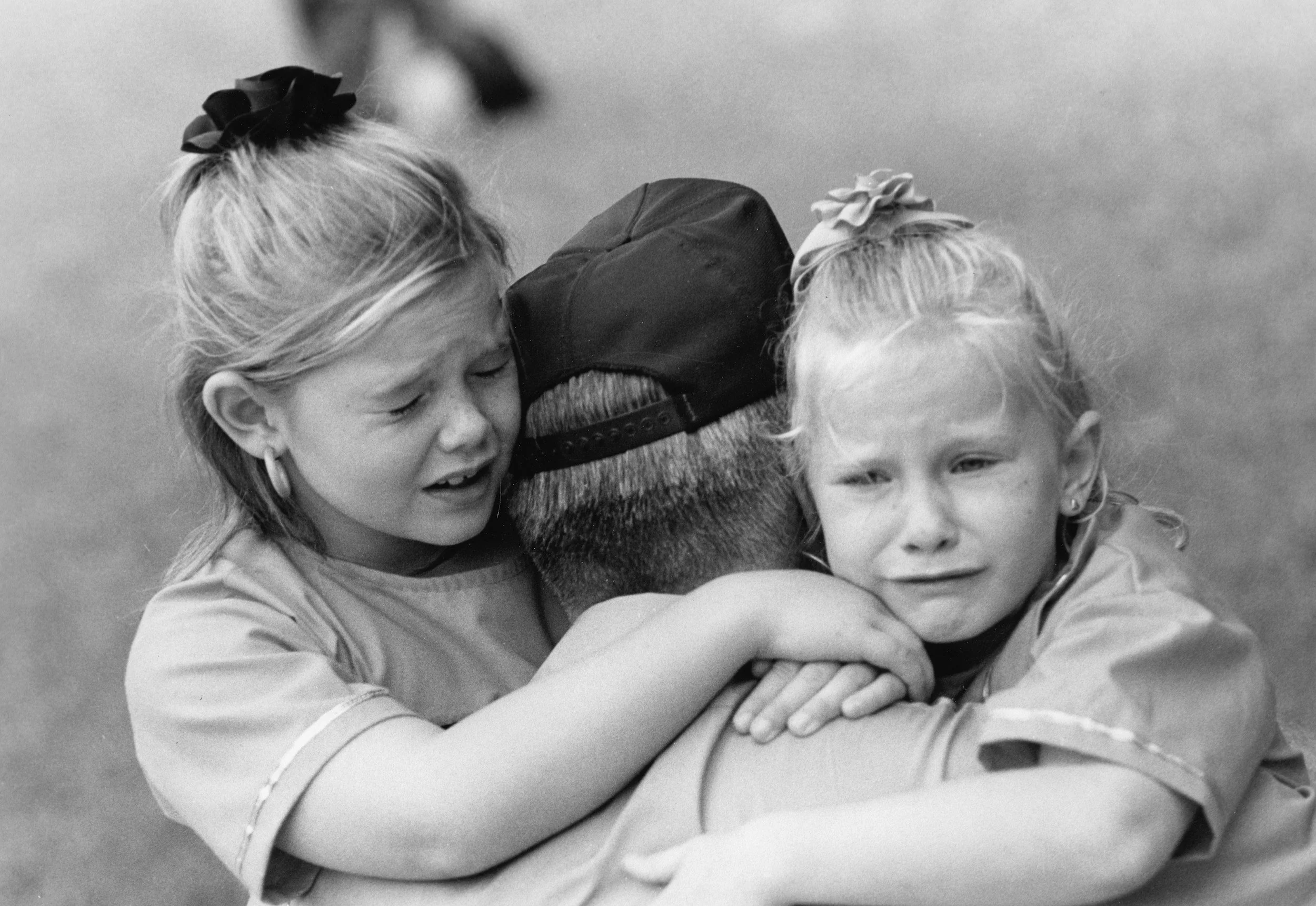
When the Children Start Preparing for the End of the World
The first time their youngest daughter asked where they would go if the roads closed, Claire knew she had heard more than Mark intended.
She was nine. She had a flashlight beside her bed and knew where the extra batteries were.
This was sensible.
She also wanted to know whether she should leave school if the power went out, whether the Creamery would still have food, and whether Grandma would be allowed in their house if there wasn't enough for everyone.
Mark had not told her to worry about Grandma.
He had talked about supplies at dinner.
He had watched a video about a prolonged grid failure while their daughter was in the room.
Once, while explaining the family plan, he said that people might become desperate.
Children are excellent at hearing the sentence adults wish they had phrased differently.
Claire wanted the videos off and the emergency talk kept between them.
Mark wanted their daughter to know what to do.
They had each found a way to say, “I'm protecting her,” and each was beginning to wonder whether the other was.

When One Spouse Starts Preparing for the End of the World
The generator worked.
That was part of the problem.
When the power went out, Mark rolled it into the driveway, ran an extension cord through the garage, and kept the refrigerator cold.
Their daughter charged her phone.
By morning, the neighbors had come over for coffee.
Mark had spent months telling his wife, Claire, that they needed a backup. For once, an argument in their marriage had been settled by an appliance.
Or so he thought.
Claire thanked him for getting the lights on. Then she asked whether he had paid for the generator with their joint credit card. He had.
It cost nearly three thousand dollars. He had bought it six weeks earlier and kept it at his brother’s house because he knew she would object.
“But we needed it,” he said, gesturing toward the humming machine.
She looked at him. “You knew I would object.”
Both statements were true. The refrigerator stayed cold. But their trust took a hit.
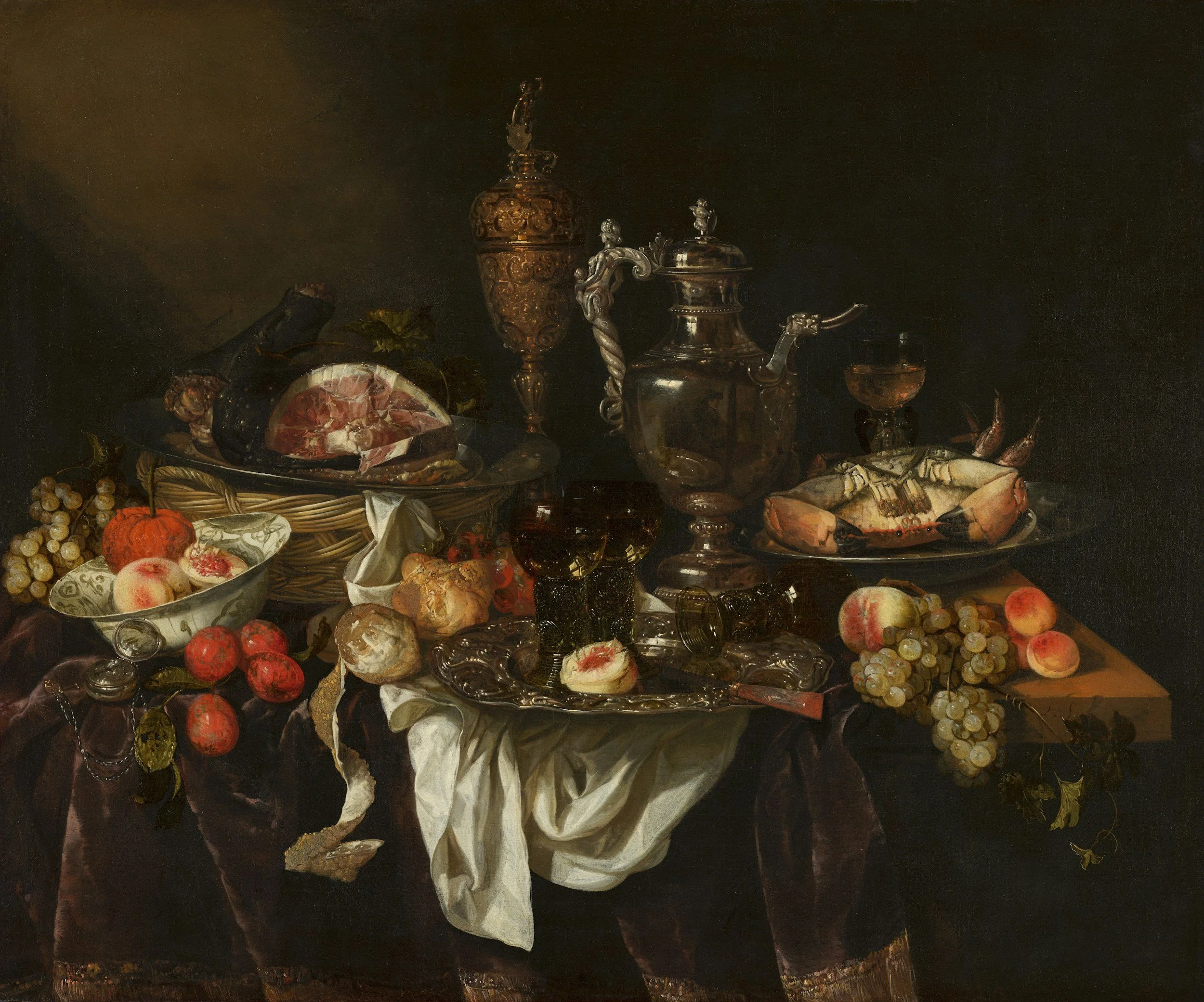
How Much Food Does It Take to Feel Safe?
The Roman emperor Vitellius reportedly served a dish containing fish livers, peacock brains, lamprey milt, and flamingo tongues.
Suetonius described the meal as evidence of an appetite without restraint. But it was also an achievement of transportation.
Captains brought the ingredients from across the Roman world.
What looked like one man's extravagance depended on the labor of strangers and the ability to move food over great distances. Suetonius, Life of Vitellius, 13.
We notice the flamingo tongues. We should notice the ships.
In Massachusetts, I can buy blueberries in February and decide against them because the raspberries look better.
I can pick up coffee that will be waiting again tomorrow.
The modern food system has placed a kind of imperial reach inside an ordinary errand.
Its most remarkable accomplishment may be that it rarely feels remarkable.
That reach has improved our lives. Trade can help a country through a poor harvest; it allows people to eat a more varied diet than their own climate permits.
It has also taught us to expect the world to answer promptly when we want something. We barely register the winter blueberry. We register its absence.
Lately, I have been thinking less about what I can buy and more about what I should keep.
How long does canned meat last? How much water is enough? What could a well-tended garden actually provide?
Each question has a practical answer.
Together, they suggest that my confidence in the full supermarket shelf has somewhat changed.
The People Planning to Survive Without Us
There was a time when politics at least pretended to be about building a better future.
The future might be socialist, capitalist, suburban, technological, Christian, multicultural, or suspiciously well supplied with monorails.
But it would be shared.
Even our worst political arguments took place inside a common assumption: there would still be a society when we were finished arguing about it.
That assumption is weakening.
A darker politics has begun to appear—one less interested in preventing catastrophe than in deciding who will be protected from it. It does not ask how we might preserve a livable world. It asks who gets a place in the bunker.
Naomi Klein and Astra Taylor call this “end-times fascism.”
Their phrase describes an emerging alliance among religious apocalypticists, technological accelerationists, ethno-nationalists, and extraordinarily wealthy men who appear to have concluded that humanity may not possess a common future—but that they personally might.
The billionaire has a bunker. The fundamentalist has the Rapture. The nationalist has the border. The frightened ordinary person is offered someone to blame.
Their cosmologies differ. Their emotional proposition is the same:
The future is ruined. There will not be enough. Someone must be abandoned. Make sure it is not you.

Why Narcissistic Revenge Can Be So Inventive
Creativity has enjoyed excellent public relations.
We associate it with novels, inventions, jazz, and people who have persuaded themselves that a converted barn is an office.
Creativity is assumed to be generous, liberating, and faintly noble.
But originality is morally neutral.
The same mind that can devise a beautiful surprise can also devise a punishment no one sees coming.
A recent study examines malevolent creativity: the use of original thinking to harm, deceive, manipulate, or retaliate.
Researchers found that narcissistic traits and a history of malevolently creative behavior were associated with producing revenge ideas that combined harm with originality.
Some people do not merely hold a grudge.
They give it a research-and-development department.

The Spouse Who Stopped Complaining
Something changed.
Your spouse stopped complaining.
No more arguments about the phone at dinner.
No more requests for affection.
No more anguished conversations about sex, drinking, work, spending, your mother, or the manner in which you load a dishwasher—as if you were raised by wolves with unusually poor spatial reasoning.
The marriage is calmer now.
You may believe things have improved.
Your spouse may be preparing to leave.

When “Just the Facts” Becomes a Way to Escape Accountability
In Robert Heinlein’s Stranger in a Strange Land, Anne—the rigorously trained Fair Witness—is asked what color a distant house is.
She looks and answers:
“It’s white on this side.”
She reports only what she can verify. She will not assume that the unseen walls match the visible one merely because that would be reasonable.
It is a beautiful model of disciplined observation.
It can also become a terrible model for marriage if we misunderstand it.
Human relationships are not distant houses. We live inside them.
We remember what happened before.
We react to tone, timing, expression, silence, and pattern.
The meaning of an interaction may reside precisely in what one isolated fact cannot establish.
And sometimes the person demanding “just the facts” is not protecting truth.
They are protecting themselves from accountability.

How Did the Hurt Partner End Up Apologizing?
It begins with a small act of courage.
One partner says, “Something you did hurt me.”
They may say it carefully. They may wait until the children are asleep.
They may rehearse it in the car, remove every accusing word, and begin with the sort of disclaimer ordinarily used when approaching an unexploded device:
I know you didn’t mean it this way.
I’m not saying you’re a bad person.
I just want you to understand how it felt.
Twenty minutes later, the person who was hurt is apologizing.
Not for shouting. Not for insulting anyone. Not for choosing a terrible moment.
They are apologizing for having introduced their pain into the room.
Their partner is now devastated, furious, ashamed, or reciting everything they have ever done for the relationship. The original injury has vanished beneath the larger emergency of the accused partner’s feelings.
This is one of the strangest little reversals in intimate life.
The conversation begins with: You hurt me.
It ends with: I’m sorry I made you feel like a bad person.
And the hurt partner goes to bed wondering how the meeting changed agendas without anyone taking a vote.
When Your Employer Has Entered Your Marriage
Some couples do not have a communication problem.
They have been denied the conditions under which communication is possible.
One partner promises to be home for dinner.
At 3:40, the manager changes the shift.
Childcare has been arranged. It must now be rearranged.
There was supposed to be time together after the children went to bed. Instead, someone is closing the store—and perhaps returning six hours later to open it.
The worker says, “I’m sorry.”
The partner hears, “Once again, we came second.”
But neither partner made the decision.
The employer did.
New research suggests that unpredictable work schedules are associated with a substantially greater risk of separation and divorce among hourly service-sector workers.
An erratic schedule does not merely take time away from a relationship.
It damages the couple’s ability to make promises about time at all.

When Social Anxiety Comes Home Angry
Some people save their worst selves for the person who makes them feel safest.
They endure the dinner party with a tight smile.
They survive the joke, the interruption, the moment when someone more charming captures the table. They say nothing on the drive home.
Then the front door closes.
Now there will be an accounting.
Why did you tell that story?
Why were you laughing with them?
Why didn’t you notice I was uncomfortable?
Why did you let me sit there looking ridiculous?
The partner, who thought they had attended dinner, discovers that evidence has been gathering all evening for a trial.
This is one of the stranger faces of social anxiety.
The fear remains hidden in public.
The anger comes home.

Which Mothers Do We Choose to Understand?
Two Massachusetts mothers killed their children.
There is no graceful way into that sentence.
Lindsay Clancy, of Duxbury, is accused of killing her three children in 2023. Her defense argues that she was suffering from postpartum psychosis and could not appreciate the wrongfulness of what she was doing.
Latarsha Sanders, of Brockton, was convicted in 2022 of killing her two sons.
Her lawyers also argued that she was psychotic and not criminally responsible.
This month, the Massachusetts Supreme Judicial Court threw out Sanders’s convictions and ordered a new trial, concluding that jurors had been prevented from seeing important psychiatric evidence.
And there is a remarkable overlap.
The same judge who presided over Sanders’s trial is now presiding over Clancy’s.
The cases are not the same.
But placed beside each other, they ask a question larger than either defendant:
Which mothers do we readily imagine as sick, and which do we imagine as monstrous?

Are Therapists Breaking Up Families?
Therapy is supposed to help folks understand difficult relationships.
But what happens when the therapist begins helping the client end one?
A provocative new Wall Street Journal reportexamines whether some therapists are too readily encouraging adult children to cut off parents and other relatives in the name of self-care.
The question is combustible because estrangement is sometimes necessary. Families can be violent, abusive, coercive, addicted, or chronically destructive.
Nobody should be required to remain available for further harm simply because the person causing it has the same last name.
But the Journal is asking a more difficult question.
Has the threshold for permanent estrangement changed? And are some therapists helping to lower it?