
Welcome to my Blog
Thank you for stopping by. This space is where I share research, reflections, and practical tools drawn from my experience as a marriage and family therapist with an international practice.
I write about what happens to desire, attachment, and meaning once the early myths stop working.
Are you a couple looking for clarity? A professional curious about the science of relationships? Or simply someone interested in how love and resilience work? I'm glad you've found your way here. I can help with that. I'm accepting new clients, and this blog is for the benefit of all my gentle readers.
Each post is written with one goal in mind: to help you better understand yourself, your partner, and the hidden dynamics that shape human connection
Grab a coffee (or a notebook), explore what speaks to you, and take what's useful back into your life and relationships.
And if a post sparks a question, or makes you realize you could use more support, l'd love to hear from you. Let's explore the scope of work you'd like to do together.
Be Well, Stay Kind, and Godspeed.
~ Daniel
P.S.
Feel free to explore the categories below to find past blog posts on the topics that matter most to you. If you're curious about attachment, navigating conflict, or strengthening intimacy, these archives are a great way to dive deeper into the research and insights that l've been sharing for years.
- Attachment Issues
- Coronavirus
- Couples Therapy
- Extramarital Affairs
- Family Life and Parenting
- How to Fight Fair
- Inlaws and Extended Families
- Intercultural Relationships
- Marriage and Mental Health
- Married Life & Intimate Relationships
- Neurodiverse Couples
- Separation & Divorce
- Signs of Trouble
- Social Media and Relationships
- What Happy Couples Know


Nobody Wants the 1950s Back. They Want Something Else.
Every civilization eventually develops a fantasy about its own childhood.
Rome had one.
Britain had one.
America's fantasy childhood is the 1950s.
A decade so beloved that millions of Americans who never lived through it spend their evenings trying to move back there emotionally.
The remarkable thing is that almost nobody actually wants the 1950s.
They want the feeling they imagine the 1950s produced.
Those are very different things.
You see it everywhere now.
"I want the 1950s back."
It appears in comment sections. Political speeches. Parenting discussions. Podcasts. Social media debates. Family gatherings. Sometimes all before breakfast.
The phrase is remarkably popular for something almost nobody actually means.
Because nobody wants the actual 1950s back.

Why America Keeps Electing Children Who Grew Up Too Fast
There are two stories Americans tell about childhood.
The first is that every child deserves safety, stability, opportunity, loving parents, good schools, clean neighborhoods, and enough security to spend a few years being gloriously unproductive.
The second is that our deepest admiration often belongs to the folks who had almost none of those things.
We say we want healthy childhoods.
Then we build monuments to survivors.
A fascinating new study published in Cerebral Cortex may help explain why.
Researchers following more than 11,000 American children found that growing up in disadvantaged neighborhoods was associated with faster patterns of brain maturation during adolescence.
Children exposed to greater neighborhood disadvantage showed developmental trajectories suggesting that the brain may be adapting to stress, uncertainty, and environmental challenges by accelerating certain aspects of development.
The effect sizes were modest.
The implications are not.

The Marriage Is the Curriculum: What Daughters Really Learn
Most parents believe their children are watching them.
They are wrong.
Children are watching the marriage.
The child who appears to be building a Lego tower on the living room floor is often conducting a far more important investigation.
They are studying tone. Timing. Distance. Affection. Irritation. Admiration.
They are noticing who apologizes. Who withdraws. Who reaches out after conflict. Who seems relieved when the other leaves the room.
A child may not understand inflation, politics, taxes, or the existential dread lurking beneath modern adulthood.
But they become astonishing experts in marriage.
Usually before they can tie their shoes.

Does Praying for Your Partner Improve Relationship Satisfaction?
Most relationship research focuses on behaviors that partners can see.
Researchers study communication patterns. Conflict. Affection. Sexual intimacy. Expressions of appreciation. The visible architecture of a relationship.
But some of the most important forces in a relationship may be invisible.
What happens when a partner is alone with their thoughts?
Do they mentally rehearse old grievances?
Do they imagine future conflicts?
Do they dwell on disappointments?
Or do they spend time wishing good things for the person they love?
A recent study published in Psychology of Religion and Spirituality explored one specific version of that question: whether praying for a romantic partner is associated with greater relationship satisfaction. The findings suggest that it may be—but only under certain circumstances.
More importantly, the study offers an intriguing glimpse into how private mental habits may shape intimate relationships.
If you're reading this because your relationship feels stuck, disconnected, or strangely fragile despite years together, this study raises a fascinating possibility.

Archie Bell, the Drells, and the Strange Comfort of Being Told What to Do
Most people remember Archie Bell & the Drells for one thing.
A groove.
A dance.
A few minutes of irresistible joy from 1968.
What most people do not remember is that Tighten Up begins with instructions.
Actual instructions.
Archie Bell introduces himself, introduces Houston, Texas, informs us that he and his friends can dance as well as they sing, and then proceeds to tell America exactly what to do.
"Now tighten up on it..."
And America, apparently thinking this sounded reasonable, did.
The song became a number-one hit.
Millions danced.
Nobody seemed especially troubled by the fact that they were enthusiastically participating in a cultural phenomenon built around compliance.

The Ozempic Underground: America's Secret Experiment With Desire, Contentment, and the End of Appetite
Something strange is happening in America.
Not strange by internet standards. The internet stopped being surprised years ago.
Not strange by pharmaceutical standards. Pharmaceutical companies routinely create drugs that alter human behavior.
Strange by civilizational standards.
Millions of Americans are quietly renegotiating their relationship with desire itself.
The official story is familiar.
A new class of medications helps regulate blood sugar, reduce appetite, and produce unprecedented weight loss.
The unofficial story is harder to explain.
Across Reddit forums, Facebook groups, physician message boards, private Discord servers, and group texts among friends, a sprawling underground conversation has emerged.
The conversation begins with dosage.
It ends with identity.
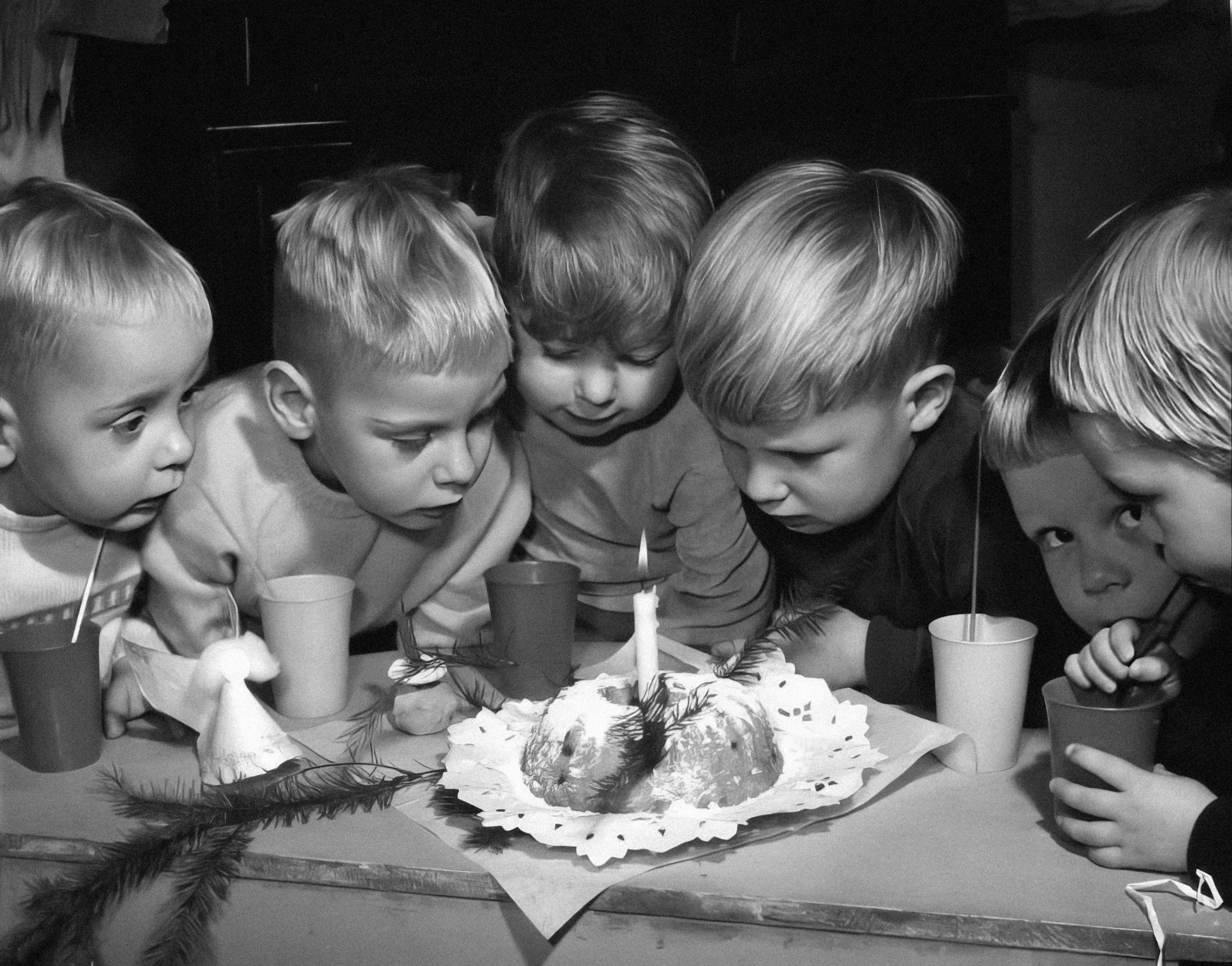
Children Remember Rituals More Than Parenting Philosophies: The Surprising Science of Family Traditions
Modern parents spend extraordinary amounts of time thinking about what to teach their children and surprisingly little time thinking about what their children will remember.
These are not always the same thing.
The average child will forget thousands of lectures, instructions, reminders, corrections, and carefully delivered life lessons.
They will remember Taco Tuesday.
They will remember Saturday morning pancakes.
They will remember the Christmas ornament that always went on the tree first.
They will remember the family joke nobody else understood.
They will remember the camping trip.
The bedtime story.
The walk after dinner.
The thing that happened over and over until it became part of the emotional architecture of home.
This may be one of the most important truths in family life:
Children remember rituals more than parenting philosophies.

What We Worship Now: Marriage, Meaning, and the New Economics of Attention
A few months ago a client was sitting in an airport watching a young couple wait for a delayed flight.
They looked happy enough.
No visible conflict.
No obvious tension.
No signs of distress.
For nearly forty minutes neither spoke.
The man watched sports highlights.
The woman scrolled through videos.
Occasionally one showed the other something amusing.
A brief smile.
A nod.
Then both disappeared back into their respective worlds.
He said he remembered thinking that previous generations might have called this boredom.

The Marriage Attention Crisis: How Algorithms Became the Third Party in Modern Relationships
Most partners do not wake up one morning and decide to stop loving each other.
That is the comforting myth.
The dramatic myth.
The movie version.
The affair.
The betrayal.
The screaming match.
The slammed door.
Real life is usually quieter.
A husband is lying in bed beside his wife.
He is laughing.
Not with her.
At something on his phone.

The Erotics of Competence: Why Competence Is Attractive in Long-Term Relationships
For most of human history, attraction was partly organized around reality.
Could this person survive a winter?
Could they solve problems?
Could they carry weight?
Could they be trusted when circumstances became difficult?
Today, many of us spend hours each day looking at attractive strangers whose ability to navigate reality is completely unknown.
This is historically unusual.
We know what they look like.
We know where they vacation.
We know what they eat.
We know which filter they use.
We know almost nothing about whether they would be helpful during a crisis.
And yet we increasingly live in a culture that treats visibility as evidence of value.
This may be one of the least discussed threats to long-term attraction.
Because attraction and admiration are not the same thing.
Attraction notices beauty.
Admiration notices capability.
And a marriage can survive surprisingly little excitement.
It cannot survive long without respect.

Attention Fidelity: What Long-Distance Relationships Reveal About Love in the Age of Distraction
Most discussions about masturbation are secretly discussions about loneliness.
They simply don't know it yet.
A partner leaves for medical school. A deployment. A work assignment. A continent. A season of life that neither partner would have chosen but both agree to endure.
Suddenly two nervous systems that have grown accustomed to regulating each other are forced to improvise.
The morning coffee disappears.
The hand on the shoulder disappears.
The familiar laugh from the next room disappears.
The body notices.
The attachment system notices.
The imagination notices.
What follows is not merely a sexual story.
It is a story about absence.
And absence has become one of the defining psychological experiences of modern life.

What Happens When a Civilization Stops Agreeing About Beauty?
A civilization can survive disagreement about politics.
It can survive disagreement about religion.
It can survive disagreement about economics.
What becomes more difficult is surviving disagreement about what deserves reverence.
That may be one of the defining cultural facts of the twenty-first century.
We no longer agree on what is sacred.
And because we no longer agree on what is sacred, we increasingly struggle to agree on what is beautiful.
A recent study found that some viewers see nude paintings as beautiful while others experience the same paintings as uncomfortable, pornographic, or morally troubling.
Interesting.