Tuesday, June 2, 2026.
Modern parents spend extraordinary amounts of time thinking about what to teach their children and surprisingly little time thinking about what their children will remember.
These are not always the same thing.
The average child will forget thousands of lectures, instructions, reminders, corrections, and carefully delivered life lessons.
They will remember Taco Tuesday.
They will remember Saturday morning pancakes.
They will remember the Christmas ornament that always went on the tree first.
They will remember the family joke nobody else understood.
They will remember the camping trip.
The bedtime story.
The walk after dinner.
The thing that happened over and over until it became part of the emotional architecture of home.
This may be one of the most important truths in family life:
Children remember rituals more than parenting philosophies.
Not because parenting philosophies do not matter.
But because rituals are where philosophies become experiences.
And human beings remember experiences.
Ask an Adult About Childhood
Ask a fifty-year-old about childhood and watch what happens.
Not immediately.
At first they tell you the official story.
The town.
The schools.
The neighborhood.
The jobs their parents held.
Then something shifts.
They remember the smell of tomato sauce on Sundays.
They remember Dad scraping frost off the windshield before school.
They remember Grandma insisting everyone take home leftovers.
They remember fighting over the corner piece of lasagna.
They remember the old Christmas ornament missing one eye.
The memory arrives carrying emotion with it.
Notice what is happening.
They are not remembering theories.
They are remembering rituals.
The things that happened repeatedly.
The things that transformed ordinary time into meaningful time.
The things that answered a child's deepest question before the child could even ask it:
What kind of family is this?
The Great Parenting Confusion
Parenting has become strangely intellectualized.
There are parenting frameworks for every conceivable challenge.
Bookshelves groan under the weight of attachment theory, emotional coaching, gentle parenting, authoritative parenting, executive functioning strategies, resilience training, and enough developmental psychology to make raising a child feel suspiciously similar to completing a graduate degree.
Parents often feel as though they are assembling a child while simultaneously studying the instruction manual.
The irony is that childhood rarely feels theoretical from the child's perspective.
Children experience parenting as a climate.
A rhythm.
A collection of repeated moments.
When adults look back decades later, they rarely say:
"My parents demonstrated remarkable consistency in applying evidence-based emotional validation techniques."
They say:
"We always ate dinner together."
"We always went to the same lake."
"My father always read to me before bed."
The memories that endure tend to be rituals.
Not theories.
The Science of Why Rituals Stick
The science here is surprisingly robust.
Research on family rituals and routines has consistently found associations with stronger family identity, better emotional adjustment, greater resilience during stress, and improved psychological well-being (Fiese et al., 2002).
Why?
Because the brain is fundamentally a prediction machine.
Much of what the nervous system is trying to accomplish every day is answering a simple question:
What happens next?
Rituals make that question easier to answer.
The bedtime routine tells a child what comes next.
The Sunday dinner tells a child what comes next.
The annual family vacation tells a child what comes next.
Prediction lowers uncertainty.
Lower uncertainty reduces anxiety.
Reduced anxiety increases feelings of safety.
Safety supports secure attachment.
Attachment shapes memory.
In other words, the bedtime story is doing far more work than anyone realizes.
It is not simply entertainment.
It is nervous-system regulation disguised as a children's book.
Developmental psychologists have long understood that predictability matters enormously to children. The world is large, confusing, and often outside their control.
Rituals create islands of certainty.
The world may change.
The ritual remains.
Family Stories, Family Identity, and Resilience
Researchers studying family narratives have discovered something equally interesting.
Children who know more about their family history often show greater resilience during stressful periods and a stronger sense of identity. Developmental psychologist Robyn Fivush and her colleagues found that family stories help children place themselves within a larger narrative.
They learn that challenges existed before they arrived.
They learn that setbacks can be survived.
They learn that they belong to something larger than themselves.
Rituals are often the vehicle through which those stories travel.
The annual holiday gathering.
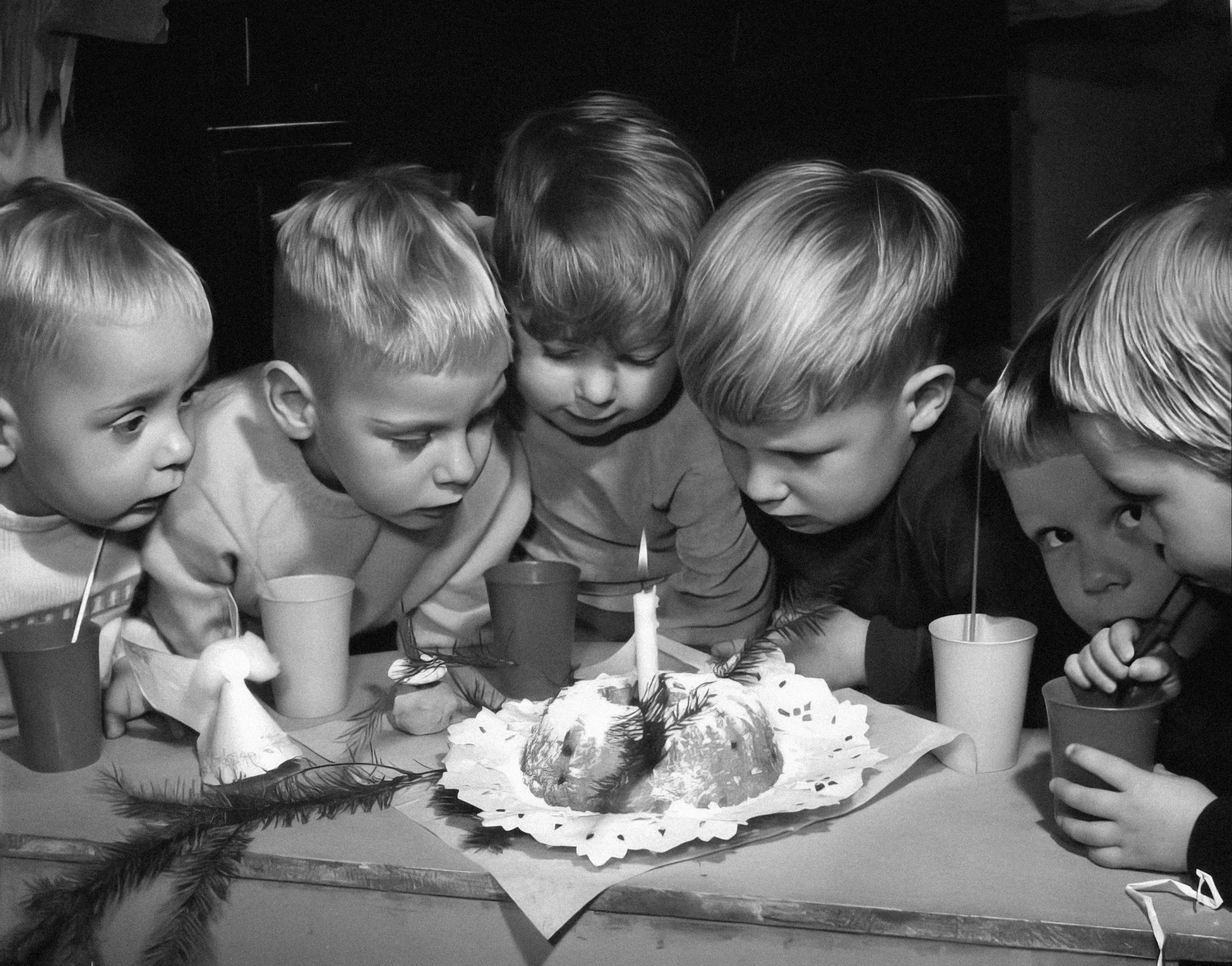
The birthday tradition.
The family recipe.
The repeated story told around the same table year after year.
A ritual is rarely just an activity.
It is a delivery system for identity.
Rituals Are Repeated Acts of Attention
Here is a definition worth considering:
Rituals are repeated acts of attention that create belonging.
At its core, every family ritual is really an attention ritual.
The bedtime story says attention belongs here.
The family dinner says attention belongs here.
The evening walk says attention belongs here.
The annual camping trip says attention belongs here.
This becomes particularly important when viewed against the backdrop of modern life.
Because the attention economy has entered the family.
Every device in your home is competing for the same resource.
Attention.
The family dinner competes with notifications.
The bedtime story competes with YouTube.
The evening conversation competes with social media.
The walk competes with scrolling.
Technology is not the enemy.
But it asks a different question.
Not:
"What deserves our attention?"
But:
"What can capture our attention?"
Those are not the same thing.
A ritual is a family deciding that certain forms of attention are too important to outsource.
What Children Actually Take With Them
Parents often imagine they are raising children.
In reality, they are also creating future memories.
Every family is manufacturing nostalgia in real time.
The strange thing is that nobody knows which moments will survive.
Parents spend thousands on Disney vacations.
The child remembers making pancakes.
Parents spend months planning Christmas.
The child remembers drinking hot chocolate afterward.
Parents remember the event.
Children remember the ritual.
This happens because rituals package connection, repetition, attention, and belonging into a form the brain can easily store.
Years later those moments become landmarks.
Not because they were extraordinary.
Because they were repeated.
Again.
And again.
And again.
The Hidden Relationship Between Ritual and Marriage
There is another reason rituals matter.
Most family rituals are secretly marriage rituals.
The family dinner is also a marriage ritual.
The evening walk is also a marriage ritual.
The annual vacation is also a marriage ritual.
The Sunday breakfast is also a marriage ritual.
Many couples assume marriages deteriorate because love disappears.
That is not always what happens.
Often the rituals disappear first.
The dinners become irregular.
The walks stop.
The traditions quietly evaporate.
And eventually something feels missing.
Not because the partners stopped loving one another.
Because the relationship lost its rhythms.
The first sign of relational drift is often not conflict.
It is the disappearance of ritual.
The marriage becomes operational.
Efficient.
Functional.
And strangely forgettable.
The Age of Optimization Meets the Age of Meaning
For the past two decades American culture has been obsessed with optimization.
Optimize your productivity.
Optimize your sleep.
Optimize your nutrition.
Optimize your finances.
Optimize your attention.
Optimize your children.
Many parents have become accidental project managers of childhood.
The focus shifted toward outcomes.
Grades.
Achievements.
Activities.
Performance.
Future success.
Yet human beings do not build meaningful lives entirely through optimization.
Meaning emerges differently.
Meaning grows through repetition.
Through shared experiences.
Through rituals.
A child can have a remarkable résumé and still feel disconnected.
A child can have extraordinary opportunities and still feel lonely.
A child can be optimized and not feel that they belong.
Belonging is built through repeated experiences of shared attention.
Which may explain why family rituals are quietly making a comeback.
People are becoming exhausted by endless optimization.
Eventually a different question emerges:
What was all the optimization for?
Rituals are one answer.
They transform time into meaning.
They transform attention into belonging.
They transform ordinary life into memory.
In many ways, they are small domestic forms of the sacred.
Final Thoughts
For most of human history, families inherited rituals.
Today many families must consciously invent them.
That may be one of the hidden tasks of modern parenthood.
Not merely raising children.
Creating the traditions they will someday miss.
One day your child will leave home.
The bedroom will be empty.
The schedules will stop.
The homework battles will end.
The soccer games will become stories.
Most of childhood disappears with surprising speed.
What remains are the rituals.
The family dinner.
The walk.
The story.
The song.
The joke.
The ordinary moments that became sacred through repetition.
Years from now your children may not remember the parenting books.
They may not remember the lectures.
They may not remember the rules.
But they will remember where attention lived.
They will remember who showed up.
They will remember what happened every Friday night.
Because rituals are how families make memory visible.
They are repeated acts of attention that create belonging.
Long after childhood is gone, those rituals continue doing their quiet work.
They become memory.
They become identity.
They become belonging.
And sometimes they become the way love survives.
FAQ
Why are family rituals important for children?
Family rituals provide predictability, emotional security, identity formation, and opportunities for connection. Research suggests that strong family rituals are associated with greater resilience, emotional well-being, and family cohesion.
What is the difference between a family routine and a family ritual?
A routine serves a practical purpose. A ritual carries emotional or symbolic meaning. Bedtime may be a routine. Reading the same story together every night is a ritual.
Can family rituals improve relationships?
Yes. Rituals create repeated opportunities for connection, communication, and shared attention. They strengthen both parent-child relationships and couple relationships.
What are examples of simple family rituals?
Family dinners, evening walks, bedtime stories, game nights, Sunday breakfasts, holiday traditions, annual trips, volunteer projects, and shared celebrations can all become meaningful rituals.
When Reading About Parenting Isn't Enough
Understanding why rituals matter is not the same thing as creating them.
Most families do not struggle because they lack information. They struggle because modern life fragments attention. Schedules expand. Devices multiply. Shared moments become harder to protect.
This pattern usually escalates. The rituals disappear first. Then the connection begins to thin.
If your relationship or family feels increasingly efficient but less emotionally alive, it may be worth examining where attention is actually going. Some family systems are no longer suffering from misunderstanding. They are suffering from repetition. Insight is not interruption.
People often arrive here the way most of us arrive anywhere on the internet—looking for an answer, a strategy, or perhaps a little reassurance. Sometimes information helps. Sometimes the challenge is no longer understanding the pattern. The challenge is changing it.
If your relationship or family is caught in one of these cycles, I offer focused, science-based intensives designed to accomplish in a few days what can otherwise take months of weekly therapy. Understanding the problem matters. Interrupting the pattern matters more.
Be Well. Stay Kind. and Godspeed.
REFERENCES:
Fiese, B. H., Tomcho, T. J., Douglas, M., Josephs, K., Poltrock, S., & Baker, T. (2002). A review of 50 years of research on naturally occurring family routines and rituals: Cause for celebration? Journal of Family Psychology, 16(4), 381–390.
Fivush, R., Bohanek, J. G., & Duke, M. P. (2008). The intergenerational self: Subjective perspective and family history. In F. Sani (Ed.), Individual and collective self-continuity (pp. 131–143). Psychology Press.
Masten, A. S. (2014). Ordinary magic: Resilience in development. Guilford Press.
Nelson, K. (1996). Language in cognitive development: Emergence of the mediated mind. Cambridge University Press.
Sroufe, L. A. (2005). Attachment and development: A prospective, longitudinal study from birth to adulthood. Attachment & Human Development, 7(4), 349–367.
Waldinger, R. J., & Schulz, M. S. (2023). The Good Life: Lessons from the World's Longest Scientific Study of Happiness. Simon & Schuster.