Archie Bell, the Drells, and the Strange Comfort of Being Told What to Do
Tuesday, June 2, 2026.
Most people remember Archie Bell & the Drells for one thing.
A groove.
A dance.
A few minutes of irresistible joy from 1968.
What most people do not remember is that Tighten Up begins with instructions.
Actual instructions.
Archie Bell introduces himself, introduces Houston, Texas, informs us that he and his friends can dance as well as they sing, and then proceeds to tell America exactly what to do.
"Now tighten up on it..."
And America, apparently thinking this sounded reasonable, did.
The song became a number-one hit.
Millions danced.
Nobody seemed especially troubled by the fact that they were enthusiastically participating in a cultural phenomenon built around compliance.
This is one of those small moments in popular culture that becomes more interesting the longer you stare at it.
Because Americans love telling themselves stories about independence.
We admire rebels.
Mavericks.
Individualists.
Rule-breakers.
Self-made entrepreneurs.
People who refuse to follow the crowd.
Yet every generation eventually lines up to perform some version of the Tighten Up.
The culture says smoke.
Everybody smokes.
The culture says jog.
Everybody jogs.
The culture says optimize.
Everybody optimizes.
The culture says heal.
Everybody begins healing.
The culture says develop boundaries.
Everybody develops boundaries.
The culture says buy standing desks.
Suddenly half the country is standing.
Human beings are much less independent than they imagine.
And thank goodness for that.
Because the deeper story hidden inside Tighten Up is not conformity.
It is relief.
Archie Bell appears to be offering dance instructions.
What he is actually offering is freedom from decision-making.
The dance has already been chosen.
The steps have already been selected.
Nobody has to invent anything.
Nobody has to optimize anything.
Nobody has to discover their authentic self before participating.
Just follow along.
The remarkable thing is how attractive this remains.
Modern life is often described as an age of unprecedented freedom.
That is true.
It is also exhausting.
Every day presents a thousand tiny decisions.
What to eat.
What to wear.
What to believe.
How to exercise.
How to parent.
Where to live.
Which political tribe to join.
Which identity to perform.
Which version of yourself should be displayed to the world.
The modern citizen spends enormous amounts of energy deciding who to be.
Then along comes a dance song.
"Here's the dance."
The relief is immediate.
One less thing to figure out.
This may explain something larger about the moment we are living through.
For decades, American culture treated freedom as the ultimate goal.
More options.
More choices.
More customization.
More individuality.
More personal expression.
The assumption was simple.
More freedom would naturally create more happiness.
Instead, many souls appear strangely overwhelmed.
It turns out that endless choice carries its own psychological burden.
You can spend an entire day making decisions without arriving at a single meaningful conclusion.
The self-help industry has responded by creating an economy around guidance.
Everybody now seems to have a method.
A framework.
A blueprint.
A system.
A mindset.
A protocol.
A masterclass.
A morning routine.
A five-step process.
If Archie Bell released Tighten Up today, somebody would undoubtedly launch The Tighten Up Method™.
There would be a podcast.
A certification course.
A branded journal.
A retreat in Arizona.
A TED Talk.
Three subscription tiers (I’m thinking about that one myself,) but I digress.
And somebody on LinkedIn explaining how Tighten Up principles improved quarterly productivity metrics.
One of the reasons the original song remains charming is that Archie Bell was refreshingly honest.
He was not pretending to save your life.
He simply wanted you to dance just as good as you want…
Modern culture often disguises conformity behind increasingly sophisticated language.
Archie Bell just called it a dance.
The more I think about it, the more I suspect the loneliness crisis may be connected to this problem.
Not because people lack information.
Not because people lack communication.
Because people increasingly lack synchronization.
For most of human history, communities moved together.
The same holidays.
The same songs.
The same stories.
The same seasons.
The same celebrations.
The same grief.
The same rhythms.
Life was often difficult.
But it was synchronized.
Today two neighbors can live twenty feet apart while inhabiting completely different realities.
Different media.
Different values.
Different politics.
Different entertainment.
Different algorithms.
Different stories about what matters.
We often describe this as personalization.
Perhaps another word would be fragmentation.
The modern world has become extraordinarily effective at delivering individualized experiences.
What it struggles to provide are shared rhythms.
The result is that many people feel lonely even while remaining connected.
Not disconnected.
Unsynchronized.
There is a difference.
Social media promised connection.
Instead, it often delivers simultaneous isolation.
Millions of people staring at the same platform while inhabiting entirely different worlds.
Which is why a song like Tighten Up suddenly seems less trivial than it first appeared.
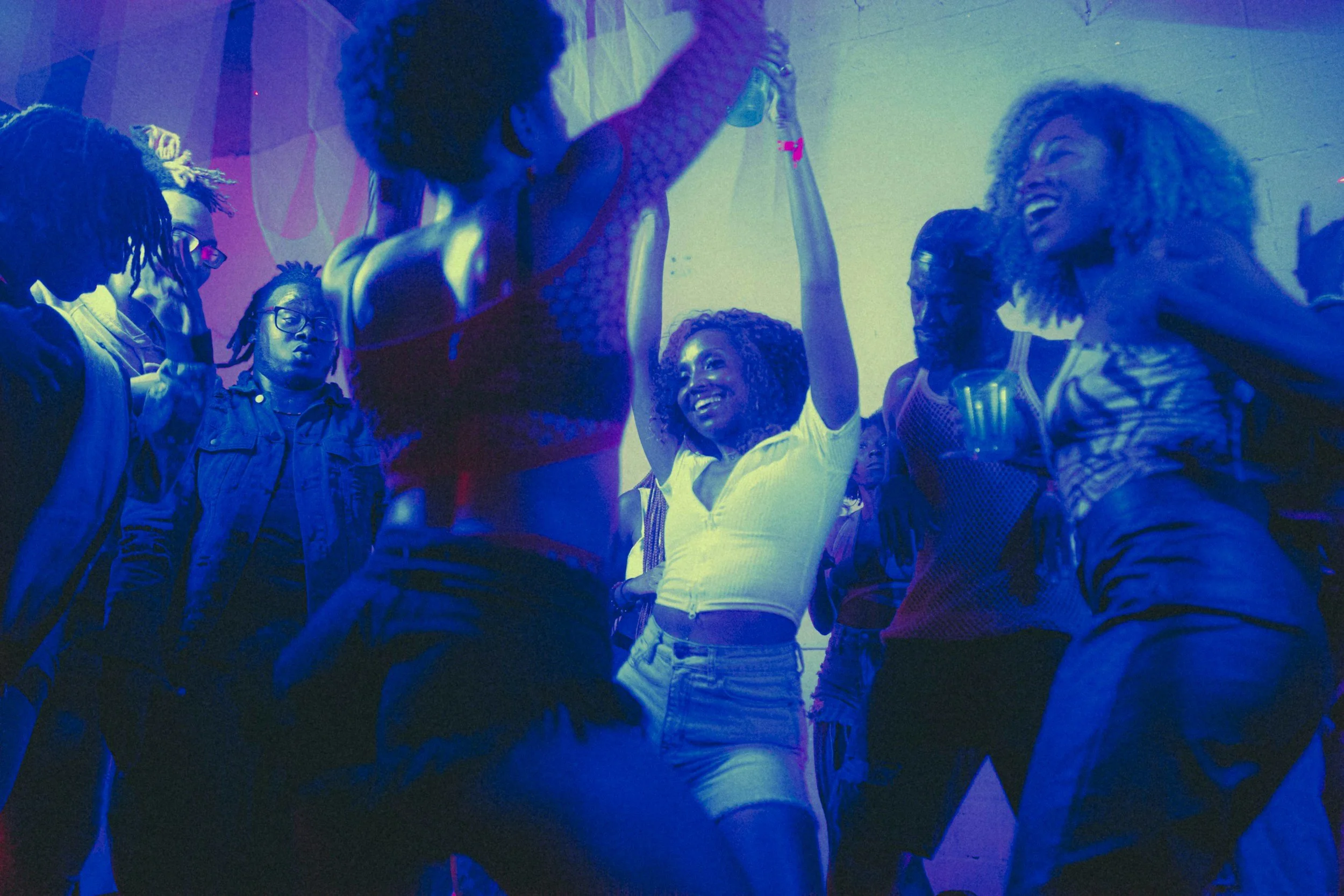
For three minutes everybody knew the steps.
Everybody heard the same music.
Everybody moved together.
The dance created temporary belonging.
The sociologist Émile Durkheim called this collective effervescence—the electric feeling that emerges when people participate in a shared experience larger than themselves.
Religions create it.
Sporting events create it.
Concerts create it.
Families sometimes create it.
Communities create it.
Dances create it.
Human beings appear to need it.
Not occasionally.
Regularly.
Which may be why modern life often feels strangely hungry despite its abundance.
We have information.
We have convenience.
We have entertainment.
We have options.
What many people seem to be searching for is rhythm.
A reason to move together.
A reason to gather.
A reason to belong.
This is not an argument against individuality.
Individuality matters.
Freedom matters.
Autonomy matters.
The challenge is that human beings appear to need two seemingly contradictory things at the same time.
We want freedom.
And we want belonging.
We want uniqueness.
And we want recognition.
We want independence.
And we want community.
Civilization itself may largely consist of managing these tensions.
Too much conformity and the soul suffocates.
Too much individualism and the soul becomes isolated.
Somewhere between those extremes lies a dance.
Not a perfect dance.
Not a permanent dance.
Just a rhythm.
A way of moving through life together without disappearing into the crowd.
Perhaps that is why Tighten Up still sounds joyful nearly sixty years later.
The dance was simple.
Everybody knew the steps.
Nobody had to invent themselves for three minutes.
Nobody had to optimize.
Nobody had to curate a personal brand.
Nobody had to become a better version of themselves.
They simply joined the rhythm.
Archie Bell probably thought he wrote a dance song.
What he may have written instead was a small reminder of something modern life keeps forgetting.
Folks do not merely want choices.
Souls want belonging.
And belonging often begins when somebody says:
"Here's the dance."
Now Make it mellow…
Be Well, Stay Kind, and Godspeed.
REFERENCES:
Durkheim, E. (1995). The elementary forms of religious life (K. E. Fields, Trans.). Free Press. (Original work published 1912)
Putnam, R. D. (2000). Bowling alone: The collapse and revival of American community. Simon & Schuster.
Turkle, S. (2011). Alone together: Why we expect more from technology and less from each other. Basic Books.