
Welcome to my Blog
Thank you for stopping by. This space is where I share research, reflections, and practical tools drawn from my experience as a marriage and family therapist with an international practice.
I write about what happens to desire, attachment, and meaning once the early myths stop working.
Are you a couple looking for clarity? A professional curious about the science of relationships? Or simply someone interested in how love and resilience work? I'm glad you've found your way here. I can help with that. I'm accepting new clients, and this blog is for the benefit of all my gentle readers.
Each post is written with one goal in mind: to help you better understand yourself, your partner, and the hidden dynamics that shape human connection
Grab a coffee (or a notebook), explore what speaks to you, and take what's useful back into your life and relationships.
And if a post sparks a question, or makes you realize you could use more support, l'd love to hear from you. Let's explore the scope of work you'd like to do together.
Be Well, Stay Kind, and Godspeed.
~ Daniel
P.S.
Feel free to explore the categories below to find past blog posts on the topics that matter most to you. If you're curious about attachment, navigating conflict, or strengthening intimacy, these archives are a great way to dive deeper into the research and insights that l've been sharing for years.
- Attachment Issues
- Coronavirus
- Couples Therapy
- Extramarital Affairs
- Family Life and Parenting
- How to Fight Fair
- Inlaws and Extended Families
- Intercultural Relationships
- Marriage and Mental Health
- Married Life & Intimate Relationships
- Neurodiverse Couples
- Separation & Divorce
- Signs of Trouble
- Social Media and Relationships
- What Happy Couples Know


I Said Exactly What I Meant: NVLD and the Hidden Architecture of Marital Conflict
At some point in a long marriage, two intelligent adults find themselves arguing about the meaning of a sentence that, moments earlier, seemed incapable of producing an international incident.
The scene is rarely cinematic.
No one is throwing crystal stemware against a marble fireplace.
Usually, someone is standing at the kitchen sink.
There is unopened mail.
A half-drunk cup of coffee gone cold.
The dog's medication sitting beside a grocery list that includes cilantro, batteries, and toothpaste.
One spouse says, "It would have been nice if you'd helped more when my parents visited."
The other replies, "I took them to breakfast on Saturday."
Silence.
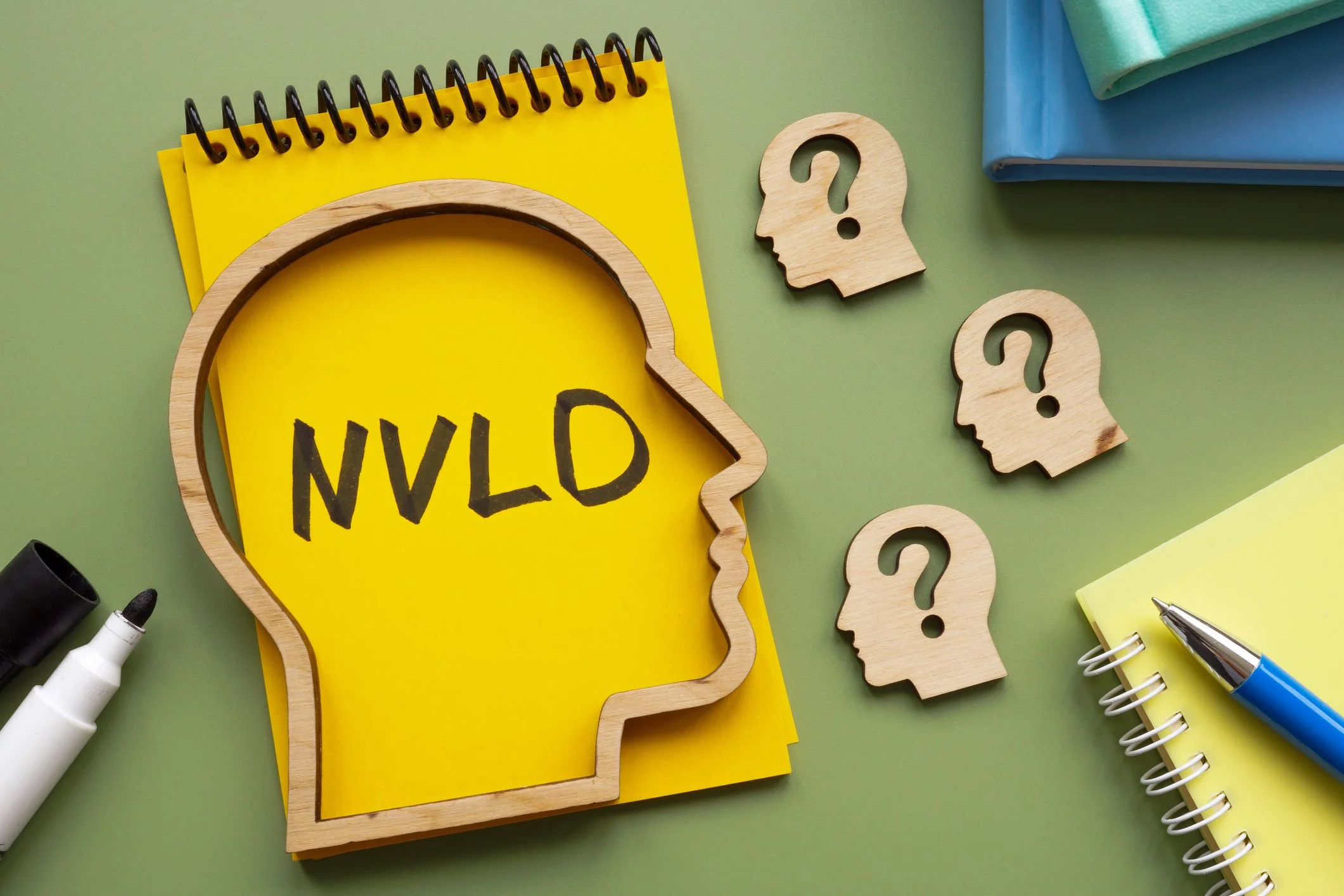
The Intelligent People the World Keeps Misreading: The Hidden Experience of NVLD
They are the ones everyone asks for advice.
They can explain mortgage rates, constitutional law, or the geopolitical implications of a trade agreement with unnerving precision.
They remember obscure details from books they read twenty years ago. They write thoughtful emails. They use words like nuance correctly and without irony.
Then they spend twenty minutes wandering through a parking garage because they cannot remember where they left the car.
They arrive at the wrong entrance to a building despite checking the directions twice.
They walk into a gathering and suddenly have no idea where to stand, how long to maintain eye contact, or whether the joke they just made landed or detonated.
Nobody quite knows what to do with this contradiction.

Why Smart Couples Keep Misdiagnosing Their Relationship Problems
One partner says:
"We've been disconnected for years."
The other replies:
"What are you talking about? Things were fine until last month."
Neither is lying.
They are simply reading different weather reports.
There is a peculiar modern belief that if two reasonably evolved adults simply communicate clearly enough, intimacy will sort itself out.
Use "I" statements.
Reflect what you hear.
Validate feelings.
Schedule check-ins.
Buy the card deck game.
Listen to the podcast.
Learn each other's love language.
The assumption beneath all of this is charming.
It is also wrong.

Why Smart Couples Misdiagnose Narcissism
Every era develops its favorite explanation for why relationships fail.
The Victorians blamed morality. Mid-century Americans blamed mothers. The 1990s blamed communication. Today, we blame narcissism.
It is, in many ways, the perfect modern diagnosis.
It sounds psychologically sophisticated. It carries moral clarity. It offers the relief of explanation.
Most importantly, it locates the problem safely inside someone else's personality.
There is comfort in believing we finally know what happened.
"My spouse isn't overwhelmed."
"My wife isn't emotionally avoidant."
"My husband isn't ashamed."
"They're just a narcissist."
Case closed.

The Folks Who Leave the Room Without Moving: What Literature Reveals About Maladaptive Daydreaming
For a species that prides itself on practicality, human beings spend an astonishing amount of time elsewhere.
We sit in traffic and replay arguments that never happened. We fold laundry while imagining alternate careers.
We mentally redecorate kitchens we cannot afford and rehearse conversations we are unlikely to have.
We envision reunions, rescues, revenge, vindication, and occasionally the perfect comeback to an insult delivered sometime during the George W. Bush administration.
The body remains present.
The mind catches a connecting flight.

The Secret Grief of the Life We Imagined
No one tells you that adulthood involves mourning people who never existed.
Not lovers.
Not parents.
Not children.
Not friends.
Versions of yourself.
The woman who thought she would write the novel.
The man who imagined he would be more patient.
The parent who assumed family dinners would be warm and uninterrupted instead of featuring negotiations over vegetables and someone crying because the pasta touched the peas.
The ambitious twenty-five-year-old who envisioned becoming decisive, sophisticated, and somehow immune to lower back pain.
The self who believed that by now you would have arrived.
Instead, many of us discover that adulthood feels less like arrival and more like revision.

When Humiliation Becomes a Moral Permission Slip
There are injuries that bruise the body.
And there are injuries that bruise the self.
A forgotten invitation.
A public correction.
A partner who fails to defend us.
A friend who chooses someone else.
A colleague who receives the recognition we quietly believed was ours.
Most folks experience these moments as painful but survivable.
We replay them in our minds. We complain to a trusted soul.
We lose sleep for a night or two.
Eventually, life gathers us back into itself.
But for some, humiliation does not simply hurt.
It destabilizes.
It lands not as disappointment but as exposure.
Proof.
Confirmation of an old suspicion that one is unseen, undervalued, replaceable, or fundamentally unworthy.
The emotional intensity of the wound exceeds the objective size of the event. The psyche begins searching for relief.
And sometimes, it finds revenge.

When an Affair Doesn't End the Marriage: Grief, Trust, and the Possibility of Repair
There are losses that arrive without funerals.
No casseroles appear on the doorstep.
No obituary is printed.
No one lowers their voice and says, "I'm so sorry for what happened."
Yet a life organized around certainty quietly collapses.
Affairs often belong to this category of grief.
The person you love remains seated across the table. They still know how you take your coffee.
They still remember the names of your children, the stories from your childhood, the private jokes accumulated over years of shared life.
And yet something essential has vanished.
The marriage you believed you inhabited no longer exists in the way you understood it.

The Surprising Romantic Advantage of Antagonistic Narcissism
There is a comforting story many of us tell ourselves about love.
It goes something like this:
The kind ones are easy to spot.
The difficult ones reveal themselves immediately.
Red flags wave dramatically in the breeze.
Good judgment triumphs.
The end.
Real life, unfortunately, is not so accommodating.

When the World Feels Too Much: Oscillanguish, Marriage, and the Emotional Weather of Our Time
You wake up optimistic about the future.
Artificial intelligence is diagnosing illnesses earlier than ever before.
Scientific breakthroughs are occurring at breathtaking speed. Your granddaughter is considering careers that did not exist twenty years ago.
Humanity, for all its absurdity and stubbornness, remains astonishingly inventive.
By lunchtime, you've read about war, political dysfunction, economic instability, climate disasters, and another round of layoffs.
By dinner, you've encountered conflicting advice about health, alarming headlines about the future, and enough outrage to last several lifetimes.
You no longer know whether to feel hopeful or exhausted.
You settle for both.
Many souls know this feeling intimately.
Recently, my colleague and former classmate, Dr. Afarin Rajaei, offered a name for it: oscillanguish.

What If the Narcissists at Work Are Actually Doing Fine?
Everyone knows this person.
They arrive ten minutes late carrying a coffee the size of a baptismal font and immediately begin explaining what everyone else should have done differently.
By lunch, they have interrupted three colleagues, volunteered for a highly visible initiative they may or may not complete, and described themselves as "results-oriented" with the confidence of someone announcing the discovery of gravity.
They also appear to be doing just fine.
Meanwhile, the dependable souls—the ones who prepared for the meeting, remembered everyone's birthdays, stayed late to fix the presentation, and apologized before asking perfectly reasonable questions—are Googling, Can stress cause eyelid twitching?
It hardly seems fair.
According to a recent study published in Acta Psychologica, it may also be true.

What Psychologists Noticed About the Couples Who Were Happiest After Moving In Together
Everyone thinks moving in together is about the boxes.
The boxes matter, of course. They contain your books, your dishes, your winter coats, and the coffee mug you've inexplicably carried through three apartments because it reminds you of a happier version of yourself. But the boxes are not the real story.
Neither is the debate over whose mattress survives the merger.
Or whether the thermostat should be set for human habitation or polar bear conservation.
Or the discovery that your beloved loads the dishwasher in a way that feels less like a household preference and more like an existential threat.
Those things are memorable. They are not what psychologists found.
What they noticed was quieter.
And, I think, more important.
The couples who were happiest after moving in together weren't necessarily the couples who found the transition easiest.
They were the couples who understood what moving in together meant to each other.
That sounds obvious until you realize how rarely we actually do it.