Welcome to my Blog
Thank you for stopping by. This space is where I share research, reflections, and practical tools drawn from my experience as a marriage and family therapist with an international practice.
I write about what happens to desire, attachment, and meaning once the early myths stop working.
Are you a couple looking for clarity? A professional curious about the science of relationships? Or simply someone interested in how love and resilience work? I'm glad you've found your way here. I can help with that. I'm accepting new clients, and this blog is for the benefit of all my gentle readers.
Each post is written with one goal in mind: to help you better understand yourself, your partner, and the hidden dynamics that shape human connection
Grab a coffee (or a notebook), explore what speaks to you, and take what's useful back into your life and relationships.
And if a post sparks a question, or makes you realize you could use more support, l'd love to hear from you. Let's explore the scope of work you'd like to do together.
Be Well, Stay Kind, and Godspeed.
~ Daniel
P.S.
Feel free to explore the categories below to find past blog posts on the topics that matter most to you. If you're curious about attachment, navigating conflict, or strengthening intimacy, these archives are a great way to dive deeper into the research and insights that l've been sharing for years.
- Attachment Issues
- Coronavirus
- Couples Therapy
- Extramarital Affairs
- Family Life and Parenting
- How to Fight Fair
- Inlaws and Extended Families
- Intercultural Relationships
- Marriage and Mental Health
- Married Life & Intimate Relationships
- Neurodiverse Couples
- Separation & Divorce
- Signs of Trouble
- Social Media and Relationships
- What Happy Couples Know


The Time Clock in the Kitchen: Why the Dishes Are Never Just About Dishes
Most couples do not arrive in therapy arguing about capitalism.
They arrive arguing about dishes.
One partner says, "I can't keep doing everything."
The other says, "Nothing I do is ever enough."
Then they look at each other with the exhausted bewilderment of two life partners who once promised to protect one another and now find themselves negotiating who forgot to buy toothpaste.
The presenting problem sounds ordinary.
The dishwasher.
The budget.
The in-laws.
The soccer schedule.
Who was supposed to call the pediatrician.
Who forgot to switch the laundry.
But after years studying labor and years sitting with couples, I have become suspicious of explanations that are too small.
The dishes are rarely about dishes.
More often, they reveal a collision between two institutions competing for the same finite human capacities.
Time.
Attention.
Patience.
Presence.
Different disciplines gave me different languages for the same human ache.
One called it labor.
The other called it marriage.

Campitello: The Children Who Came Home with a Story
Most miracles begin in the wrong place.
Not in cathedrals.
Not before kings.
Not in cities important enough to appear in bold print on maps.
This one began because two girls had chores.
By the summer of 1899, Corsica was thirsty.
The island had always known hardship. It knew invasion and poverty. It knew migration and grief.
It knew the fierce loyalties of family life and the long memories of vendetta.
In some parts of Corsica, old injuries were preserved with extraordinary fidelity.
Grievances could become heirlooms. A wrong done to one generation might still shape the emotional landscape of the next.
The "we" often transcended the "I."
Then the rains failed.
In mountain villages like Campitello, drought was not an inconvenience.
It was a threat to survival. Olive groves suffered. Chestnut trees weakened. Springs diminished. Livestock required water that seemed increasingly uncertain.
When Status Becomes Oxygen: What New Research Reveals About Narcissism
We live in an age that confuses visibility with virtue.
Followers masquerade as friendships. Influence is mistaken for wisdom.
Entire careers are built upon the suspicion that if enough strangers applaud, the old ache of not feeling like enough will finally quiet down.
It rarely does.
A recent study published in the Journal of Personality suggests that the relationship between narcissism and status may be far more intimate than we family therapists previously understood.
Certain forms of narcissism appear to propel souls toward status seeking, while attaining—or merely believing one has attained—status may strengthen narcissistic tendencies in return.
The ego and the social ladder, it turns out, may be training partners.
But before we go hunting for narcissists in our contact lists, it is worth admitting something uncomfortable: the wish to matter is not pathological.
Most folks enjoy being admired.
Most of us appreciate recognition for our efforts.
Most feel a small warmth when our work is praised, our competence acknowledged, or our contributions appreciated. Admiration’s a wonderful thing, much of the time.
But the line between healthy ambition and desperate self-construction is thinner than we like to believe.

Observing Without Absorbing: The Missing Skill Behind Co-Regulation
A wife notices her husband is unusually quiet at dinner.
By dessert, she is anxious.
By bedtime, they are both anxious.
Neither can quite explain what happened.
Nothing significant occurred between them. No argument. No crisis. No bad news.
An emotion simply migrated.
Most couples have experienced some version of this phenomenon. One partner becomes worried, discouraged, overwhelmed, irritated, or fearful.
Before long, the emotional state has spread across the relationship like weather moving across a landscape.
We tend to call this empathy.
Sometimes it is.
But sometimes it is something else.
Sometimes it is emotional absorption.
The Brain Still Wants a Place to Put a Story
Nobody remembers where a PDF lived.
That sounds like a joke, but I am not entirely joking.
Most of us can still remember where our childhood books lived.
The shelf in the bedroom.
The corner of the library.
The cardboard box in the attic.
The copy of Charlotte's Web with the torn cover.
The Stephen King paperback swollen from rainwater.
The cookbook stained by three generations of gravy.
The family Bible with names and dates written in fading ink.
Yet nobody says:
"You should read the PDF that used to be near the lamp."
Digital information is strangely homeless.
It exists.
It matters.
It influences us.
But it rarely lives anywhere.
Increasingly, I wonder whether that is becoming a problem.
Not merely for reading.
For memory.
For relationships.
For identity.
Perhaps even for meaning itself.
Are We Actually Good at Guessing Our Partner’s Attachment Style? New Research Says Yes—But There’s a Catch
A wife says her husband is avoidant.
A husband says his wife is anxious.
They have been having the same argument for seven years.
Both are convinced they understand what is happening.
A new study suggests they may each be partly right.
It also suggests they may each be looking through a distorted mirror.
Attachment Theory has become part of everyday language.
Partners diagnose one another over dinner.
Friends discuss attachment styles over coffee. Social media has transformed a once-specialized psychological framework into common cultural currency.
Yet beneath all the labels sits a surprisingly old question:
How well do we really know the person we love?
The Defiant Child: What James Lehman Understood About Power, Responsibility, and Family Life
The child is eleven.
You have asked him three times to put on his shoes.
He is standing in the hallway delivering what appears to be a TED Talk on injustice.
The shoes remain unshod.
The school bus is coming.
Somehow the discussion now involves his sister, last Tuesday’s punishment, your tone of voice, and an incident from 2024 that nobody else remembers.
You begin to suspect that your child could successfully argue a parking ticket before the Supreme Court.
The shoes remain untouched.
Parents laugh at scenes like this because they are painfully familiar. They also laugh because the alternative is walking into the pantry and eating peanut butter directly from the jar like a raccoon with a mortgage.
James Lehman built an entire career around children like this.
Not merely difficult children.
Not merely stubborn children.
Children who discover something profound about family life:
Conflict moves people.
And once a child discovers that conflict moves people, conflict can become a tool.

The Right to Want: What a New Study Reveals About Desire, Power, and Intimacy
A new study published in the Journal of Social and Personal Relationships began with a familiar question:
Who is more sexually assertive?
For generations, the answer seemed obvious. Men initiate. Men pursue. Men ask. Women respond.
The researchers found something far more interesting.
Not gender.
Not sexual orientation.
Not traditional sexual scripts.
Power.
More specifically, the perception that one's voice carries influence within a relationship.
Life partners who felt they had greater influence over their partner consistently reported greater sexual assertiveness.
Men and women, meanwhile, showed remarkably similar levels of sexual assertiveness.
But I suspect the most interesting word here is not power.
It is permission.
Because beneath the study lies a question that reaches far beyond sexuality:
Who gets to have wants?

The Missing “We”: What Psychopathy Reveals About Identity, Relationships, and Belonging
Ask a grandmother who she is.
She may tell you about her grandchildren.
Ask a devoted husband who he is.
He may tell you about his wife.
Ask a teacher who she is.
She may tell you about her students.
Ask a firefighter who he is.
He may tell you about his crew.
Notice something strange.
The deepest answers to the question Who are you? often contain other people.
We tend to think of identity as something private, something discovered by looking inward.
Modern culture encourages us to find ourselves, express ourselves, optimize ourselves, and become our authentic selves. The self is treated almost like a personal project.
But a fascinating new study published in Social and Personality Psychology Compass suggests that one of the most important differences between individuals may not be what they think about themselves.
It may be whether other people live inside their definition of self at all.
And that brings us to psychopathy.
Not the movie version.
The psychological version.
Which turns out to have something profound to teach us about belonging, connection, and the mysterious thing we call "we."
The New Face: Narcissism, Cosmetic Surgery, and the Modern Hunger to Be Seen
A curious thing has happened to the human face.
For most of history, it was something you carried through life.
Now it is something you manage.
You optimize it.
Photograph it.
Filter it.
Evaluate it.
Compare it.
Market it.
Improve it.
The face, once a record of a life, has become a project.
A recent study published in Aesthetic Plastic Surgery found that folks scoring higher on narcissism, psychopathy, and Machiavellianism were significantly more accepting of cosmetic surgery.
Among the three traits, narcissism emerged as the strongest predictor.
That finding is interesting.
But it is not the most interesting thing about the study.
The most interesting thing is that many of us now inhabit a culture that quietly rewards narcissistic behavior whether we possess narcissistic personalities or not.
That should give us pause.
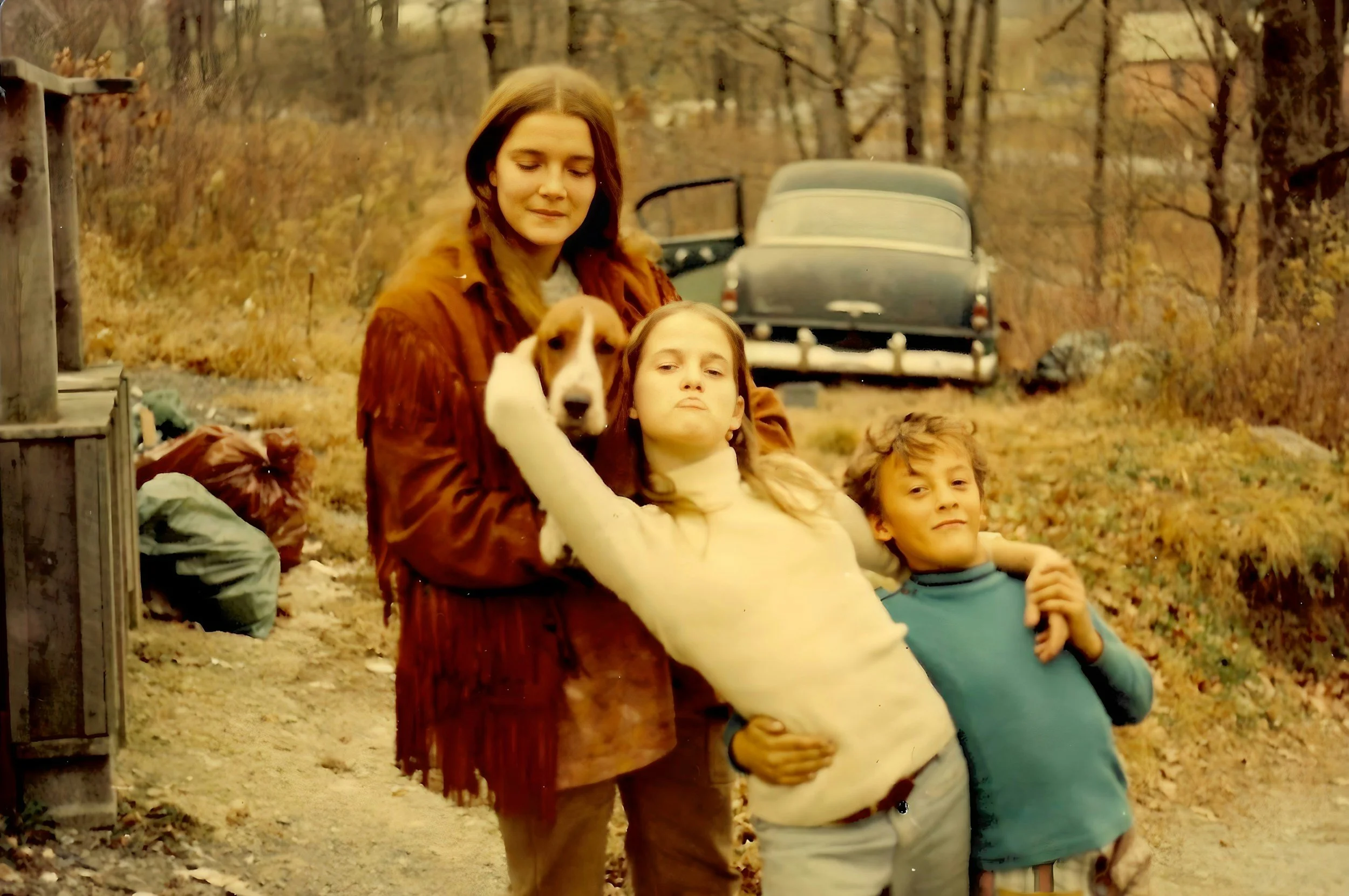
The Familial Self: When the "We" Transcends the "I"
One of the quiet tragedies of modern life is that we have become fluent in the language of the self and nearly illiterate in the language of belonging.
We speak constantly of self-esteem, self-care, self-expression, self-actualization, self-improvement.
The self has become both the hero and the project. We curate it, optimize it, defend it, and explain it.
Yet beneath the modern self lies something older.
Something deeper.
Something that refuses to fit inside the boundaries of an individual life.
The familial self.
The part of us that knows, instinctively, that no human being arrives here alone.
The part that understands that identity is not merely something we construct. It is also something we inherit.
Before there was an "I," there was a "we."
And long after the "I" is gone, the "we" remains.
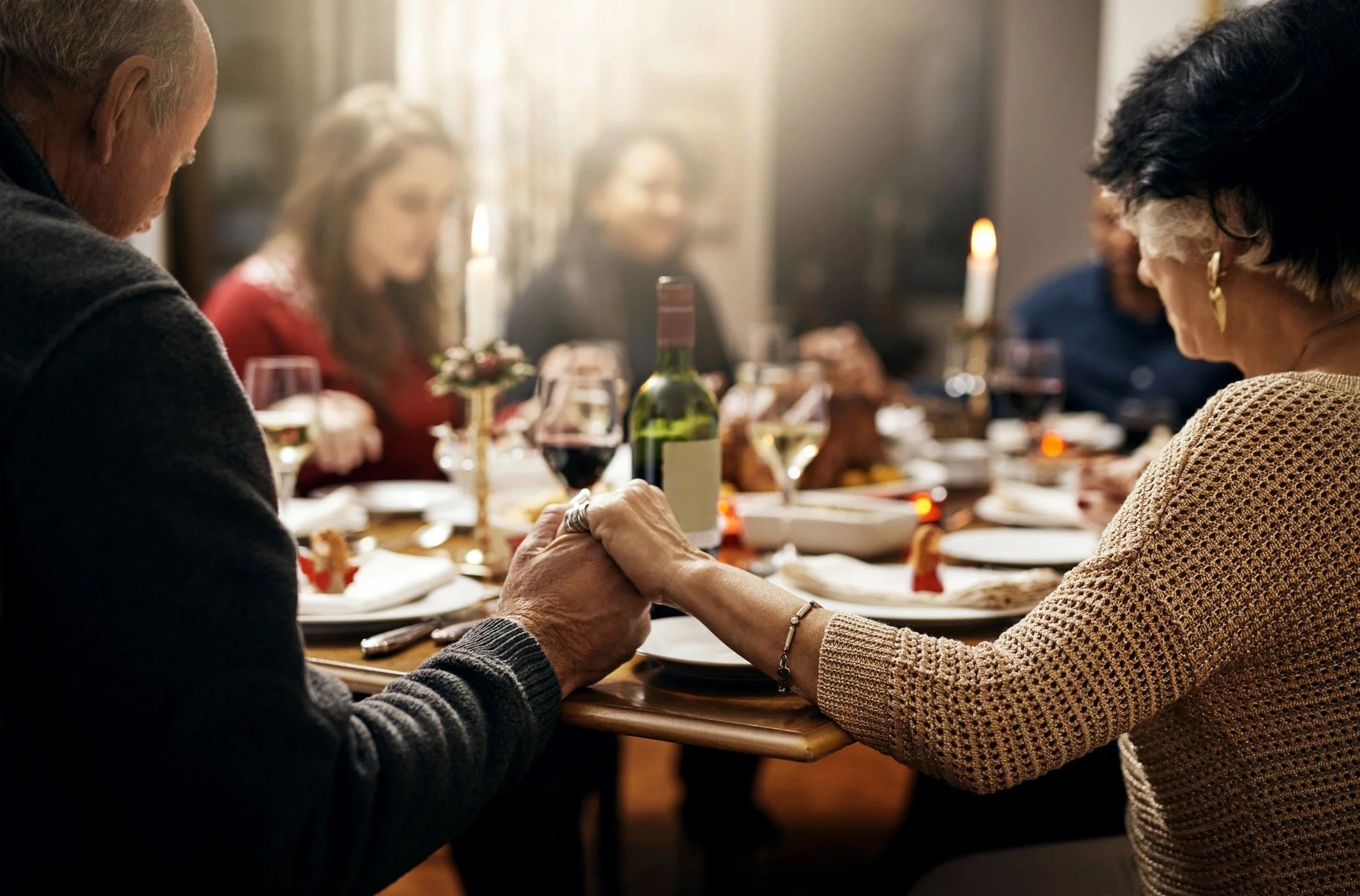
The Return of Ritual: Why Families Are Rebuilding Sacred Time in the Age of the Attention Economy
A strange thing happened when we built the most powerful attention-capturing machines in human history.
We rediscovered the family dinner.
Not because dinner changed.
Because attention changed.
For thousands of years, human beings developed rituals that directed attention toward what mattered most.
Meals. Holidays. Birthdays. Weddings. Sabbaths. Bedtime stories. Seasonal celebrations. Shared traditions.
These practices were so common that they became nearly invisible.
Then, within a single generation, we built an economy designed to redirect attention somewhere else.
The result was not merely distraction.
It was a crisis of continuity.