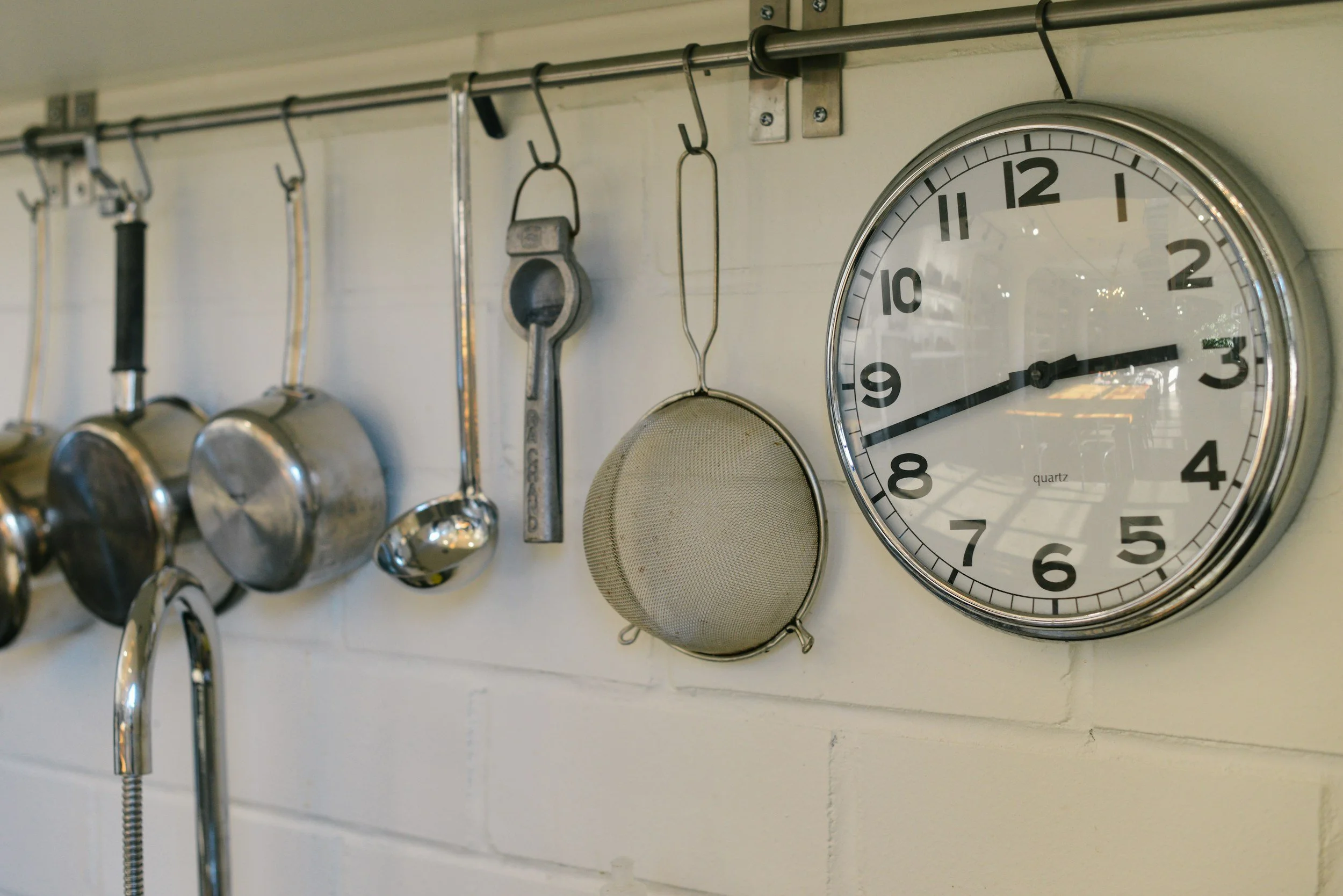
Wednesday, June 17, 2026, 7:40 am. This is for my cousin, Denise Dashnaw, her grandson, Colton, and the whale watch we are doing today!
Most couples do not arrive in therapy arguing about capitalism.
They arrive arguing about dishes.
One partner says, "I can't keep doing everything."
The other says, "Nothing I do is ever enough."
Then they look at each other with the exhausted bewilderment of two life partners who once promised to protect one another and now find themselves negotiating who forgot to buy toothpaste.
The presenting problem sounds ordinary.
The dishwasher.
The budget.
The in-laws.
The soccer schedule.
Who was supposed to call the pediatrician.
Who forgot to switch the laundry.
But after years studying labor and years sitting with couples, I have become suspicious of explanations that are too small.
The dishes are rarely about dishes.
More often, they reveal a collision between two institutions competing for the same finite human capacities.
Time.
Attention.
Patience.
Presence.
Different disciplines gave me different languages for the same human ache.
One called it labor.
The other called it marriage.
The Historical Collision
For most of human history, marriage and work occupied different moral territories.
Marriage organized inheritance, childrearing, survival, social continuity, and economic cooperation. Affection mattered.
Survival mattered more.
Work, meanwhile, was bounded by place and time. You left the field. You left the factory. You came home.
Then history changed the terms of the agreement.
Marriage became psychologically ambitious.
Work became temporally invasive.
As Esther Perel has observed, we now ask our life partner to be our spouse, lover, best friend, co-parent, intellectual equal, first listener, emotional witness, spiritual companion, travel partner, retirement planner, emergency contact, and enthusiastic audience for our becoming.
At precisely the same moment, work followed us home.
The smartphone glows on the nightstand.
The unanswered email lingers through dinner.
The meeting ends but continues in the mind.
Two institutions expanded simultaneously.
Both now compete for the same finite human capacities.
No wonder so many couples feel inadequate.
The mystery is not why life partners struggle.
The mystery is why so many remain tender.
Marriage Is Also an Economy
Years before I became a therapist, My degree in Labor Studies taught me to ask practical questions with moral implications:
Who bears the risk?
Who controls the schedule?
Whose labor becomes visible?
Whose labor disappears into expectation?
Marriage has its own economy.
Its own currencies.
Its own debts.
Its own forms of exchange.
Its own invisible subsidies.
Who remembers the allergy medication?
Who notices that one child has become quieter than usual?
Who buys the birthday gift for your partner's mother?
Who anticipates needs before they become crises?
Who tracks the appointments, permissions, deadlines, and details that allow ordinary life to proceed without catastrophe?
These sound like domestic questions.
They are also questions about dignity.
Not merely who does what.
But who notices what.
Who carries what.
Who cannot afford to forget.
The Labor of Remembering
Arlie Russell Hochschild taught us to recognize the second shift: the unpaid labor that often begins when paid labor ends.
But there is another category of labor that receives less attention.
The labor of remembering.
Remembering birthdays.
Remembering fears.
Remembering promises.
Remembering that your partner's presentation is today and sending a text that says, You've got this.
Remembering which stuffed animal cannot be left behind because tonight is the night it matters.
Remembering the anniversary of a death.
Remembering to insist, despite fatigue and scheduling chaos, that everyone sit together for ten minutes because rituals disappear gradually and then all at once.
Families survive through logistics.
They endure through memory.
Someone remembers who everyone is becoming.
Yet without it, families became distended and lose their shape.
The Family as Shock Absorber
After years of listening to couples, I have become wary of locating problems entirely inside personalities.
The spouse sitting across from you is almost never the whole story.
There is often a third presence in the room.
Debt.
Shift work.
Layoffs.
Status anxiety.
Infertility.
Aging parents.
A child who struggles.
The quiet terror of economic precarity.
The exhaustion of trying to remain employable in a world that punishes stillness.
Family therapists witness what Labor Studies researchers often describe.
Not job insecurity in the abstract, but the shame it brings home.
Not caregiving statistics, but the irritability born of depletion.
Not workplace demands, but the way exhaustion alters tone of voice.
Couples often prosecute one another for injuries inflicted by circumstances neither created.
The dishes are not about dishes.
Money is rarely just money.
Criticism often conceals fear.
Withdrawal often conceals inadequacy.
Couples argue while history sits quietly in the corner taking notes.
The Colonization of Intimacy
The workplace rewards efficiency.
Respond quickly.
Optimize.
Remain available.
Increase output.
Marriage asks something different.
Attend.
Linger.
Notice.
Be curious.
Stay.
Increasingly, we import the moral vocabulary of work into love.
We multitask.
We outsource.
We seek return on investment.
We evaluate performance.
We become managers of one another.
A spouse becomes another project requiring coordination.
A child becomes a scheduling problem.
Efficiency quietly displaces presence.
The tragedy is not that love has become work.
The tragedy is that work has taught us to approach love as though efficiency were its highest virtue.
Attachment has never flourished under the conditions of optimization.
Love requires forms of inefficiency.
The long conversation that produces no measurable outcome.
The repeated bedtime story.
The apology that takes an hour.
The walk after dinner.
The silence beside a grieving partner when nothing useful can be said.
Productivity experts might classify these activities as waste.
But Attachment vitally depends upon them.
The Deepest Complaint
I have listened to nurses, teachers, executives, tradespeople, first responders, retirees, and exhausted parents describe why their marriages hurt.
Their stories differ in vocabulary.
Their structures often do not.
Somewhere along the way, many began confusing love with competence.
They solved more problems.
Managed more details.
Became increasingly indispensable.
Then found themselves bewildered that the person beside them felt lonely.
Most people can tolerate hardship longer than they can tolerate invisibility.
Exhaustion rarely destroys attachment on its own.
Being unseen often does.
The opposite of being cherished is not hatred.
It is becoming function.
Administratively necessary.
The one who remembers.
The one who absorbs.
The one who quietly prevents collapse.
The deepest marital complaint may not be criticism.
It may be obscurity.
See what this costs me.
See how hard I am trying.
See me before usefulness becomes my identity.
The Sacred Ordinary
Families are sustained through repetitive acts that modern culture dismisses as small.
The packed lunch.
The nightly phone call.
The same prayer before dinner.
The text message that says, Drive safely.
The hand placed briefly on a shoulder while passing through the kitchen.
The joke repeated until it becomes family mythology.
Ritual transforms maintenance into meaning.
Repetition becomes devotion.
What appears inefficient from the perspective of productivity often becomes sacred from the perspective of attachment.
We tend to notice these rituals only after they disappear.
Yet they are among the primary ways love acquires a body in ordinary life.
What Neither Discipline Measures
Economists measure productivity.
Therapists measure distress.
Neither field has yet developed adequate metrics for devotion.
How do we quantify the partner who notices grief before tears appear?
The father who learns the names of every stuffed animal?
The daughter who keeps family rituals alive?
The spouse who reaches across the bed in the dark simply to confirm the other person is still there?
The labor of noticing.
The labor of waiting.
The labor of forgiving.
The labor of remaining.
We notice its absence immediately.
We rarely notice its presence until it disappears.
What the Time Clock Measures
I once thought Labor Studies taught me about institutions and family therapy taught me about intimacy.
Now I suspect they have always been asking versions of the same question:
What conditions allow human beings to remain recognizably human?
Labor studies asks:
How should we organize work so that we do not surrender our dignity?
Marriage and family therapy asks:
How should we organize love so we do not surrender our tenderness?
Both disciplines resist the temptation to reduce us to mere factotums.
Human souls are not infinitely elastic.
The way we organize our days eventually becomes the way we organize our hearts.
Every society reveals what it worships by what it measures.
We measure output.
We measure growth.
We measure efficiency.
We rarely measure the spouse who asks, "How did the meeting go?" and actually waits for the answer.
Yet these unnoticed acts may be the very infrastructure upon which both economies and families depend.
The future of marriage may not depend solely upon becoming better communicators.
It may depend upon reclaiming forms of attention that modern life increasingly treats as expendable.
Love cannot compete with productivity on productivity's terms.
Nor should it try.
FAQ
Are the dishes ever really about the dishes?
Sometimes. More often, the argument concerns recognition rather than plates. Couples frequently find themselves fighting over chores when the deeper injury involves fairness, appreciation, exhaustion, or the painful feeling that one's efforts have become invisible. The dishes are concrete. The longing beneath them is relational.
What is the hidden labor of marriage?
Hidden labor refers to the work required to keep family life emotionally and practically intact: remembering appointments, noticing shifts in a child's mood, buying birthday gifts, anticipating needs, maintaining rituals, and carrying the mental load of ordinary life.
Much of this labor goes unseen precisely because it is done well.
Why do I feel lonely even though my partner does so much?
Because, as attractive as it often is, competence and connection are not quite the same thing.
Many couples become extraordinarily effective at running a household while quietly drifting apart emotionally. Partners can tolerate hardship longer than they can tolerate invisibility. The deepest complaint in many marriages is not, "You don't help me." It is, "Do you still see me?"
What is the "mental load" in relationships?
The mental load is the invisible cognitive work involved in tracking the countless details that sustain family life: schedules, medications, school forms, birthdays, groceries, appointments, and emotional needs.
It is not simply remembering.
It is remaining responsible for remembering.
Why does work stress so often show up at home?
Because families function as shock absorbers.
The pressures of layoffs, debt, caregiving, status anxiety, shift work, and economic uncertainty rarely remain confined to the workplace. Exhaustion changes tone of voice. Fear disguises itself as criticism. Inadequacy can look like withdrawal. Couples often prosecute one another for injuries inflicted by circumstances neither created.
Is emotional labor the same as love?
No. Not Quite.
Love includes delight, admiration, play, desire, and companionship.
Emotional labor is the work of sustaining connection.
Healthy marriages require both. When emotional labor is consistently unacknowledged, love itself can begin to feel transactional.
Can rituals really strengthen a marriage?
Yes.
Research and clinical experience both suggest that small, repeated acts of connection help stabilize relationships. Shared meals, bedtime routines, anniversary traditions, check-in conversations, inside jokes, and ordinary gestures of affection transform maintenance into meaning.
Families survive through logistics.
They endure, and perhaps even thrive, through ritual.
What is the deepest complaint you hear from couples?
Surprisingly, it is not usually anger.
It is obscurity.
Life partners long to be known beyond their superficial usefulness.
Beneath many conflicts lies a quieter plea:
See what this is costing me.
See how hard I am trying.
See me before competence and provision become my sole identity.
Can modern marriages survive these pressures?
I believe they can.
But not by becoming more efficient.
The task is not optimization.
It is remembering that the person beside you is more than a co-manager of household operations. Love asks us to interrupt usefulness long enough to become curious again.
To ask:
"How did the meeting go?"
"Are you okay?"
"Tell me what today felt like."
And then to actually wait for the answer.
Final Thoughts
The tragedy is not that love has become work.
The tragedy is that work has taught us to approach love as though efficiency were its highest virtue.
The life partner that we purport to cherish is not a project to be managed or an outcome to be optimized.
They are mysteries to be revisited. Again and again.
Love's task has always been different.
To interrupt usefulness long enough for one human being to recognize another and say:
I know you are more than what you produce.
Come sit beside me for a while.
Be Well, Stay Kind, and Godspeed.