Monday, June 15, 2026.
What a Manga Study Reveals About Memory, Neurodiversity, Marriage, and Cognitive Geography
Nobody remembers where a PDF lived.
That sounds like a joke, but I am not entirely joking.
Most of us can still remember where our childhood books lived.
The shelf in the bedroom.
The corner of the library.
The cardboard box in the attic.
The copy of Charlotte's Web with the torn cover.
The Stephen King paperback swollen from rainwater.
The cookbook stained by three generations of gravy.
The family Bible with names and dates written in fading ink.
Yet nobody says:
"You should read the PDF that used to be near the lamp."
Digital information is strangely homeless.
It exists.
It matters.
It influences us.
But it rarely lives anywhere.
Increasingly, I wonder whether that is becoming a problem.
Not merely for reading.
For memory.
For relationships.
For identity.
Perhaps even for meaning itself.
A fascinating neuroscience study recently nudged me toward that question.
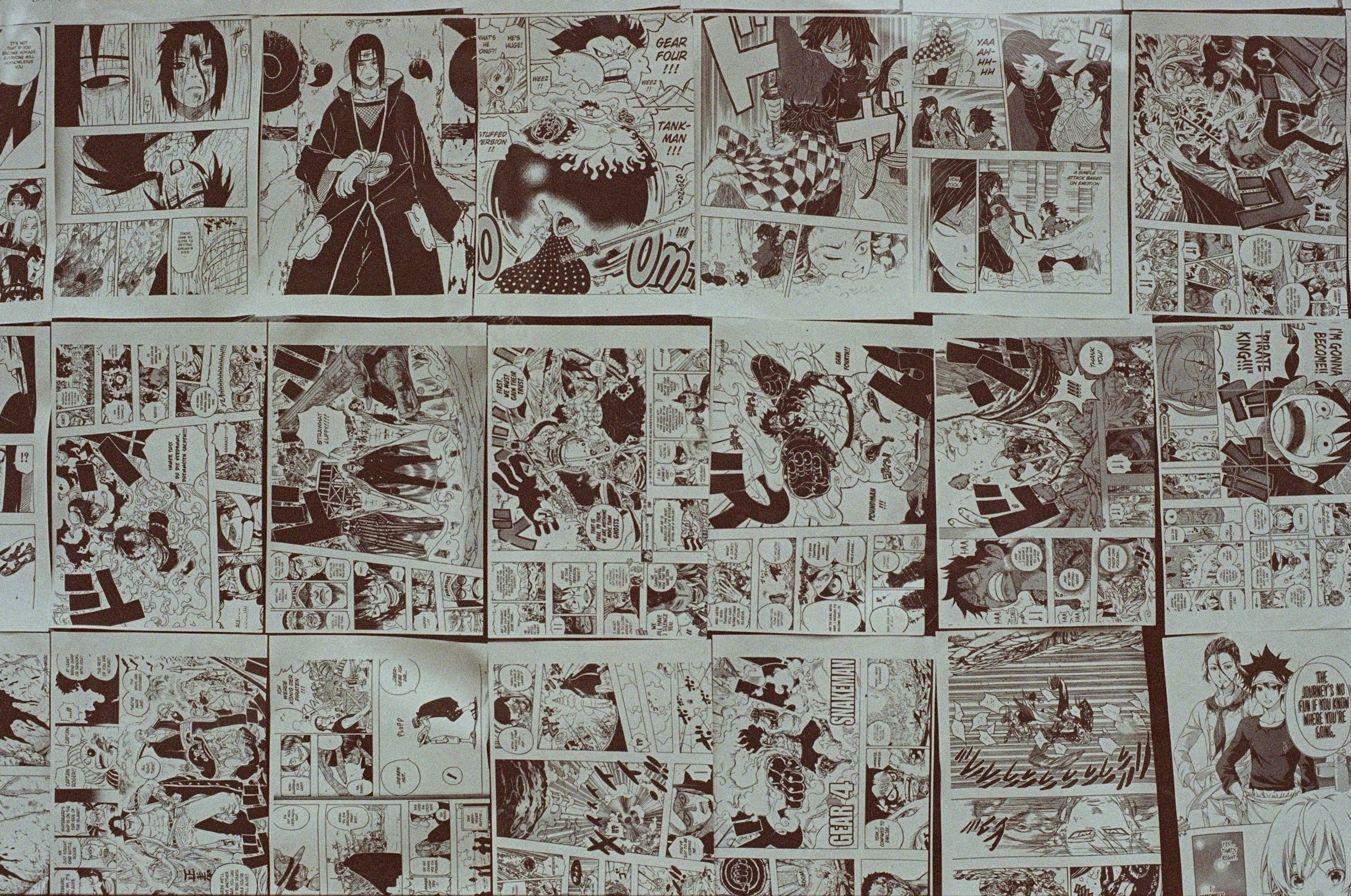
Researchers at the University of Tokyo compared reading a manga story on paper versus a digital tablet. They may have been studying reading comprehension.
I suspect they accidentally stumbled onto something much bigger:
Human Beings Remember Through Geography
For centuries, we have assumed memory works something like a filing cabinet.
Information goes in.
Information comes out.
Neat. Efficient. Rational.
The trouble is that human memory rarely behaves like a filing cabinet.
It behaves more like a landscape.
Ancient Greek and Roman orators understood this.
To memorize long speeches, they used the method of loci—the famous memory palace technique.
Ideas were placed in imagined locations and later retrieved by mentally walking through those locations.
The method has survived for more than two thousand years because it exploits something fundamental about the human mind:
We remember through geography.
Think about your own life.
You probably remember where you were when you received devastating news.
You remember where someone first said, "I love you."
You remember where your children took their first steps.
You remember where you stood when your life changed.
Memory does not merely record events.
Memory records places.
The physical world becomes part of the memory itself.
The more I think about it, the more I suspect memory is often a collaboration between the brain and the environment.
The mind remembers.
The world helps.
Let’s call this cognitive geography: the tendency of human beings to organize memory, meaning, and identity through places, objects, rituals, and spatial landmarks.
The Great Flattening
Modern life, for all its extraordinary benefits, has been conducting a quiet experiment.
We have systematically removed physical landmarks from everyday experience.
Letters became emails.
Photo albums became cloud storage.
Maps became GPS.
Music collections became streaming services.
Offices became Zoom windows.
Bookstores became algorithms.
Cash became numbers on screens.
Libraries became search bars.
None of these changes are inherently bad.
Most are astonishing achievements.
But convenience and meaning are not always the same thing.
Something subtle happens when physical experiences become digital experiences.
The landmarks disappear.
The textures disappear.
The locations disappear.
The environment becomes flatter.
A photograph stored in a shoebox occupies physical space in your life.
A photograph stored among forty thousand images on a phone occupies almost none.
The image survives.
Its geography does not.
Human beings evolved in landscapes.
We became creatures of landmarks.
The oak tree.
The village square.
The church steeple.
The family table.
The bookshelf.
The wedding album.
Increasingly, modern life asks us to live inside abstractions instead.
The file.
The folder.
The feed.
The cloud.
Useful things.
Astonishing things.
But not places.
The cloud may be the most successful storage technology in human history.
It is also the first storage system that sounds like weather.
A Small Manga Study Suggests the Brain Notices
Researchers recruited university students and asked them to read a manga story.
Some read the first portion on paper.
Others read the same material on a digital tablet.
Later, researchers measured brain activity while participants completed the story and answered questions about it.
The findings were nuanced.
Both groups understood the story.
Both groups answered questions accurately.
No evidence emerged that tablets make readers less intelligent or incapable of comprehension.
The interesting finding appeared elsewhere.
Participants who initially read on paper appeared to integrate complex narrative information more efficiently.
Readers who started on tablets showed greater activation in brain regions associated with language processing and narrative integration when answering more demanding questions.
In plain English:
The tablet readers reached the same destination.
Their brains appeared to work harder getting there.
The researchers propose that physical books provide stable tactile and spatial cues that help organize narrative information.
A physical book gives the brain landmarks.
The thickness of pages already read.
The weight of pages remaining.
The location of a scene near the bottom of a page.
The sensation of moving through a story.
A tablet delivers the same information.
But much of the geography disappears.
The story moves.
The rectangle stays the same.
The difference sounds trivial.
The brain may disagree.
Why Neurodivergent Minds May Notice This First
The study did not examine autism, ADHD, or AuDHD specifically.
That matters.
We should be careful not to claim findings that the researchers never tested.
Still, the implications are fascinating.
Many autistic folks rely heavily on environmental structure.
Predictable routines.
Stable systems.
Reliable physical cues.
Consistent sensory experiences.
For some autistic readers, the location of information may become part of understanding itself.
Many ADHD readers describe something slightly different.
A physical book narrows attentional possibilities.
It does not contain social media.
It does not contain breaking news.
It does not contain online shopping.
It does not contain three text messages, two notifications, and a video of a raccoon stealing cat food.
A book is gloriously limited.
The modern screen is like a buffet with no closing hour.
At the same time, digital tools offer enormous benefits for many neurodivergent readers.
Search functions.
Text-to-speech.
Adjustable fonts.
Highlighting systems.
Accessibility features.
For many souls, those tools dramatically improve comprehension and access.
Which is why the question is not:
"Which format is better?"
The better question instead is:
"Which format creates the least friction for this particular nervous system?"
Marriages Have a Geography Too
This is where the study stopped being about books for me.
Increasingly, I suspect many struggling couples are not suffering from a communication deficit.
They are suffering from a geography deficit.
Most enduring relationships develop physical anchors.
The Saturday breakfast place.
The annual vacation.
The evening walk.
The church pew.
The front porch.
The favorite restaurant.
The kitchen table where difficult conversations happen.
These locations become more than locations.
They become containers for memory.
Containers for meaning.
Containers for identity.
A couple gradually builds a shared geography.
And that geography quietly supports the story of the relationship.
For decades, therapists have focused on communication.
Communication matters.
But communication may be downstream from geography.
Consider what happens when a couple loses:
Sunday morning coffee.
evening walks.
annual traditions.
favorite destinations.
recurring conversations.
family rituals.
shared projects.
They do not merely lose activities.
They lose retrieval cues.
They lose landmarks.
They lose the places where the relationship lives.
Marriages, in a very real sense, are partly stored outside the brain.
They are stored in routines.
In traditions.
In recurring acts of attention.
In ordinary places invested with extraordinary meaning.
A relationship exists in memory.
But it also exists in the porch swing.
The coffee shop.
The annual trip.
The church pew.
The kitchen table.
Remove enough of those anchors and couples sometimes experience a strange sensation.
They know they love each other.
Yet they can no longer find the marriage.
Then life accelerates.
Children arrive.
Work expands.
Schedules multiply.
Everything becomes logistics.
Texts replace conversations.
Coordination replaces ritual.
Efficiency replaces presence.
Eventually many couples discover that the marriage still exists, but there are fewer places where it lives.
The relationship becomes administratively functional and geographically homeless.
And when relationships lose their geography, they often lose part of their story.
Identity Needs Landmarks Too
The larger question may not be about books at all.
It may be about selfhood.
An astonishing amount of identity depends on physical continuity.
The bedroom where we grew up.
The neighborhood where we learned who we were.
The photographs on the wall.
The books on the shelf.
The scars on the kitchen table.
The drawer filled with old letters.
The jacket that still smells faintly like someone we miss.
Human beings do not merely inhabit places.
Places inhabit us.
When everything becomes infinitely searchable, infinitely portable, and infinitely replaceable, something else becomes fragile.
The sense of inhabiting a life rather than merely accessing information.
Perhaps that is the larger cultural question hidden inside this modest manga study.
Not whether we remember information differently.
Whether we remember ourselves differently.
The Real Question
We often assume technology changes what we know.
Perhaps it also changes where knowing happens.
The photographs are no longer in albums.
The letters are no longer in drawers.
The music collection no longer sits on a shelf.
The map no longer unfolds on the hood of the car.
The book no longer accumulates coffee stains, bent corners, and tiny reminders that a human being once traveled through its pages.
We have gained astonishing convenience.
We have gained speed.
We have gained access.
But we may also have surrendered something harder to measure.
Location.
Human beings appear to remember themselves the same way they remember stories.
Through places.
Through objects.
Through rituals.
Through geography.
Remove enough of those landmarks and eventually the question is no longer where the story went.
The question becomes whether we still know where we are.
A small manga study from Tokyo cannot answer that question.
But it does suggest that the brain has not entirely adapted to our increasingly placeless age.
Frankly, I am not sure that it wants to.
Frequently Asked Questions
Does this study prove that paper books are better than digital books?
No. Participants in both groups understood the story and answered questions accurately. The primary difference involved the amount of cognitive effort required when integrating complex narrative information.
Did the study include autistic or ADHD participants?
No. Any discussion of neurodiversity in this article is theoretical and should not be interpreted as a direct finding of the study.
What is cognitive geography?
Cognitive geography refers to the tendency of human beings to organize memory, meaning, and identity through places, objects, rituals, and spatial landmarks.
What is embodied cognition?
Embodied cognition is the idea that thinking is shaped not only by the brain but also by the body's interactions with the physical environment.
Is this simply nostalgia for paper books?
No. The study measured cognitive performance and brain activity rather than personal preference. The findings suggest that physical books may provide spatial cues that influence cognitive processing.
Could physical books be especially helpful for autistic or ADHD readers?
Possibly, but we do not yet know. The present study did not examine neurodivergent populations directly. Future research may clarify whether paper-based reading offers unique advantages for specific neurotypes.
What should parents take away from this research?
The study does not suggest eliminating digital reading. Instead, it highlights the possibility that physical books provide unique cognitive benefits worth preserving alongside digital tools.
What should couples take away from this research?
Shared rituals, traditions, and meaningful places may function as psychological anchors. Protecting those anchors may help preserve a couple's shared story and identity over time.
A Final Thought
If this article is correct, then stories do not simply live inside our heads.
They live in places.
They live in rituals.
They live in repeated conversations.
They live in the spaces where we return to one another again and again.
Long-term relationships are no different.
Many couples arrive in therapy believing they have a communication problem.
Sometimes they do.
But often they have lost track of the shared geography of the relationship.
The Saturday morning breakfast disappeared.
The evening walk vanished.
The front porch conversations became text messages.
The kitchen table became a command center for logistics.
The marriage still exists.
But fewer places remain where it can be felt.
Part of good couples therapy is helping partners rediscover those landmarks.
To remember the story they were building before life became consumed by schedules, obligations, stress, and survival.
To rebuild the rituals, conversations, and moments of connection that allow a relationship to feel inhabited again.
If you and your partner feel as though your relationship has become administratively efficient but emotionally difficult to locate, I may be able to help.
You do not have to wait until the story is falling apart to understand where you are.
Sometimes the most important work is not fixing the relationship.
Sometimes it is rediscovering the places where the relationship lives.
Be Well, Stay Kind, and Godspeed.
REFERENCES:
Barsalou, L. W. (2008). Grounded cognition. Annual Review of Psychology, 59, 617–645. https://doi.org/10.1146/annurev.psych.59.103006.093639
Mangen, A., Walgermo, B. R., & Brønnick, K. (2013). Reading linear texts on paper versus computer screen: Effects on reading comprehension. International Journal of Educational Research, 58, 61–68. https://doi.org/10.1016/j.ijer.2012.12.002
Oatley, K. (2016). Fiction: Simulation of social worlds. Trends in Cognitive Sciences, 20(8), 618–628. https://doi.org/10.1016/j.tics.2016.06.002
Umejima, K., Sunada, Y., & Sakai, K. L. (2026). Manga reading on paper vs. digital devices: Prospective effects on core and supportive integration processes in the brain. PLOS ONE, 21(6), e0349778. https://doi.org/10.1371/journal.pone.0349778
Wilson, M. (2002). Six views of embodied cognition. Psychonomic Bulletin & Review, 9(4), 625–636. https://doi.org/10.3758/BF03196322