
Welcome to my Blog
Thank you for stopping by. This space is where I share research, reflections, and practical tools drawn from my experience as a marriage and family therapist with an international practice.
I write about what happens to desire, attachment, and meaning once the early myths stop working.
Are you a couple looking for clarity? A professional curious about the science of relationships? Or simply someone interested in how love and resilience work? I'm glad you've found your way here. I can help with that. I'm accepting new clients, and this blog is for the benefit of all my gentle readers.
Each post is written with one goal in mind: to help you better understand yourself, your partner, and the hidden dynamics that shape human connection
Grab a coffee (or a notebook), explore what speaks to you, and take what's useful back into your life and relationships.
And if a post sparks a question, or makes you realize you could use more support, l'd love to hear from you. Let's explore the scope of work you'd like to do together.
Be Well, Stay Kind, and Godspeed.
~ Daniel
P.S.
Feel free to explore the categories below to find past blog posts on the topics that matter most to you. If you're curious about attachment, navigating conflict, or strengthening intimacy, these archives are a great way to dive deeper into the research and insights that l've been sharing for years.
- Attachment Issues
- Coronavirus
- Couples Therapy
- Extramarital Affairs
- Family Life and Parenting
- How to Fight Fair
- Inlaws and Extended Families
- Intercultural Relationships
- Marriage and Mental Health
- Married Life & Intimate Relationships
- Neurodiverse Couples
- Separation & Divorce
- Signs of Trouble
- Social Media and Relationships
- What Happy Couples Know

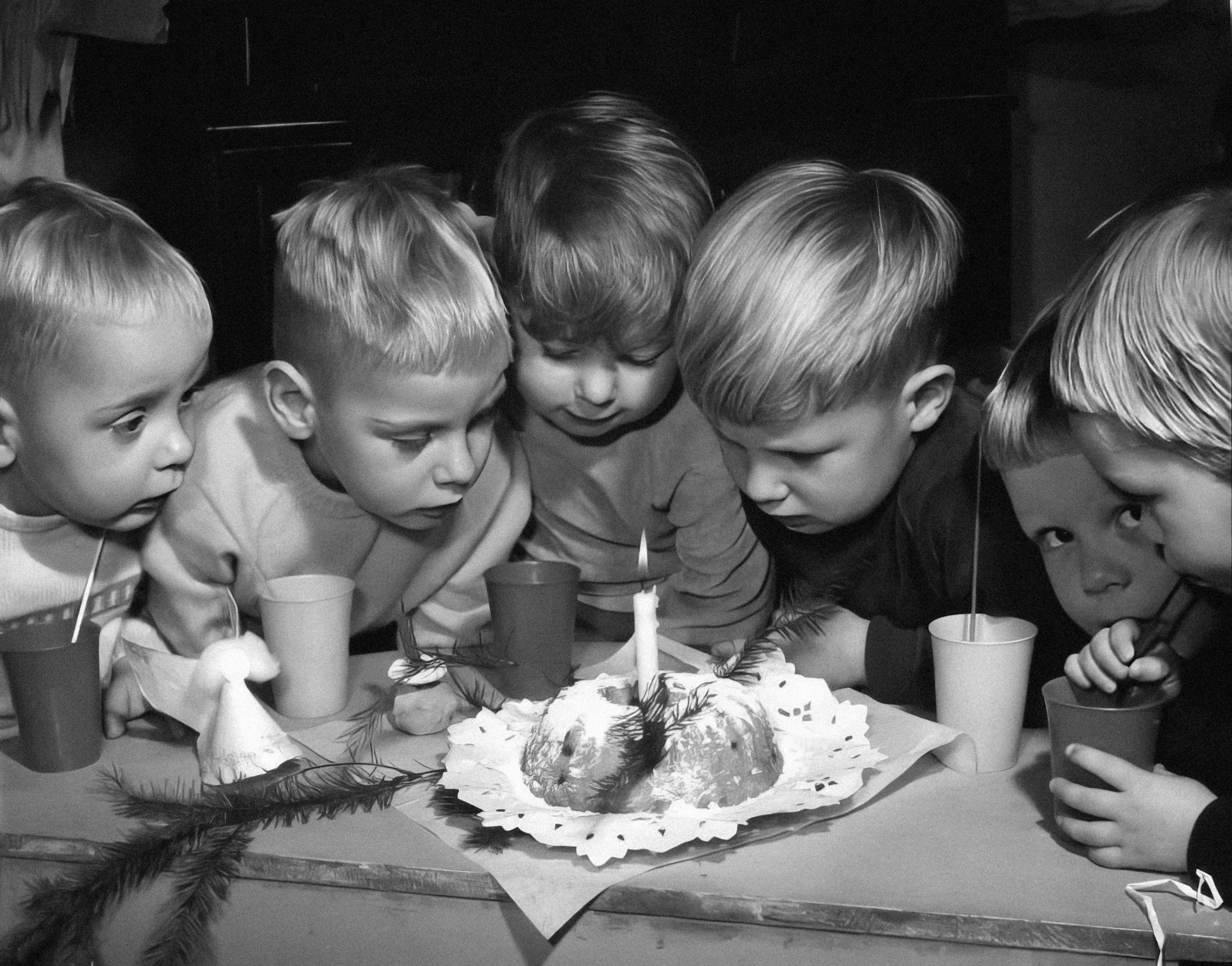
Children Remember Rituals More Than Parenting Philosophies: The Surprising Science of Family Traditions
Modern parents spend extraordinary amounts of time thinking about what to teach their children and surprisingly little time thinking about what their children will remember.
These are not always the same thing.
The average child will forget thousands of lectures, instructions, reminders, corrections, and carefully delivered life lessons.
They will remember Taco Tuesday.
They will remember Saturday morning pancakes.
They will remember the Christmas ornament that always went on the tree first.
They will remember the family joke nobody else understood.
They will remember the camping trip.
The bedtime story.
The walk after dinner.
The thing that happened over and over until it became part of the emotional architecture of home.
This may be one of the most important truths in family life:
Children remember rituals more than parenting philosophies.

What We Worship Now: Marriage, Meaning, and the New Economics of Attention
A few months ago a client was sitting in an airport watching a young couple wait for a delayed flight.
They looked happy enough.
No visible conflict.
No obvious tension.
No signs of distress.
For nearly forty minutes neither spoke.
The man watched sports highlights.
The woman scrolled through videos.
Occasionally one showed the other something amusing.
A brief smile.
A nod.
Then both disappeared back into their respective worlds.
He said he remembered thinking that previous generations might have called this boredom.

The Marriage Attention Crisis: How Algorithms Became the Third Party in Modern Relationships
Most partners do not wake up one morning and decide to stop loving each other.
That is the comforting myth.
The dramatic myth.
The movie version.
The affair.
The betrayal.
The screaming match.
The slammed door.
Real life is usually quieter.
A husband is lying in bed beside his wife.
He is laughing.
Not with her.
At something on his phone.

The Erotics of Competence: Why Competence Is Attractive in Long-Term Relationships
For most of human history, attraction was partly organized around reality.
Could this person survive a winter?
Could they solve problems?
Could they carry weight?
Could they be trusted when circumstances became difficult?
Today, many of us spend hours each day looking at attractive strangers whose ability to navigate reality is completely unknown.
This is historically unusual.
We know what they look like.
We know where they vacation.
We know what they eat.
We know which filter they use.
We know almost nothing about whether they would be helpful during a crisis.
And yet we increasingly live in a culture that treats visibility as evidence of value.
This may be one of the least discussed threats to long-term attraction.
Because attraction and admiration are not the same thing.
Attraction notices beauty.
Admiration notices capability.
And a marriage can survive surprisingly little excitement.
It cannot survive long without respect.

Attention Fidelity: What Long-Distance Relationships Reveal About Love in the Age of Distraction
Most discussions about masturbation are secretly discussions about loneliness.
They simply don't know it yet.
A partner leaves for medical school. A deployment. A work assignment. A continent. A season of life that neither partner would have chosen but both agree to endure.
Suddenly two nervous systems that have grown accustomed to regulating each other are forced to improvise.
The morning coffee disappears.
The hand on the shoulder disappears.
The familiar laugh from the next room disappears.
The body notices.
The attachment system notices.
The imagination notices.
What follows is not merely a sexual story.
It is a story about absence.
And absence has become one of the defining psychological experiences of modern life.

What Happens When a Civilization Stops Agreeing About Beauty?
A civilization can survive disagreement about politics.
It can survive disagreement about religion.
It can survive disagreement about economics.
What becomes more difficult is surviving disagreement about what deserves reverence.
That may be one of the defining cultural facts of the twenty-first century.
We no longer agree on what is sacred.
And because we no longer agree on what is sacred, we increasingly struggle to agree on what is beautiful.
A recent study found that some viewers see nude paintings as beautiful while others experience the same paintings as uncomfortable, pornographic, or morally troubling.
Interesting.

ADHD, Personality Disorders, and the Strange Modern Habit of Diagnosing the Scar Instead of the Wound
There is a peculiar habit in modern psychology.
A child struggles.
The struggle changes the child.
The change receives a diagnosis.
Then the diagnosis begins replacing the story. I see this In public mental health relentlessly.
A recent meta-analysis reported that approximately 57% of adults with ADHD in clinical settings meet criteria for at least one personality disorder.
The most commonly identified patterns included avoidant, passive-aggressive, and borderline personality disorders.
The finding generated predictable reactions.
Some readers saw confirmation that ADHD is more serious than previously understood.
Others saw evidence that personality disorders are vastly underdiagnosed.
Still others immediately began diagnosing themselves.
I found myself asking a different question.
What if many of these diagnoses are not revealing separate disorders?
What if they are simply revealing the accumulated psychological consequences of living with ADHD for decades?
That possibility is far more interesting than the headline.
And far more unsettling.

Why Your Nervous System Thinks Your Partner Is Leaving
The most powerful rival to your marriage may not be another person.
It may be a machine.
Not because the machine is lovable.
Not because the machine is attractive.
But because the machine is very, very good at capturing attention.
And attention has quietly become the most valuable emotional currency in modern relationships.
A fascinating 2026 study published in the Journal of Personality found that anxiously attached partners experienced higher depressed mood, lower self-esteem, more resentment, and greater urges to retaliate when they felt ignored by a romantic partner using a smartphone—a behavior researchers call phubbing (phone + snubbing).
Surprisingly, relationship satisfaction itself remained largely unchanged.
At first glance, this appears to be a study about phones.
It isn't.
It is a study about what happens when the human attachment system collides with the attention economy.

Men's Sexual Desire Peaks Around 40? Perhaps We've Been Thinking About Desire Backwards
The modern world is strangely uncomfortable with middle age.
We celebrate youth.
We monetize youth.
We reconstruct youth.
We market youth.
We filter youth.
We preserve youth in photographs, advertisements, movies, social media feeds, and increasingly expensive bathroom cabinets.
Youth is no longer merely a stage of life.
It has become a cultural aspiration.
Which is why a new study involving more than 67,000 people feels almost heretical.

The Little Emperor Problem: Why Good Parents Sometimes Raise Entitled Adults
There is a peculiar modern parenting ritual that unfolds thousands of times every day across America.
A child wants something.
The parent says no.
The child protests.
The parent explains.
The child escalates.
The parent negotiates.
The child escalates again.
The parent begins offering concessions.
By the end of the interaction, the child has acquired a cookie, an iPad, a frozen yogurt, and what appears to be partial sovereignty over the household.
Nobody intended this.
Nobody woke up that morning hoping to raise a narcissist.
The parent was trying to be kind.
The child was being a child.
Yet somewhere in the background, a subtle lesson may have been delivered:
Reality.

The Vanishing Hangover: GLP-1 Drugs, Dating Apps, and the Pharmacology of Modern Desire
There was a period in American life when casual sex carried a certain cinematic glamour.
City lights.
Cocktails.
Taxi rides.
Rumpled sheets.
Texts sent at 1:12 a.m. containing phrases like:
“You up?”
followed shortly afterward by:
“This is probably a bad idea,”
which historically has functioned less as a warning than as an accelerant.
Modern dating culture became organized around managed impulsivity.
Alcohol lowered inhibition.
Apps increased access.
Urban anonymity reduced consequences.
Therapy culture reframed experimentation as self-discovery.
And loneliness quietly flooded the entire system with urgency.
Then something strange began happening.

The Drying Out: GLP-1 Drugs, Alcohol Culture, and the Strange Future of American Pleasure
There was a period in American life when drinking was not merely recreational.
It was infrastructural.
Alcohol lubricated:
first dates.
networking.
weddings.
sports.
family holidays.
creative ambition.
suburban loneliness.
urban sophistication.
corporate culture.
and approximately 73% of all conversations between middle managers at hotel conferences.
To refuse alcohol in many American settings once triggered immediate amateur detective work.