
Welcome to my Blog
Thank you for stopping by. This space is where I share research, reflections, and practical tools drawn from my experience as a marriage and family therapist with an international practice.
I write about what happens to desire, attachment, and meaning once the early myths stop working.
Are you a couple looking for clarity? A professional curious about the science of relationships? Or simply someone interested in how love and resilience work? I'm glad you've found your way here. I can help with that. I'm accepting new clients, and this blog is for the benefit of all my gentle readers.
Each post is written with one goal in mind: to help you better understand yourself, your partner, and the hidden dynamics that shape human connection
Grab a coffee (or a notebook), explore what speaks to you, and take what's useful back into your life and relationships.
And if a post sparks a question, or makes you realize you could use more support, l'd love to hear from you. Let's explore the scope of work you'd like to do together.
Be Well, Stay Kind, and Godspeed.
~ Daniel
P.S.
Feel free to explore the categories below to find past blog posts on the topics that matter most to you. If you're curious about attachment, navigating conflict, or strengthening intimacy, these archives are a great way to dive deeper into the research and insights that l've been sharing for years.
- Attachment Issues
- Coronavirus
- Couples Therapy
- Extramarital Affairs
- Family Life and Parenting
- How to Fight Fair
- Inlaws and Extended Families
- Intercultural Relationships
- Marriage and Mental Health
- Married Life & Intimate Relationships
- Neurodiverse Couples
- Separation & Divorce
- Signs of Trouble
- Social Media and Relationships
- What Happy Couples Know


Is This the End of the American Appetite?
There was a period in American life when appetite itself was treated as evidence of character.
Big hunger meant ambition.
Big consumption meant vitality.
Big personalities ordered appetizers “for the table” with the confidence of Roman emperors moments before everyone developed acid reflux and unresolved emotional dependency.
The culture admired wanting.
Wanting more.
Buying more.
Eating more.
Scrolling more.
Achieving more.
Experiencing more.
American life became organized around stimulation so thoroughly that many people stopped noticing the machinery surrounding them.
The grocery store. The smartphone. The liquor aisle. The food delivery app.

The Quieting: Ozempic, Desire, and the End of American Appetite
A man sits in his car staring at a fresh box of donuts with sprinkles.
Not resisting it.
Not negotiating with himself.
Not performing nutritional virtue for the invisible tribunal now governing American adulthood.
He simply no longer cares about it.
For years, the sprinkle donuts occupied psychic real estate.
Then one day it didn’t.
This is the real story hiding underneath the national obsession with Ozempic, Wegovy, and the expanding world of GLP-1 drugs.
The media keeps treating these medications as a weight-loss story.
But the more unsettling possibility is that they may actually be a desire story.
Because folks are reporting something stranger than reduced hunger.
They keep saying they want things less.
Less alcohol.
Less gambling.
Less compulsive shopping.
Less binge eating.
Less doomscrolling.
Less obsession.
Less emotional urgency.

Economic Panic Is Becoming Romantic Panic
There is a peculiar sentence appearing all over Reddit lately:
“We’re doing everything right and it still feels impossible.”
That sentence matters.
Because it captures something larger than financial stress.
It captures the collapse of a cultural promise.
For decades, Americans were sold a particular emotional narrative about adulthood:
study hard,
work hard,
find love,
build a life,
buy a house,
raise children,
be tired sometimes but fundamentally stable.
Increasingly, modern couples experience something very different.
They experience adulthood as continuous economic vigilance.

The Fear of Becoming the “Default Human”
There is a particular kind of exhaustion emerging inside modern marriage that older relationship language does not fully capture. It is not exactly resentment.
Not exactly burnout. Not exactly emotional labor, though it overlaps with all three.
It is the sensation of becoming the life partner who must permanently remember reality for everyone else.
The pediatric appointment.
The gluten-free snack requirement.
The teacher email.
The birthday gift.
The soccer registration deadline.
The dog medication.
The emotional temperature of the house.
The location of the extra batteries.
The family calendar.
in other words, the invisible architecture of ordinary life.

The Anxiety That Attention Has Left the Family
One of the strangest developments in modern marriage is that many couples are no longer primarily fighting about cruelty.
They are fighting about disappearance.
Not physical disappearance.
Attentional disappearance.
A husband sitting six feet away scrolling sports clips for three hours while vaguely murmuring “wow” at intervals that suggest either agreement or the onset of a mild neurological event.
A wife lying in bed beside her partner while simultaneously conducting a second emotional life through Instagram messages, parenting forums, TikTok, work Slack, and seventeen open browser tabs concerning magnesium glycinate.
Teenagers eating dinner with AirPods in while entire emotional universes unfold elsewhere.
Families physically together yet psychologically exported into separate algorithmic ecosystems.
This is becoming one of the defining emotional anxieties of modern family life.

America Is Running Out of Psychiatrists at Exactly the Wrong Time
It is difficult to describe the psychological atmosphere of the country now without sounding faintly melodramatic, which is unfortunate, because melodrama is increasingly how many Americans experience ordinary life.
We move through our days with the exhausted vigilance of citizens waiting for weather alerts.
We monitor markets, notifications, school shootings, passwords, retirement accounts, weather radar, unread messages, air quality indexes, and the emotional climate of marriages already carrying too much silent freight.
And somewhere inside all this, the culture has finally arrived at a fragile and hard-won conclusion:
Many of us are not well.

Interview with the Exorcist
The exorcist arrived twenty-three minutes late carrying a paper cup of coffee and the exhausted patience of a man accustomed to hearing modern people confuse spirituality with branding.
Outside, October leaves scraped across the church parking lot in nervous little spirals. The sky had gone the color of old bruises.
Across the street, a pharmacy glowed with the soft fluorescent despair unique to suburban America, where entire civilizations now appear to operate beneath the emotional atmosphere of a waiting room.
“You’re late,” I said.
“I was blessing a woman’s house.”
“Demonic infestation?”
“Squirrels.”

The Fantasy Panic: Why Thinking About Someone Else During Sex May Tell Us More About Modern Consciousness Than Modern Infidelity
There is a distinctly modern form of relationship anxiety in which two people become less concerned with betrayal itself than with the possibility of unauthorized cognition.
Someone admits—hesitantly, guiltily, often with the exhausted expression of a person confessing to financial crimes—that they occasionally fantasize about someone else during sex.
And suddenly the atmosphere changes.
Not grief exactly.
Not even jealousy.
Interpretation.

The Grocery Store Feeling: Why Ordinary Life Suddenly Feels More Expensive, More Fragile, and Weirdly Exhausting
Last week, a man in Plymouth stood silently in front of the meat case at Market Basket holding two packages of ground beef like Hamlet contemplating mortality beneath fluorescent lighting and a sale sign for frozen shrimp.
Not angry exactly.
Just tired in a very contemporary American way.
The kind of tiredness that arrives when ordinary life begins requiring the emotional stamina of a regional airport during a thunderstorm.
Everything still technically functions. The planes still leave. The lights remain on. But everyone looks faintly betrayed by the experience.
Because the strange thing about inflation is that people rarely experience it intellectually.
They experience it atmospherically.
The Great Optimization Error: How the Super El Niño and Fertilizer Crisis Exposed Civilization’s Hidden Fragility
A farmer in Queensland recently described delaying fertilizer purchases because prices had become too unstable to predict profit margins confidently.
Meanwhile, a shopper in Massachusetts stared at the price of eggs as though the eggs themselves had developed moral failings.
These events appear unrelated.
They are not.
One of the strangest features of modern civilization is that most people have almost no emotional relationship to the systems keeping them alive.
Food arrives. Water appears. Lights turn on.
Bananas materialize in New England winters as if summoned by minor fruit sorcery.
And because these systems function reliably most of the time, people begin confusing reliability with inevitability.
That confusion may become one of the defining psychological stories of the next decade.
Because the developing 2026–2027 El Niño and the emerging fertilizer crisis are revealing something larger than supply-chain instability or climate volatility.
They are exposing what might be called The Great Optimization Error:
Modern civilization spent forty years maximizing efficiency while quietly deleting resilience.
Ambient Infidelity, In-Laws, and the Ancient Suspicion That Marriage Was Never Just About Two People
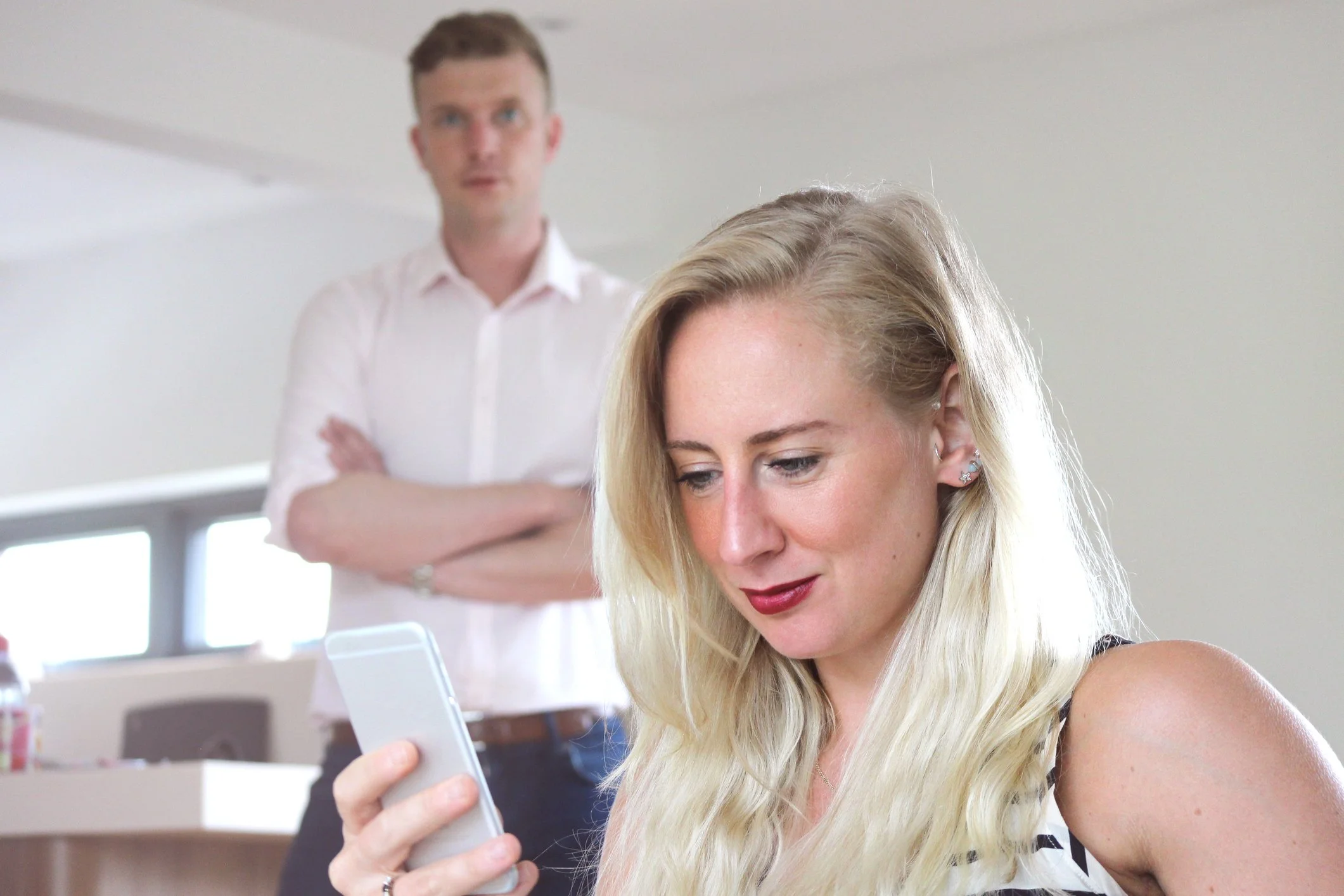
The laugh arrives instantly for strangers and three seconds late for him.
Not occasionally.
Reliably.
She smiles at her phone before breakfast.
Reacts to texts with animation. Replies to people she has never met with a kind of reflexive psychological immediacy that used to belong to the marriage.
At first he tells himself not to become dramatic.
Nobody is cheating. Nobody is sneaking into hotels wearing baseball caps and a look of exhausted moral confusion. There are no mysterious credit card charges.
No suspicious “work conferences” involving suspiciously tropical weather.
And yet something in the relationship has clearly migrated.
She seems more emotionally alive elsewhere.
More attentive.
More anticipatory.
More psychologically available to invisible worlds that he cannot fully access.

The Factory and the Feed: Why the Vatican Thinks AI Is the New Industrial Revolution
At 11:43 p.m., a husband and wife lie beside one another in bed staring into separate algorithmic realities.
He is watching videos that quietly intensify his grievances.
She is scrolling through therapeutic language teaching her how to reinterpret every disappointment diagnostically.
Neither person is technically alone.
Neither person is fully together.
An artificial intelligence somewhere is refining behavioral predictions about both of them in real time while the marriage itself competes with infinite novelty, frictionless distraction, personalized stimulation, and systems specifically engineered to hold attention longer than ordinary human conversation can.
And yet modern people still speak about technology as though it were merely a tool.
This is one reason the relationship between “Magnifica Humanitas” and “Rerum Novarum” matters so much.
The Catholic Church appears to believe we are living through another Industrial Revolution.
Not economically.
Anthropologically.
That distinction changes everything.