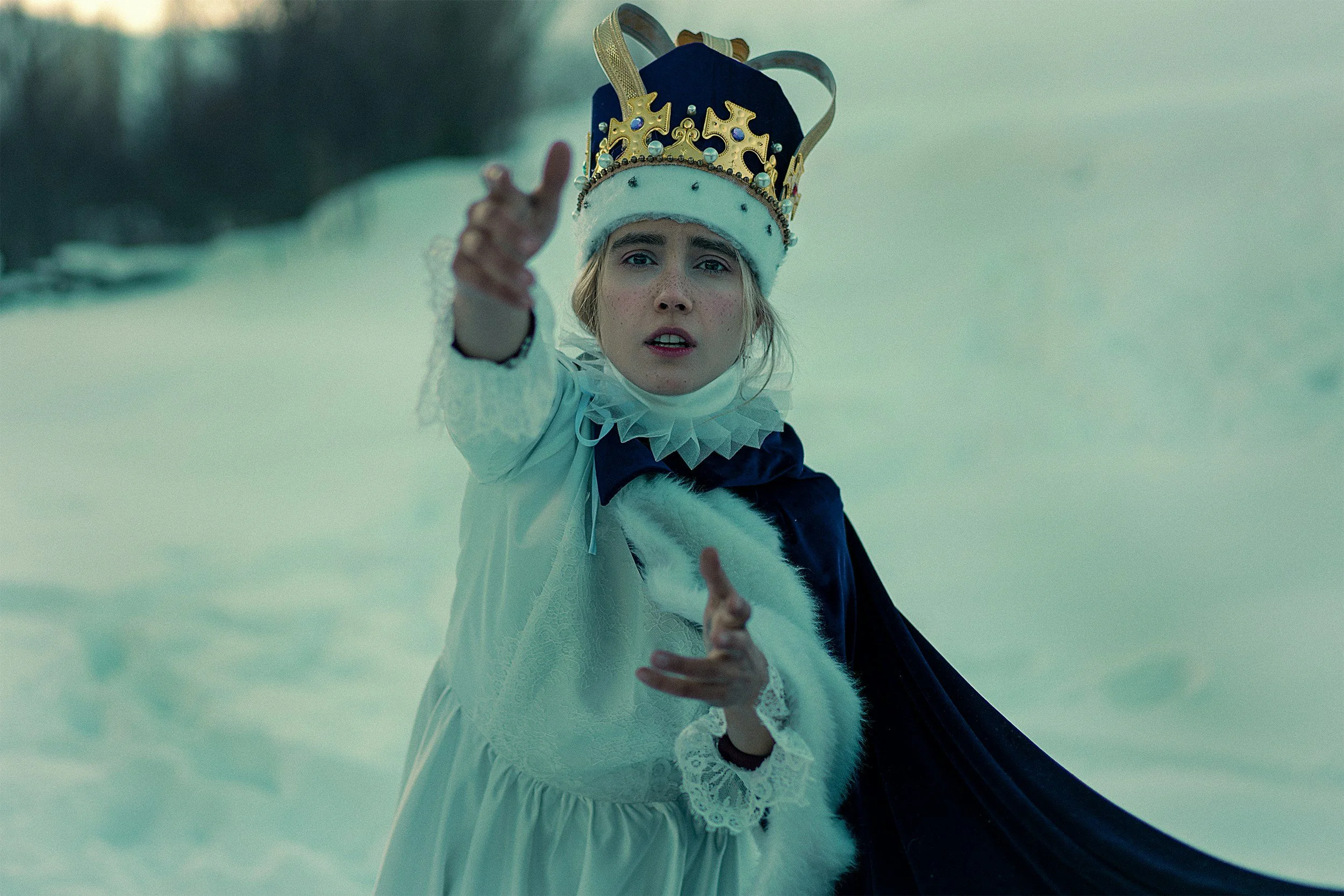
Sunday, May 31, 2026. The is for two fantastic, mindful parents I know; Katy, & Greg, and their amazing daughter Eleanor!
There is a peculiar modern parenting ritual that unfolds thousands of times every day across America.
A child wants something.
The parent says no.
The child protests.
The parent explains.
The child escalates.
The parent negotiates.
The child escalates again.
The parent begins offering concessions.
By the end of the interaction, the child has acquired a cookie, an iPad, a frozen yogurt, and what appears to be partial sovereignty over the household.
Nobody intended this.
Nobody woke up that morning hoping to raise a narcissist.
The parent was trying to be kind.
The child was being a child.
Yet somewhere in the background, a subtle lesson may have been delivered:
Reality is negotiable.
According to a fascinating new study published in Current Psychology, that lesson may matter more than we realize.
Researchers found that adults who recalled highly indulgent parenting tended to score higher on darker personality traits such as narcissistic antagonism, psychopathic meanness, and impulsive disinhibition.
Meanwhile, parental praise showed almost the opposite pattern, predicting healthier and more socially adaptive traits.
The study isn't really about narcissism.
At least not entirely.
It's about a mistake modern culture keeps making.
We keep confusing love with accommodation.
And those are not remotely the same thing.
The Day Childhood Became Customer Service
The strangest thing about modern parenting is that it increasingly resembles customer service.
The child has preferences.
The family adapts.
The child has objections.
The family adapts.
The child experiences discomfort.
The family adapts.
The child becomes bored.
The family launches a multi-department intervention.
At some point childhood quietly transformed from preparation for reality into a negotiation with reality.
Parents are exhausted.
Children are anxious.
Nobody is entirely sure why.
Meanwhile the family dog appears to be the only creature in the house operating under clear expectations.
This would be amusing if it weren't becoming so common.
The Self-Esteem Industrial Complex
For forty years American culture has been conducting a giant experiment.
The experiment was simple:
"How do we create confident children?"
The answers were less simple.
One camp said:
Encourage children.
Praise effort.
Build resilience.
Support growth.
The other camp said:
Remove frustration.
Minimize disappointment.
Eliminate obstacles.
Protect self-esteem at all costs.
Unfortunately those two approaches got shmooshed together in a yucky tasting psychological smoothie.
The result is that many parents no longer know the difference between support and rescue.
Or between affirmation and indulgence.
The study suggests the distinction matters. A great deal.
The Rise of the Tiny Monarch
Historically, children adapted to families.
Modern families increasingly adapt to children.
Schedules revolve around children.
Vacations revolve around children.
Menus revolve around children.
Weekends revolve around children.
Emotional climates revolve around children.
The child becomes the gravitational center of the household.
And because children are observant, they notice.
Imagine being seven years old and discovering that multiple adults routinely reorganize reality around your preferences.
Many adults would become unbearable under those conditions.
Children are not magically immune.
Previous generations worried about absentee fathers.
Modern families sometimes suffer from absentee authority.
Everybody is present.
Nobody appears to be in charge.
The Participation Trophy Wars Were Always Silly
For two decades Americans have argued about participation trophies.
This was never the interesting question.
The interesting question was whether children were learning that effort matters or whether they were learning that disappointment should be eliminated.
Those are radically different lessons.
The study points toward something surprisingly hopeful.
Praise appeared beneficial.
Indulgence appeared problematic.
Notice what that means.
The problem is not making children feel valued.
The problem is teaching children that reality owes them validation.
Confidence says:
"I can handle difficulty."
Entitlement says:
"Difficulty should handle me."
That distinction explains more modern conflict than many people realize.
Narcissism May Be an Intolerance of Reality
One of the most misunderstood ideas about narcissism is that narcissistic souls simply love themselves too much.
In practice, many narcissistic traits look more like an inability to tolerate ordinary disappointment.
Criticism feels devastating.
Limits feel insulting.
Boundaries feel offensive.
Rejection feels unjust.
The world continually fails to provide the admiration that seems obviously deserved.
Seen this way, narcissism starts to look less like vanity and more like a lifelong conflict with reality itself.
Reality keeps delivering unwelcome news.
The narcissistic soul keeps filing appeals.
The Most Unpopular Parenting Advice Ever Written
Children need frustration.
There.
I said it.
Nobody likes hearing this.
Nobody cross-stitches it onto decorative pillows.
Nobody publishes parenting books titled:
The Healing Power of Mild Disappointment
Yet developmental psychology keeps wandering back toward the same conclusion.
Patience develops through waiting.
Self-regulation develops through limits.
Empathy develops when the universe refuses to revolve around us.
Resilience develops when life says:
"No."
And the child survives.
Which, in most cases, they do.
Dramatically.
Loudly.
Occasionally on the floor of Target.
But they survive.
The Curious Case of Praise
One of the most fascinating findings in the study is that praise showed almost the opposite pattern from indulgence.
This is where social media loses its collective mind.
The internet hears criticism of indulgence and immediately concludes:
"So we're not supposed to praise children anymore?"
No.
The researchers found the opposite.
Praise was associated with healthier and more adaptive traits.
Because praise and indulgence are not cousins.
They are barely acquaintances.
Praise says:
"You have value."
Indulgence says:
"You are exempt."
Praise strengthens identity.
Indulgence weakens reality testing.
One prepares children for life.
The other prepares children for customer service.
The Status Parenting Trap
Perhaps the most American finding in the study involved status-oriented parenting.
Parents emphasizing prestige, success, fame, and achievement appeared to produce a mixture of adaptive and maladaptive traits.
Which sounds exactly right.
Because status is complicated.
Status can produce competence.
Status can produce discipline.
Status can produce ambition.
Status can also produce anxiety.
Manipulation.
Hostility.
And the lingering suspicion that one's worth depends entirely on performance.
The child learns:
"Who I am matters less than what I accomplish."
That lesson can fuel extraordinary achievement.
It can also fuel extraordinary loneliness.
Sometimes at the same time.
The College Admissions Industrial Complex
You can almost watch this process unfold in affluent communities.
The tutors.
The travel sports.
The résumé engineering.
The carefully curated extracurricular activities.
The endless optimization.
At some point parenting began resembling venture capital.
Every hobby became an investment.
Every interest became a credential.
Every childhood became a startup.
Children increasingly receive a subtle message:
"Your future depends on your performance."
Which is a tremendous burden to place on a ten-year-old.
Particularly one who still suspects squirrels are running a parallel government in the backyard.
FAQ
Does this study prove that indulgent parents create narcissists?
No.
The study found associations, not proof of causation. Personality develops through a combination of genetics, temperament, parenting, peers, culture, and life experience.
What's the difference between praise and indulgence?
Praise communicates:
"You matter."
Indulgence communicates:
"The rules don't apply to you."
The study found that praise was associated with healthier outcomes while indulgence was associated with darker personality traits.
Can you spoil a child with love?
Probably not.
But you can spoil a child with the absence of limits.
Love and boundaries are not opposites.
Healthy parenting generally requires both.
Why do narcissistic partners struggle with criticism?
One possibility is that criticism threatens an inflated or fragile sense of self. If a child rarely encounters disappointment, limits, or accountability, criticism may feel less like information and more like an attack.
Is every indulged child destined to become narcissistic?
No.
The study examined statistical trends across groups, not individual destinies. Many indulged children grow into healthy, empathetic adults.
What is the healthiest parenting style?
Most developmental psychologists favor a combination of warmth, affection, encouragement, clear limits, accountability, and age-appropriate autonomy.
What is the biggest parenting mistake highlighted by this study?
Confusing affirmation with indulgence.
Children benefit from hearing:
"You matter."
They do not necessarily benefit from hearing:
"Reality should continuously reorganize itself around your preferences."
Can adults overcome narcissistic traits learned in childhood?
Yes.
Personality is not fixed. Self-awareness, healthy relationships, accountability, life experience, and therapy can all contribute to meaningful change.
What is the single most important takeaway from this study?
Children need praise.
Children need limits.
The opposite of neglect is not indulgence.
The opposite of neglect is guidance.
What This Study Is Really About
On the surface, this is a study about parenting and dark personality traits.
Underneath, it is a study about a civilization struggling to distinguish affirmation from indulgence.
Children need praise.
Children need warmth.
Children need encouragement.
Children also need limits.
The opposite of neglect is not indulgence.
The opposite of neglect is guidance.
And guidance occasionally requires disappointing someone you love.
That may be the most difficult lesson in parenting.
It may also be the most important.
Because children eventually leave home.
And when they do, reality takes over.
Unlike parents, reality never attended a parenting seminar.
Reality does not care about self-esteem.
Reality does not distribute participation trophies.
Reality remains stubbornly committed to consequences.
When Reading About Narcissism Isn't Enough
Many readers arrive at my articles about narcissism looking for an explanation.
What they often discover is that understanding a pattern and changing a pattern are two decidedly very different things.
Insight is not interruption.
Whether you are dealing with entitlement, chronic conflict, emotional immaturity, manipulation, or the lingering effects of growing up with a narcissistic parent, awareness is only the first step.
The harder work involves learning different ways of relating—to yourself, to your partner, to your children, and to the inevitable frustrations of ordinary life.
Because most relationship problems are not maintained by ignorance.
They are maintained by repetition.
And some of the most painful patterns begin with good intentions.
Be Well. Stay Kind. and Godspeed.
REFERENCES:
Vonk, J., Zeigler-Hill, V., & Griffin, N. (2026). Praise the light, indulge the dark: Parenting strategies and dark personality traits. Current Psychology. Discussed in research summary.
Bowlby, J. (1988). A secure base: Parent-child attachment and healthy human development. Basic Books.
Paulhus, D. L., & Williams, K. M. (2002). The Dark Triad of personality: Narcissism, Machiavellianism, and psychopathy. Journal of Research in Personality, 36(6), 556–563.
Twenge, J. M., & Campbell, W. K. (2009). The narcissism epidemic: Living in the age of entitlement. Free Press.