
Welcome to my Blog
Thank you for stopping by. This space is where I share research, reflections, and practical tools drawn from my experience as a marriage and family therapist with an international practice.
I write about what happens to desire, attachment, and meaning once the early myths stop working.
Are you a couple looking for clarity? A professional curious about the science of relationships? Or simply someone interested in how love and resilience work? I'm glad you've found your way here. I can help with that. I'm accepting new clients, and this blog is for the benefit of all my gentle readers.
Each post is written with one goal in mind: to help you better understand yourself, your partner, and the hidden dynamics that shape human connection
Grab a coffee (or a notebook), explore what speaks to you, and take what's useful back into your life and relationships.
And if a post sparks a question, or makes you realize you could use more support, l'd love to hear from you. Let's explore the scope of work you'd like to do together.
Be Well, Stay Kind, and Godspeed.
~ Daniel
P.S.
Feel free to explore the categories below to find past blog posts on the topics that matter most to you. If you're curious about attachment, navigating conflict, or strengthening intimacy, these archives are a great way to dive deeper into the research and insights that l've been sharing for years.
- Attachment Issues
- Coronavirus
- Couples Therapy
- Extramarital Affairs
- Family Life and Parenting
- How to Fight Fair
- Inlaws and Extended Families
- Intercultural Relationships
- Marriage and Mental Health
- Married Life & Intimate Relationships
- Neurodiverse Couples
- Separation & Divorce
- Signs of Trouble
- Social Media and Relationships
- What Happy Couples Know


Is Having a Boyfriend Embarrassing?
It is not embarrassing to have a boyfriend.
But it is embarrassing, right now, to be seen as having chosen.
That distinction explains almost everything.
This question did not emerge from therapy offices or kitchen tables.
It surfaced from media ecosystems where identity has become provisional and visibility carries reputational risk.
When a recent essay in Vogue gave the feeling a headline, it didn’t invent the anxiety.
It named something already circulating: the sense that visible, named heterosexual commitment now reads as earnest, basic, or aesthetically careless.
Not immoral.
Not oppressive.
Just uncool.
Which is how cultures speak when they are anxious.
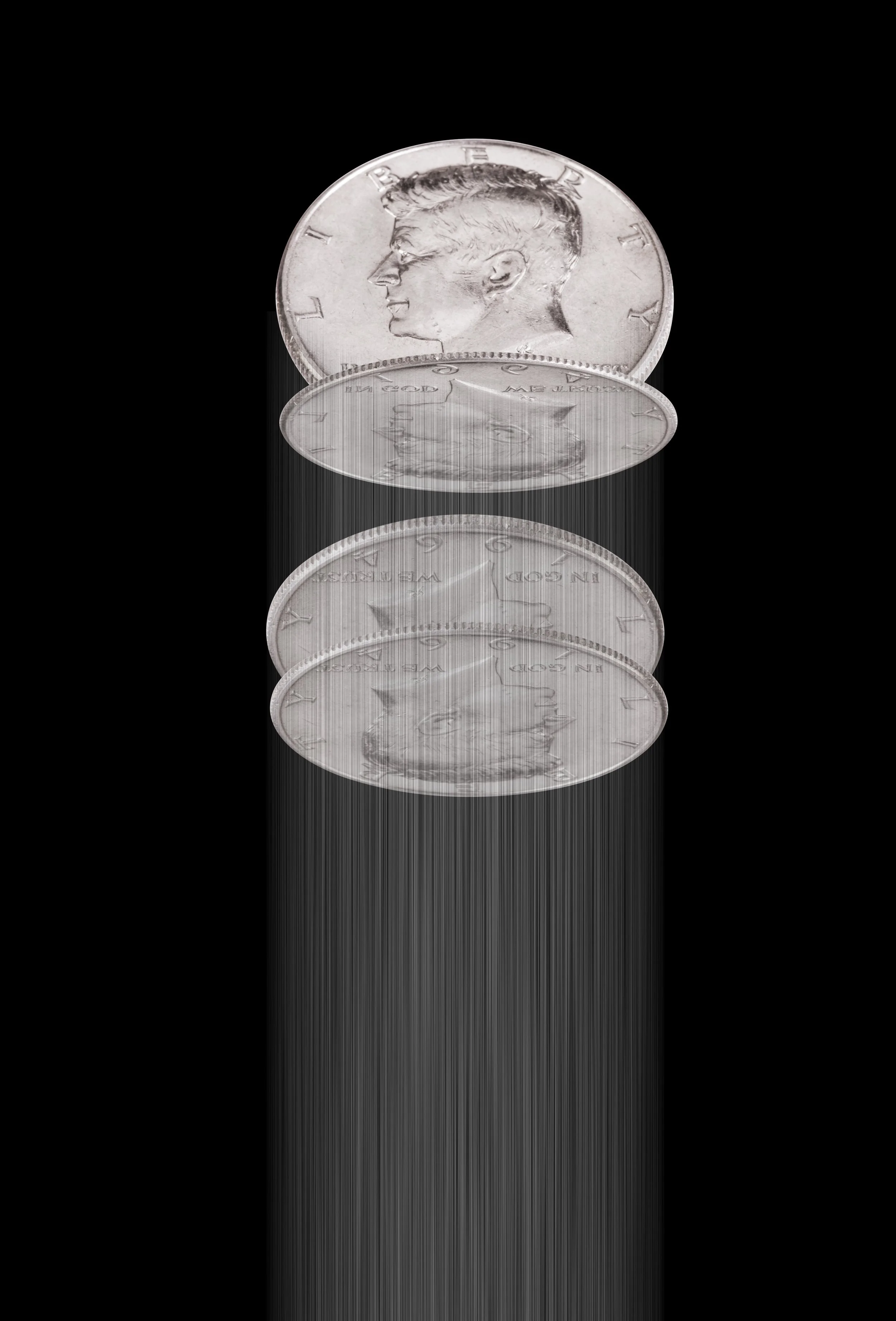
Tatiana Schlossberg and the Inheritance of Seriousness
There are people who inherit money, people who inherit power, and people who inherit expectations.
Tatiana Schlossberg inherited the last one, which is by far the most exhausting.
She is the granddaughter of John F. Kennedy.
This is the kind of fact that never stops being true and never stops being unhelpful. It follows you into rooms. It sits beside you at dinner. It whispers to editors and readers alike: Yes, but is she serious?
What Schlossberg did—unfashionably—was answer that question by becoming boring in the most honorable way possible.
She became a reporter.
Not a memoirist of dynastic pain.
Not a brand ambassador for inherited melancholy.
Not a performative conscience with a newsletter and a speaking tour.
A reporter. The kind who reads studies, files stories, and writes sentences that do not ask to be admired.
This is rarer than it sounds.

The Collapse of the “Good Family” Myth: When Nothing Is Wrong—but Nothing Is Working Splendidly Either
The most common family problem today is not toxicity or breakdown—it is emotional malnourishment inside systems that still technically work.
I see this most often in what I call emotionally unsustaining families: families that function reliably while quietly failing to nourish the people inside them.
For most of the twentieth century, the definition of a “good family” was simple—stay together, avoid scandal, raise competent adults. Emotional fulfillment was optional. Stability was the achievement.
Social media cracked that myth open—and replaced it with two extremes that leave most families stranded in the middle.

When Insight Creates Moral Confusion in Marriage
There is a moment that arrives after understanding—
when nothing is unclear anymore,
and nothing feels settled.
The pattern makes sense now.
The language fits.
The mystery is solved.
And instead of relief, a more destabilizing question appears:
What am I allowed to do with what I now know?
Late insight doesn’t create clarity in marriage—it creates moral confusion, because knowing changes what feels permissible before it tells us what to do.

Why Closure Fails in Modern Relationship Grief
Closure is a comforting idea for losses that actually end.
It promises resolution. Clean edges. A sense that something painful can be finished, understood, and put away.
But much of modern relationship grief does not cooperate with endings.
It lives inside ongoing lives.
Closure fails in modern relationships because many losses occur without endings—and grief without an ending cannot be resolved, only integrated.

Grief Without Exit: The Quiet Loss Inside Relationships That Never Officially Ended
There is a kind of grief our culture only knows how to recognize after someone leaves.
A parent goes no-contact.
A sibling disappears from holidays.
A marriage ends.
Then—finally—we allow sadness.
But there is another form of grief that arrives without rupture, without paperwork, without an exit interview. It appears inside relationships that remain intact.
Modern relationships produce forms of grief that don’t require endings—only understanding that arrives too late.
This is that grief.

When One Partner Changes Faster Than the Dyad Can Adapt
There is a moment in some long relationships when one person looks around and realizes they are no longer standing where the relationship expects them to be.
They haven’t left.
They haven’t betrayed anyone.
They haven’t even stopped loving their partner.
They’ve just moved.
And the relationship hasn’t caught up yet.
We talk about growth as if it were clean. Positive. Upward.
In relationships, growth is rarely symmetrical.
One partner has an insight—diagnostic, emotional, conceptual. Language sharpens.
Patience thins. Old patterns suddenly look named and therefore negotiable. The other partner is still living inside yesterday’s operating system, often doing nothing wrong.
This isn’t disagreement.
It isn’t conflict.
It’s timing.

The Quiet Grief of the Marriage You Would Have Had
There is a particular sadness that arrives without ceremony.
Nothing collapses.
No one leaves.
The marriage continues.
Bills get paid. Schedules sync. Holidays are negotiated with reasonable civility.
The outward shape of the life remains intact, almost impressively so. Friends would call it “stable.” Therapists might even call it “functional.”
And yet—something becomes unmistakably absent.
Not something dramatic enough to grieve publicly.
Not something you could point to without sounding ungrateful or melodramatic.
Not something that was taken.
Something that was never allowed to form.

When Insight Arrives Too Late
Some relationships don’t break.
They tip.
No shouting. No affair. No obvious villain.
Just a moment—often in a therapist’s office, sometimes alone at night—when a sentence lands and everything subtly rearranges.
Oh.
That’s what that was.
And instead of relief, there’s vertigo.
We are very good at celebrating insight. We are less good at admitting what it costs.
Late-arriving insight doesn’t drift into a relationship like a helpful clarification.
It shows up like a zoning change. Suddenly, structures that once made sense look provisional. Temporary. Slightly exposed.
The marriage that worked—worked—now feels oddly undocumented. No shared language. No permits. Just decades of improvisation that somehow held.

When War Enters the Body: How Fear and Isolation Reshape Intimacy
War does not just rearrange borders.
It rearranges interiors.
Including the private ones we pretend are untouched by politics.
A new study in Archives of Sexual Behavior tracked something we almost never observe in real time during armed conflict: what people do privately, anonymously, and without witnesses when fear becomes ambient.
Using population-level internet data, researchers found that as the Russian invasion of Ukraine intensified, Ukrainians’ pornography consumption rose in close correspondence with civilian deaths.
Not metaphorically.
Statistically.
This was not a postwar survey filtered through memory and shame. There were no questionnaires asking people to reconstruct what they did while sirens sounded.
Instead, researchers analyzed live data streams—Google search behavior, Pornhub traffic patterns, and United Nations casualty reports—moving week by week as the war unfolded.
The result is unsettling precisely because it is so profoundly ordinary.

Your 10 Best Relationship Skills (Which are Annoying, Because None of Them are Particularly Romantic)
Most relationships don’t fail from lack of love. They fail from lack of usable skills under stress.
People prefer romantic explanations for relational collapse: lost chemistry, mismatched attachment styles, insufficient gratitude rituals performed near candles.
The truth is less poetic and more operational.
Relationships fail when two reasonably competent adults hit pressure—fatigue, parenting, illness, ambition, neurodivergence, grief—and discover they were never taught how to run a relationship once goodwill is no longer doing the heavy lifting.
Love gets you started.
Skill determines whether the relationship remains livable.
Here are the ten skills that actually predict long-term stability in your dyad.

Happiness Is a Cultural Preference, Not a Human Default
Western culture treats happiness the way it treats Wi-Fi: as something everyone should have constant access to—and something to complain about loudly when it flickers.
A large, cross-national study now suggests this assumption is not just provincial but culturally specific.
Happiness maximization is not a universal human motivation but a culturally situated value system that emerged alongside Western individualism and modern economic life.
For much of the world, happiness is not the main project of adulthood. It is, at best, a by-product. At worst, a distraction.
The study—published in Perspectives on Psychological Science—does not argue that people outside the West dislike happiness.
It argues something more destabilizing: they do not organize their lives around maximizing it.
That difference matters.