
Welcome to my Blog
Thank you for stopping by. This space is where I share research, reflections, and practical tools drawn from my experience as a marriage and family therapist with an international practice.
I write about what happens to desire, attachment, and meaning once the early myths stop working.
Are you a couple looking for clarity? A professional curious about the science of relationships? Or simply someone interested in how love and resilience work? I'm glad you've found your way here. I can help with that. I'm accepting new clients, and this blog is for the benefit of all my gentle readers.
Each post is written with one goal in mind: to help you better understand yourself, your partner, and the hidden dynamics that shape human connection
Grab a coffee (or a notebook), explore what speaks to you, and take what's useful back into your life and relationships.
And if a post sparks a question, or makes you realize you could use more support, l'd love to hear from you. Let's explore the scope of work you'd like to do together.
Be Well, Stay Kind, and Godspeed.
~ Daniel
P.S.
Feel free to explore the categories below to find past blog posts on the topics that matter most to you. If you're curious about attachment, navigating conflict, or strengthening intimacy, these archives are a great way to dive deeper into the research and insights that l've been sharing for years.
- Attachment Issues
- Coronavirus
- Couples Therapy
- Extramarital Affairs
- Family Life and Parenting
- How to Fight Fair
- Inlaws and Extended Families
- Intercultural Relationships
- Marriage and Mental Health
- Married Life & Intimate Relationships
- Neurodiverse Couples
- Separation & Divorce
- Signs of Trouble
- Social Media and Relationships
- What Happy Couples Know


When Famous Families Fall Silent: What Celebrity Estrangements Reveal About Modern Loyalty
Celebrity family estrangements are rarely treated as what they actually are.
They’re treated as gossip.
Or as proof of moral progress.
Neither framing is doing the real work.
What many people feel when a public figure cuts off a parent, sibling, or entire family system isn’t outrage or admiration. It’s something quieter—and more destabilizing:
Am I supposed to understand this as growth?
That question—not the celebrity—is the real subject here.
Because family estrangement has become one of the few cultural moves that feels both radical and officially sanctioned at the same time.
And celebrity culture is where that contradiction is now being rehearsed most visibly.
Not because famous families are uniquely broken.
But because fame changes how rupture is narrated, rewarded, and remembered.

The American Idea That Sex Undermines Seriousness
America has always been suspicious of pleasure.
Not in a European, tragic way.
In a managerial one.
We don’t ask whether sex is good or bad.
We ask whether it interferes.
For nearly two centuries, American self-help and success literature has advanced a quiet but persistent proposition: sexual intimacy competes with ambition.
It drains focus. It softens edges. It introduces relational variables that cannot be optimized, scheduled, or cleanly contained. It makes you linger where you should be building.
What changes over time is the tone.
What never changes is the logic.
Instrumental celibacy does not describe a new behavior.
It describes a moment of cultural honesty.

What Is Instrumental Celibacy? A Couples Therapist Defines the Pattern
Silicon Valley has rediscovered abstinence.
Not for spiritual reasons.
For productivity.
Among young tech founders, “locked in” has become both a badge of honor and a personal policy. It signals seriousness.
Discipline. Resolve.
The gym, the laptop, and the company come first. Dating apps are deleted. Nights out declined. Sex is quietly postponed until some future milestone—Series A, Series B, exit, or maybe just relief.
This isn’t prudishness.
It’s instrumental celibacy.
And it tells us far more about modern work culture than it does about libido.

When Being Cherished Becomes a Trap
A counterpoint on benevolent sexism, conflict, and why leaving can feel like betrayal
The previous piece asked why women remain in high-conflict relationships.
This one asks something more unsettling:
What if the relationship doesn’t feel abusive—just existentially expensive to leave?
New research published in the Journal of Applied Social Psychology suggests that women are more inclined to stay in conflict-laden relationships when their partner endorses benevolent sexism—a belief system that frames women as precious, morally elevated, and deserving of protection, while positioning men as providers and guardians.
This is not hostility.It is not contempt.
It is care with conditions.
And psychologically, conditional care is harder to leave than harm.

Most Men Are Not “Toxic”—And Treating Them As If They Are Has Been a Category Error
For the last decade, toxic masculinity has operated less as a clinical descriptor and more as a moral shortcut—a way of gesturing at real harms without specifying their structure, prevalence, or distribution.
The problem is not that harmful forms of masculinity do not exist.
They do.
The problem is that the term has been allowed to stand in for men themselves.
A large new study of more than 15,000 men in New Zealand suggests what many clinicians and researchers have quietly known for years: most men do not resemble the profile implied by the phrase at all.
And the men who do cannot be understood as a single type.

When American Marriage Becomes a Luxury Good
The Wall Street Journal recently ran a piece with a politely unsettling implication: marriage in America is increasingly concentrated among the affluent.
The article describes how the “economic contract” of marriage has shifted, with many young adults prioritizing financial stability before committing to wed.
Their core claim?
Marriage hasn’t become obsolete in America—it has become economically selective.
What the WSJ Is Really Saying (Without Saying It)

When “Just Communicate” Becomes Emotional Surveillance
Communication is supposed to bring people closer.
But somewhere along the way, it became a moral obligation.
If something feels off, you’re expected to explain it.
If you can’t explain it, you’re expected to try harder.
If you don’t want to explain it, the refusal itself becomes suspicious.
This post is about how communication—once meant to foster intimacy—quietly becomes a tool for monitoring, compliance, and emotional access.
This is how just communicate turns into emotional surveillance.
Selective Opacity: The Right to Remain Partially Unknown
Something subtle is happening online.
Not louder. Not stranger. Quieter.
It began, improbably, with a refusal to explain.
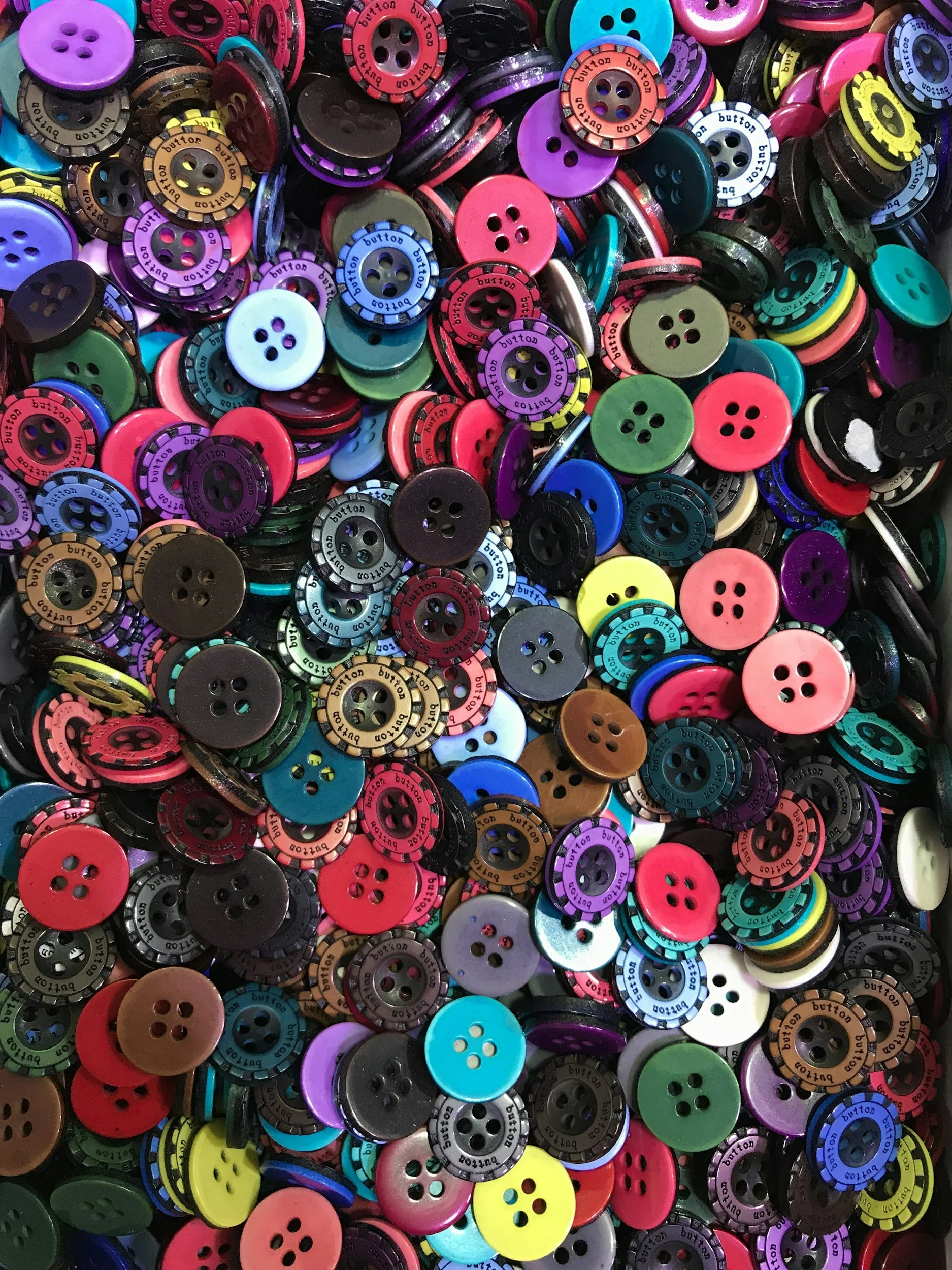
On TikTok, a user announced they carry 365 buttons—one for each day of the year—and declined to say what that meant.
No metaphor. No emotional arc. No clarification in the comments. Just the statement and the boundary.
What spread wasn’t confusion.
It was relief.
People didn’t want the explanation. They wanted the permission.

Why Other Marriages Look Happier Online
Other marriages don’t look happier online because they are happier.
They look happier because they are not being asked to be honest.
What you are seeing is not happiness. It is selection.
A chosen minute. Cropped from a longer, less cooperative week. Lit properly. Edited gently. Paired with music that suggests meaning where there is mostly timing.
Gratitude, in this setting, is not a feeling—it is a formatting choice.
Your marriage, meanwhile, is happening in real time. It has dishes. It has silence.
It has conversations that begin with logistics and end with something unnamed sitting between you. It contains affection that must survive fatigue and desire that does not arrive on schedule.
Real marriages are stubbornly uncinematic.
They refuse to perform.

Is Having a Boyfriend Embarrassing?
It is not embarrassing to have a boyfriend.
But it is embarrassing, right now, to be seen as having chosen.
That distinction explains almost everything.
This question did not emerge from therapy offices or kitchen tables.
It surfaced from media ecosystems where identity has become provisional and visibility carries reputational risk.
When a recent essay in Vogue gave the feeling a headline, it didn’t invent the anxiety.
It named something already circulating: the sense that visible, named heterosexual commitment now reads as earnest, basic, or aesthetically careless.
Not immoral.
Not oppressive.
Just uncool.
Which is how cultures speak when they are anxious.

When War Enters the Body: How Fear and Isolation Reshape Intimacy
War does not just rearrange borders.
It rearranges interiors.
Including the private ones we pretend are untouched by politics.
A new study in Archives of Sexual Behavior tracked something we almost never observe in real time during armed conflict: what people do privately, anonymously, and without witnesses when fear becomes ambient.
Using population-level internet data, researchers found that as the Russian invasion of Ukraine intensified, Ukrainians’ pornography consumption rose in close correspondence with civilian deaths.
Not metaphorically.
Statistically.
This was not a postwar survey filtered through memory and shame. There were no questionnaires asking people to reconstruct what they did while sirens sounded.
Instead, researchers analyzed live data streams—Google search behavior, Pornhub traffic patterns, and United Nations casualty reports—moving week by week as the war unfolded.
The result is unsettling precisely because it is so profoundly ordinary.

Brigitte Bardot and the Long Afterlife of Unmanaged Women
The unease that followed the death of Brigitte Bardot is not about nostalgia. It’s about unfinished business.
Bardot didn’t simply belong to a moment; she interrupted one.
She arrived when Western culture was still committed—publicly, at least—to the idea that women’s desire should be filtered, narrated, improved upon, or gently apologized for.
Bardot declined all of that.
She did not present desire as longing, or yearning, or seduction with a conscience. She presented it as presence. A body occupying space without explanation.
Here is the part we still struggle to say plainly: Bardot’s cultural meaning is not that she liberated women, but that she revealed how little culture actually tolerates women who stop managing themselves.
In And God Created Woman, what scandalized audiences was not nudity or sexuality per se. It was agency without irony.
Bardot did not perform desire in quotation marks.
She did not ask the viewer to forgive her for it, admire her discipline around it, or imagine a future version of herself that would be more reasonable. She simply was.