
Welcome to my Blog
Thank you for stopping by. This space is where I share research, reflections, and practical tools drawn from my experience as a marriage and family therapist with an international practice.
I write about what happens to desire, attachment, and meaning once the early myths stop working.
Are you a couple looking for clarity? A professional curious about the science of relationships? Or simply someone interested in how love and resilience work? I'm glad you've found your way here. I can help with that. I'm accepting new clients, and this blog is for the benefit of all my gentle readers.
Each post is written with one goal in mind: to help you better understand yourself, your partner, and the hidden dynamics that shape human connection
Grab a coffee (or a notebook), explore what speaks to you, and take what's useful back into your life and relationships.
And if a post sparks a question, or makes you realize you could use more support, l'd love to hear from you. Let's explore the scope of work you'd like to do together.
Be Well, Stay Kind, and Godspeed.
~ Daniel
P.S.
Feel free to explore the categories below to find past blog posts on the topics that matter most to you. If you're curious about attachment, navigating conflict, or strengthening intimacy, these archives are a great way to dive deeper into the research and insights that l've been sharing for years.
- Attachment Issues
- Coronavirus
- Couples Therapy
- Extramarital Affairs
- Family Life and Parenting
- How to Fight Fair
- Inlaws and Extended Families
- Intercultural Relationships
- Marriage and Mental Health
- Married Life & Intimate Relationships
- Neurodiverse Couples
- Separation & Divorce
- Signs of Trouble
- Social Media and Relationships
- What Happy Couples Know


My Wife Is Hotter Than My Coffee: The Psychology of Beauty, Power, and Marriage
A new client from New York opened our intake call with this:
“Daniel, I gotta warn you. My wife is hotter than my coffee. And I want to talk about how hard that is sometimes.”
I believed him.
Not because of the coffee.
But because there is an entire body of social science showing that beauty is not neutral inside relationships.
It alters perception. It shifts power. It changes how partners feel about alternatives, jealousy, investment, and security.
What follows is not gossip.
It is research.

The Discipline of Admiration: Why Long Marriages Rise or Fall on Esteem
Admiration is not chemistry.
It is not infatuation.
It is not the electric volatility of early attraction.
Admiration is the refusal to psychologically demote one’s partner.
And in long partnership, that refusal must be disciplined.
Most couples begin with admiration because mystery supplies it. Very few understand that once mystery fades, esteem must be governed.
Left unattended, the human mind drifts toward critique.
Not merely because we are vigilant.
Because critique confers superiority.
And superiority, even when subtle, corrodes respect.

Why So Many People Want Someone Else to Be in Charge (And Why That Desire Shows Up in Relationships First)
The desire to be ruled is rarely ideological.
It is almost always neurological.
Most people don’t want power.
They want relief.
Relief from choosing.
Relief from explaining.
Relief from negotiating reality with someone who keeps asking follow-up questions.
This is not a political statement.
It’s a nervous system one.
Over the last decade, I’ve watched a quiet shift take place—not just in culture, but in couples’ offices, kitchens, boardrooms, and late-night arguments that start with “Can we just decide?” and end with someone shutting down.
Folks are not craving authority because they love hierarchy.
They are craving it because shared decision-making has become cognitively exhausting.

Money Doesn’t Just Reduce Stress. It Rewires the Male Brain.
We like to believe money lives outside the psyche.
A pressure. A context. A background variable.
This belief is comforting.
It is also biologically naïve.
A recent neuroimaging study published in the European Journal of Neuroscience found that middle-aged men with higher family income show higher metabolic activity in brain regions that regulate reward and stress.
Not metaphorically. Literally. More glucose uptake. More neural energy.
Money, it turns out, doesn’t just lower stress.
It changes how the brain allocates emotional energy.

Why Are You Talking to Me, Specifically, Instead of Continuing to Read?
There comes a point when reading stops helping.
Not because the material is wrong.
Not because you missed a crucial framework.
Not because there’s one more idea you haven’t encountered yet.
But because the problem you’re facing is no longer informational.
If you’re here, there’s a good chance you already understand what’s happening in your relationship.
You can name the patterns. You recognize the cycles. You see the dynamics unfold — sometimes even while they’re happening.
And still, nothing moves.
This page is not here to offer you another insight.
It’s here because insight has already done its job.

What Happens After You’ve Read Everything
There is a point at which reading stops helping.
Not because the material is wrong.
Not because you missed a crucial framework.
But because the problem you are facing is no longer informational.
You know the language now.
You can identify attachment patterns in real time.
You recognize trauma responses as they arise.
You understand power, regulation, projection, and repair well enough to narrate the relationship while it is actively failing.
And still, nothing moves.
This is not confusion.
It is post-insight immobility.

What London Cab Drivers’ Brains Reveal About Long Marriages
There is something almost unbearably intimate about what London cab drivers do to themselves.
They take a city—crooked, historical, emotionally irrational—and lodge it inside their hippocampus.
Twenty-five thousand streets. One hundred thousand landmarks. Not as trivia, not as cleverness, but as embodied structure.
Direction becomes reflex.
Detours become instinct.
Confusion becomes navigable.
The brain responds by growing.
Neuroscientists have shown that London cabbies develop enlarged posterior hippocampi, the region responsible for spatial memory and navigation.
When you ask them how to get somewhere, they are not recalling facts. They are moving through an internal world they have built and maintained over years.
Marriage—when it lasts—does something eerily similar.

Why Romance Makes People Reckless: What Love Does to Self-Control When No One Is Watching
Every two years, I present a synthesis of cross-cultural infidelity research for the LingYu Psychology Institute on Zoom.
Established in Toronto in 2009, LingYu is the largest Chinese professional psychology center in North America.
For fifteen years, its global network of psychologists, psychotherapists, and social workers has delivered clinical services, professional training, supervision, corporate consultation, public mental-health education, and research at North American standards.
Which is to say: this is not a room inclined toward moral shortcuts.
And yet, every cycle, the same question surfaces—quietly, almost reluctantly:
Why do partners who value fidelity still do such reckless things?

Love Does Not Care How You Met: What Arranged and Free-Choice Marriages Reveal About Romance
There is a story Western culture tells itself about love.
It goes like this: love must be chosen freely, passionately, against resistance.
Anything negotiated, inherited, introduced, or arranged is assumed to be thinner—functional, perhaps, but emotionally compromised.
This study politely ruins that story.
Researchers examining marriages across five non-Western societies—where both arranged and free-choice marriages coexist—found something deeply inconvenient to modern romantic ideology:
Arranged and free-choice marriages do not differ, on average, in love.
Not in intimacy.
Not in passion.
Not in commitment.
Same triangle. Different entrance.

When Childhood Teaches You Not to Settle: Why Unpredictable Upbringings Create Restless Relationships
There is a quiet assumption many people carry into adulthood:
that once you find your person, your nervous system will finally stand down.
This study suggests that for many people, that moment never quite arrives—not because they are avoidant, unloving, or incapable of intimacy, but because their early environment trained them to keep scanning for exits.
The research, published in Evolutionary Psychology, examines adults who grew up in harsh or unpredictable childhood environments and asks a blunt question:
What if the problem in their adult relationships isn’t attachment alone—but strategy?

Why Revolutionary Road Still Hurts More Than Strangers When We Meet
Strangers When We Meet was published in 1958.
Revolutionary Road followed just three years later.
Those three years matter.
They sit exactly at the moment when postwar American adulthood stops feeling provisional and starts feeling permanent—when the suburbs, the roles, and the timelines harden from experiment into expectation.
The novels are often grouped together as suburban marriage stories. They shouldn’t be. They are not describing the same marital problem. They are describing adjacent stages of cultural closure.
Strangers When We Meet is written before the seal fully sets.
Revolutionary Road is written after.
That difference explains everything.
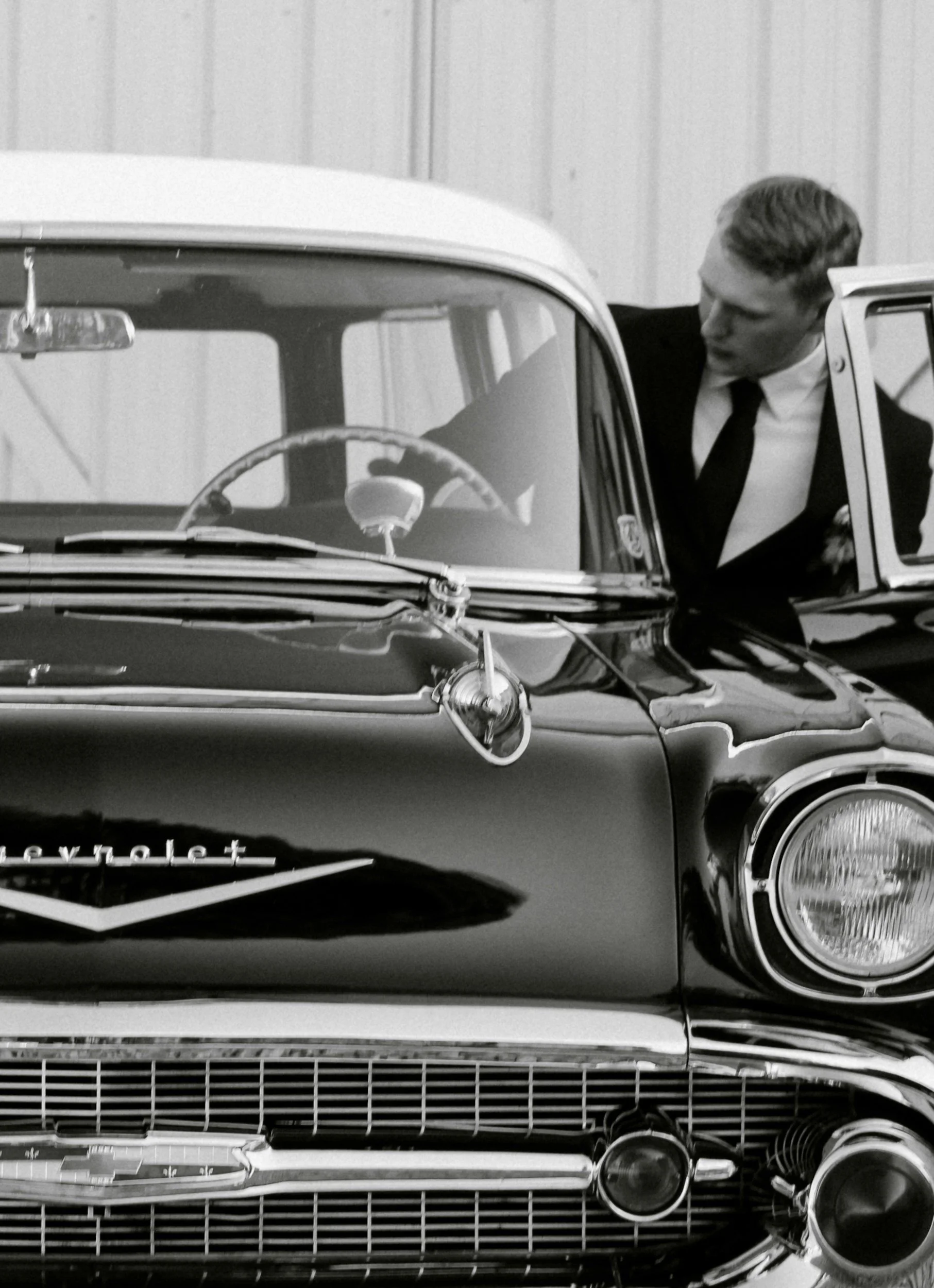
Strangers When We Meet and the American Talent for Living Correctly While Feeling Nothing
Strangers When We Meet is not a novel about adultery.
That interpretation belongs to a later moral economy.
It is a novel about American adulthood at the moment emotional dissatisfaction became common but remained culturally illegible—when lives worked, marriages held, and silence passed for maturity.
This is not a love story.
It is a cultural document.
1958 America: stability was solved, interior life was deferred.
By 1958, the United States had achieved something rare and deeply misleading: mass adult stability.
The war was over.
The middle class was expanding.
Marriage was normative.
Divorce was still embarrassing.
Work followed predictable arcs.
The system functioned.