Tuesday, January 27, 2026.
There is something almost unbearably intimate about what London cab drivers do to themselves.
They take a city—crooked, historical, emotionally irrational—and lodge it inside their hippocampus.
Twenty-five thousand streets. One hundred thousand landmarks. Not as trivia, not as cleverness, but as embodied structure.
Direction becomes reflex.
Detours become instinct.
Confusion becomes navigable.
The brain responds by growing.
Neuroscientists have shown that London cabbies develop enlarged posterior hippocampi, the region responsible for spatial memory and navigation.
When you ask them how to get somewhere, they are not recalling facts. They are moving through an internal world they have built and maintained over years.
Marriage—when it lasts—does something eerily similar.
Marriage Is Not a Feeling. It’s a Map
In long marriages, partners build “cognitive maps” of each other—predictive knowledge of triggers, needs, repair routes, and stress patterns that makes the relationship easier to navigate over time.
Long marriages are not sustained by love alone. They are sustained by cognitive cartography.
Where your partner goes when they’re overwhelmed.
Which topics lead to cul-de-sacs.
Which memories function like roundabouts—always circling, never exiting.
Where the emotional hospitals are.
Where the police stations are.
Where you should never drive during rush hour.
Early relationships rely heavily on GPS.
Tell me what you need.
Explain what just happened.
Why are you upset?
Enduring marriages stop asking those questions as often—not because curiosity dies, but because navigation becomes embodied.
You don’t need directions to your partner’s grief.
You feel the turn before it comes.
This is not romantic language.
It is neurological language.
Repetition creates structure.
Structure creates efficiency.
Efficiency creates safety.
Prudentia: The Roman Virtue Hidden Inside Long Marriage
The Romans had a word for this kind of knowing: Prudentia.
It is usually translated as “prudence,” which badly undersells it. Prudentia is not caution. It is not restraint. It is not playing it safe.
Prudentia is the cultivated ability to perceive reality accurately over time—and to act accordingly.
It binds memory, judgment, and foresight into a single capacity. Cicero described it as the virtue that connects past, present, and future into one act of discernment.
In other words: Prudentia is The Knowledge.
London cab drivers are not impressive because they memorize streets. They are impressive because they can orient instantly inside complexity. They know which routes flood. Which shortcuts only work at certain hours. Which intersections snarl when conditions change.
That is exactly what long marriages require.
A prudent marriage is not cautious.
It is accurate.
It knows:
which conversations require momentum and which require rest.
which conflicts should be entered head-on and which navigated sideways.
which emotional neighborhoods are safe to enter unannounced and which require warning lights.
This kind of knowing cannot be outsourced to rules, scripts, or communication tips.
It is learned the way cabbies learn London:
by repetition, correction, humility, and time.
Early relationships rely on ideals.
Prudent marriages rely on maps.
Mastery Builds the Brain—and the Family System
In 1851, London decided it had had enough of men with reins improvising their way through geography.
That year, the Great Exhibition—an enormous Victorian flex of glass, gadgets, and imperial confidence—pulled crowds into the city like a magnet.
The streets clogged. The horse-drawn hacks swarmed. And cabbies, confronted with London’s cheerful refusal to be logically arranged, got lost.
Which meant the passengers got furious.
So the authorities did the most British thing imaginable: they invented a test.
Not a polite little quiz. An actual exam designed to prevent navigational anarchy by forcing drivers to prove—on paper, in advance—that they knew where they were going, how to get there, and how not to turn a fare into a moving meditation on regret.
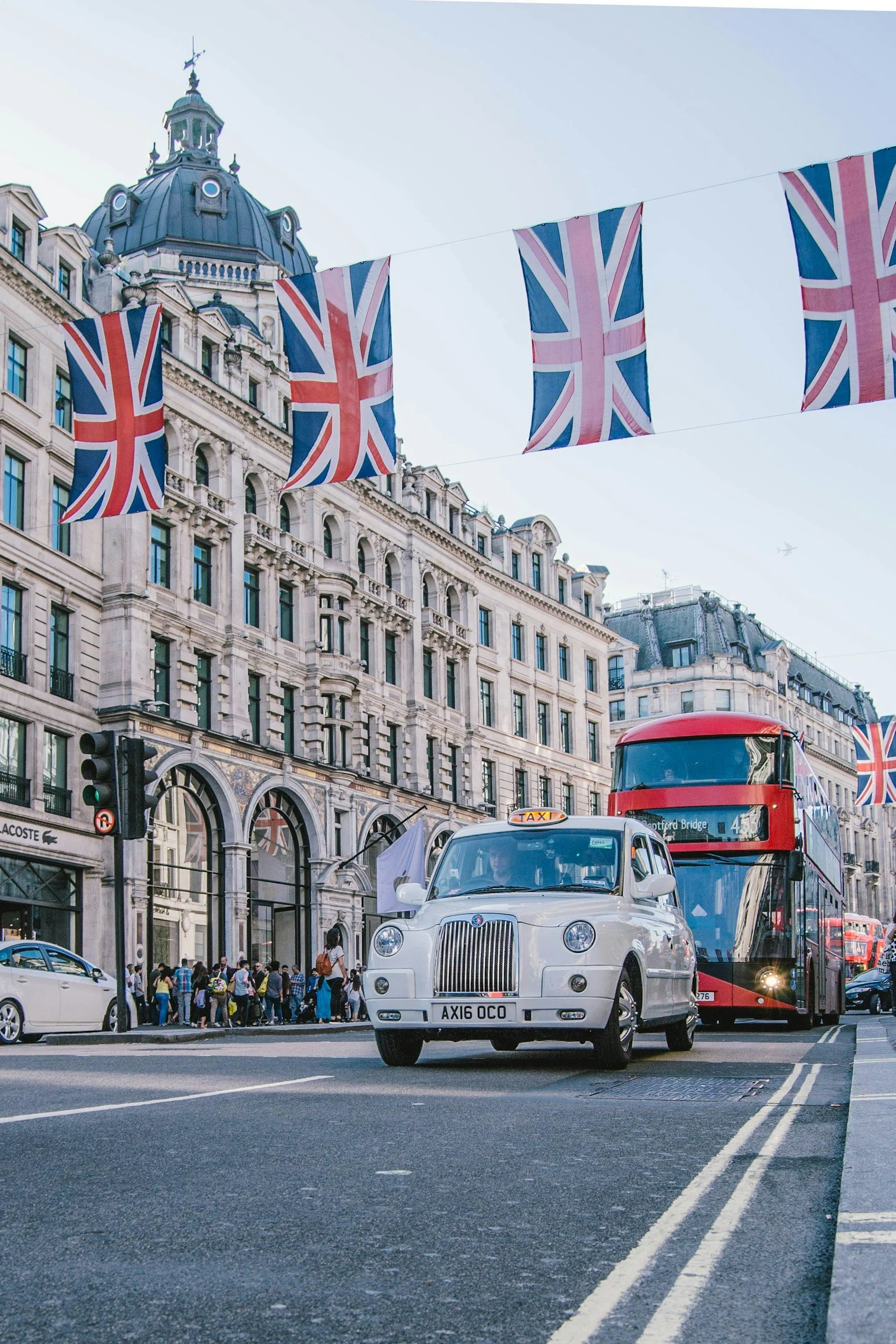
A black cab and a red double-decker bus slide past Big Ben like they’re auditioning for the role of “London” in a movie that refuses to end. Tourists photograph the obvious. But a neuroscientist watches the cab.
The Miracle of Neuroplasticity
Because the cab isn’t the miracle. The driver is.
A London cabbie is somebody who took a city that behaves like a spilled bowl of noodles and forced it to become an internal map—so thoroughly that the brain itself changes shape in response. Neuroplasticity isn’t a motivational poster here; it’s literal architecture. Learning London rewires you.
Candidates have to memorize the streets within a six-mile radius of Charing Cross, the old gravitational center London uses for measuring itself.
That’s about 113 square miles of urban spaghetti—roughly five Manhattans—but without Manhattan’s polite grid.
London doesn’t do straight. It does “crooked lane that becomes a way that becomes a road that was probably a footpath in 1640.”
Within that radius: roughly 25,000 streets. But streets are only the skeleton. The real demand is the flesh—the lived city—something like 100,000 landmarks that have to be instantly locatable: hotels, hospitals, theaters, police stations, courts, clubs, parks, statues, and all the other little pins that turn a map into a place.
And the instrument of that rewiring is a test that doesn’t merely “challenge” you. It tries to break your spirit with paperwork.
“The Knowledge of London” is widely considered one of the toughest vocational exams in the world.
Born, as all serious institutions are, out of public irritation and logistical panic.
What’s most striking about The Knowledge is not its difficulty, but its resistance to outsourcing.
You cannot skim it.
You cannot delegate it.
You cannot Google your way through it.
You must carry it.
Families that endure—especially under chronic stress—develop the same kind of neural infrastructure.
Parents learn which child needs containment and which needs permission.
Couples learn which silences are restorative and which are lethal.
Long-term partners know when a fight is about the fight—and when it’s about something that happened twenty years ago and never metabolized.
This is not emotional intelligence as a personality trait.
It is emotional intelligence as trained neural architecture.
And like all mastery, it comes with a cost.
When Prudentia Hardens Into Rigidity
As London cab drivers’ posterior hippocampi grow, the anterior regions—associated with learning new spatial information—can shrink.
In plain language: mastery reliably narrows novelty.
Long marriages face the same risk.
When you know someone deeply, you may become less flexible with them. Less imaginative. Less willing to explore alternative routes. The familiar works. The familiar is efficient. The familiar feels safe.
Until it doesn’t.
This is what couples mean when they say:
“We know each other too well.”
What they are really saying is:
Our map has replaced the territory.
Roman thinkers warned about this exact failure. When Prudentia stops updating, it decays into arrogance. Memory replaces perception. Judgment becomes stale.
True Prudentia keeps learning.
Pietas: Who Carries the Map When Memory Fails
If Prudentia is knowing the way, Pietas is staying loyal to the shared journey.
In Roman life, Pietas meant devotion to family, ancestors, and future generations—not sentimentally, but structurally. It was the virtue of carrying responsibility across time.
This matters when we talk about memory, aging, and Alzheimer’s.
As cognitive maps thin, someone else must hold the city.
Long marriages often reach a point where one partner remembers for two:
appointments.
stories.
routes home.
the shape of a shared life.
This is not romantic.
It is sacred, emotional labor.
Pietas is the willingness to carry the map when your partner cannot—and to do so without contempt.
So that someone still knows the way home.
A Therapist’s Note
If marriage is a city, many couples stop studying it long before they’ve learned the side streets.
They know the highways.
They don’t know the landmarks.
And then they are shocked when they get lost.
The work is not passion.
The work is The Knowledge.
Learning your partner well enough that your nervous system knows the route—and staying curious enough to redraw the map when the city inevitably changes.
That is not romance.
That is what lasts.
Be Well, Stay Kind, and Godspeed.